



Antique Table Mirror Base
An antique table mirror base anchors the glass where we groom, shifting from walnut frames to brass and marble stands.
Antique Table Mirror Base
When you search for an antique table mirror base, you encounter frames and supports designed to hold swing mirrors on dressing tables, chests, and sideboards. These items date from the eighteenth century through to the early twentieth century, spanning Georgian, Victorian, and Art Deco periods.
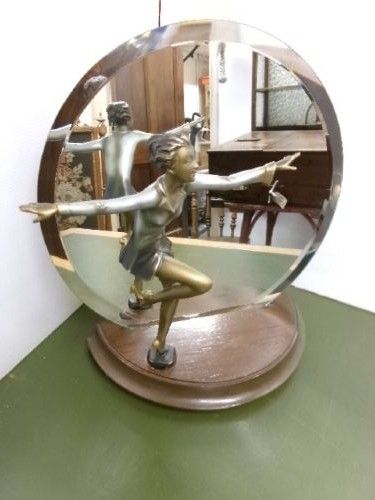
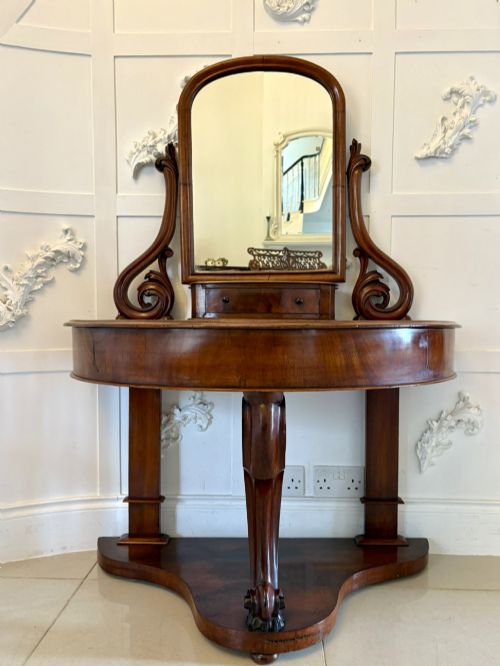
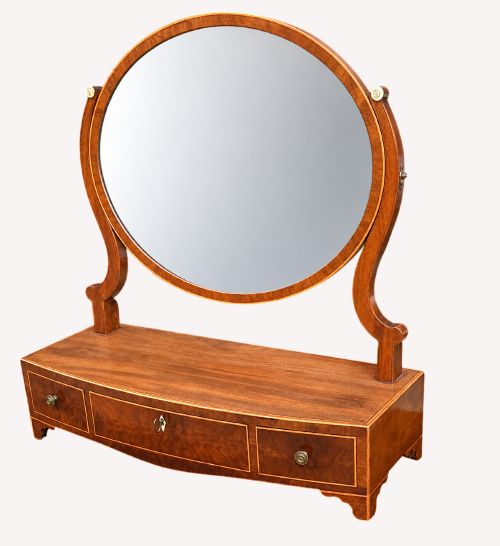
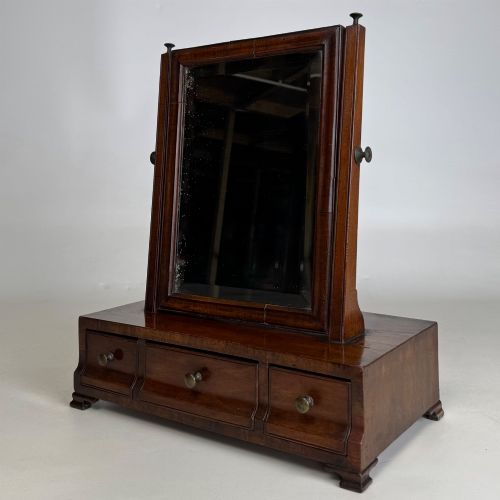
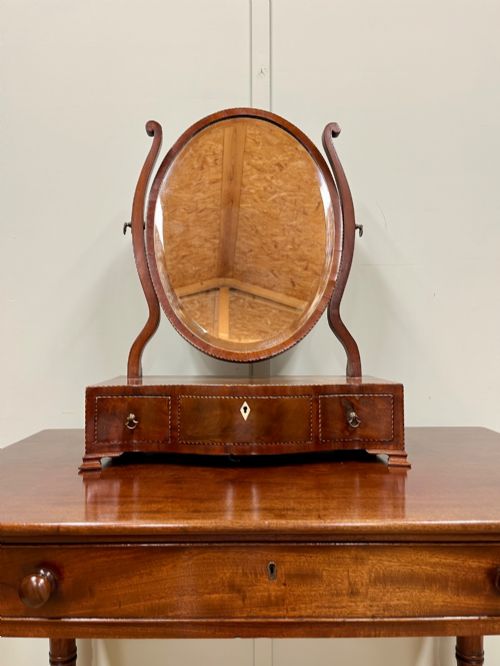
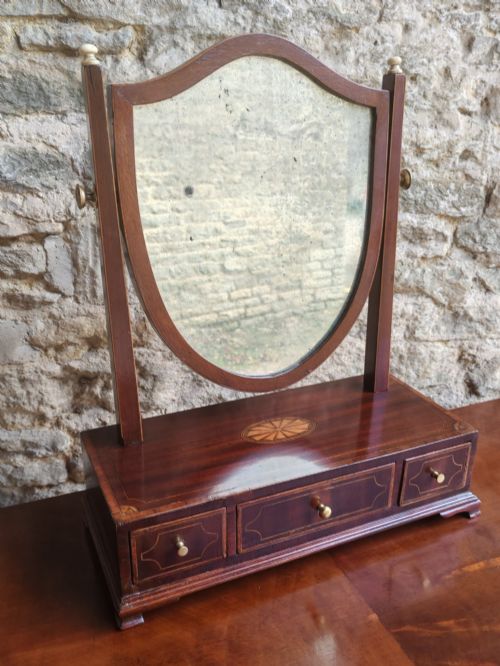
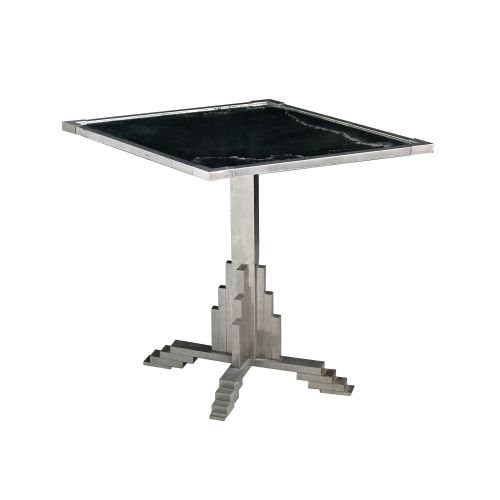
The version you are most likely to meet on this page is the mahogany or walnut toilet mirror, often featuring a small box base with drawers beneath the glass. Alongside these, the inventory includes brass, bronze ormolu, and marble stands built to hold pivoting mirror plates or silver-plated table plateaus.
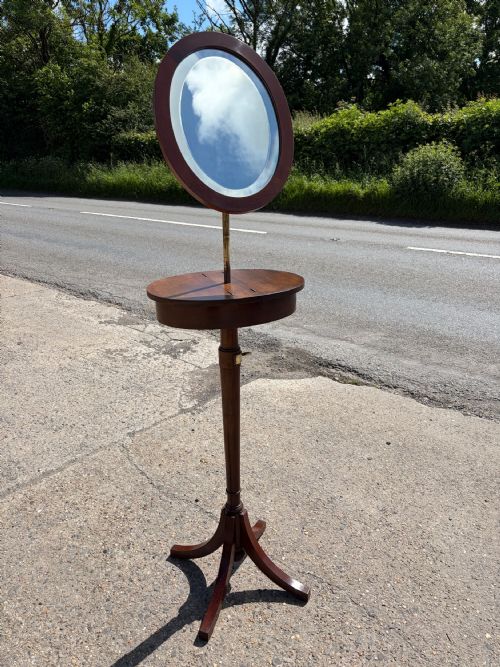
Forms range from simple shield shapes and oval glasses on upright supports to telescopic shaving mirrors on tripod bases and ornate French Empire designs. While some listings comprise complete dressing mirrors, the focus rests on the structural bases and frames that elevate the glass.
How they were made
Cabinetmakers constructed these pieces primarily in timber, employing figured walnut, mahogany, harewood, and oak for the frames and box bases. They frequently incorporated secondary woods and delicate bone inlay or drawer fittings.
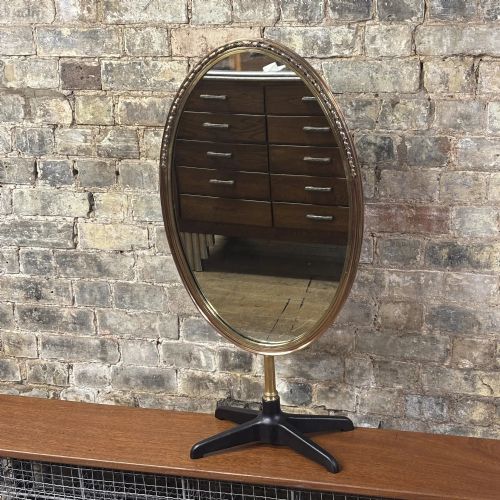
Metalwork played a structural and decorative role, seen in cast brass supports, bronze ormolu mounts, and silver plating on table plateaus. Heavier variants utilised marble bases to counterbalance the weight of the mirror glass.
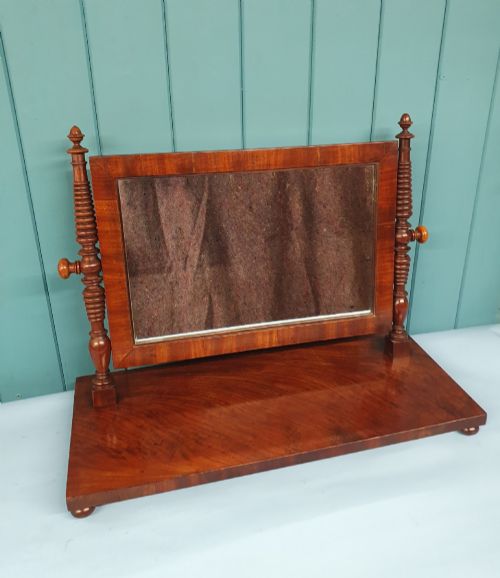
Glass was silvered and cut to fit shield, oval, or rectangular frames, mounted on pivoting side screws that allowed the user to adjust the angle. Joinery techniques on the drawer bases typically involved precise dovetailing.
What varies in quality
The refinement of the timber figure and the crispness of the cabinetwork determine the standing of each piece. Finer examples display carefully selected mahogany or figured walnut with precise edge mouldings, whereas simpler items rely on plain veneers or painted finishes.
The choice of materials shifts the character of the object, from utilitarian brass and oak combinations to elaborate ormolu and marble compositions. Hardware such as original brass pivoting screws and matching drawer pulls distinguishes higher-grade examples.
Proportion and structural harmony separate superior pieces from standard workshop output. The relationship between the weight of the base and the scale of the mirror plate dictates how steadily the glass sits.
The Antique Table Mirror Base Glossary
- Toilet mirror
- A small mirror designed to stand upon a dressing table or chest, typically incorporating a set of small drawers in its base.
- Swing mirror
- A mirror plate hung on pivots between two upright arms, allowing it to tilt back and forth.
- Ormolu
- Gilded bronze or brass used for decorative mounts and decorative framing on classical furniture and mirror bases.
- Plateau
- A mirrored glass tray or stand placed in the centre of a table to display ornaments or silver.
- Shield shaped
- A mirror glass cut into the outline of a heraldic shield, popular during the eighteenth century.
Antique Table Mirror Base: Frequently Asked Questions
Where were table mirror bases placed?
These pieces sat upon dressing tables, sideboards, or chests of drawers in bedrooms and dressing rooms. They provided a raised surface for personal grooming before wall-mounted mirrors became standard.
Cabinetmakers designed the box bases to hold small personal items, keeping the dressing surface orderly while anchoring the weight of the pivoting glass.
How do I date a mahogany toilet mirror?
Cabinetwork styles and wood choices offer primary clues to the age of a piece. Eighteenth-century examples often feature walnut or figured mahogany with serpentine box bases and fine dovetail construction.
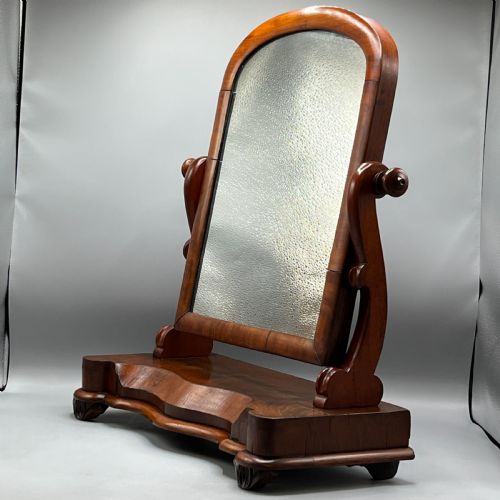
Victorian and later pieces tend to show heavier proportions, sometimes combining mahogany with marble bases or incorporating telescopic brass columns for adjustable height.
What is the difference between a toilet mirror and a dressing mirror?
A toilet mirror typically refers to a smaller table-standing glass equipped with a box base containing drawers. These sat on top of existing furniture.
A dressing mirror often describes a larger format or a full freestanding glass, though historical descriptions frequently overlap between the two terms.
Can I adjust the angle of the mirror glass?
Most pieces utilise side screws or threaded pivots connecting the frame to the upright supports. Tightening or loosening these fixings allows the user to tilt the glass to the desired angle.
Original brass hardware ensures smooth adjustment, though older fittings require careful handling to preserve the surrounding wood.