


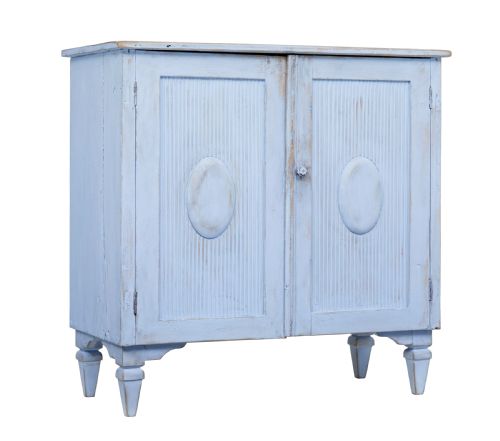


Antique Swedish Credenza
An antique Swedish credenza brings calm Nordic proportion and pale painted timber into a room.
Antique Swedish Credenza
When you search for an antique Swedish credenza, you encounter substantial storage furniture spanning the eighteenth, nineteenth, and early twentieth centuries. These pieces encompass regional sideboards, buffets, enfilades, and cupboards rather than strict modern credenzas.
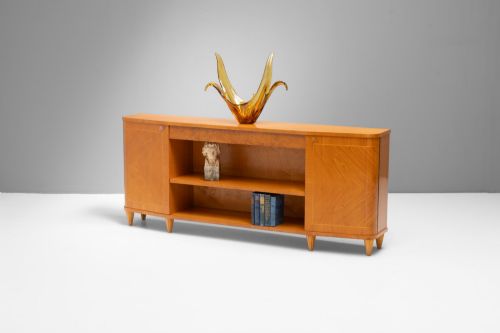
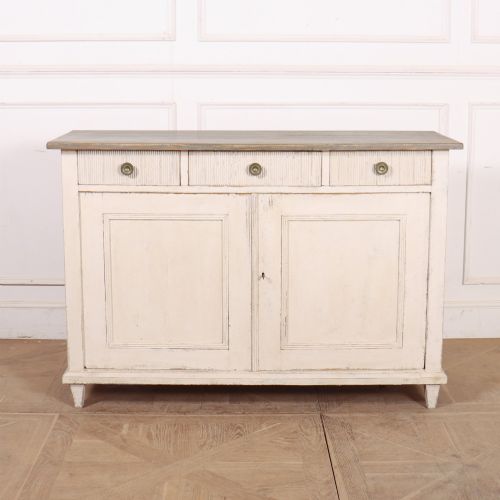
The nineteenth century provides the bulk of the examples on this page, dominated by painted pine, birch, and softwood. Gustavian and Scandinavian country traditions shape the aesthetic, alongside occasional departures into Swedish Biedermeier and Art Deco.
Most items serve primarily as cupboards or sideboards, offering deep shelving and enclosed drawer space behind panelled doors. Buyers frequently choose these forms to anchor a dining room or hallway with functional northern European history.
Materials and construction methods
Makers relied on native timbers such as pine, birch, and softwood, building solid carcases to withstand northern climates. Structural iron and brass fittings provide functional hardware for doors and drawers.
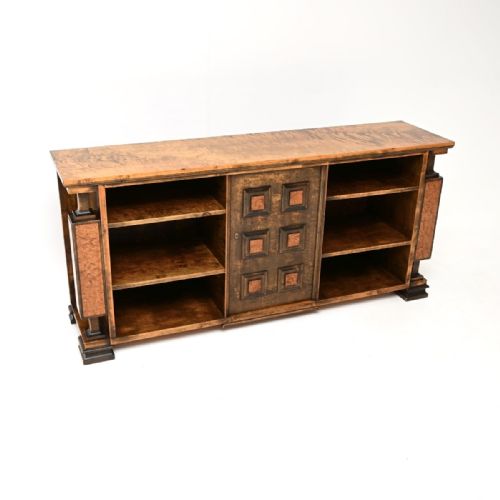
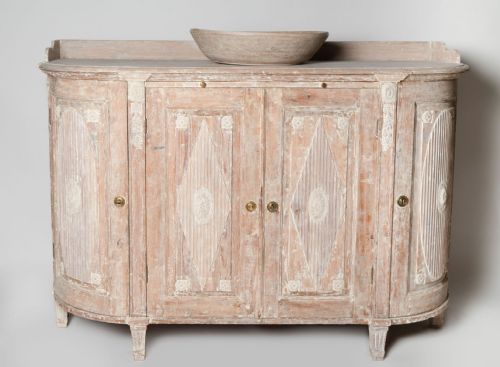
Surfaces frequently display layers of historic paint, ranging from original scraped finishes to decorative ragwork techniques. Selected examples combine timber construction with marble tops or incorporate burr elm veneers.
Listings span pine, birch, burr elm, and marble, anchored primarily in the nineteenth century with occasional eighteenth-century and Art Deco examples.
What separates examples
The integrity of the painted surface determines much of the visual character, distinguishing untouched historic pigment from later re-painting. Original scraped finishes and preserved ragwork patination command greater interest among purists.
Timber selection and joinery execution also set pieces apart, moving from rustic utilitarian pine to figured birch and burr elm. Structural retention of original brass and iron hardware further defines the standard of an individual piece.
The Antique Swedish Credenza Glossary
- Enfilade
- A suite of cabinets or a long sideboard designed to stand in a straight line along a wall. These pieces typically offer extensive surface area and multiple lower cabinet doors.
- Ragwork
- A decorative painting technique where rags are used to apply or manipulate glaze on a surface. This creates a mottled, textured finish characteristic of regional Scandinavian folk art.
- Gustavian
- The Swedish neoclassical style spanning the late eighteenth and early nineteenth centuries. It is characterised by restrained classical symmetry, pale paint finishes, and subtle fluting.
- Biedermeier
- A central European and Scandinavian design movement focusing on utilitarian comfort and clean lines. Pieces from this tradition often highlight the natural grain of birch without heavy ornamentation.
Antique Swedish Credenza: Frequently Asked Questions
What is an antique Swedish credenza?
An antique Swedish credenza refers broadly to storage furniture from northern Europe, including painted sideboards, buffets, enfilades, and cupboards.
These pieces originate mostly from the nineteenth century and reflect Scandinavian country and Gustavian design traditions.
How were these cabinets used?
Historic households utilised these cupboards and sideboards for storing textiles, kitchenware, and provisions in domestic spaces.
Today, buyers place them in dining rooms and living areas to store tableware while displaying decorative objects on top.
How do I identify a Gustavian piece?
Gustavian pieces display restrained neoclassical lines, often featuring pale or white paint finishes and subtle carved details.
They emerged from late eighteenth-century Swedish interpretations of French and Italian classical design.
What wood types should I expect?
Construction relies heavily on softwoods like pine, frequently finished with historic paint or ragwork treatments.
More formal examples utilise native birch or imported burr elm veneers for a warmer, figured grain.