






19th Century Swedish Sideboard
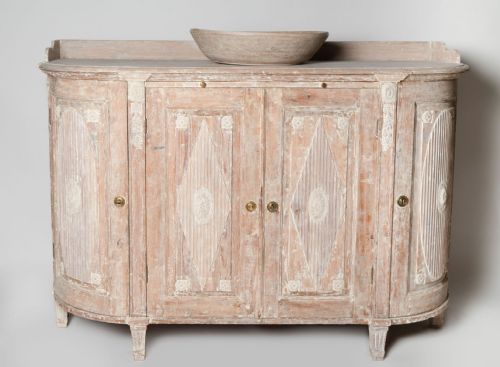
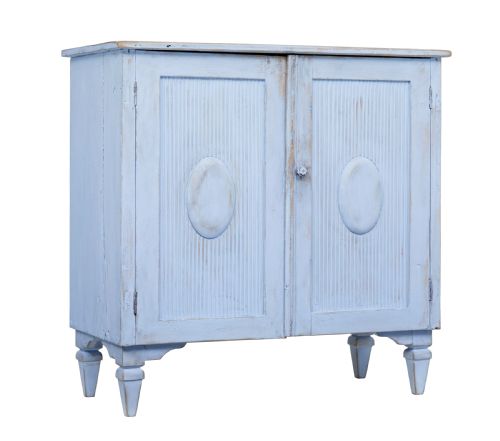
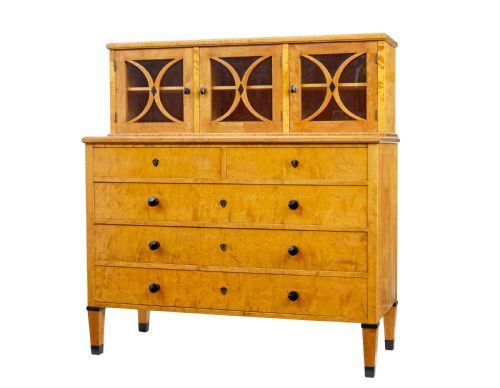
A 19th century swedish sideboard brings functional storage and distinctive Scandinavian character to a room through painted pine and warm birch.
19th Century Swedish Sideboard
A 19th century swedish sideboard encompasses sturdy storage furniture designed for domestic interiors across Sweden during the eighteen-hundreds. Buyers searching for this phrase encounter a variety of forms including painted pine cupboards, birch buffets, and commodes.
The pieces appearing on this page span the entirety of the nineteenth century, featuring styles from rustic Scandinavian country and Gustavian design to Swedish Biedermeier and late period Art Nouveau. Forms range from kitchen cupboards and display cabinets to chests of drawers and workbenches.
Painted pine pieces often display original scraped paint or ragwork decoration, while birch examples highlight the natural grain of the wood. These items served practical storage needs in Nordic homes and now function as statement storage pieces in contemporary rooms.
Judging quality in these pieces
Quality rests in the survival of original surface treatments, whether a scraped painted finish or the warm figure of polished birch. Pieces retaining their early layers of pigment carry greater integrity than those stripped or repainted in later periods.
Proportion and execution separate standard utility items from finer cabinetwork, particularly in Gustavian and Biedermeier forms where restraint dictates the design. The handling of secondary timbers and the crispness of mouldings indicate the maker's competence.
Kitchen cupboards often retain traces of flour and old Scandinavian recipes tucked deep inside their forgotten corners.
The 19th Century Swedish Sideboard Glossary
- Gustavian
- The Swedish neoclassical style spanning the late eighteenth and early nineteenth centuries, characterised by restrained carving, fluted columns, and pale painted finishes. It takes its name from King Gustav III.
- Biedermeier
- A central European and Scandinavian style spanning the mid nineteenth century that prioritises clean lines, utility, and the natural grain of timbers like birch over heavy ornamentation.
- Ragwork paint
- A decorative paint technique where rags or cloths are used to manipulate wet glaze on a surface, creating mottled or textured patterns popular in Scandinavian country furniture.
- Satin birch
- A timber derived from birch featuring a shimmering, light-reflective grain that polishes to a high lustre, frequently employed in high-end nineteenth century cabinetwork.
- Scraped paint
- A surface condition where later overcoats of paint have been carefully removed to reveal the original historical pigment layers beneath.
19th Century Swedish Sideboard: Frequently Asked Questions
How do I clean a painted pine sideboard?
Dust the surface regularly with a dry, soft cloth to prevent particulate buildup on fragile nineteenth-century pigment layers.
Avoid modern chemical cleaning agents and moisture, which can soften or lift original paintwork over time.
What is the difference between a buffet and a sideboard?
Buffets traditionally served lower dining room functions for holding food and servingware, while sideboards often incorporate enclosed cupboards and cabinet space.
In nineteenth-century Swedish furniture, the terms frequently overlap depending on regional terminology and the specific configuration of drawers and doors.
Are these pieces made of solid wood?
Nineteenth-century Swedish pieces are constructed from solid native timbers such as pine and birch, rather than modern manufactured board.
Finer examples utilise dense birch or satin birch veneers applied over stable softwood secondary cores to achieve decorative grain patterns.
How do I identify a Gustavian piece?
Gustavian pieces display neoclassical symmetry, pale monochrome paint finishes, and minimal carved details like fluting or rosettes.
They reflect Swedish interpretation of French Louis XVI design through a simpler, more restrained Nordic lens.