
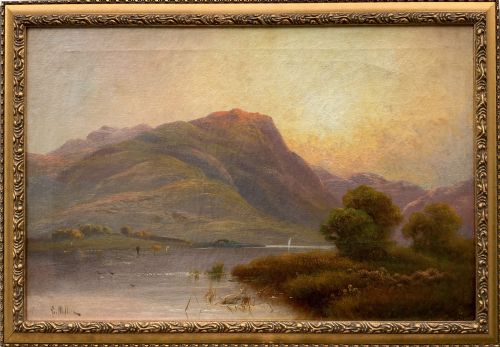
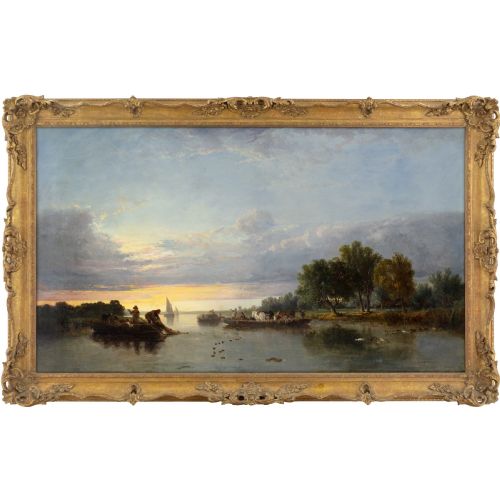

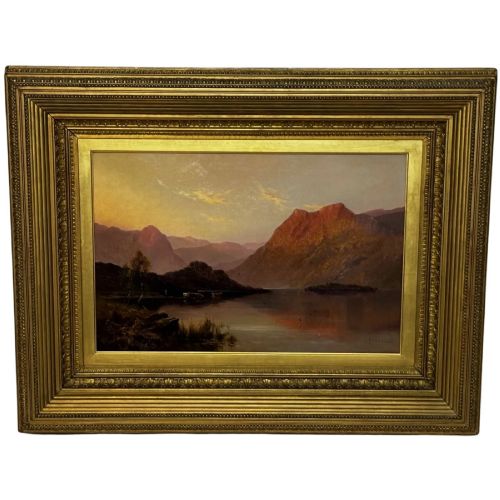
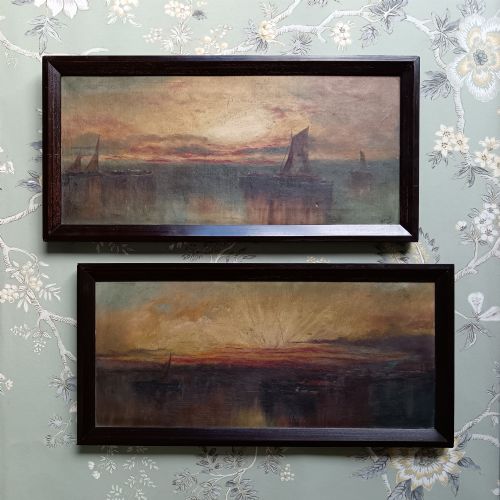


Antique Sunset Landscape Art
Antique sunset landscape art captures the fading evening light over rivers, lochs and coastal shores, offering collectors rich atmospheric scenes.
Antique Sunset Landscape Art
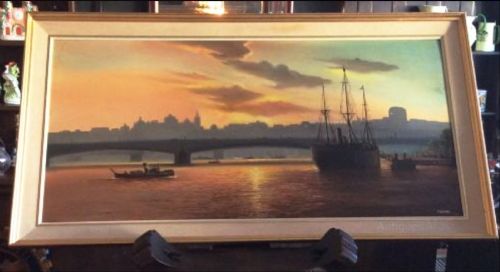
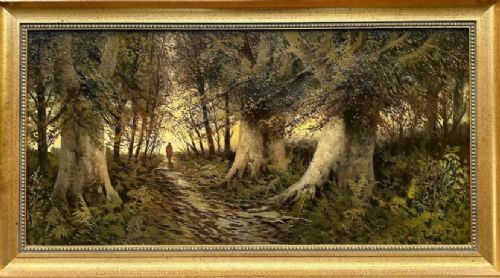
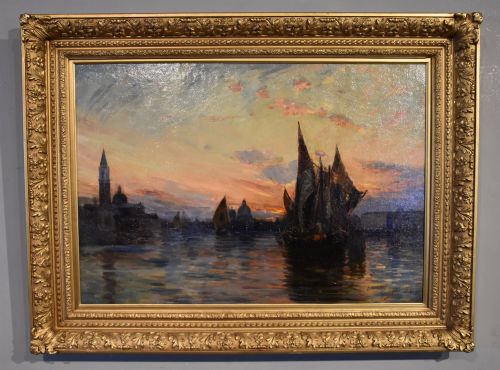
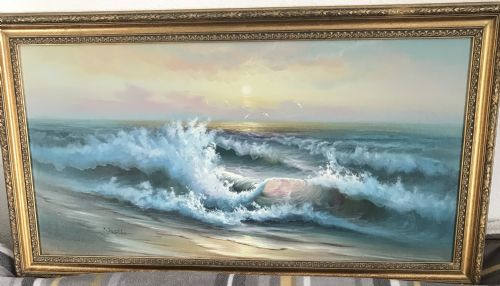
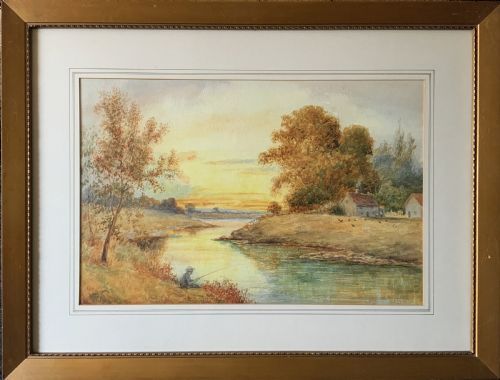
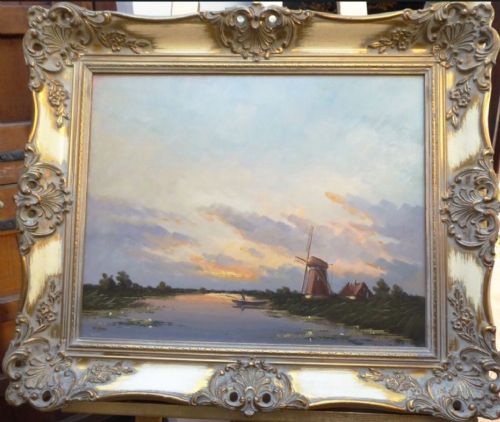
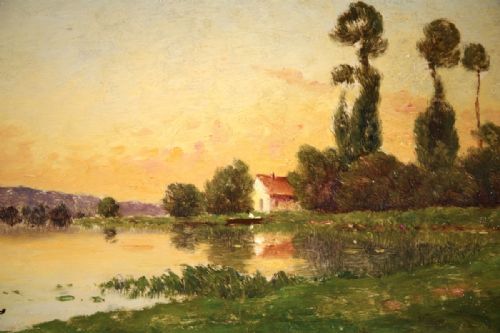
When searching for antique sunset landscape art, buyers encounter oil on canvas and watercolour paintings created across the nineteenth and twentieth centuries. These works record rural waterways, Scottish highlands, maritime scenes and woodland clearings bathed in evening light.
The pieces on this page span the Victorian and Edwardian periods through to the interwar years, encompassing British Impressionism, Art Nouveau and marine art. Formats range from intimate framed watercolours on paper to large panoramic oil paintings.
Subject matter frequently centres on the close of day, capturing figures walking home, fishing boats returning to shore, or windmills beside rivers. Collectors find both British regional views and continental European scenes represented.
Materials and Techniques
Artists utilised oil paint on canvas and wood panels alongside delicate watercolours on paper, often supported by gesso frames. Glass objects from the period employ cameo techniques to render warm evening hues.
Brushwork varies from the precise realism of the nineteenth century to the looser application found in later impressionist and modernist works. Pigments capture specific atmospheric conditions, recording orange glows and deep shadows.
Factors That Distinguish Quality
Quality rests upon the artist's ability to manipulate light and colour to convey the specific mood of twilight. Superior works demonstrate accomplished handling of tone, creating depth within the sky and water.
Condition of the canvas, paper and original frame influences the overall standing of a piece. Strong provenance and clear signatures by known painters elevate individual works above unsigned examples.
Alfred Fontville de Breanski Jr·Thomas Hodgson Liddell·George Vicat Cole·Daum Freres·Alfred de Breanski Snr
The Antique Sunset Landscape Art Glossary
- Watercolour
- A painting method where fine pigment is suspended in a water-based solution on paper. This medium allows for transparent washes that capture delicate twilight skies.
- Gesso
- A plaster mixture applied to wood or canvas as a base for painting or moulded onto frames. It provides a smooth surface for ornate decorative detailing.
- Cameo glass
- Art glass produced by layering two or more colours and carving the surface to create relief designs. Makers used this technique to depict sunset landscapes.
- Impressionism
- An art movement focusing on accurate depiction of light and its shifting qualities. Painters working in this style prioritise spontaneous brushstrokes over rigid detail.
- Seascape
- A work of art depicting the sea, coastlines and maritime vessels. These compositions frequently incorporate sunset lighting over water.
Antique Sunset Landscape Art: Frequently Asked Questions
What periods do these paintings come from?
The works span the nineteenth century, the Edwardian era, and the early twentieth century. Artists produced these pieces across distinct historical periods defined by shifting aesthetic movements.
Victorian and Edwardian examples sit alongside later works from the nineteen-twenties and mid-century. Each period brings distinct framing choices and painting techniques to the subject.
How do I care for antique paintings?
Keep works out of direct sunlight to prevent fading of delicate watercolours and oil pigments. Stable indoor humidity protects canvas and wood panels from warping.
Dust frames gently and avoid hanging pieces near heat sources. Professional conservators should handle any structural repairs to the canvas or gesso.
What subjects appear in these landscapes?
Common subjects include Scottish highlands, rivers, rural waterways, and coastal shipping scenes. Artists recorded the close of day across diverse British and European locations.
Scenes frequently feature figures walking home, fishermen, windmills, and bridges silhouetted against the evening sky. Coastal works often depict low tide and returning boats.
How are watercolours and oils different?
Watercolours utilise pigments on paper to achieve translucent effects and delicate washes of light. They require protective glass framing to prevent environmental damage.
Oils use suspended pigment on canvas or wood, allowing for rich texture and impasto brushwork. These durable surfaces generally do not require glass protection.