


Antique Sunderland Ceramic Jug
An antique sunderland ceramic jug carries the storied maritime heritage and transfer-printed scenes of northern potteries straight into your home.
Antique Sunderland Ceramic Jug
When you search for an antique sunderland ceramic jug, you are looking at earthenware vessels produced in the North East of England during the Georgian and Victorian periods. These pieces serve as tangible links to maritime history, often celebrating the local shipbuilding trade, iron bridges, and fraternal orders.
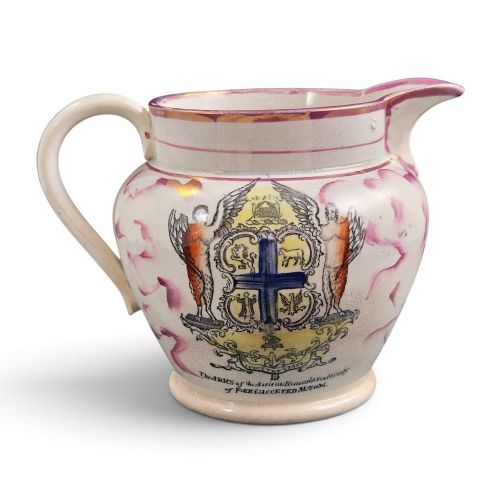
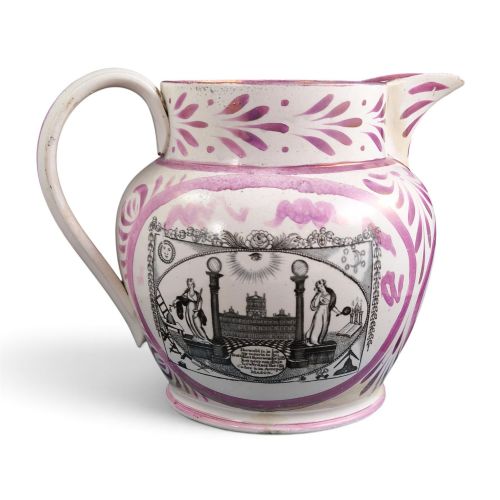
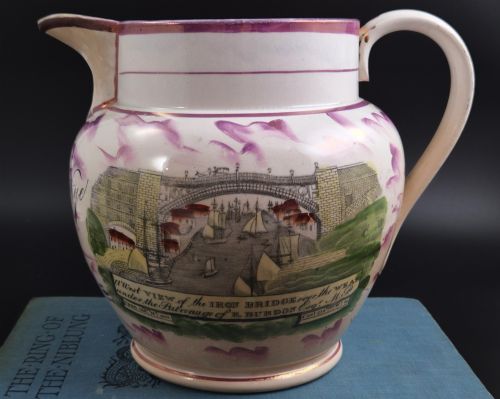
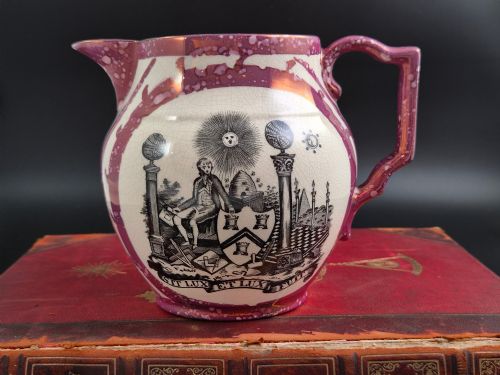
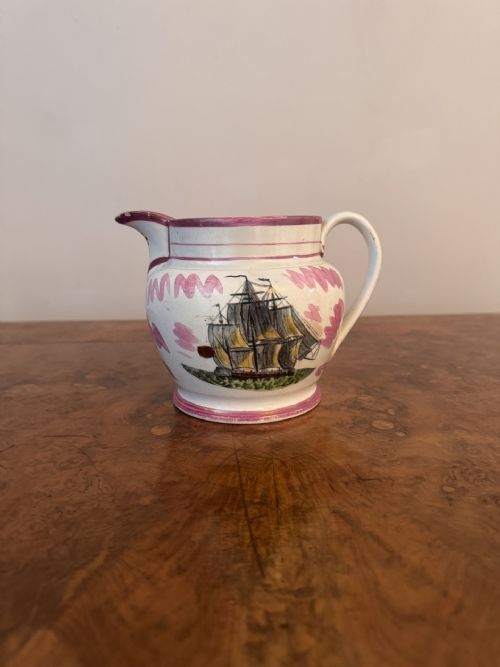
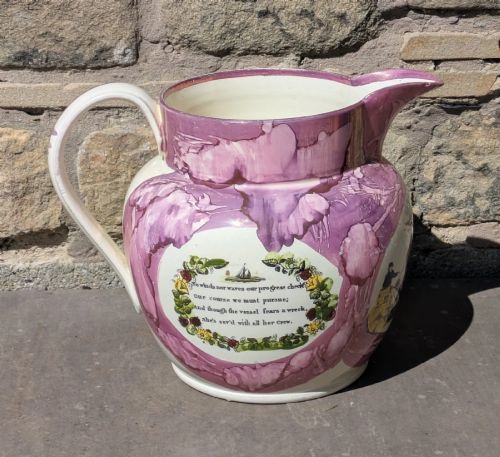
The version you are most likely to meet on this page is the pink lustre jug, frequently decorated with transfer prints depicting tall ships, masonic symbols, or sentimental verses. These items range in date from around 1800 through to the 1860s, capturing the robust folk art aesthetic of the nineteenth century.
Makers often drew upon local landmarks, such as the famous Iron Bridge over the Wear, alongside popular poetic panels and boxing scenes. Their forms vary from modest pouring vessels to large display jugs intended for prominent placement in a room rather than everyday service.
Materials and methods
Potters shaped these vessels from earthenware and pearlware bodies, building a porous foundation that accepted glazes and pigments readily. Artisans applied transfer printing to transfer detailed maritime and Masonic imagery onto the ceramic surface with precision.
The distinctive appearance relies heavily on metallic lustre glazes, which create an iridescent pink or splash effect when fired. Enamel colours were often painted by hand over the transfer prints to add vibrancy to the flags, hulls, and floral borders.
Sailors occasionally toasted absent friends using jugs adorned with verses dedicated to dear Jack.
Assessing quality
The distinction between a standard example and a finer piece rests on the clarity of the transfer print and the richness of the pink lustre application. Crisp details in the depiction of clipper ships or masonic emblems elevate a vessel above simpler, heavily blurred counterparts.
Hand-painted enamel highlights that remain bright and carefully aligned within the printed outlines indicate greater skill in the decorating shop. Additionally, larger formats carrying named and dated inscriptions or complex triple-print layouts command closer attention from collectors.
Garrison Pottery
The Antique Sunderland Ceramic Jug Glossary
- Pink lustre
- A metallic glaze technique that produces a mottled or splash effect with a rosy, iridescent sheen when fired in the kiln. This finish defines the visual appeal of many northern earthenware pieces from the nineteenth century.
- Pearlware
- A refined earthenware body developed in the late eighteenth century featuring a subtle bluish tint in the glaze to mimic Chinese porcelain. It forms the smooth canvas for many early maritime vessels.
- Transfer printing
- A method of applying pre-printed paper designs from an engraved copper plate onto the ceramic surface before glazing and firing. This allowed potteries to reproduce detailed ships and poetic panels consistently.
- Earthenware
- A porous pottery body fired at relatively low temperatures, requiring an opaque or transparent glaze to ensure it holds liquids. It serves as the primary material for regional English folk pottery.
- Metallic oxide
- Compounds used by potters to impart colour and lustre effects to the glaze during the firing process. These minerals react inside the kiln to produce the characteristic sheen found on nineteenth-century jugs.
Antique Sunderland Ceramic Jug: Frequently Asked Questions
What is a sunderland lustre jug?
A sunderland lustre jug is a ceramic vessel produced in the North East of England, known for its distinctive pink metallic glaze and transfer-printed decoration.
These pieces typically date from the nineteenth century and often feature maritime themes, tall ships, or masonic symbols.
How were these jugs used?
While technically shaped as pouring pitchers, many of the larger examples served decorative and commemorative roles in homes and meeting halls.
Their transfer-printed poetry and fraternal symbols made them popular display items that celebrated local trades and seafaring life.
How do I date an antique jug?
Dating relies on stylistic clues, ceramic bodies such as early pearlware versus later earthenware, and specific historical references on the prints.
Inscribed dates, names of ships, and specific historical events like the construction of the Iron Bridge provide reliable benchmarks for determining the period.
What causes the pink splash effect?
The pink splash effect is created by floating metallic oxides on the surface of the glaze during the firing process in the kiln.
As the compounds react to the heat, they separate into the characteristic mottled patterns that collectors associate with northern lustreware.