
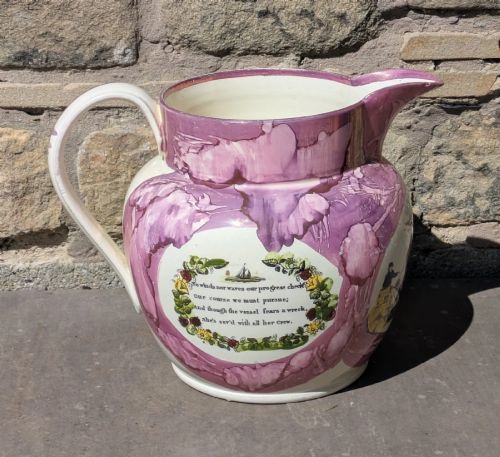


19th Century Sunderland Jug
A 19th century sunderland jug brings tactile maritime history to your room through bold pink lustre and transfer-printed scenes.
19th Century Sunderland Jug
When you search for a 19th century sunderland jug, you are looking at earthenware pitchers originating from the potteries along the River Wear in North East England. These pieces span the Georgian and Victorian eras, carrying the social and maritime history of a bustling port through transfer-printed imagery and verse.
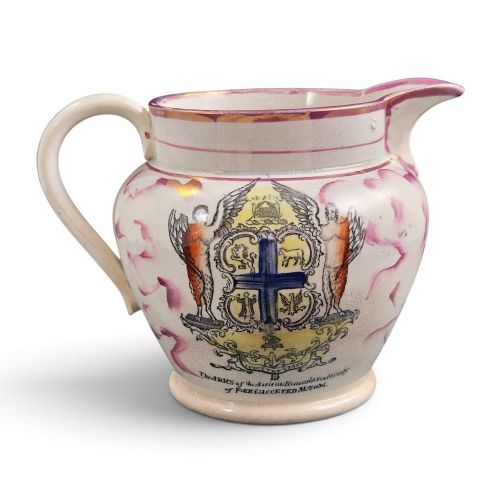
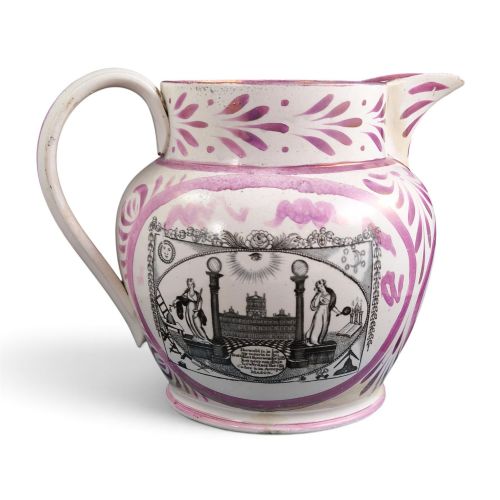
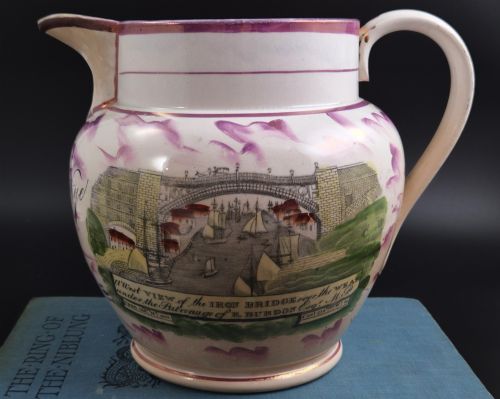
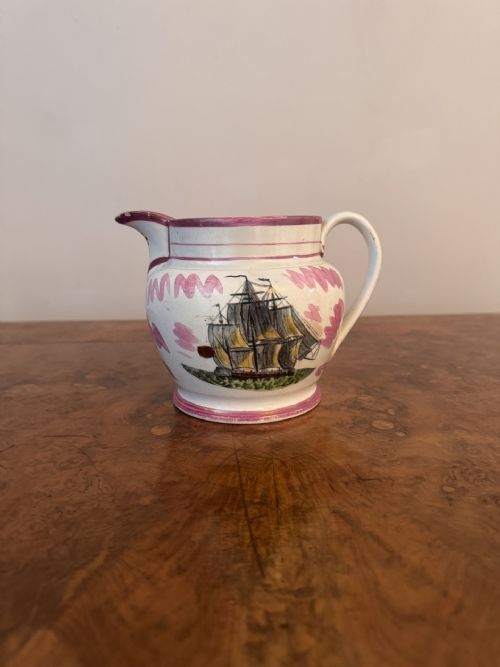
You are most likely to meet examples featuring pink lustre or splash lustre finishes, often decorated with depictions of the Iron Bridge over the Wear, tall ships, or Masonic symbols. They vary in scale from small commemorative vessels to large display jugs designed to hold pride of place on a dresser or mantelpiece.
How they were made
Potters shaped these vessels in earthenware and pearlware before applying copper-based metallic oxides to create the distinctive pink lustre and splash glaze effects. These metallic glazes react during firing to produce the characteristic shimmering purple-pink surface sheen.
Makers applied the decorative motifs using transfer printing, pulling inked engravings onto the ceramic body before hand-colouring details with enamel paints. This combination of mechanical print and hand-brushwork allowed potteries to produce detailed maritime scenes, poetic panels, and portraits efficiently.
Sailors evidently needed substantial poetic encouragement, judging by the frequent appearance of verses dedicated to Jack on these sturdy vessels.
What varies in quality
The distinction between ordinary and exceptional work rests on the clarity of the transfer print and the richness of the lustre application. Stronger pieces display deep, even metallic iridescence without dull patches, alongside sharply defined engravings of ships or bridges.
Artisanal care shows in the precision of the hand-applied enamel colours that fill out the printed outlines. Well-composed panels with named inscriptions or specific dates elevate a piece beyond standard decorative production into clear collector territory.
Sunderland Garrison Pottery
The 19th Century Sunderland Jug Glossary
- Pink lustre
- A metallic glaze technique utilising gold or copper to create a shimmering pink or purple surface effect. It defines the visual identity of most Wearside pottery.
- Pearlware
- A refined earthenware body with a faint bluish tinge in the glaze, developed by Staffordshire potters and widely adopted in the early nineteenth century.
- Transfer printing
- A method of decorating ceramics by pulling an inked engraving from a copper plate onto tissue paper and pressing it onto the fired clay body.
- Splash lustre
- A mottled or marbled metallic glaze finish created by flicking oil or water onto the surface before firing, common on nineteenth-century jugs.
- Earthenware
- Porous ceramic pottery fired at lower temperatures than stoneware or porcelain, serving as the standard structural body for these Wearside vessels.
19th Century Sunderland Jug: Frequently Asked Questions
What themes appear on these jugs?
Maritime subjects dominate these vessels, featuring clipper ships, tall ships, and scenes of the Iron Bridge over the Wear. You also find Masonic emblems, boxing subjects, and moral or poetic panels.
Potteries frequently personalized them with named inscriptions and specific dates, often commemorating sailors or local events.
How do I date a Sunderland jug?
Stylistic shifts help narrow the date, moving from early pearlware bodies around eighteen hundred toward heavier Victorian earthenwares by the middle of the century. Specific datable structures like the Iron Bridge provide a baseline, as it opened in seventeen ninety-six.
Inscribed dates left by the original makers offer the most precise chronological anchor for individual pieces.
Were these jugs used for serving?
Many larger examples served functional roles in taverns and homes for pouring ale or punch during social gatherings. Their robust earthenware construction handled daily use before transitioning into purely decorative display objects.
Smaller commemorative pieces likely served a decorative or ceremonial function from the start, given their intricate printed themes.
How should I display a lustre jug?
Place them where ambient light can catch the metallic pink glaze, as the lustre surface shifts and shimmers depending on the angle of illumination. Ensure stable placement on a sturdy shelf or mantelpiece away from high-traffic edges.
Keep them out of direct, prolonged sunlight to protect the stability of the hand-applied enamel colours over time.