




Antique Sugar Tongs
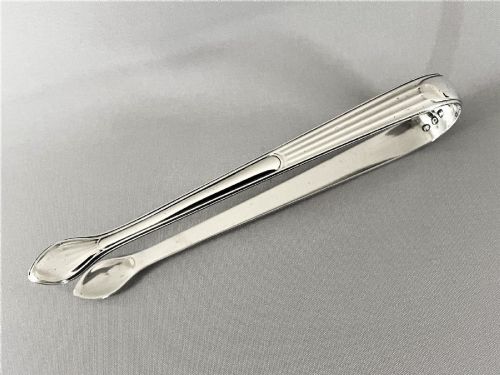
Antique sugar tongs span delicate Georgian bright-cut scissor nips to bold Art Deco designs, offering functional elegance for afternoon tea.
Antique Sugar Tongs
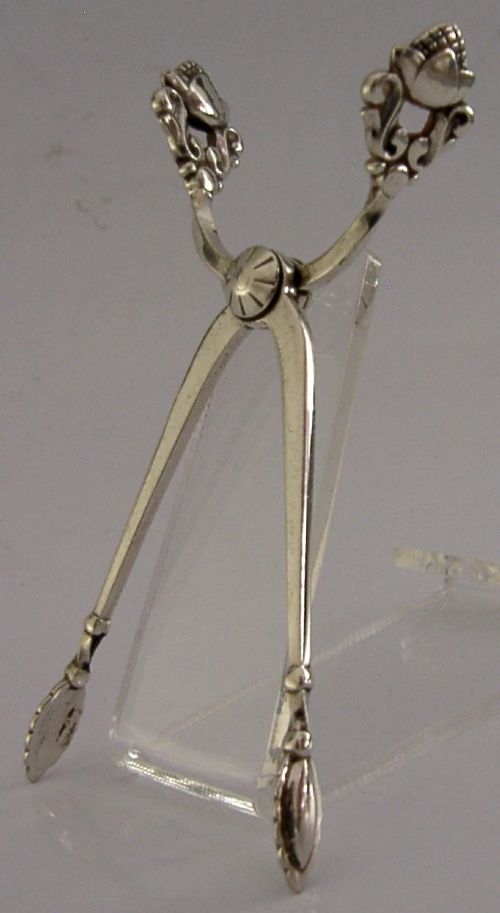
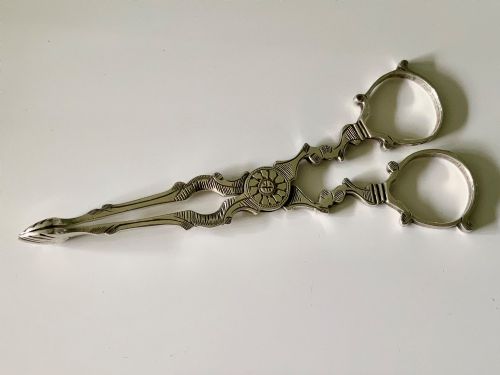
When browsing antique sugar tongs, buyers encounter a variety of forms, from early scissor-action nips to spring-action bows used for serving sugar lumps. The pieces on this page originate from periods spanning the mid-eighteenth century through the Art Deco era of the twentieth century.
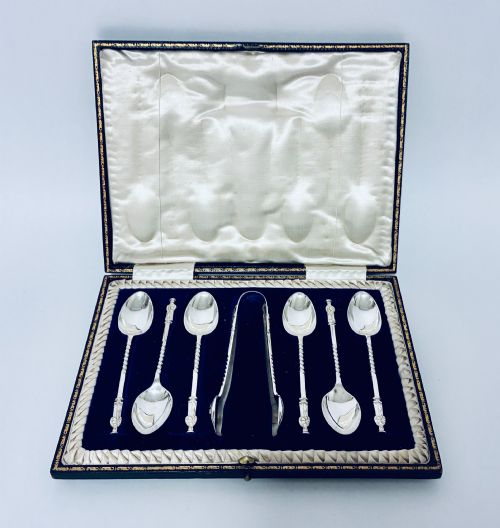
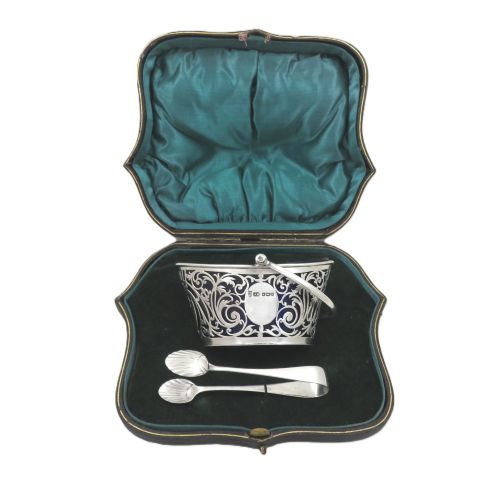
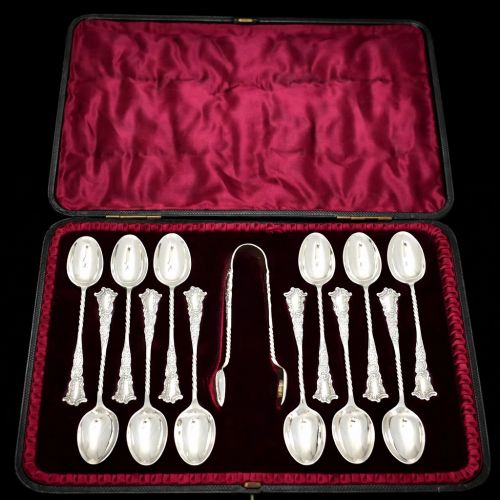
Common regional variations include English provincial and Scottish provincial pieces, alongside notable Scandinavian and Danish modern silver designs. Many survive as part of larger tea service sets paired with teaspoons or within fitted presentation cases lined in velvet and silk.
Distinctions in Quality
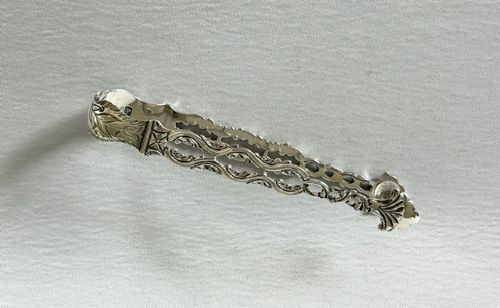
Quality in these items rests upon crispness of manufacture, particularly in the definition of cast or hand-engraved details such as foliate designs and family crests. Maker attribution also plays a role, with documented silversmiths commanding greater interest among collectors.
The resilience of the spring bow or the smoothness of the pivot mechanism indicates the level of original craftsmanship. Weight and gauge of the silver further differentiate standard utility pieces from exhibition-grade tableware.
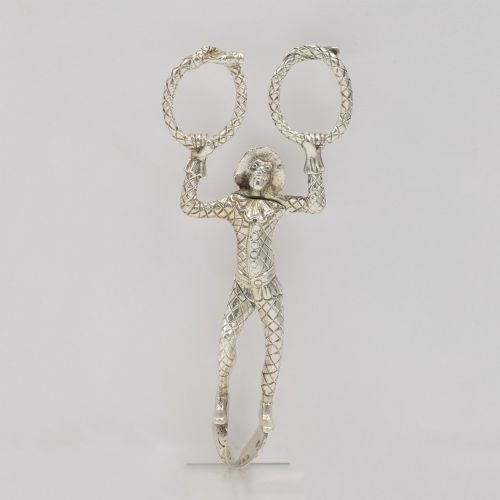
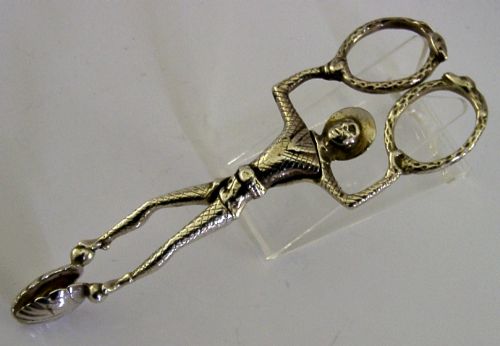
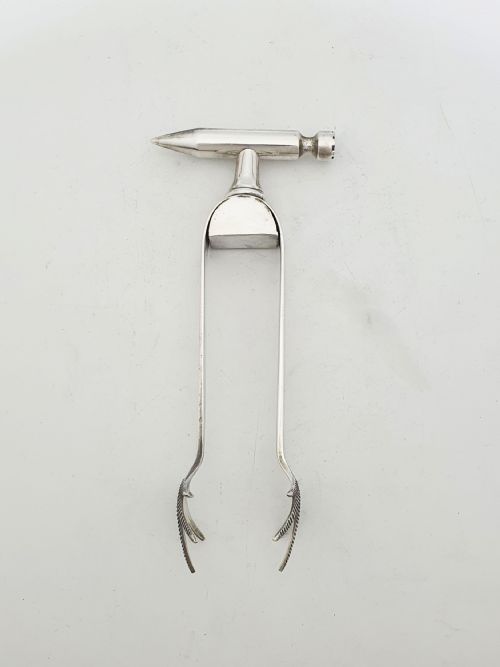
Some Victorian silver pairs are shaped like tiny bird claws or articulated monkeys to snatch your sugar.
Bateman Family·Georg Jensen·Francis Higgins·William Eley and William Fearn·Thomas Tookey
The Antique Sugar Tongs Glossary
- Sugar Nips
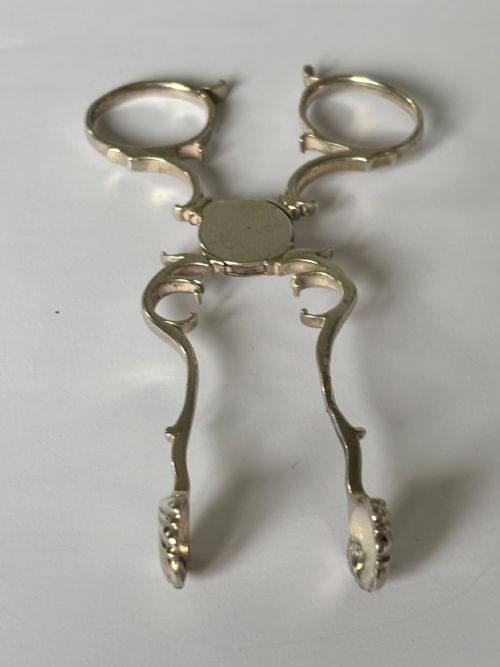
- Early scissor-style implements with circular finger rings used for cutting and lifting sugar loaf pieces. They evolved into the sprung bow tongs common by the late Georgian period.
- Bright-Cut Engraving
- A surface decoration technique utilising faceted angled cuts to create sparkling geometric or floral patterns. It is frequently seen on eighteenth-century silver work.
- Silver-Gilt
- Sterling silver that has been coated with a thin layer of gold on the surface, sometimes referred to as vermeil. This treatment protects the silver and offers a rich dual-tone appearance.
Antique Sugar Tongs: Frequently Asked Questions
How do I date older sugar tongs?
Dating relies heavily upon hallmarks stamped directly onto the metal, which record the assay office, date letter, and maker's mark.
stylistic shifts, such as the transition from scissor nips to sprung bows around the late eighteenth century, also provide reliable chronological clues.
Were these always used for sugar?
While primarily designed for handling sugar lumps during tea service, many smaller varieties served multiple purposes on the dining table.
variations like ice tongs and barware implements appeared later for handling ice or garnishes in domestic settings.
What is a novelty pair?
Novelty examples depart from standard functional bows to mimic natural or whimsical forms, such as bird claws, wishbones, or articulated monkeys.
these imaginative pieces were popular during the Victorian and Edwardian periods as conversation starters.
How should I clean silver tongs?
Standard maintenance involves gentle washing with warm soapy water and drying with a soft cloth to preserve the natural patina.
aggressive chemical dips or abrasive polishes should be avoided, particularly on antique pieces with delicate engraving or gilt surfaces.