
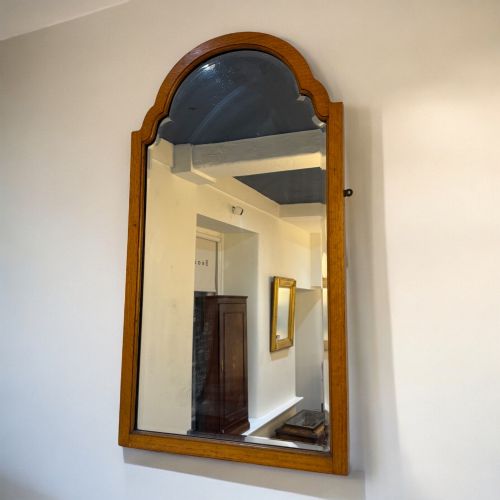
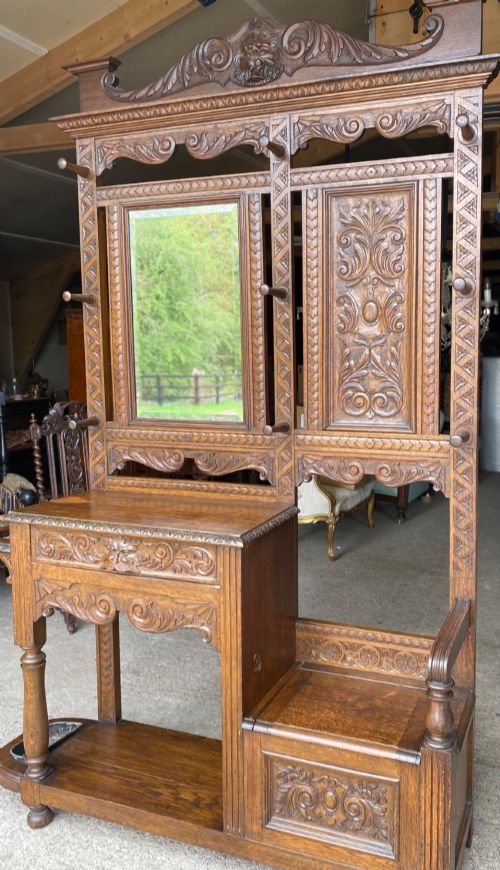

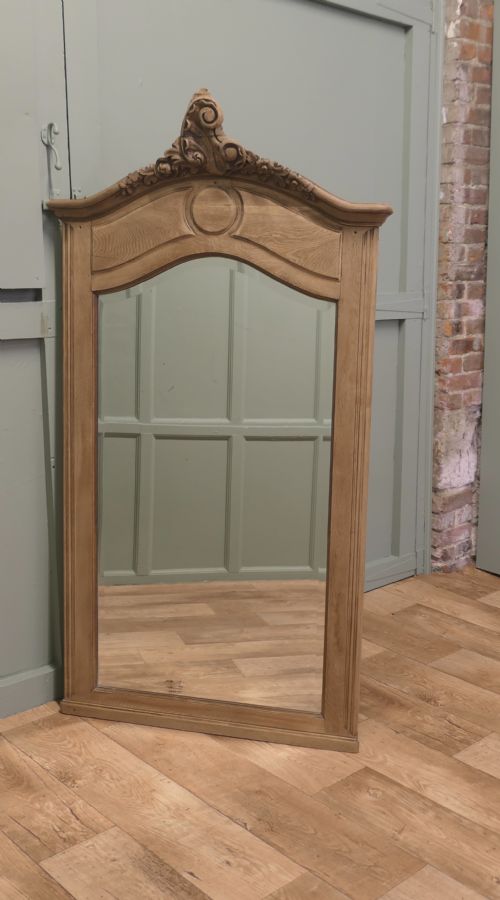
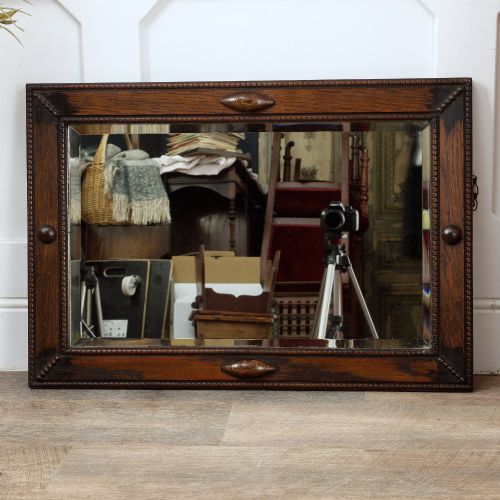



Antique Style Oak Mirror
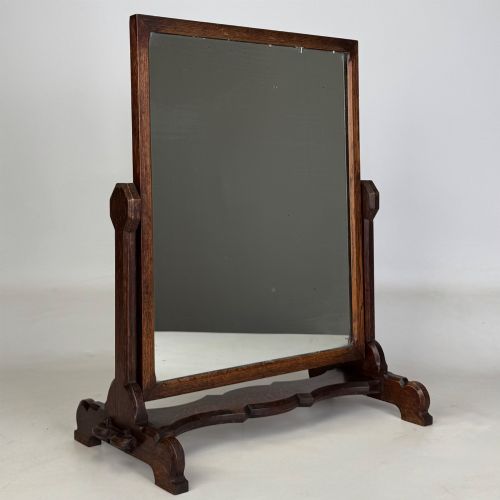
An antique style oak mirror brings warmth and solid timber grain to a room, drawing on Victorian, Edwardian, and Arts and Crafts designs.
Antique Style Oak Mirror
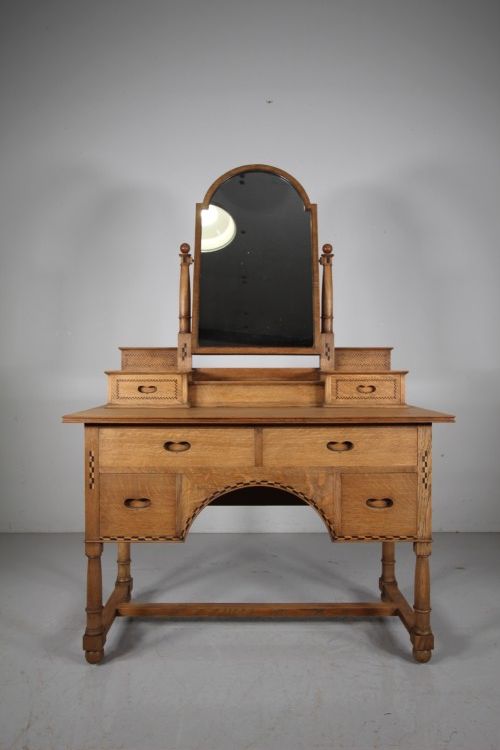
When you search for an antique style oak mirror, you encounter pieces designed for walls, overmantels, dressing tables, and hallways. These items span the nineteenth century through the early twentieth century, reflecting periods such as Victorian, Edwardian, and the Arts and Crafts movement.
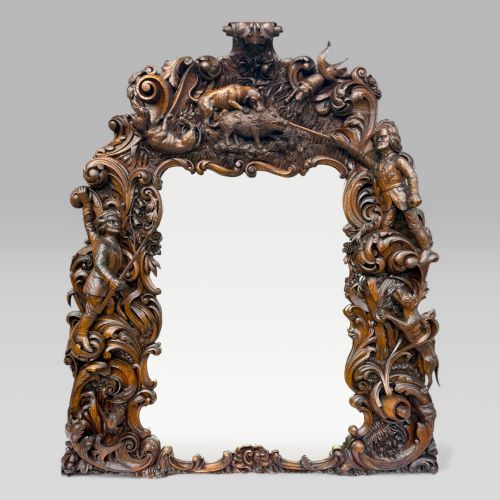
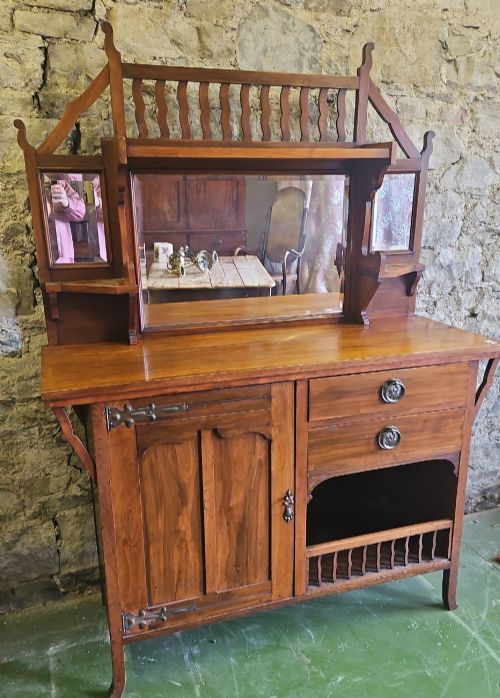
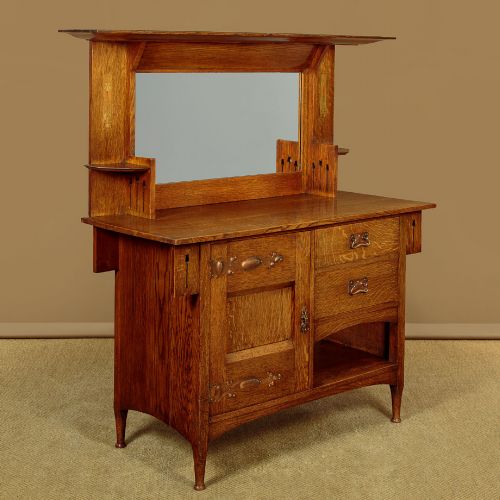
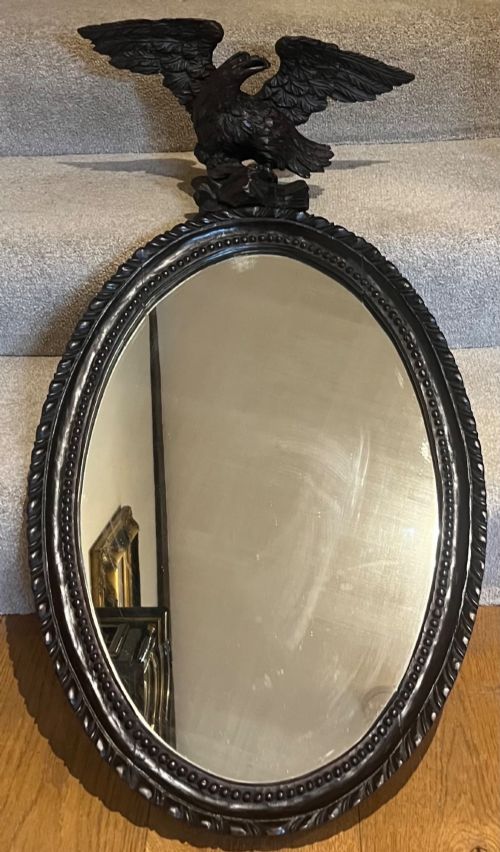
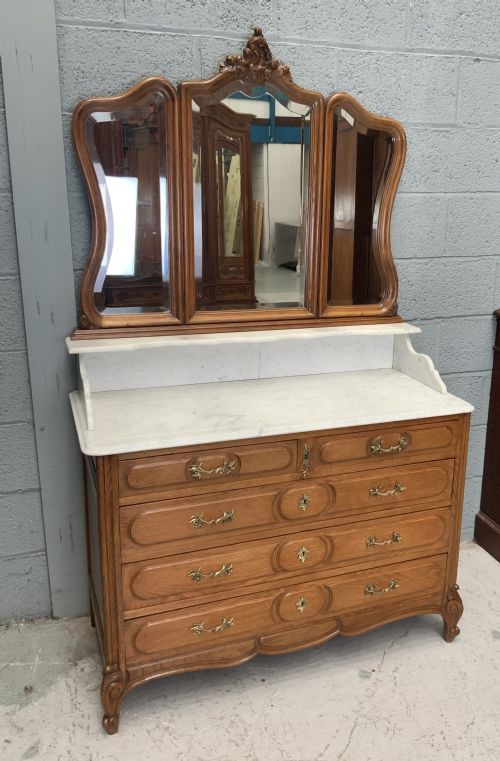
The selection on this page centres heavily on wall mirrors and overmantels framed in solid oak, alongside dressing mirrors associated with period furniture like sideboards and washstands. Many items display regional and stylistic influences, ranging from French provincial and Gothic revival to carved hunting lodge designs.
Buyers meet both vernacular pieces and workshop-produced items bearing stylistic hallmarks of makers such as Liberty and Heals. The primary function remains domestic utility, paired with decorative carving, fret cutting, or metal accents.
Materials and Construction Techniques
Makers utilised solid oak, often complemented by bleached oak, scrubbed oak, or pollard oak to achieve distinct surface tones and grain patterns. Frames were constructed using traditional joinery, housing mirror glass that ranges from plain plates to bevel-edged panels.
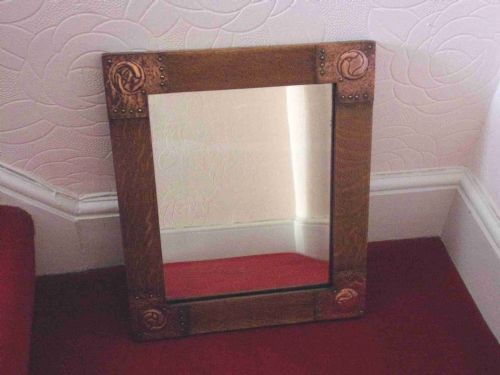
Decoration relied on hand carving, fret cutting, and applied mouldings, occasionally incorporating gesso for Rococo Revival forms. Metalwork details in copper, brass, and iron appear across Arts and Crafts and Gothic Revival examples, fixed with original pins or rivets.
Listings feature oak mirrors spanning the 1860s to the 1930s, encompassing Victorian, Edwardian, Arts and Crafts, and Gothic Revival styles.
Defining Quality in Oak Mirrors
Quality rests in the crispness of the hand carving and the integrity of the timber frame, where tighter grain and well-executed joinery separate standard production from superior workshop output. The depth of the moulding, particularly on cushion frames and overmantels, dictates the visual weight of the piece.
Originality of components matters greatly, distinguishing items retaining their original mirror glass, backing boards, and metal fittings from those with later replacements. Labelled pieces or those bearing distinct stylistic attribution to notable makers command greater interest among collectors.
Liberty and Co·Heals·George Walton
The Antique Style Oak Mirror Glossary
- Cushion frame
- A broad, rounded frame profile popular in seventeenth-century revival pieces that swells outwards towards the edge. This style creates a strong three-dimensional effect around the mirror glass.
- Arts and Crafts
- A design movement prioritising traditional craftsmanship, visible construction, and simple forms over mass production. Pieces often feature naturalistic carved motifs or hand-beaten metalwork.
- Overmantel mirror
- A large mirror designed to sit directly upon a mantelpiece above a fireplace. These frequently incorporate architectural framing or carved crests.
- Fret cut
- A technique where timber is pierced and shaped with a fretsaw to create openwork decorative patterns. It appears frequently on lighter wall mirrors from the Edwardian period.
- Bevel edge
- A mirror glass edge ground and polished at an angled slope to catch the light. This finish indicates finer manufacture in nineteenth and twentieth-century looking glasses.
Antique Style Oak Mirror: Frequently Asked Questions
How do I date an oak mirror?
Dating relies on examining the construction methods of the wooden frame, the backing boards, and the type of mirror glass used. Earlier nineteenth-century examples often feature hand-cut joints and heavier carved decoration, whereas Edwardian pieces lean towards simpler fret-cut or Arts and Crafts designs.
Hardware provides another clue, as hand-forged iron or copper fastenings differ from later mass-produced screws. Stylistic markers such as Gothic Revival arches or Rococo scrollwork also anchor pieces to specific decades.
Where should I hang an overmantel mirror?
An overmantel mirror is traditionally positioned directly above a fireplace mantel to reflect light and anchor the room's proportions. Because these pieces are often heavy, they require secure fixings attached directly to wall studs or masonry.
Outside of the fireplace, they function effectively above large sideboards or low console tables in dining spaces and hallways. Their scale commands attention, making them suitable as the primary focal point of a room.
What is bleached oak?
Bleached oak is timber that has been treated to lighten its natural golden-brown colour, producing a softer, pale finish. This treatment appears frequently on French provincial furniture and mid-century revival pieces listed on this page.
The process highlights the natural grain of the wood while removing the darker warmth associated with Victorian and Edwardian brown oak. It suits interiors that favour lighter, neutral wood tones.
Are these mirrors suitable for bathrooms?
Antique oak mirrors were originally built for dressing rooms, parlours, and hallways rather than humid bathroom environments. Exposing antique timber and older mirror silvering to consistent moisture can damage the wood joints and cause the glass backing to degrade.
If placed in a bathroom, adequate ventilation and distance from water sources are essential to preserve the original materials. Many buyers prefer to keep them in dry reception rooms where the finish remains protected.