
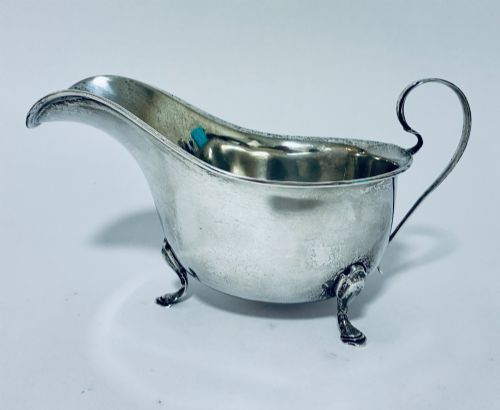
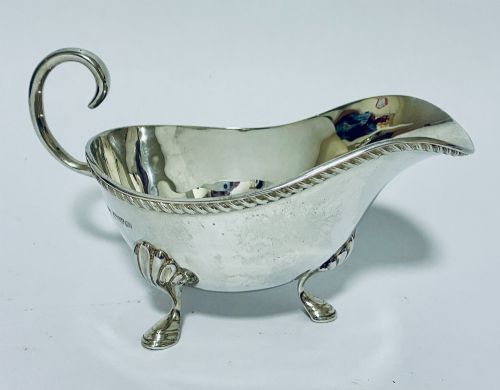


Antique Style Gravy Boat
An antique style gravy boat brings traditional form to the dining table, offering solid silver and porcelain serveware for proper sauce presentation.

Antique Style Gravy Boat
An antique style gravy boat is a piece of serveware designed for table service, often appearing as a sauce boat, sauceboat, or jug. When searching for an antique style gravy boat, buyers encounter forms ranging from simple ceramic vessels to formal silver sauce boats reflecting earlier periods.
The pieces on this page span several eras from the nineteenth and twentieth centuries, including Victorian, Edwardian, and later twentieth century examples. Many items draw upon historical aesthetics, showcasing Georgian style, Regency influence, Rococo curves, or Celtic Revival decoration.
Makers and manufacturers utilised various materials for these table vessels, producing items in sterling silver, silver plate, porcelain, ironstone, and ceramic. Forms include single vessels and matched pairs, often accompanied by matching underplates or designed as sauce tureens.
Materials and construction methods
Silver vessels utilise solid sterling silver or silver plate, shaped through traditional metalworking techniques such as casting and smithing, with towns like Birmingham and Sheffield contributing distinct marks. Many pieces feature applied handles, scrolled feet, and decorative borders executed in historical revivals.
Ceramic and porcelain examples employ fired clay bodies, including ironstone and fine porcelain, decorated with hand-painted patterns or transfer prints. Notable decorative traditions include Imari palettes, Kakiemon style motifs with quail patterns, and moulded relief work.
Listings feature both ceramic and silver vessels, spanning the Victorian and Edwardian eras alongside mid-twentieth-century pieces.
Factors that distinguish quality
Quality in silver gravy boats rests on the thickness of the metal, the crispness of chased or embossed decoration, and the integrity of hallmarks. Substantial gauge silver and well-balanced handles indicate superior workshop standards.
In porcelain and ironstone pieces, fineness of the ceramic body, clarity of glaze, and precision of hand-painted enamels separate standard utility wares from finer cabinet pieces. The complexity of moulded forms and the retention of original gilding further distinguish finer examples.
WALKER AND HALL·Mason's·Meissen·Derby
The Antique Style Gravy Boat Glossary
- Sterling silver
- A silver alloy containing 92.5 percent pure silver by mass, widely utilised for durable and high-status domestic tablewares. Hallmarks on the base indicate the assay office and maker.
- Kakiemon style
- A Japanese style of polychrome enamel decoration featuring asymmetrical designs and motifs such as birds and flowers. European potteries frequently copied these palettes during the eighteenth and nineteenth centuries.
- Silver plate
- A base metal coated with a thin layer of pure silver, offering the appearance of solid silver at a lower production cost. Sheffield plate and electroplated nickel silver are common varieties.
Antique Style Gravy Boat: Frequently Asked Questions
What is a gravy boat used for?
A gravy boat serves warm or cold sauces, gravies, and melted butter during formal or family meals. The spouted design allows smooth pouring directly onto the plate.
These vessels often rest on matching saucers or stands to catch drips and protect table linens during service.
How do I identify silver gravy boats?
Silver gravy boats usually bear stamped hallmarks indicating the standard of silver, the assay office city such as Birmingham or Sheffield, and the maker's mark. Solid sterling silver stamps differ from electroplated marks found on plated wares.
Weight and magnetic testing also help distinguish solid silver from plated base metals, though hallmarks remain the most reliable guide.
How do I care for antique silver?
Antique silver requires gentle cleaning with non-abrasive cloths and specialised silver polish to maintain its shine without removing surface detail or hallmarks. Regular washing in mild soapy water prevents tarnish buildup.
Storing silver in tarnish-resistant cloths or bags helps preserve the finish between uses on the dining table.