
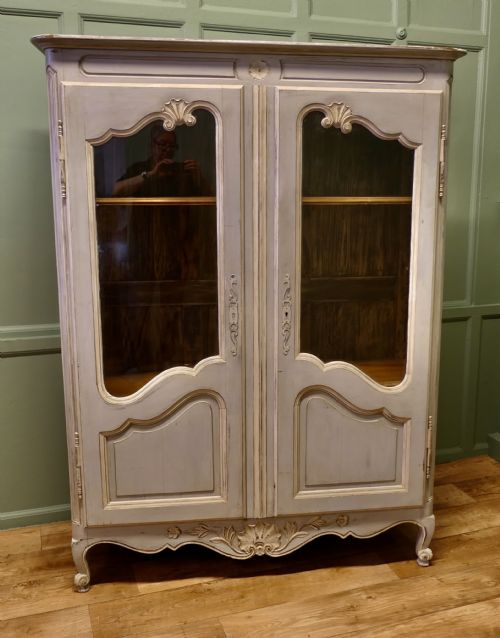
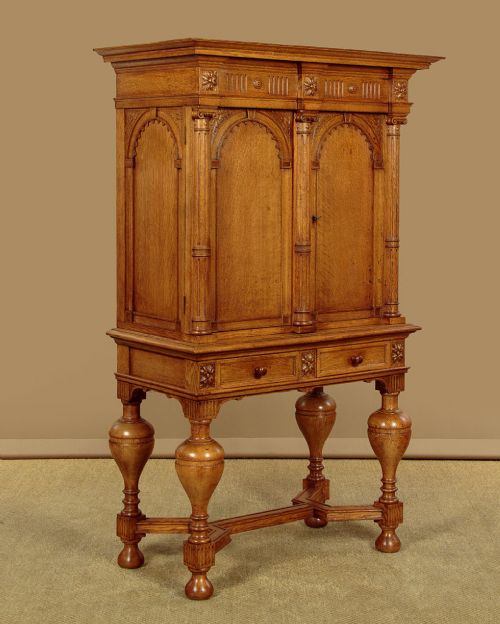
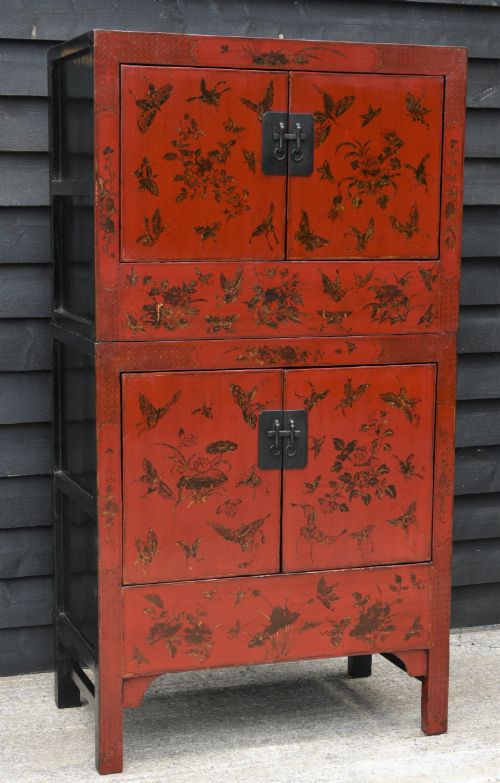
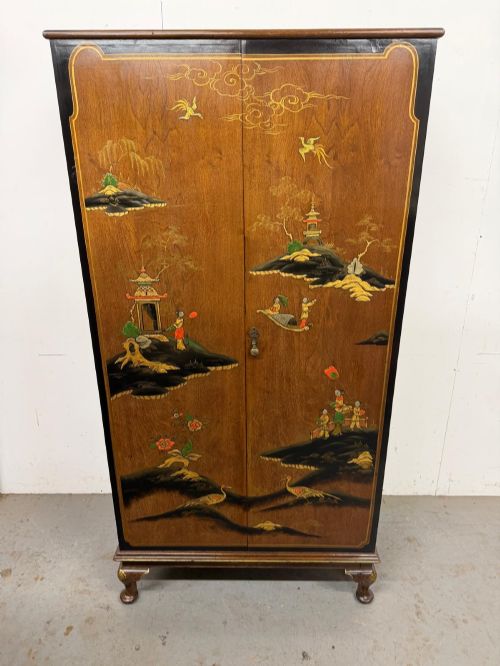

Antique Style Armoire
An antique style armoire brings grand proportions and substantial storage into a room, offering the unmistakable character of past centuries.
Antique Style Armoire
When you search for an antique style armoire, you encounter a diverse selection of large storage furniture designed for clothes and linens. These pieces span centuries of cabinet-making, incorporating wardrobes, linen presses, and tall cupboards.
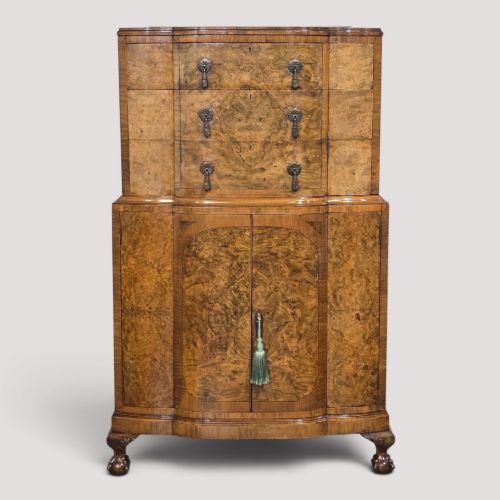
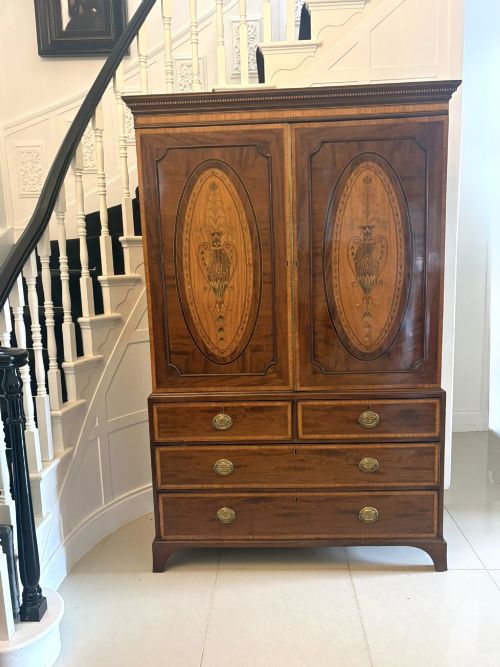
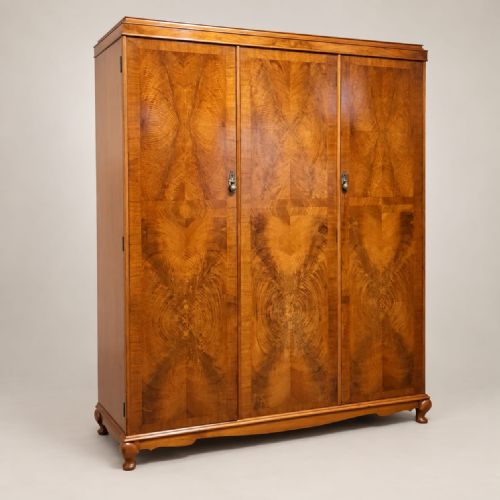
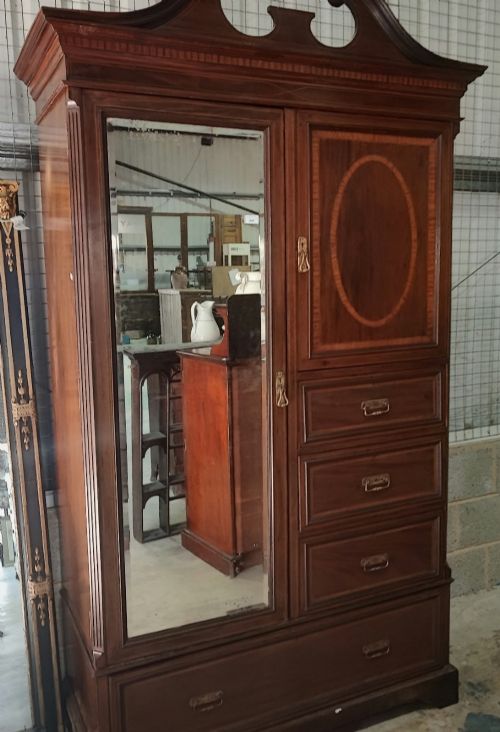
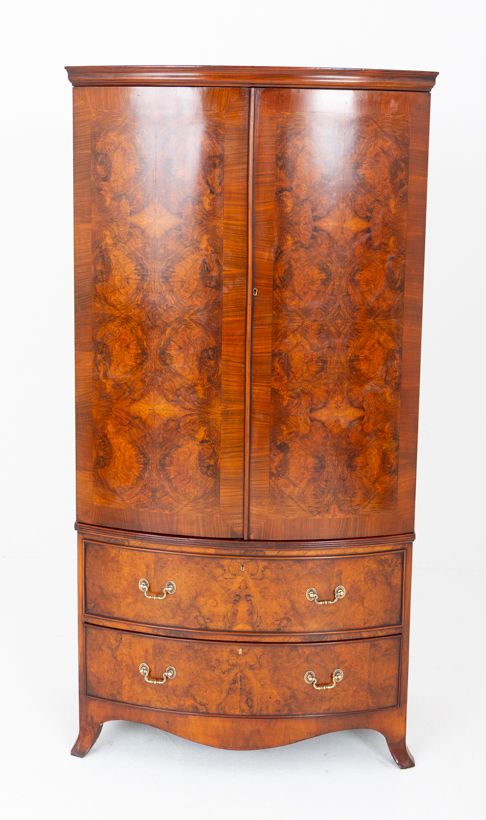
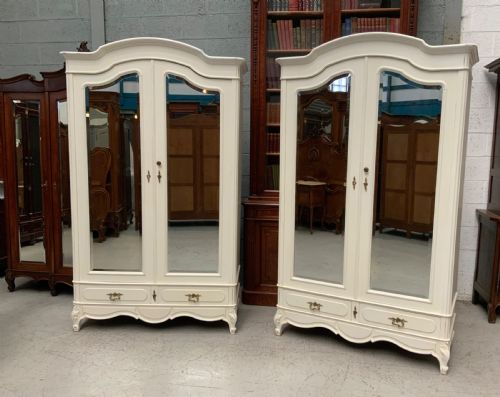
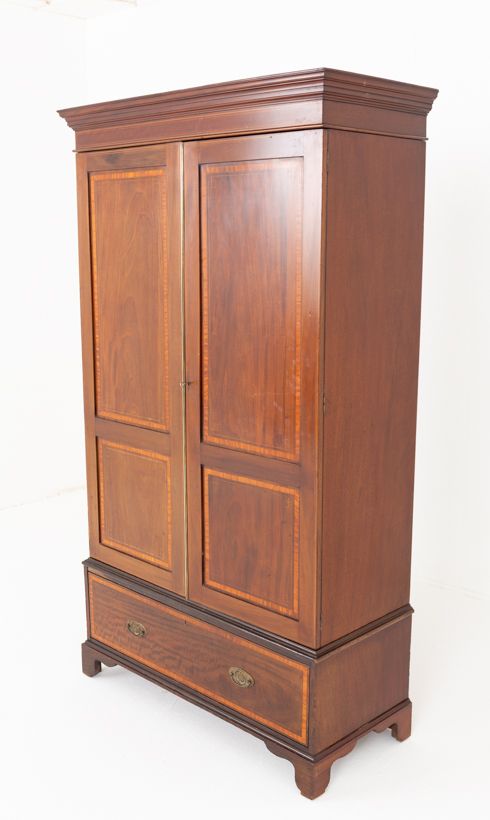
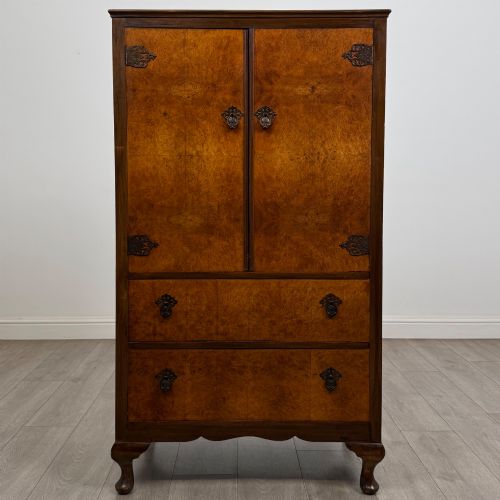
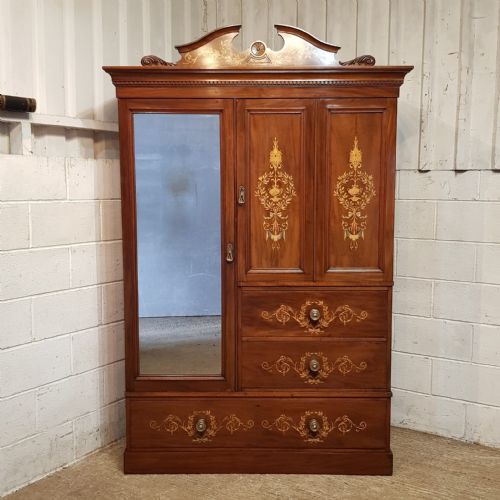
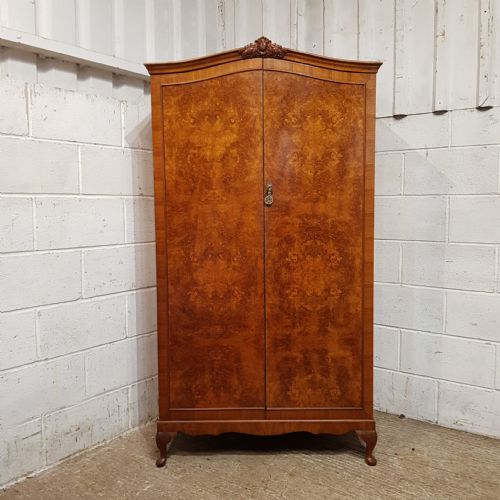
The versions most commonly met on this page include 19th-century French armoires, Edwardian inlaid mahogany pieces, and 1920s burr walnut designs. They bridge the gap between practical domestic storage and decorative statement furniture.
Makers and workshops across Europe and beyond utilised regional timbers and distinct period motifs to shape these large cabinets. From Georgian mahogany to Scandinavian painted pine, each piece reflects the prevailing taste of its origin.
How they were made
Cabinet-makers constructed these large carcasses using solid timbers such as mahogany, oak, pine, and walnut, often applying finely figured veneers to prominent surfaces. Brass hardware, glass panels, and intricate iron hinges completed the structural assembly.
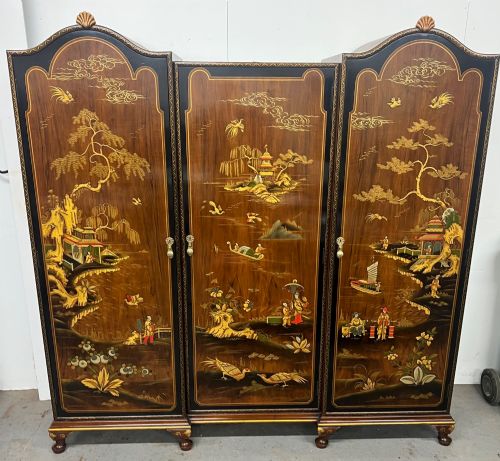
Decorative techniques varied widely, ranging from marquetry inlay and satinwood banding to hand-applied paint, lacquer, and intricate hand-carving. French pieces often displayed the curved lines of Louis styles, while English examples favoured classical proportions.
What varies in quality
The standard of a piece rests heavily on the selection of timber and the precision of the cabinet-making. Figured burr walnut and carefully matched mahogany veneers indicate a higher grade of craftsmanship than plain utility boards.
Attention to detail in the carving, inlay, and internal fittings separates standard regional items from pieces produced by notable makers. Original brass mounts, well-fitted doors, and intact internal sliding shelves or hanging spaces distinguish superior examples.
Edwards and Roberts·Maples and Co.·Druce and Co.·Heals of London
The Antique Style Armoire Glossary
- Armoire
- A large upright cupboard or wardrobe used originally for storing arms and later for clothes. These pieces typically feature double doors and generous internal depth.
- Linen Press
- A tall piece of furniture designed for storing bed linen and garments, usually combining sliding trays in the upper section with drawers below.
- Compactum
- A fitted wardrobe divided internally to provide specialised storage for different types of clothing, often including drawers, shelves, and hanging space.
- Marquetry
- The art of applying pieces of veneer to a structure to form decorative patterns and pictures. Craftsmen used contrasting timbers to achieve rich visual depth.
Antique Style Armoire: Frequently Asked Questions
What is an antique style armoire used for?
These large cabinets provide substantial hanging space, shelving, and drawer storage for modern bedrooms and dressing rooms. Their deep interiors accommodate bulky garments and folded household textiles with ease.
Beyond bedroom utility, they serve as striking focal points in large hallways or living spaces. Many owners utilise them for media storage or general household organisation while retaining period charm.
How do I tell different periods apart?
Identifying the period relies on observing timber choices, hardware, and stylistic ornament. Georgian and Regency pieces favour mahogany and straight lines, while Victorian examples often incorporate heavier mouldings and burr veneers.
Early pieces frequently display hand-cut joinery and pegged construction. Edwardian and 1920s cabinets often show revived classical styles alongside lighter timbers and satinwood banding.
How do I fit an armoire in a modern room?
Measuring both ceiling height and floor space is essential before introducing a large cabinet into a room. Many of these pieces are exceptionally heavy and tall, requiring careful placement away from direct heat sources.
Consider whether the piece dismantles into sections for transport and assembly. Several larger French and continental designs break down into panels and cornices to ease transit.
Are painted finishes original?
Painted finishes on older storage furniture vary significantly in origin and execution. Scandinavian, French, and Chinese pieces frequently feature traditional painted or lacquered surfaces that define their regional character.
Later decorative painting or surface refreshing also occurs on many pieces. Examining the wear patterns and underlying timber helps determine the history of the finish.