

Antique Storage Pedestal
An antique storage pedestal brings compact proportion and enclosed timber housing to any room.
Antique Storage Pedestal
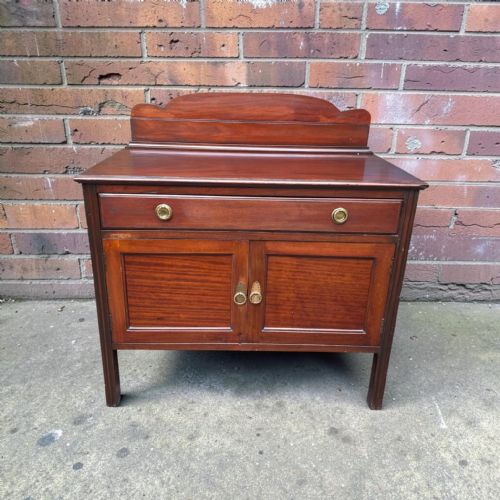
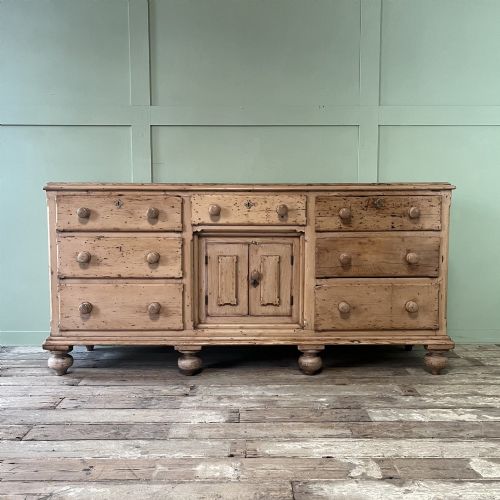
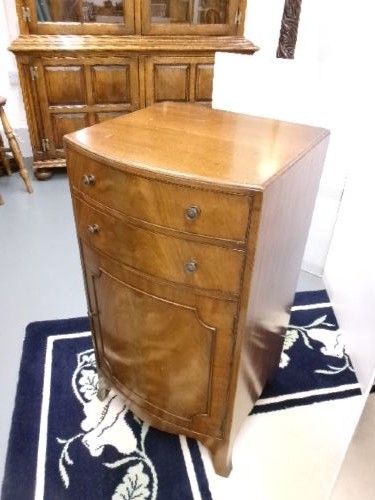
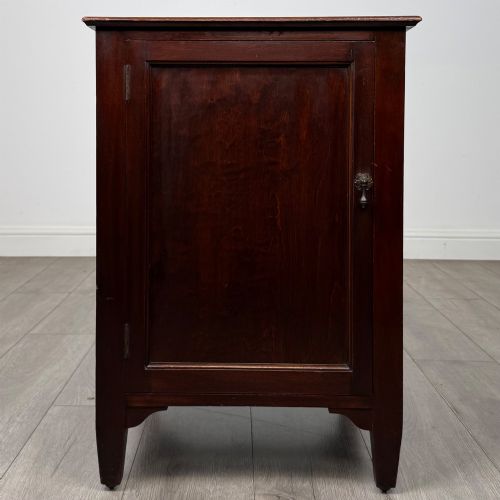
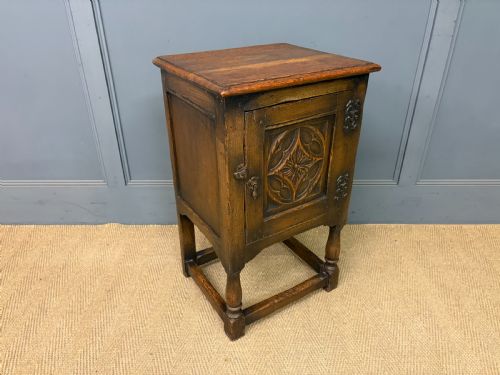
An antique storage pedestal serves as a vertical unit designed to hold items within a compact footprint. Buyers searching this phrase encounter enclosed cupboards, bedside cabinets, and small chests dating from the nineteenth and early twentieth centuries.
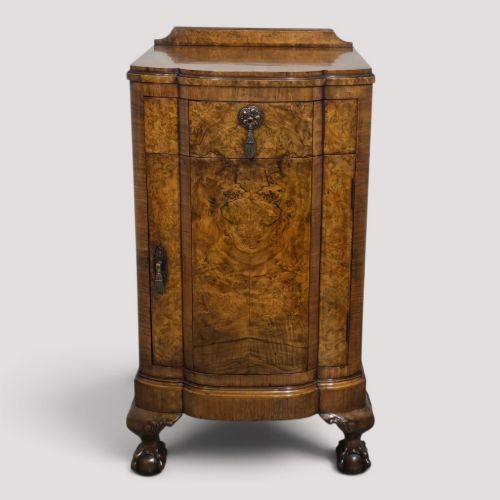
The selections available range from Georgian and Victorian mahogany pieces to Edwardian oak cupboards and Art Deco burr walnut designs. Most examples function as bedside storage or small cabinets built for domestic organisation.
How they were made
Cabinet makers relied primarily on solid timbers and veneers of mahogany, walnut, oak, and rosewood, often applying burr walnut for decorative grain patterns. Secondary construction materials include pine and satin birch for internal linings and drawer components.
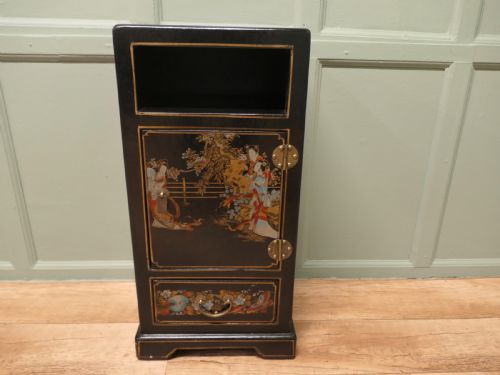
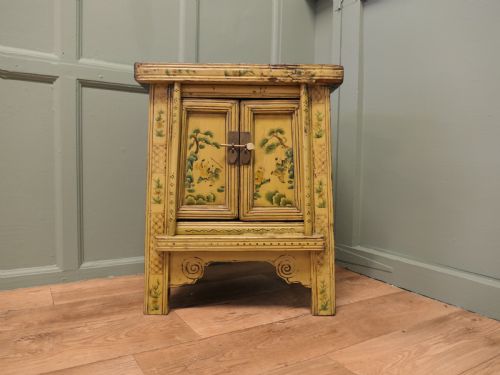
Hardware details incorporate cast brass handles and hinges alongside specialised mechanisms such as tambour fronts on filing cabinets. Surface decoration spans hand-carved elements, satinwood inlay, and painted Chinoiserie finishes.
What varies in quality
Construction standards depend heavily on the selection of timber veneers and the precision of the joinery used in the carcase and drawers. Matched pairs and pieces featuring intricate marquetry or specialised woods like burr walnut command greater attention from discerning collectors.
The integrity of the original hardware, such as brass pulls and working locks, influences the overall standing of an individual pedestal. Subtle details in hand-carving and the retention of an authentic surface patina distinguish finer examples from standard utility pieces.
Denby & Spinks
The Antique Storage Pedestal Glossary
- Pedestal cabinet
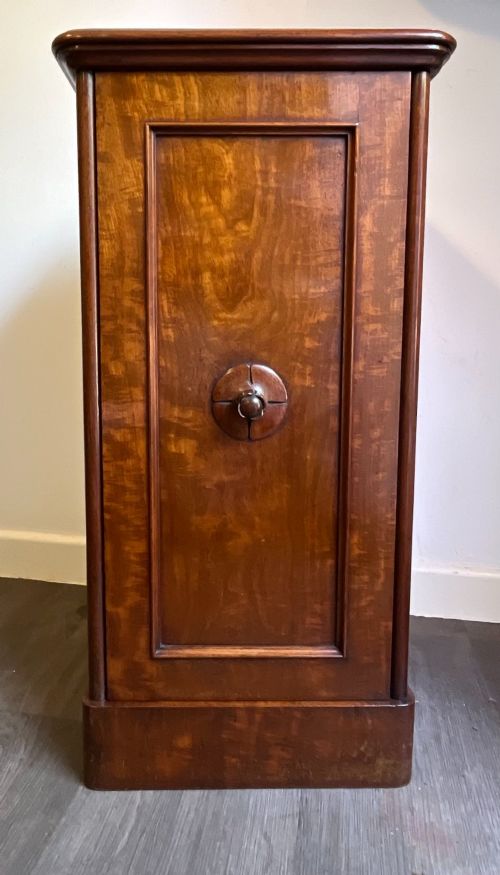
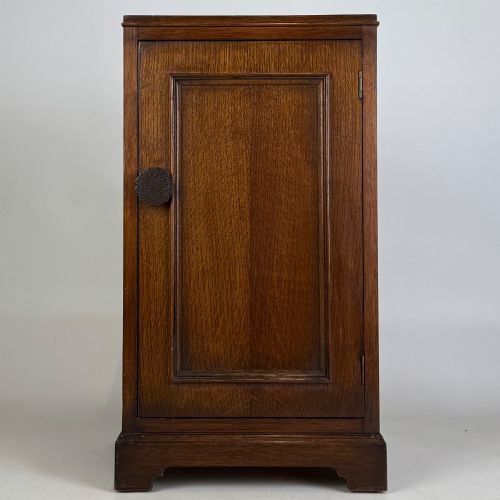
- A freestanding vertical storage unit, typically enclosed by a single door or fitted with small drawers. These pieces sit on plinths or short legs and serve bedside or secondary storage roles.
- Tambour front
- A series of narrow wooden slats glued to a canvas backing, allowing a cabinet door to slide smoothly around a curved track. This mechanism appears frequently on early twentieth-century filing furniture.
- Teapoy
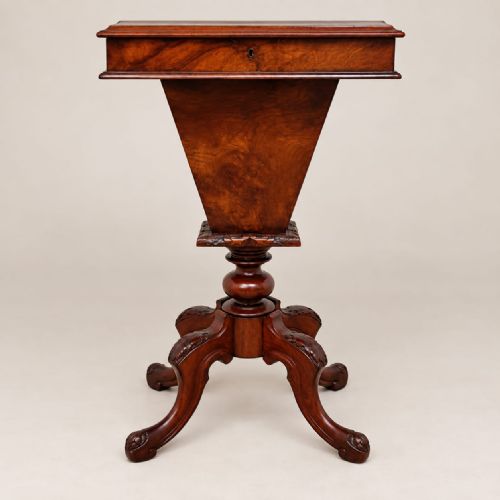
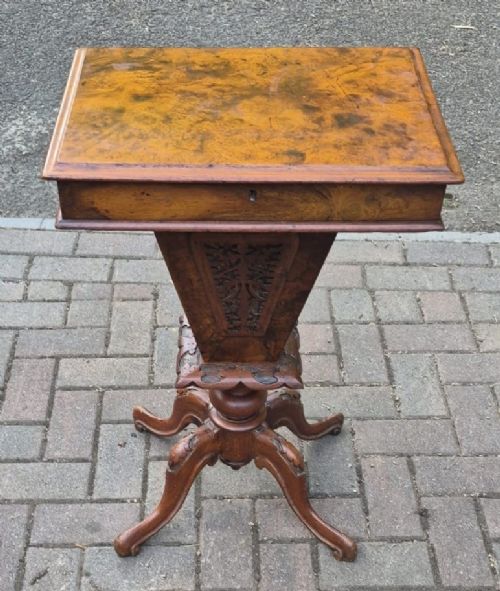
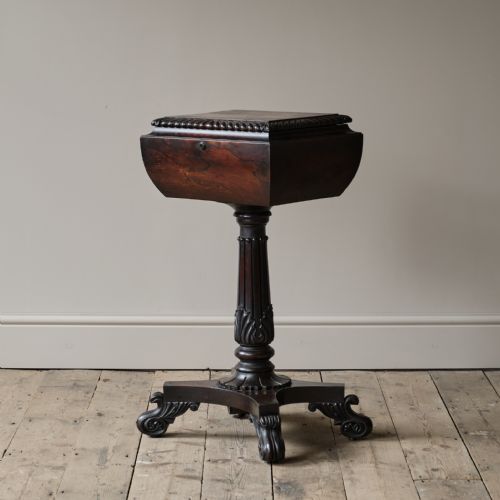
- A small box or chest mounted on a central pillar and pedestal base, originally designed to store loose tea leaves. Many examples contain internal compartments and mixing bowls.
- Chinoiserie
- European decorative style employing imitation Chinese motifs, often featuring hand-painted figures and landscapes on a lacquered ground. This finish appears on specialised nineteenth and twentieth-century cabinets.
- Flame mahogany
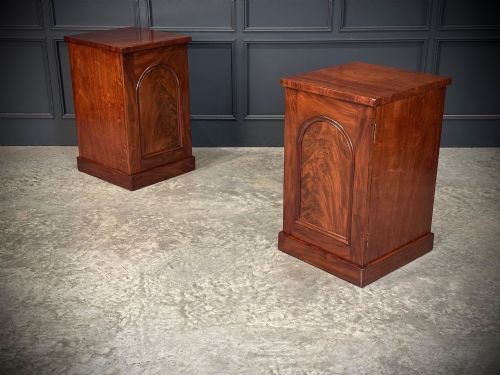
- Timber cut at an angle to the growth rings to produce a distinctive flickering flame pattern. Cabinet makers utilised this veneer on prominent door fronts and top surfaces.
Antique Storage Pedestal: Frequently Asked Questions
What is an antique storage pedestal used for?
These vertical cabinets provide enclosed storage for small items within domestic spaces. Historically, they served beside beds or in reception rooms to hold personal effects.
Today, buyers utilise them as bedside tables, small side cabinets, or compact filing units in modern studies.
How do I date an antique pedestal?
Dating relies on identifying timber choices, construction techniques, and stylistic periods such as Regency, Victorian, or Edwardian. Mahogany and rosewood dominate earlier pieces, while oak and burr walnut span the later nineteenth and early twentieth centuries.
Hardware styles and secondary woods like pine also offer clear chronological indicators for each cabinet.
Are pedestal cabinets found in matching pairs?
Makers occasionally produced matched pairs of bedside cabinets or pedestal cupboards for symmetrical placement in bedrooms. These matched sets feature identical timber graining, dimensions, and hardware.
Single pedestals remain far more common in the surviving record than dual configurations.
What woods were used for these cabinets?
Mahogany, oak, and walnut form the structural foundation for the majority of these storage pieces. Cabinet makers also incorporated decorative veneers including burr walnut, flame mahogany, and rosewood.
Secondary woods such as pine appear inside drawers and on unexposed carcase panels.