
Antique Storage Box Drawers
These antique storage box drawers bring together the utility of fitted compartments and the warmth of period timber.
Antique Storage Box Drawers
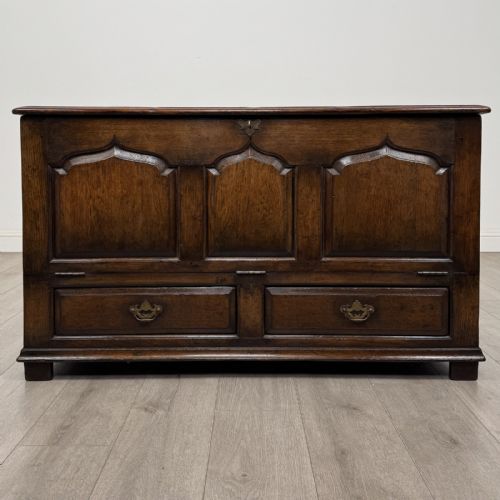
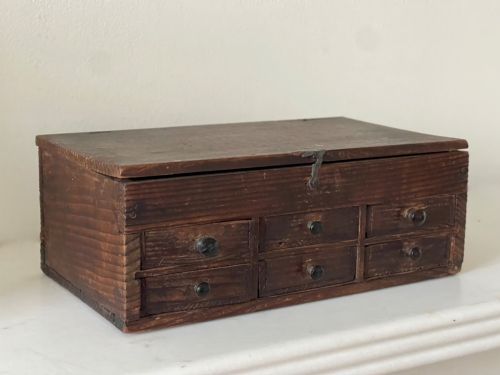
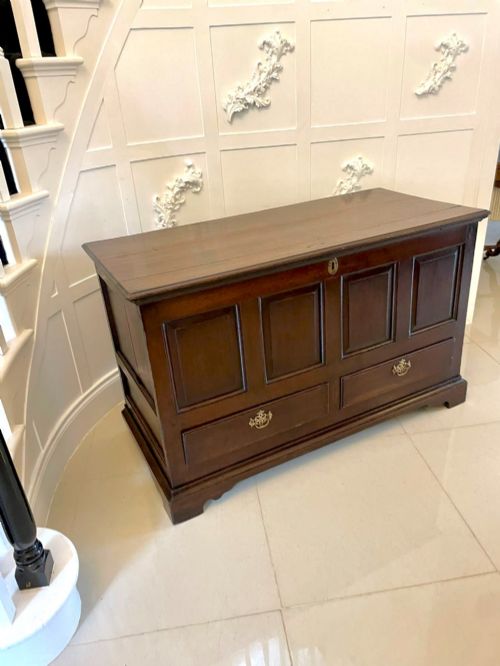
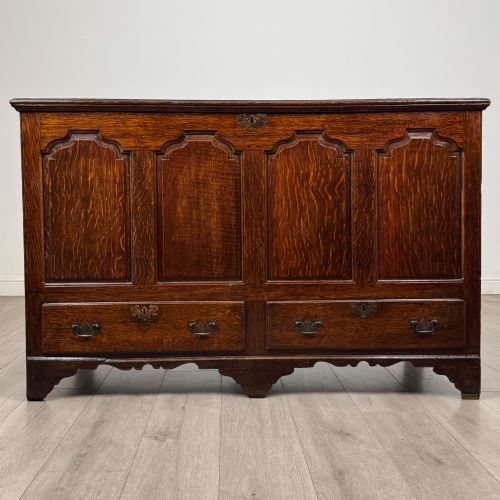
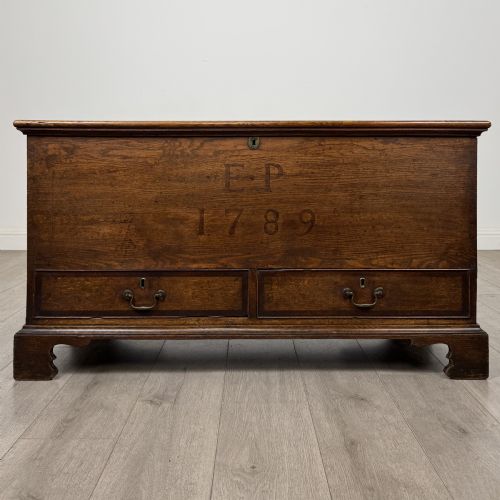
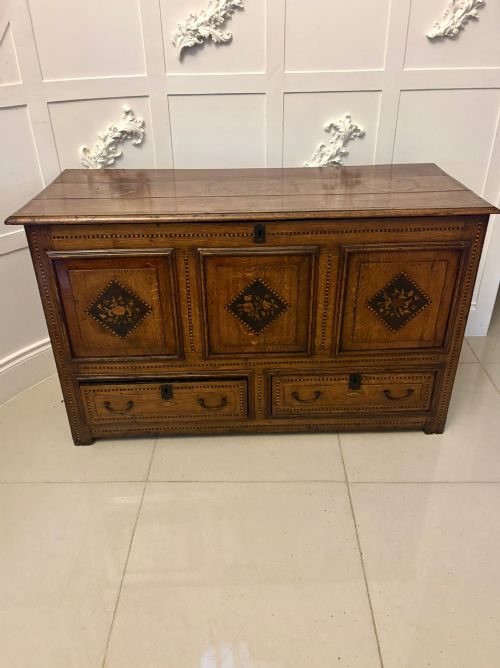
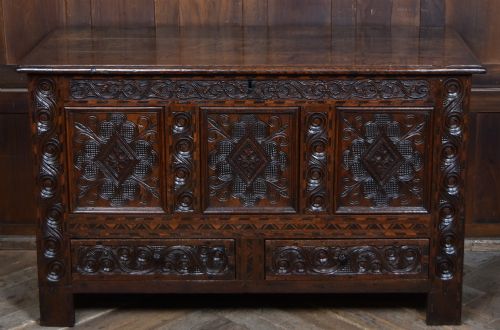
When searching for antique storage box drawers, collectors encounter pieces that blend lidded storage with internal or external drawer configurations. These items range from sturdy oak mule chests to compact tabletop collectors cabinets and specialised apothecary boxes.
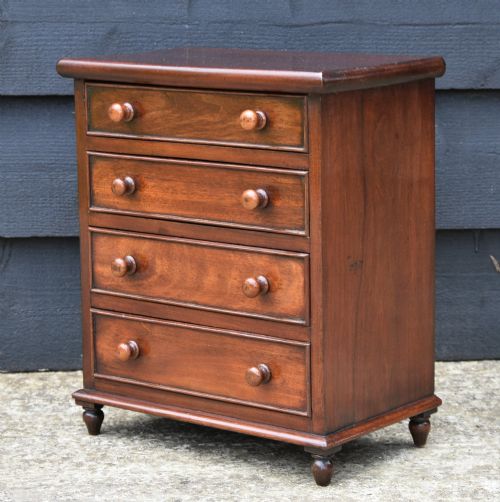
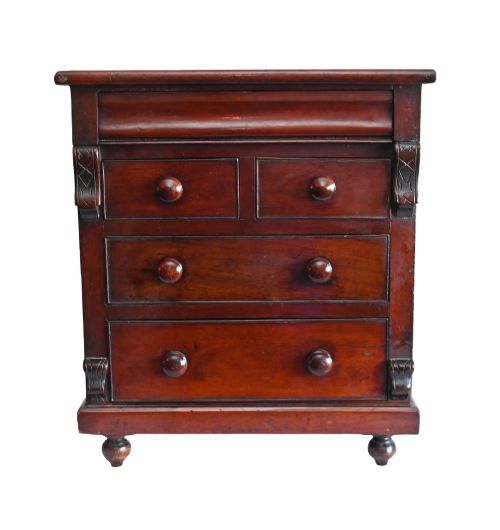
The selections span multiple eras, with significant representation from the 17th, 18th, and 19th centuries alongside early 20th-century utility forms. Pieces like the Welsh coffer bach and apprentice chests demonstrate how makers adapted standard storage formats into smaller, multi-drawer variants.
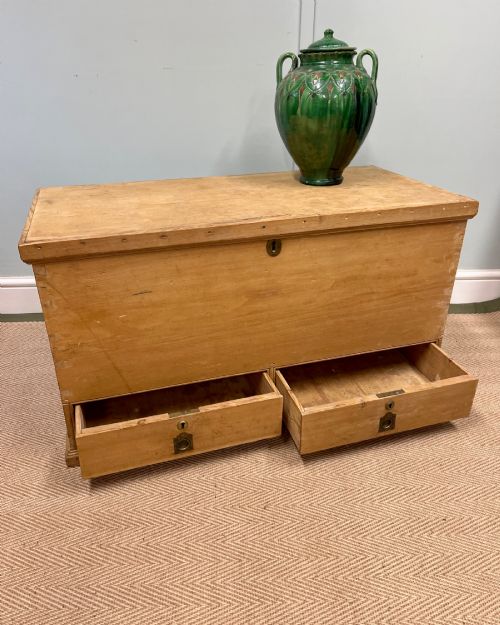
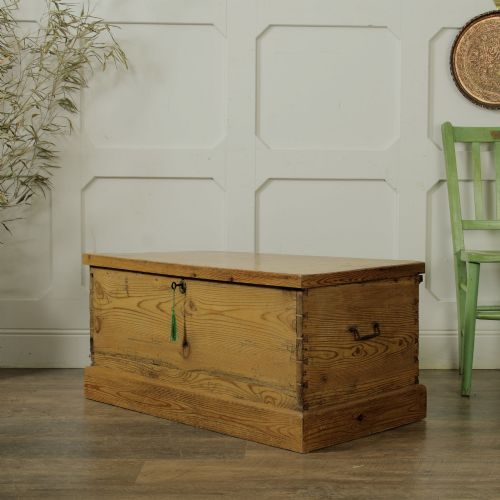
Origins vary from vernacular country workshops to formal Georgian workshops, incorporating regional timbers such as mahogany, pine, and oak. Buyers find everything from utilitarian pine carpenter chests to finely inlaid mahogany collectors pieces.
Materials and construction
Makers relied primarily on solid timbers like oak, mahogany, and pine, often enhancing structural integrity and visual appeal with secondary woods such as burr elm and fruitwood. Surface enrichment involved beeswax finishes, marquetry inlay, and occasionally painted treatments on pine.
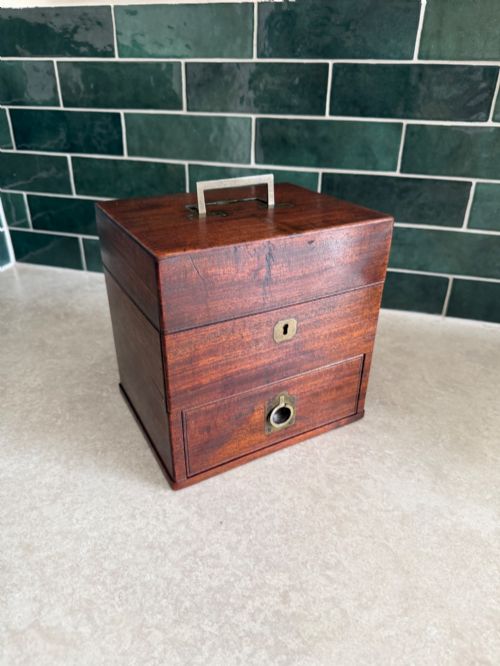
Hardware played an essential functional and decorative role, utilising brass for carrying handles, escutcheons, and hinges, alongside iron reinforcement on heavier trunks. Internal fittings incorporated precisely joined small drawers, glass bottles, and velvet linings tailored to specific trades.
Listings feature periods spanning from the 17th century through the Georgian and Victorian eras up to the 1920s, constructed in oak, mahogany, and pine.
Evaluating the craftsmanship
Quality rests heavily on the integrity of the timber selection and the precision of the joinery, particularly in the dovetailing of the small internal and external drawers. Finer examples display thoughtful grain matching, such as burr elm panels set within solid oak frames.
The degree of specialisation and original internal fittings also separates standard utility pieces from exceptional ones. Retained apothecary bottles, functional drop-front mechanisms, and complex marquetry elevate the status of a box or chest significantly.
The Antique Storage Box Drawers Glossary
- Mule chest
- A traditional storage chest featuring one or more drawers beneath the main lidded compartment. This form bridges the gap between the simple coffer and the chest of drawers.
- Coffer bach
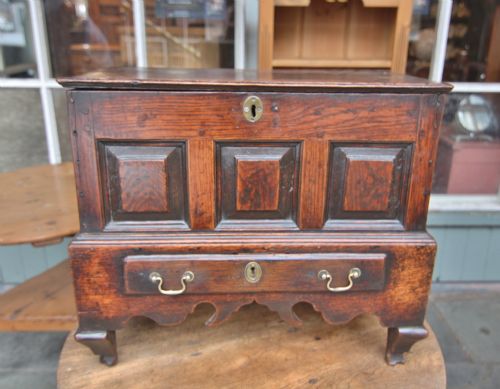
- A Welsh term translating to little coffer, denoting a miniature oak chest or mule chest produced in Wales during the 18th century and earlier. These smaller pieces often served specific domestic storage duties.
- Apprentice piece
- A miniature item of furniture created by a craftsman to demonstrate skill and secure entry into a trade guild. These display the exact joinery techniques found on full-sized furniture.
- Collectors cabinet
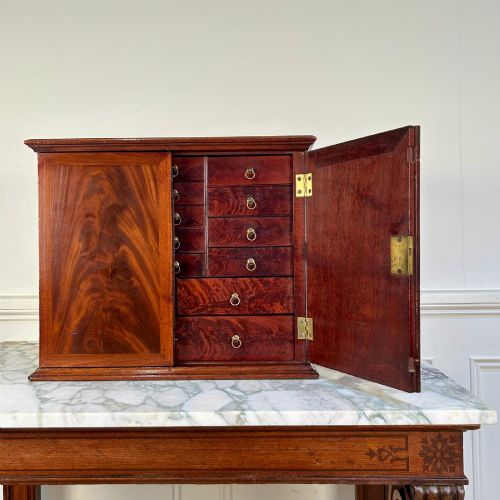
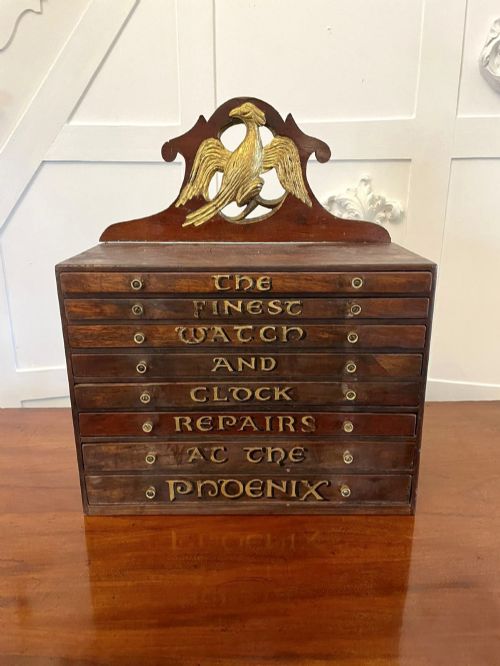
- A specialised small cabinet fitted with numerous shallow drawers designed to organise and display natural history specimens or coins. Mahogany and oak were frequent choices for these fitted pieces.
- Apothecary box
- A portable wooden case fitted with internal compartments to hold glass medicine bottles, scales, and small drawers for powders. They date predominantly from the Georgian and Victorian eras.
Antique Storage Box Drawers: Frequently Asked Questions
What is a coffer bach?
A coffer bach is a small Welsh oak chest featuring drawers beneath the main compartment. These scaled-down pieces were traditionally used for household linens and valuables.
They represent a distinct regional vernacular style from the 18th century and earlier. Their compact dimensions make them adaptable for modern domestic interiors.
How were apothecary boxes used?
Apothecary boxes served as portable pharmacies for doctors and households travelling during the Georgian and Victorian periods. The fitted interior secured glass bottles and scales safely during transit.
Lower storage drawers held mixing ingredients, mortars, and pestles. Their meticulous internal layout reflects the precise medical requirements of the era.
What distinguishes an apprentice piece?
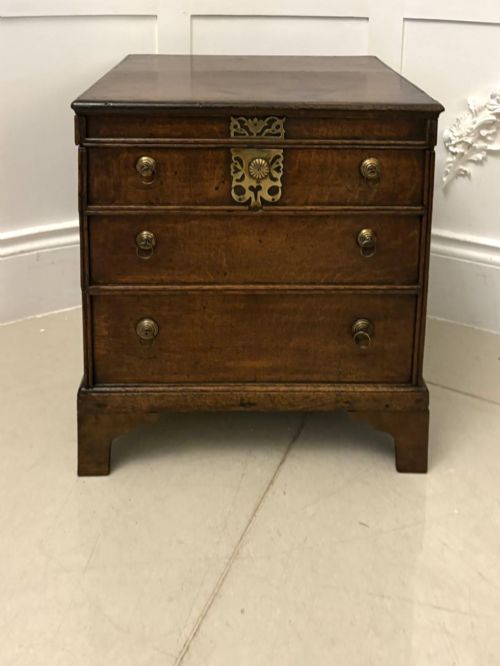
An apprentice piece is a small-scale model of standard furniture built by a tradesman to prove advanced woodworking competence. These items feature the same dovetailing and construction methods as large furniture.
Miniature chests of drawers are typical examples of this practice. Collectors value them for their concentrated demonstration of period craftsmanship.
How do I care for antique timber boxes?
Maintain antique wooden boxes by keeping them away from direct heat sources and dramatic humidity fluctuations. Natural beeswax polish applied sparingly helps preserve the finish and nourish dry timber.
Avoid chemical cleaners that can strip historic patina and finishes. Regular dusting with a soft, dry cloth protects the surface grain.