


Antique Stone Urn Bowl
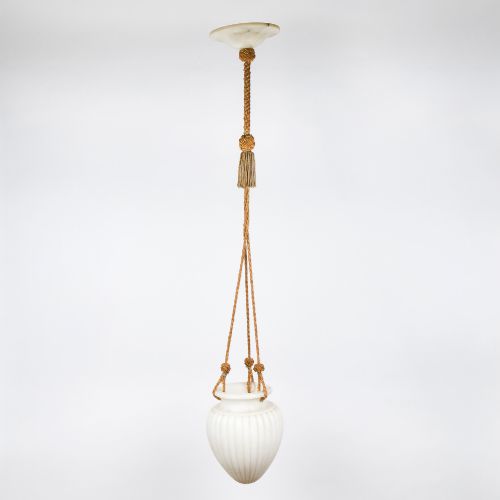
These antique stone urn bowls bring classical majesty indoors, offering carved alabaster, marble and cast stone forms that anchor a room.
Antique Stone Urn Bowl
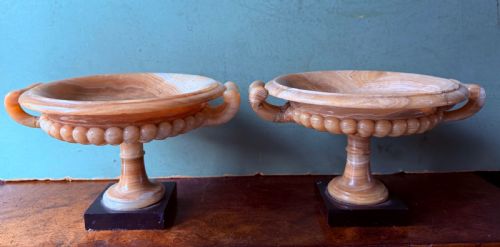
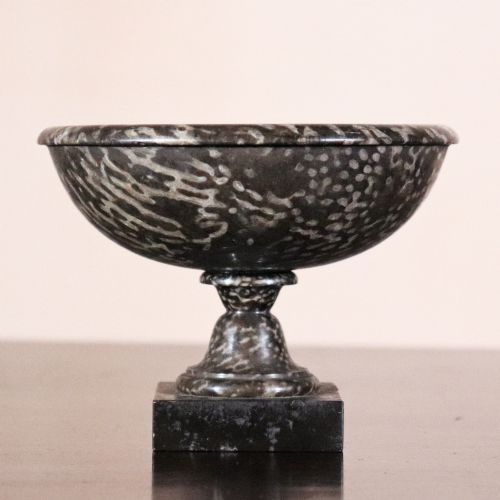
An antique stone urn bowl encompasses heavy ornamental vessels, pedestal bowls, and tazze carved or cast from hard materials. Buyers searching for an antique stone urn bowl typically encounter nineteenth-century Grand Tour souvenirs and neoclassical pedestal vessels.
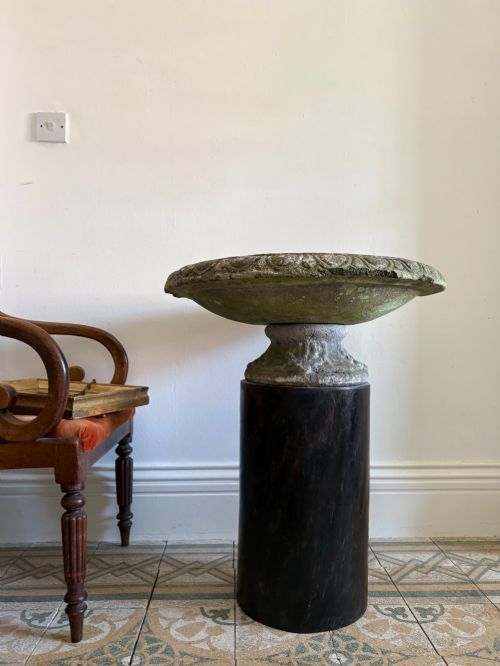
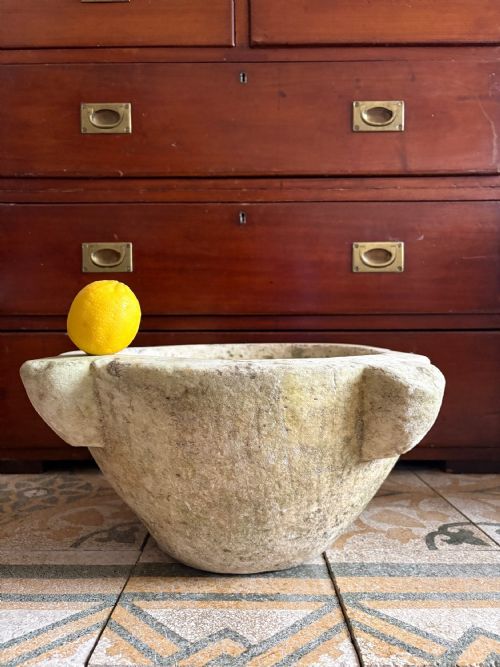
The selection ranges from monumental nineteenth-century marble tazze to eighteenth-century Italian mortars and early twentieth-century weathered cast stone garden planters. These decorative bowls serve as striking centrepieces, combining classical utility with sculptural presence.
Origins span Italian workshops, French nineteenth-century ateliers, and British garden stonework. The forms draw directly on classical antiquity, interpreted through Neoclassical, Victorian, and Classical Revival aesthetics.
What varies in quality
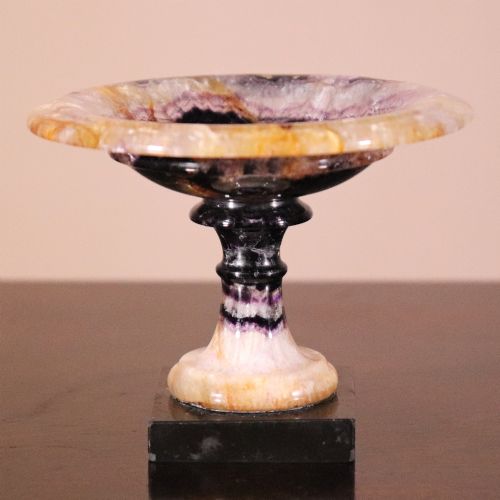
Quality rests upon the choice of material, the depth and precision of the carving, and the proportions of the vessel. Highly-figured stones like Sienna marble, Blue John, and alabastro egiziano elevate a piece above standard white marble.
The sophistication of the neoclassical turning and the integrity of any associated pedestal or base distinguish superior examples. Weathered patination on cast stone garden pieces adds character, provided the structural form remains crisp.
An eighteenth-century Italian mortar originally destined for grinding spices now spends its retirement looking distinguished as a fruit bowl.
The Antique Stone Urn Bowl Glossary
- Tazza
- A shallow bowl on a pedestal foot, traditionally used for display or serving. These stone vessels draw on classical Roman and Greek forms.
- Grand Tour
- A cultural journey undertaken by wealthy young Europeans in the eighteenth and nineteenth centuries. Souvenirs included miniature marble and alabaster architectural models and tazze.
- Mortar
- A heavy vessel in which substances are crushed or ground with a pestle. Eighteenth-century examples in white marble often double as sculptural bowls.
- Champlevé
- An enamelling technique where troughs are carved into a metal surface and filled with vitreous enamel. It appears on nineteenth-century French decorative mounts.
Antique Stone Urn Bowl: Frequently Asked Questions
What is a tazza?
A tazza is a shallow decorative vessel raised upon a central stem and foot. In stone, these pieces function primarily as ornamental centrepieces.
Originating from classical forms, they were frequently reproduced during the nineteenth century as Grand Tour souvenirs.
Where were Grand Tour items made?
Grand Tour pieces were predominantly carved in Italian workshops, particularly in Rome and Florence, catering to foreign travellers.
Local artisans utilised regional marbles and alabasters to create portable monuments for domestic display.
How do I clean alabaster?
Alabaster is a soft and water-sensitive mineral that requires gentle dry dusting with a soft cloth. Moisture and chemical cleaning agents damage the polished surface.
Keep these vessels away from damp environments to preserve the integrity of the stone.
Can stone urns stay outside?
Cast stone and reconstituted stone urns are engineered to withstand exterior weathering in gardens and patios. Natural marble and alabaster pieces are generally intended for indoor display.
Frost can damage porous stones if left unprotected during freezing winter conditions.