


19th Century Marble Bowl
These 19th century marble bowl examples bring classical antiquity and Neoclassical design directly into your interior.
19th Century Marble Bowl
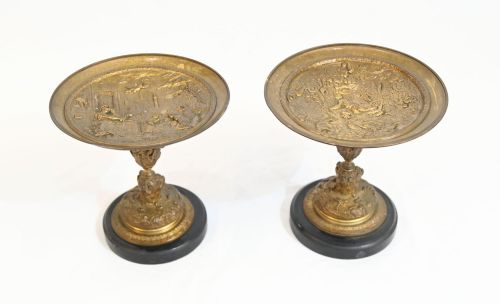
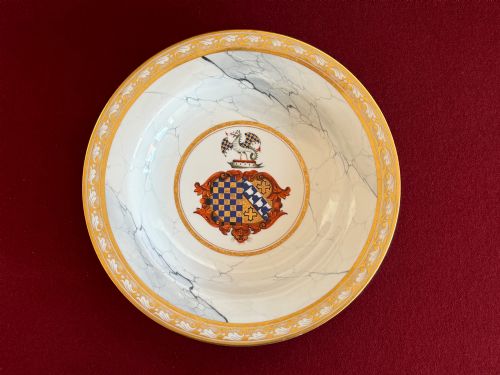
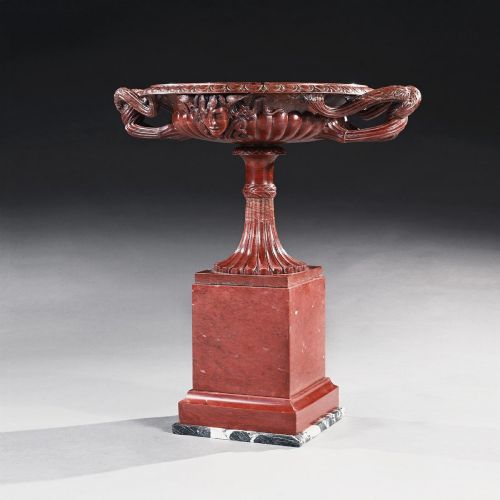
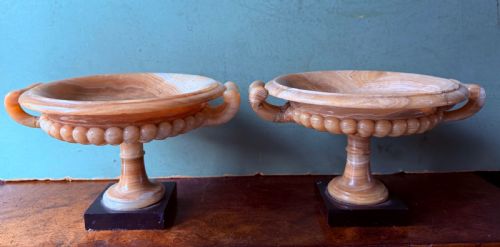
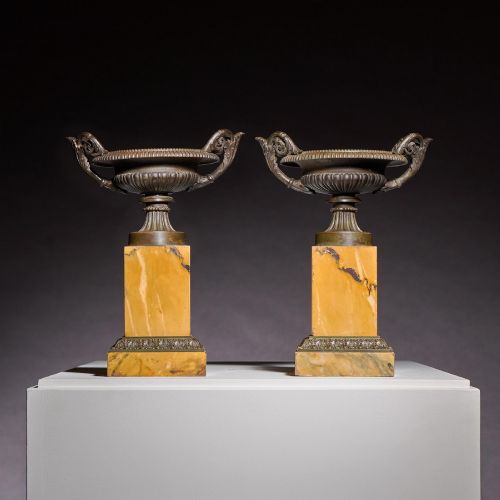
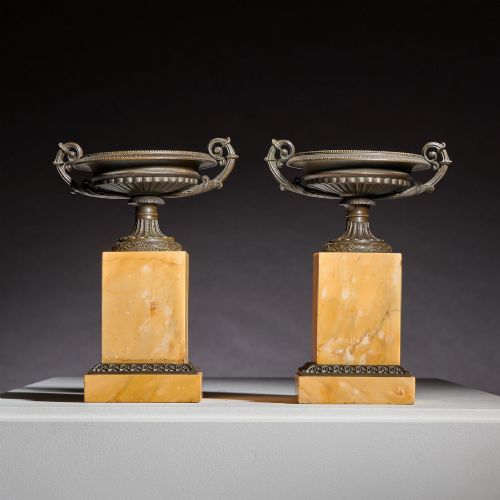
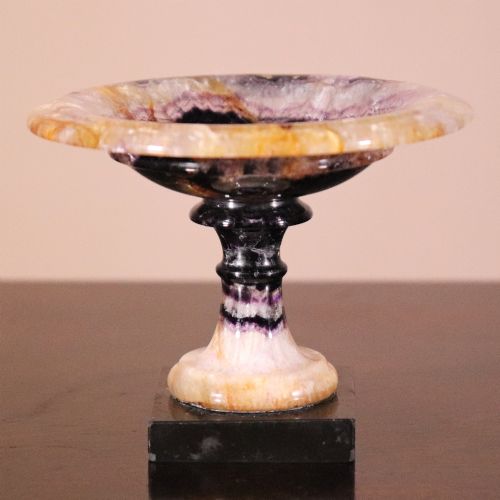
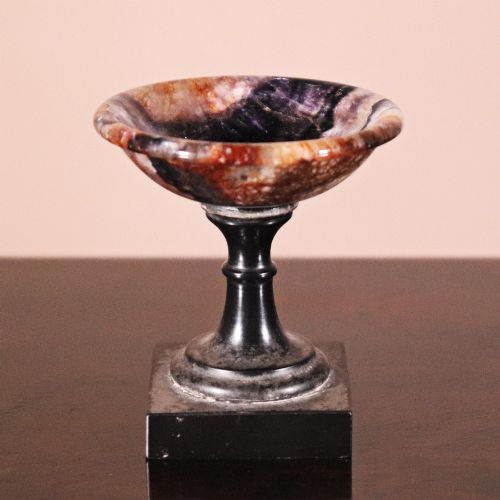
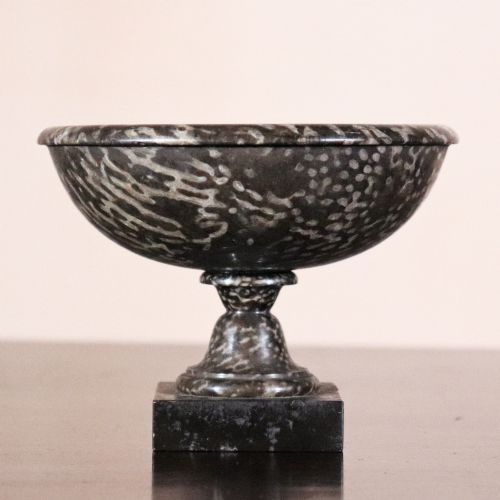
A 19th century marble bowl frequently manifests as a Grand Tour tazza, carved from highly-figured stones and set upon black marble block bases. These ornamental vessels trace their lineage directly to classical antiquity, fashioned as souvenirs for travellers journeying through Italy.
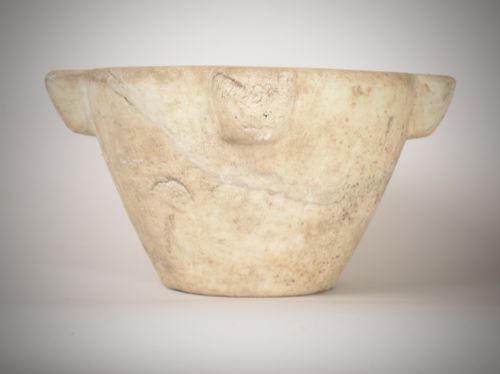
The material palette ranges far beyond standard white stone, incorporating Siena marble, Rosso Antico, Ashford coral marble, and Blue John. Alongside formal tazzas, the selection includes mortars, footbaths, and monumental pedestals bearing classical forms.
How these pieces were shaped
Masons shaped these vessels from solid blocks of stone, turning and carving the marble to achieve shallow basins and fluted pedestals. Many incorporate cast bronze and ormolu mounts, combining metalwork with turned stone.
Makers utilised distinct regional stones such as Ashford coral or Derbyshire Blue John, depending upon the specific geological source. Surface finishing involved meticulous hand-polishing to reveal the natural veining and fossilised inclusions within the marble.
The available selection spans regional British decorative items alongside Italian souvenirs carved after ancient precedents.
What separates the best examples
Quality rests upon the choice and figuring of the marble itself, alongside the crispness of any hand-carved classical details. Highly-figured stones with striking natural patterns elevate a piece far above plain grey or white alternatives.
The integration of secondary materials dictates overall refinement. Fine French ormolu mounts and intricately chased bronze enrich the composition, whilst heavier proportions and balanced bases ensure structural integrity.
Benedetto Boschetti·Barr, Flight and Barr·Minton
The 19th Century Marble Bowl Glossary
- Tazza
- A shallow bowl or cup mounted on a stem and foot, originating from classical forms. These pieces served primarily as decorative ornaments during the nineteenth century.
- Grand Tour
- A cultural journey undertaken by wealthy young Europeans through continental Europe, particularly Italy. Souvenirs purchased along the route included carved marble and bronze antiquities.
- Ormolu
- Gilded bronze utilised for decorative mounts and decorative details on nineteenth-century objects. The technique involves applying a gold amalgam to a bronze base.
- Rosso Antico
- A deep red antique marble prized by classical sculptors and later nineteenth-century revivalists. It provides a rich, dark red tone to turned vessels.
19th Century Marble Bowl: Frequently Asked Questions
How do I identify a Grand Tour tazza?
These decorative objects typically combine carved stone such as Siena or Rosso Antico marble with classical motifs. They often feature black marble bases and reflect ancient Roman or Greek architectural forms.
Many bear the marks of Italian souvenir workshops catering to travellers exploring classical sites during the nineteenth century.
What is Blue John marble?
Blue John is actually a fluorite rather than a true marble, known for its distinctive purple and yellow banding. It originates from specific mines in Derbyshire.
Objects fashioned from this material are usually small in scale due to the scarcity of the mineral.
Where were these stone vessels placed?
Nineteenth-century collectors displayed these ornamental tazzas upon mantelpieces, side tables, and pedestals within formal reception rooms. They served as visual reminders of classical education and European travel.
Their substantial weight and decorative bronze mounts suited them for prominent display surfaces.
How do I care for nineteenth-century marble?
Dust the stone regularly with a soft, dry cloth to prevent accumulation within carved recesses. Avoid liquid cleaners or acidic substances that can etch the polished surface.
Gentle handling protects any delicate ormolu mounts or patinated bronze elements attached to the stone.