



Antique Stone Mantel Clock
An antique stone mantel clock brings architectural weight and steady mechanical life to a room, offering both reliable timekeeping and solid mineral presence.
Antique Stone Mantel Clock
An antique stone mantel clock brings substantial weight and architectural presence to a room, serving as both timekeeper and sculptural object. These pieces utilise dense geological materials to house mechanical movements, often taking inspiration from classical or architectural forms.
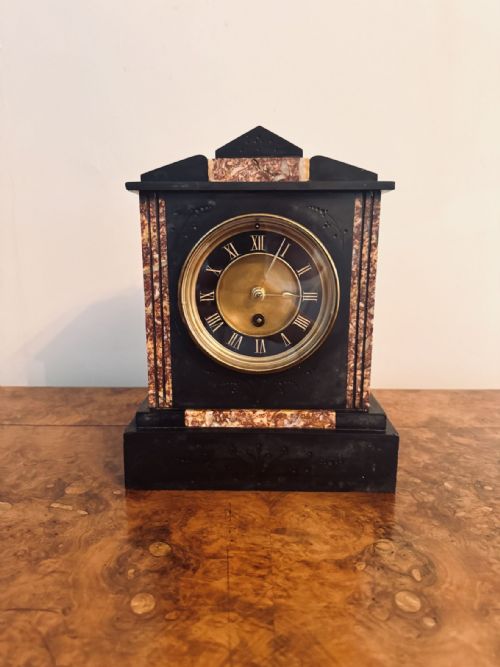
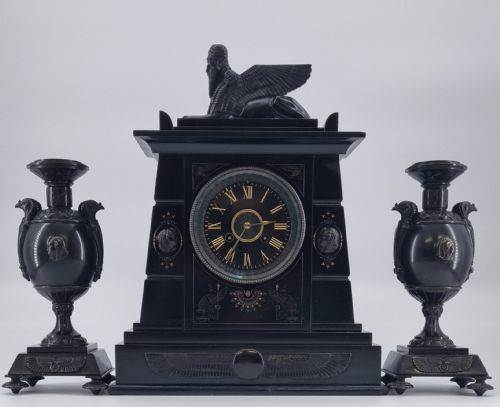
The versions most commonly met on this page date from the Victorian era and the Art Deco period. Victorian examples frequently utilise black slate, block marble, or sienna marble, sometimes incorporating garnitures such as side vases.
Art Deco interpretations lean towards green onyx and alternative marbles, reflecting the geometric preferences of the nineteen-twenties and nineteen-thirties. Formats range from drumhead dial surrounds to substantial architectural temples and architectural porticos.
Materials and construction
The primary bodies of these clocks rely on quarried stones such as black slate, white and coloured marble, alabaster, and green onyx. Stonemasons cut and polished these heavy mineral blocks into architectural facades, drumhead housings, and architectural garniture sets.
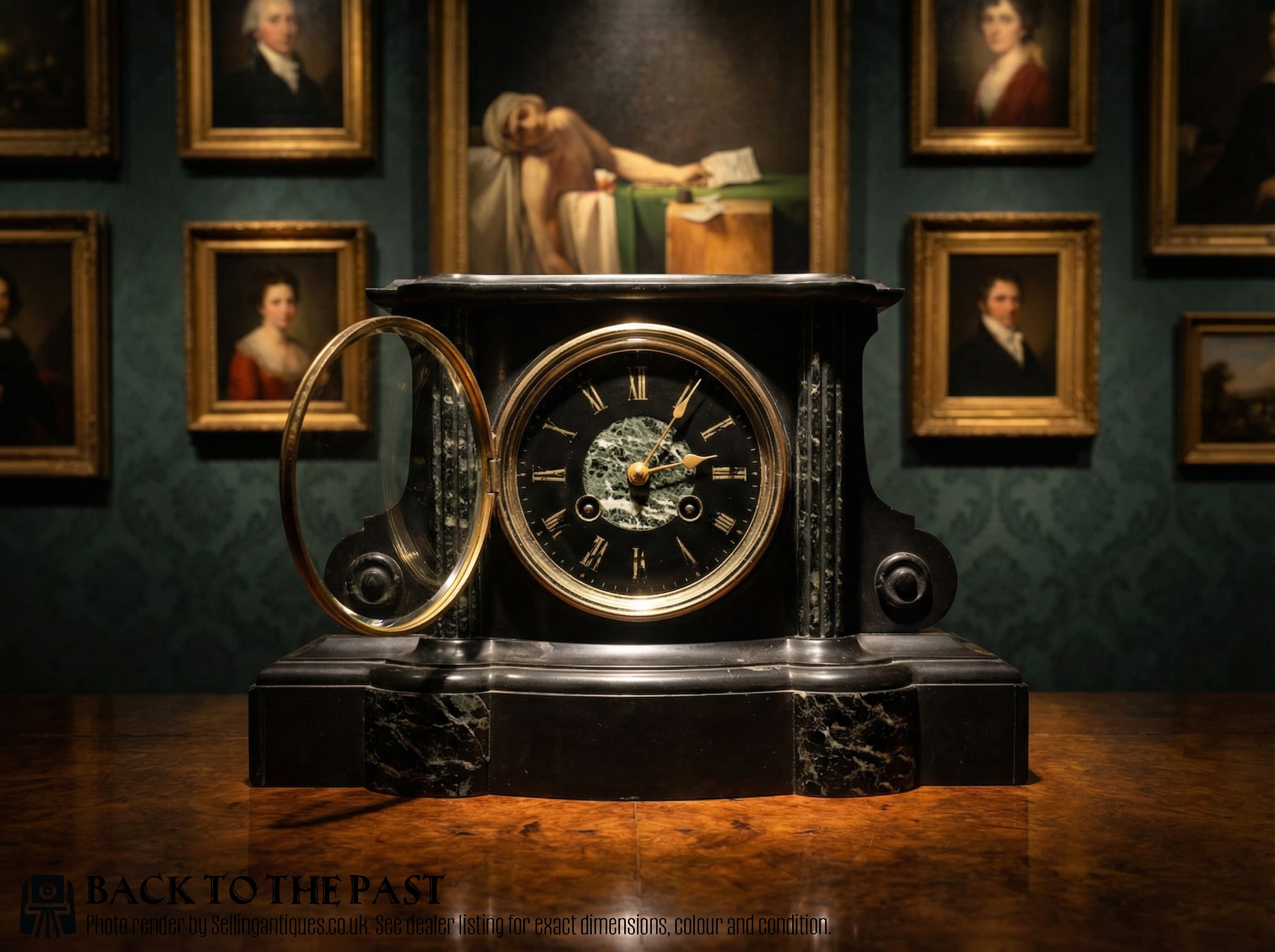
Movements fitted into these stone housings typically operate on an eight-day cycle, often of French origin, driving enamelled dials protected by bevelled glass bezels. Bronze, brass, and malachite elements frequently accent the stone body, providing metallic contrast to the heavy mineral mass.
Antique Stone Mantel Clock Retail Price Guide 2026
Typical asking prices for stone mantel clock among the pieces listed under this phrase on Sellingantiques today, from the lower quarter to the upper quarter. They describe what is for sale here now, not the wider market.
Listings span from eighteen-sixty Victorian slate and marble designs to nineteen-thirty Art Deco green onyx pieces.
Distinctions in craftsmanship
Superior examples demonstrate meticulous stonemasonry with tight joints, precise geometric carving, and harmonious matching of marble veining across the main body and any accompanying garnitures. Inferior pieces rely on simpler cast forms with minimal surface polish and plain, unadorned stone bodies.
The quality of the integrated movement and the legibility of the enamelled dial further separate the tiers. Finer pieces feature named Parisian makers or sophisticated architectural styling such as Egyptian Revival motifs, whereas basic models house standard commercial movements within plain rectangular slate cases.
Philippes Paris
The Antique Stone Mantel Clock Glossary
- Garniture
- A set comprising a central clock flanked by matching ornamental pieces such as urns or vases. These decorative sets were designed to sit symmetrically on a fireplace mantel.
- Drumhead clock
- A timepiece featuring a circular clock housing that resembles the shape of a drum. This circular element typically sits atop a rectangular stone plinth.
- Black slate
- A dense, fine-grained metamorphic rock utilised extensively for Victorian clock cases. It provides a dark, uniform surface that often mimics more expensive marbles.
- Alabaster
- A fine-grained, translucent stone used for carved decorative objects and clock cases. Its softness allows for intricate sculptural detail.
- Enamel dial
- A clock face created by fusing powdered glass to a metal substrate at high heat. This technique produces a durable, glossy surface with painted numerals.
Antique Stone Mantel Clock: Frequently Asked Questions
How heavy is an antique stone mantel clock?
These clocks possess substantial weight due to their solid marble, slate, and onyx construction. Many require two people to lift safely and need a sturdy surface for placement.
The density of the stone protects the internal mechanical movement but places high demands on the furniture supporting it.
Do garniture sets come with the clock?
Certain listings include matched side garnitures, such as matching urns or side pieces designed to sit alongside the main clock. These sets create a balanced, symmetrical arrangement on a mantelpiece.
Single clocks appear frequently without these additional ornamental companion pieces.
What movements are found inside?
Most pieces house eight-day mechanical movements that require manual winding with a key. Many of these movements originated in France before being fitted into British or European stone cases.
Enamelled dials and glass bezels typically protect the clock face from dust and damage.
How do I distinguish Victorian from Art Deco?
Victorian examples lean towards heavy black slate, sienna marble, and classical architectural motifs like pediments and columns. Egyptian Revival influences also appear within this nineteenth-century group.
Art Deco pieces favour green onyx and streamlined geometric geometry typical of the nineteen-twenties and nineteen-thirties.
Are glass domes common?
Some delicate alabaster or architectural clocks include fitted glass domes resting on wooden or slate bases. These domes protect softer stones and intricate carvings from dust and atmospheric wear.
The majority of stone mantel clocks operate without a protective glass cover.