


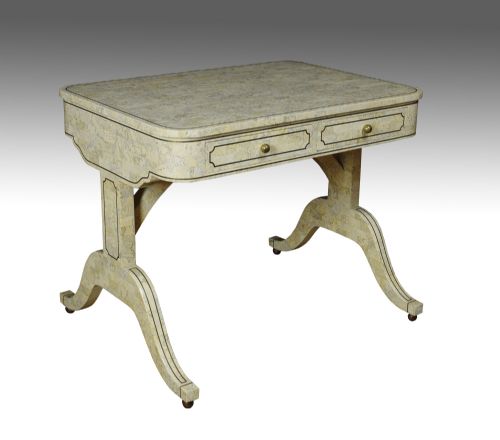

Antique Stone Inlay Table
An antique stone inlay table brings together hard stone work and timber craftsmanship, offering a surface of patterned mineral specimens that rewards closer inspection.
Antique Stone Inlay Table
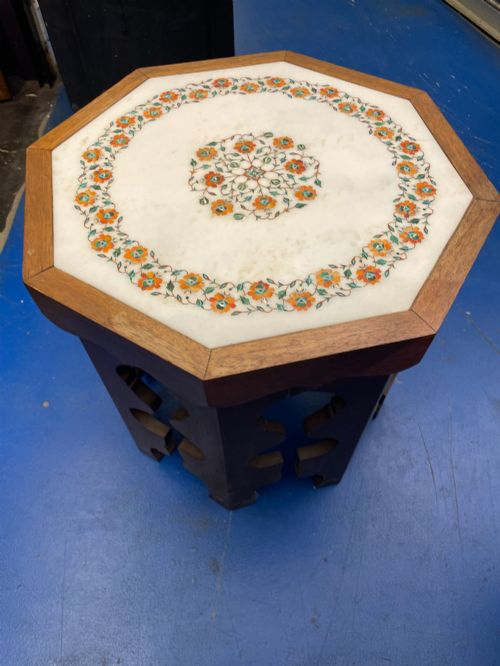
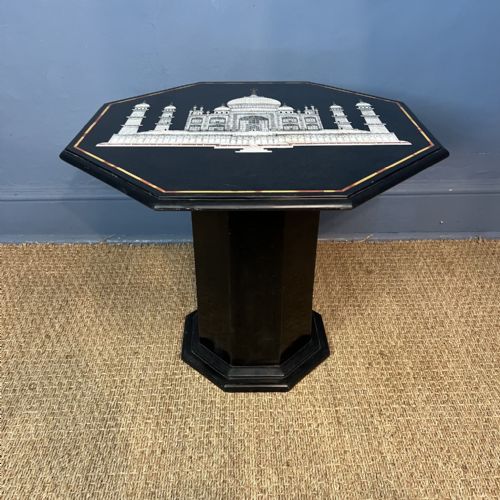
When you search for an antique stone inlay table, you are looking at surfaces ornamented with fitted minerals, ranging from geometric mosaic tops to botanical pietra dura work. These pieces appear in forms such as occasional tables, centre tables, coffee tables, and dining tables.
The examples gathered here span the nineteenth century into the twentieth, taking in Victorian, Grand Tour, Florentine Renaissance Revival, and Italian origins. You will also encounter Anglo-Indian and North African pieces alongside French and English interpretations of these styles.
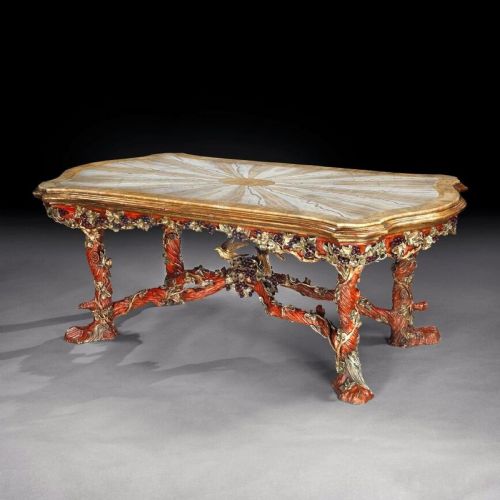
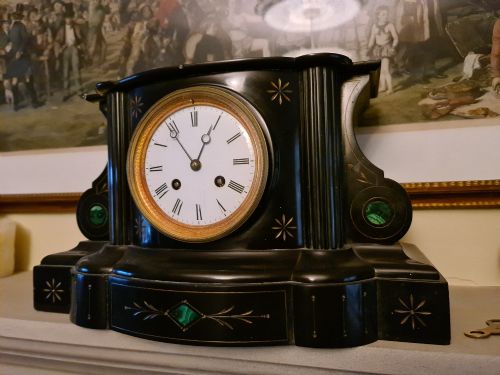
Occasional and centre tables predominate among these listings, frequently featuring marble, slate, or black marble tops supported by timber or brass frames. These tables served as display pieces in nineteenth-century interiors, designed to catch the light and showcase geological specimens.
Materials and construction methods
The construction relies on combining dense stone surfaces with supportive frames of mahogany, ebonised wood, or other hardwoods, sometimes accented with brass. Marble and slate form the substantial bases onto which thinner slices of coloured stone or mosaic tesserae are applied.
Techniques range from pietra dura, where precisely shaped hardstones are flush-fitted into a ground stone slab, to mosaic and specimen marble assembly. These methods demand exact hand-cutting so that individual mineral fragments join without perceptible gaps.
Travellers once lugged heavy marble tabletops across Europe in horse-drawn carriages just to admire them back home.
Distinctions in craftsmanship and materials
Quality rests primarily on the precision of the stone cutting and the geological variety of the minerals employed. Tighter joints between inlay pieces and a wider palette of natural stones distinguish the finer specimens from simpler geometric work.
The integration between the stone top and its wooden or brass base also defines the grade of the piece. Superior examples maintain structural stability while displaying harmonious proportions between the heavy mineral top and the supporting framework.
Woodley family
The Antique Stone Inlay Table Glossary
- Pietra dura
- An Italian term for the technique of inlaying cut and polished coloured stones into a base slab to create pictorial or geometric designs. This method produces a smooth, seamless surface where individual stone segments lock together.
- Specimen marble
- A tabletop composed of numerous small, geometric marble or mineral samples gathered from different locations. These were popular souvenirs for travellers undertaking the Grand Tour.
- Occasional table
- A small, light table designed for a specific, intermittent use rather than central daily service. They function well beside seating areas or in hallways for holding small objects.
- Centre table
- A freestanding table finished on all sides, intended to stand in the middle of a room rather than against a wall. They often feature elaborate tops designed to be viewed from any angle.
- Mosaic
- A pattern or image made by arranging small coloured pieces of stone, glass, or other materials. North African and Italian pieces frequently utilise this method for geometric surface decoration.
Antique Stone Inlay Table: Frequently Asked Questions
What is pietra dura?
Pietra dura is a decorative technique involving the precise cutting and fitting of hard mineral stones into a foundation slab. Artisans shape stones such as malachite, jasper, and marble to form continuous, smooth patterns.
This method requires immense skill to ensure each piece sits flush against its neighbour without visible cement lines. It remains a defining feature of many fine nineteenth-century Italian tables.
How do I care for a stone top?
Stone inlay surfaces require gentle cleaning with a soft, damp cloth and neutral cleaners that will not etch marble or slate. Avoid acidic substances and harsh abrasives which can damage the polish of the minerals.
Waxing the wooden bases separately helps preserve the timber frame while keeping moisture away from the stone joints. Regular, light dusting prevents grit from scratching the polished mineral surface.
Where were these tables made?
These pieces originate from various workshops across Italy, England, France, North Africa, and India during the nineteenth and early twentieth centuries. Florentine and Roman workshops specialised in pietra dura and specimen marble, while other regions adapted local hardwoods and mosaic techniques.
Travellers on the Grand Tour frequently purchased these tables abroad to ship home as mementos of their travels. Consequently, the stylistic influences often reflect international exchange and local material availability.
Are these tables sturdy enough for daily use?
Most antique stone inlay tables function well for everyday placement of light items, but their heavy stone tops require careful handling. Moving them demands lifting rather than dragging to protect the structural joinery beneath.
While robust, the inlaid minerals can chip under heavy impacts or localized stress. Placing them away from high-traffic areas helps preserve both the stone work and the antique frame.