



Antique Stick and Umbrella Holder
An antique stick and umbrella holder commands the hallway with utilitarian purpose, holding wet walking gear in solid brass, cast iron, or seasoned oak.
Antique Stick and Umbrella Holder
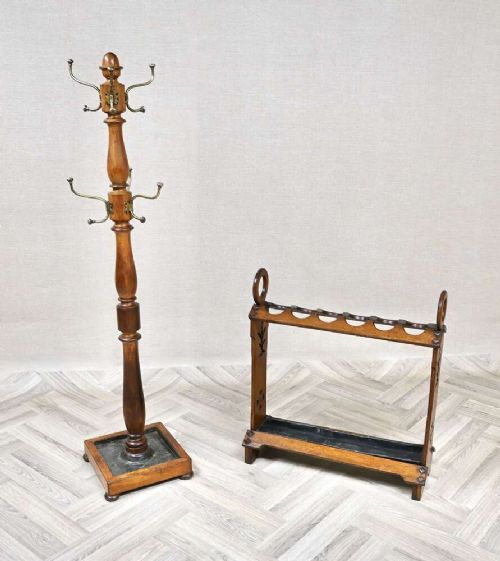
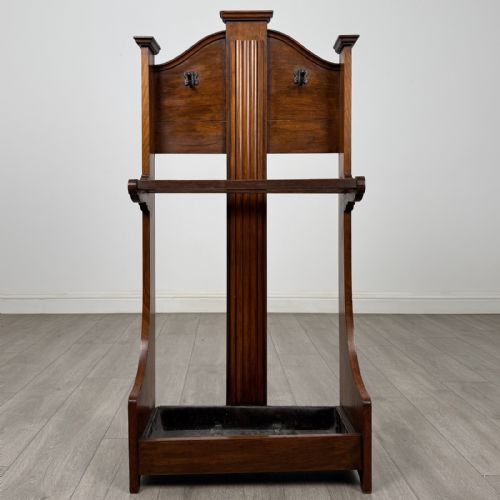
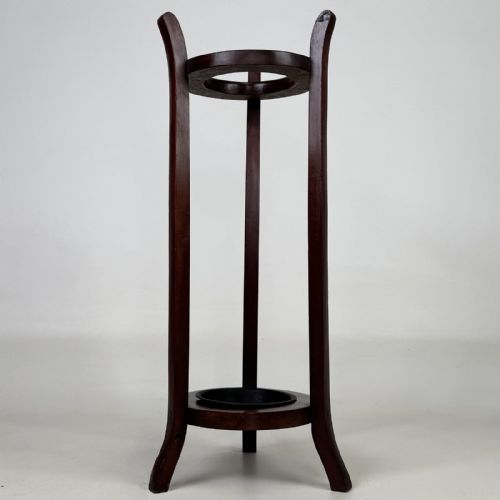
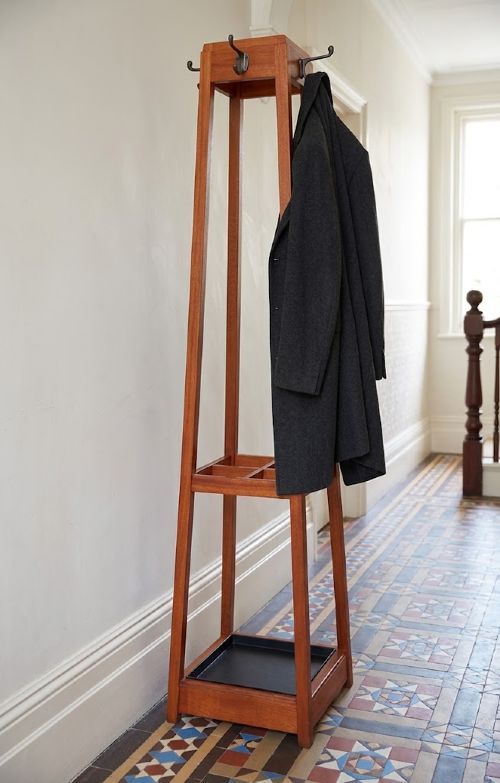
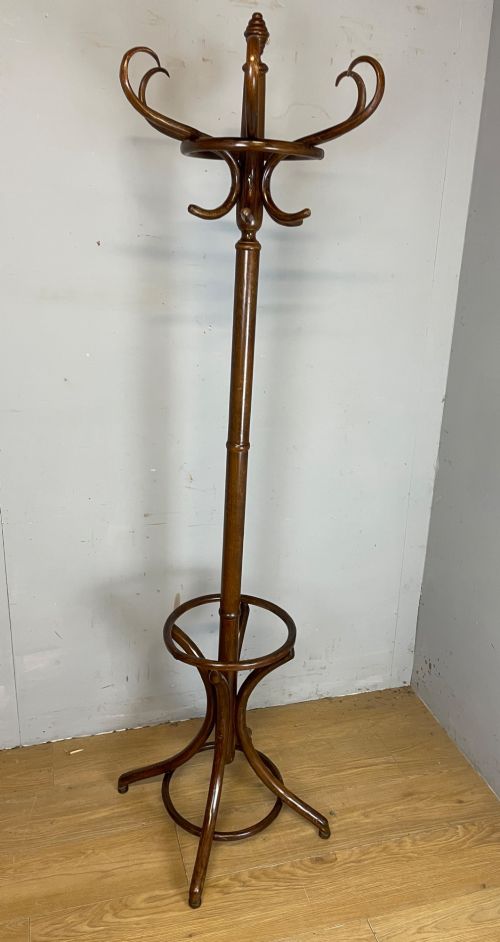
An antique stick and umbrella holder serves as a practical entryway piece, appearing in forms ranging from dedicated barrel stands to substantial hall stands with integrated coat hooks and drip trays. The selection spans the nineteenth century through the Edwardian era and into the interwar decades, showing how households managed wet weather.
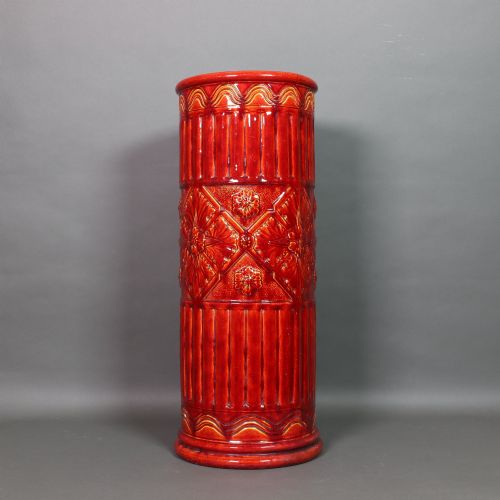
Cast iron and oak dominate the domestic versions, supplemented by mahogany, brass, and earthenware pottery. Examples appear in distinct decorative vocabularies, including the clean geometry of the Arts and Crafts movement, the fluid lines of Art Nouveau, and the robust styling of the Victorian period.
Materials and construction
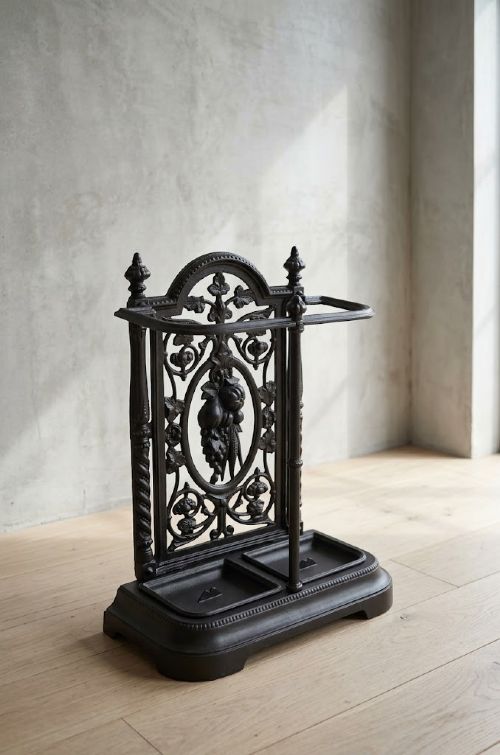
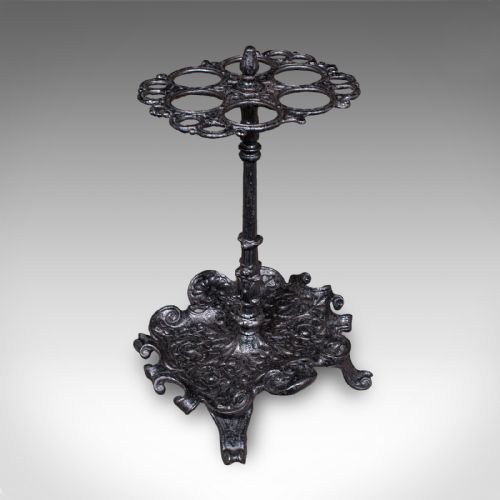
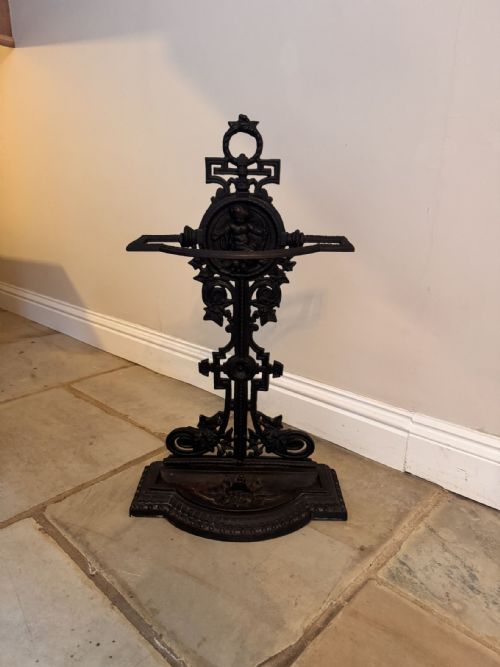
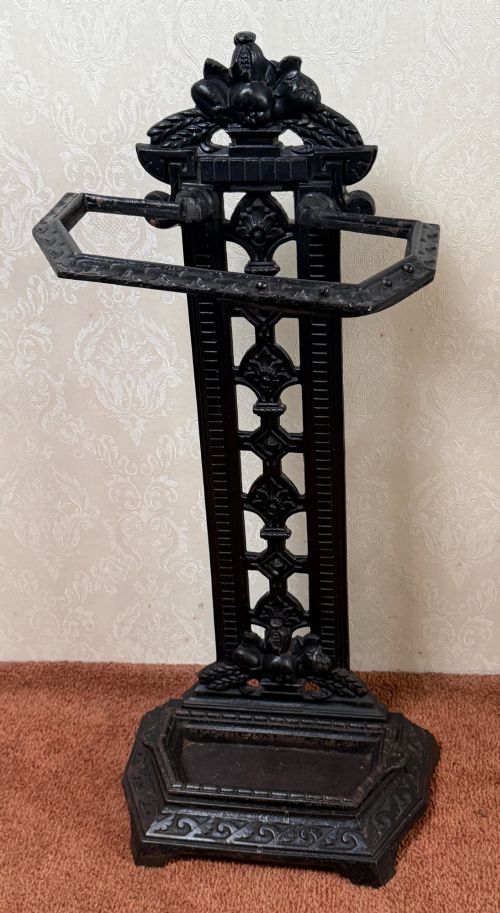
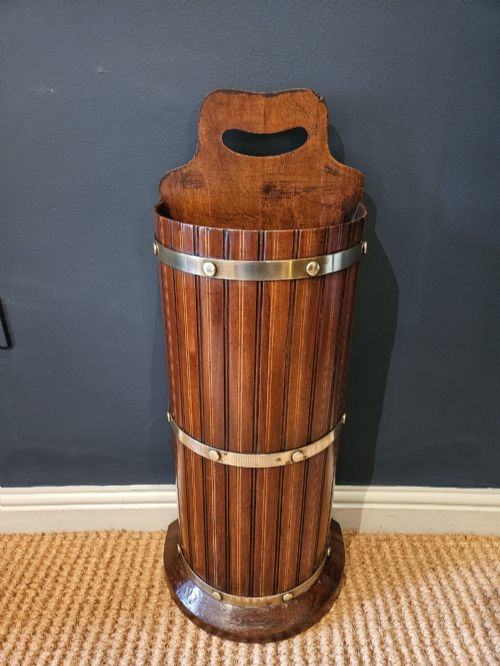
Foundry cast iron provides the structural integrity for heavy lattice and loop frames, often bearing registration marks or foundry stamps from makers such as Coalbrookdale. Coopered timber barrels utilise tight-fitting oak staves bound with polished brass bands to contain moisture without splitting the wood.
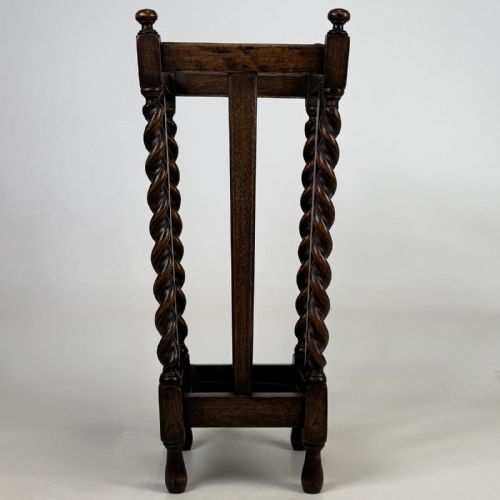
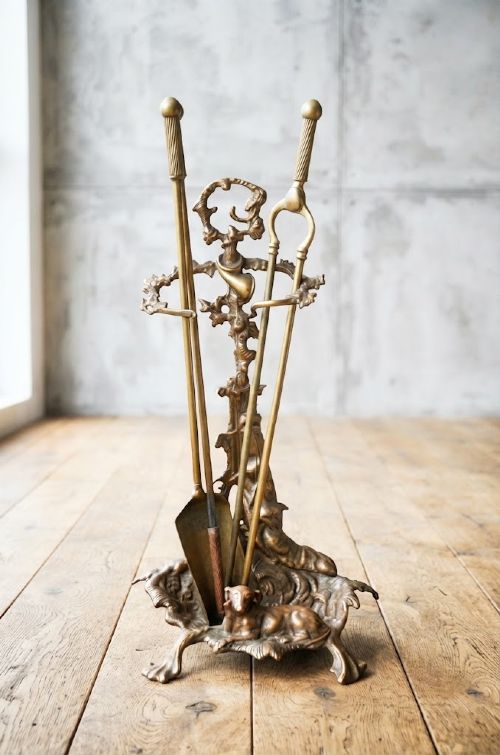
Cabinetmakers constructed hall stands and umbrella compartments from solid mahogany, oak, and pine, joining components with pegged mortise and tenon joints. Metal components integrate nickel plating, copper sheeting, and cast brass elements with decorative finials and separate zinc or iron drip trays.
Antique Stick and Umbrella Holder Retail Price Guide 2026
Typical asking prices for stick and umbrella holder among the pieces listed under this phrase on Sellingantiques today, from the lower quarter to the upper quarter. They describe what is for sale here now, not the wider market.
Materials span heavy cast iron, solid oak, mahogany, earthenware, and brass, recording domestic utility from the Victorian era through the Art Deco period.
Build and material execution
The distinction between standard utility items and exceptional pieces rests in the weight of the casting and the precision of the timber cooperage. Finely cast iron exhibits crisp relief in the decorative loops and botanical motifs, whereas lesser castings lose detail in the mould.
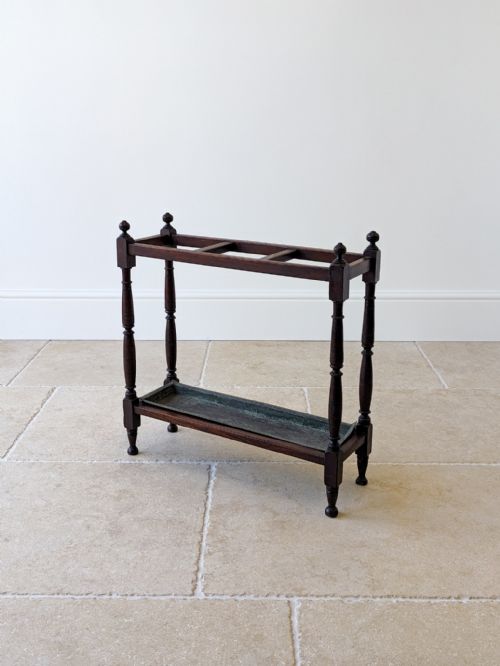
Integrity depends upon the survival of the original drip tray, as missing water pans compromise the function of timber bases. Superior examples combine robust structural framing with intact metal liners and well-preserved brass bindings that show thoughtful proportion.
Coalbrookdale·Burmantofts Faience·Théodore Deck·Liberty
The Antique Stick and Umbrella Holder Glossary
- Drip tray
- A shallow metal pan placed beneath the stick compartments to catch rainwater runoff and protect floor surfaces. These removable trays are frequently iron, zinc, or brass.
- Coopered
- A method of construction where narrow wooden staves are bevelled and joined side by side, then secured with metal hoops to form a round or oval vessel.
- Stick loop
- The metal or timber divider at the top of a stand that separates individual walking canes, umbrellas, and parasols to keep them upright.
- Demi-lune
- A half-moon shape characteristic of umbrella stands designed to sit flush against an entrance hall wall without projecting too far into the narrow space.
- Faience
- Tin-glazed earthenware pottery used to create substantial ceramic bodies for sculptural umbrella stands, notably produced during the Aesthetic Movement.
Antique Stick and Umbrella Holder: Frequently Asked Questions
How do I protect my floor from water?
Most traditional stands include an integrated or removable metal drip tray positioned at the base to catch moisture from wet umbrellas. Ensure the tray is present and waterproof before placing the stand on delicate timber or carpet.
For pieces lacking an original liner, a modern circular metal tray or saucer can be placed inside the base discreetly to preserve the flooring without altering the antique structure.
Where should I place an umbrella stand?
These pieces belong near the primary entrance of a home, functioning as they did in Victorian and Edwardian hallways to receive wet coats, walking sticks, and umbrellas immediately upon entry.
Allow adequate clearance around the stand so walking sticks and handles do not crowd adjacent furniture or block passage through the hallway.
How do I clean cast iron stands?
Cast iron surfaces benefit from gentle dusting with a dry cloth and occasional application of neutral paste wax to maintain the dark protective finish and prevent surface oxidation.
Avoid using harsh chemical solvents or abrasive pads, which strip the historic patina and expose the raw metal beneath.
Can these hold walking canes as well?
The vertical divisions and loops are specifically dimensioned to accommodate walking sticks, shooting sticks, and riding crops alongside standard umbrellas.
Narrower compartments prevent slender canes from slipping sideways, making these stands equally suited for a collection of walking aids.