


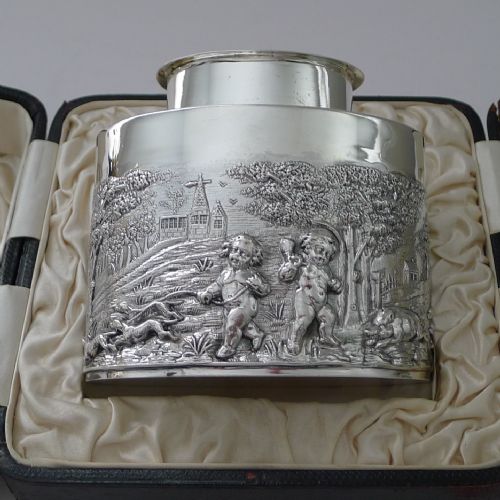

Antique Sterling Tea Canister
An antique sterling tea canister is a domestic vessel for storing leaf tea safely, and these pieces span Georgian to Art Deco periods.
Antique Sterling Tea Canister
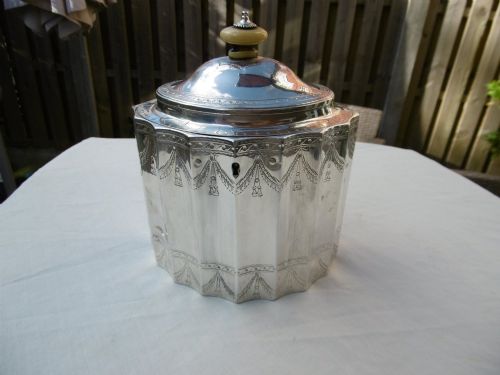
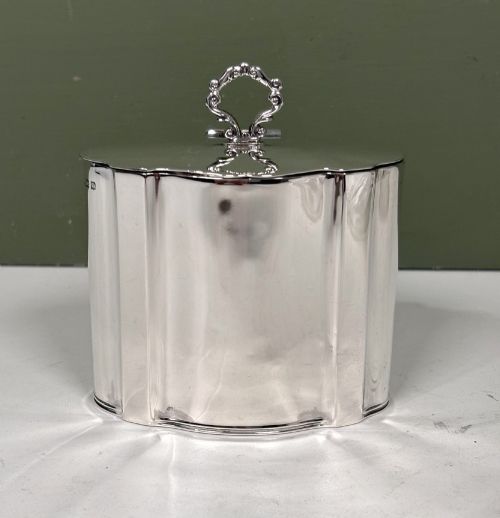
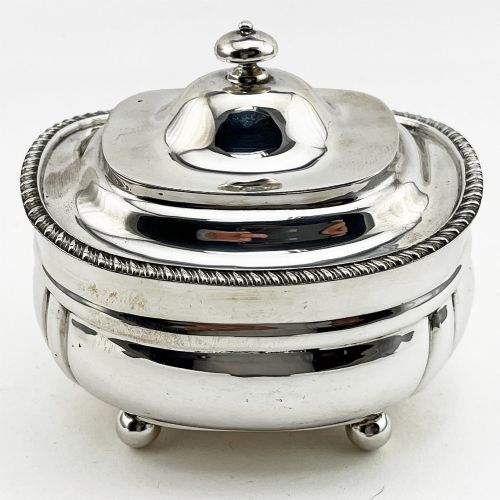
An antique sterling tea canister is a functional container designed to keep loose leaves dry and aromatic. The selection here leans heavily towards Edwardian and Victorian forms, alongside Georgian and later 20th-century pieces.
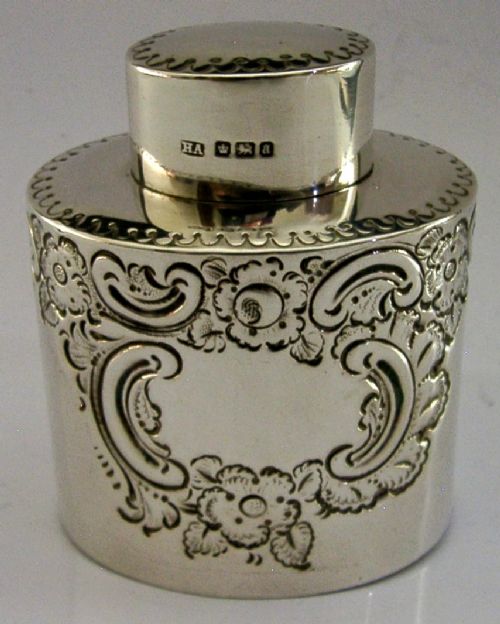
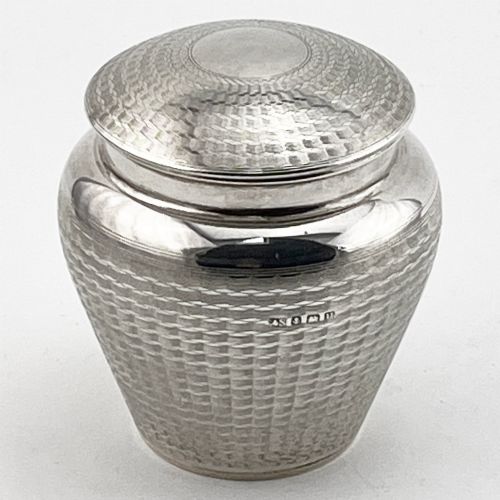
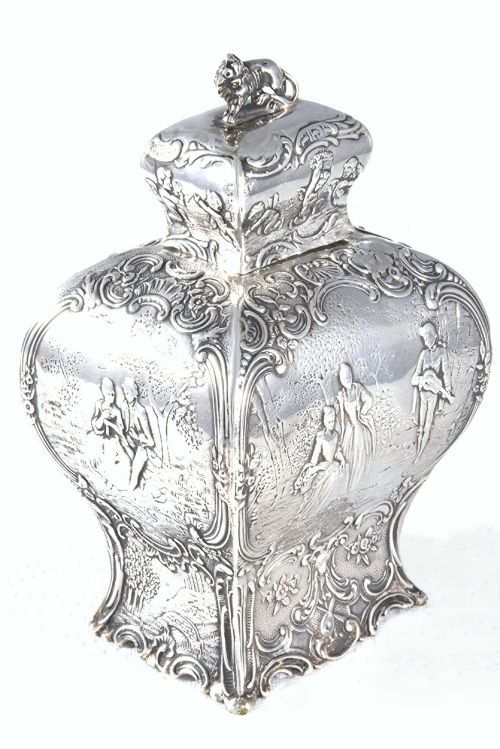
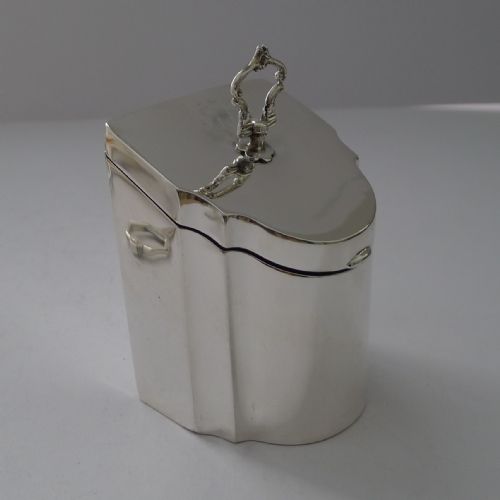
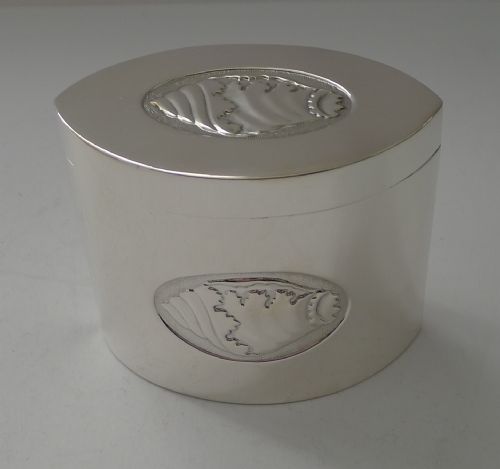
Buyers encounter various shapes, from standard oval and rectangular boxes to bombe profiles, knife box forms, and novelty paint tins. Many examples function as tea caddies or include associated caddy spoons.
These items originate primarily from English assay offices in London, Birmingham, and Sheffield, reflecting the domestic habits of past centuries when tea was a valuable commodity.
How They Were Made
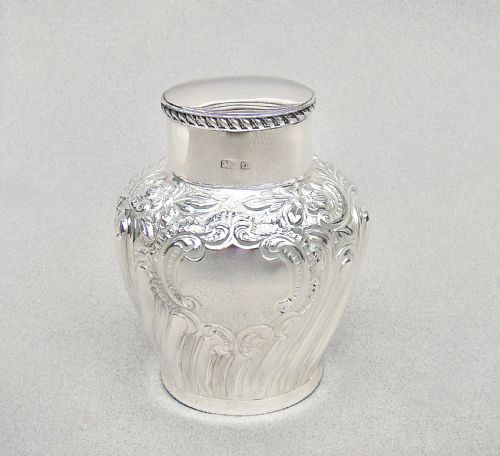
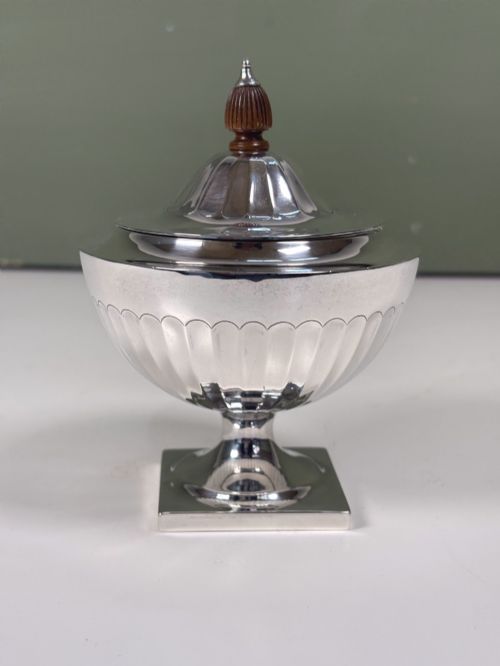
Silversmiths utilised sterling silver sheet, shaped through hammering, repousse work, and fluting to create rigid bodies with secure pull-off or hinged lids. Workshops often incorporated secondary elements such as wood, ebonised wood, bone, and cut crystal.
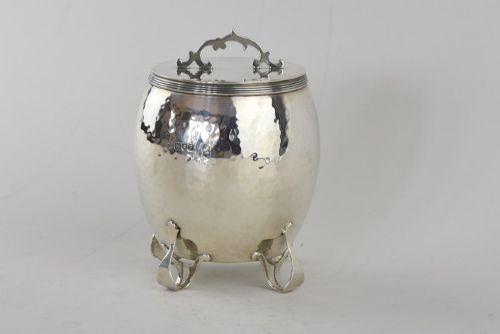
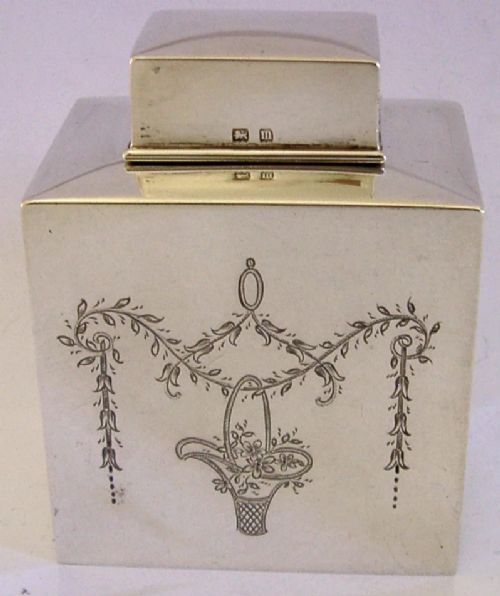
Master makers employed techniques like hand-hammering in Arts and Crafts pieces or crisp engraving in Georgian designs. Hallmarks stamped directly into the metal record the year, city of assay, and maker's mark.
Listings feature sterling silver, cut crystal, and ebonised wood across Victorian, Edwardian, and Georgian periods.
What Varies in Quality
Quality rests on the thickness of the silver gauge and the crispness of decorative chasing or repousse work. Superior examples maintain structural integrity in their hinges and lids without excessive thinning from polishing.
Attribution to notable makers and silversmithing firms elevates an object, as does the integration of uncommon materials like cut crystal or specialised forms like novelty paint tins.
Charles Edwards·Robert Hennell·Zimmermann·Thomas Hayes·William Hutton and Sons Ltd·Mappin and Webb·Ernest Druiff and Co·Goldsmiths and Silversmiths Co·Asprey and Co·Atkin Brothers·Thomas Heming
The Antique Sterling Tea Canister Glossary
- Sterling silver
- A silver alloy containing 92.5 percent pure silver and 7.5 percent other metals, usually copper. This standard composition provides the durability required for domestic tablewares.
- Repousse
- A metalworking technique where the silversmith hammers the design from the reverse side to form a raised relief on the front. It creates tactile surface decoration.
- Pull-off lid
- A snug-fitting lid that lifts straight up without a hinge. These lids rely on precision manufacturing to remain secure.
- Assay office
- An official body that tests the purity of precious metals and stamps items with hallmarks. Towns like London, Birmingham, and Sheffield operated these offices.
Antique Sterling Tea Canister: Frequently Asked Questions
How do I date a silver tea canister?
Look for the hallmarks stamped into the metal, which include a date letter indicating the exact year of assay.
Additional marks show the assay office and the maker's stamp, allowing precise historical placement.
What is the difference between a tea caddy and a canister?
The terms are often used interchangeably in the antiques trade to describe vessels built for storing tea leaves.
Canister sometimes implies a simpler or more cylindrical form, while caddy often refers to a lidded box.
How should I clean antique sterling silver?
Use a soft microfiber cloth and a mild silver polish designed specifically for antique items to remove tarnish gently.
Avoid harsh abrasive dips that can strip the original patina and damage engraved details.
Were these canisters used for everyday tea storage?
In Georgian and Victorian households, tea was expensive and kept under lock and key by the head of the house.
These vessels protected precious leaves from moisture, light, and theft in the dining room or parlour.