




Antique Sterling Mirror
An antique sterling mirror brings tactile weight and bright reflection to a dressing table, combining solid silver mounts with bevelled glass.
Antique Sterling Mirror
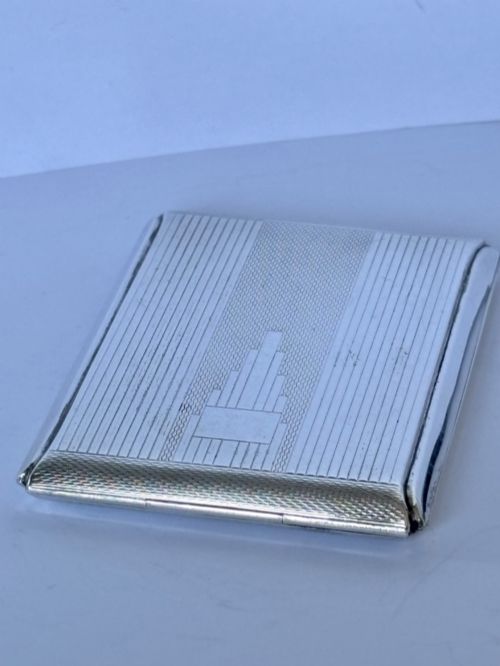
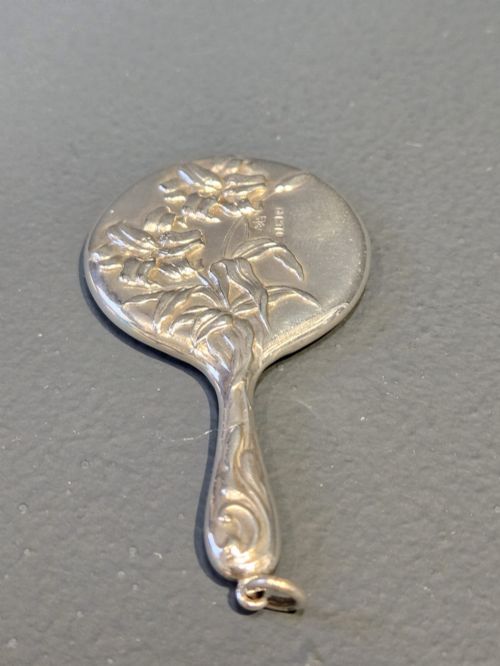
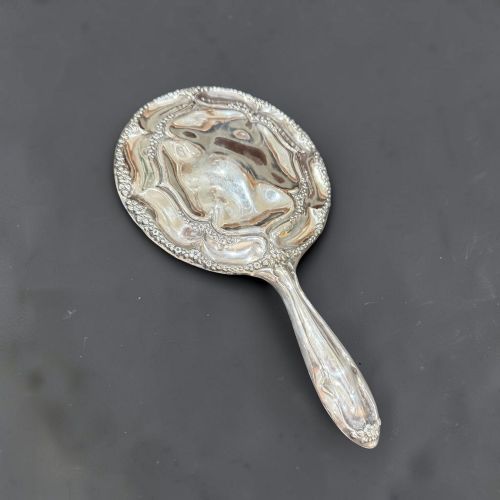
An antique sterling mirror encompasses portable hand mirrors, heavy table mirrors with easel backs, and fitted vanity sets designed for the dressing room. These objects emerge from the late nineteenth century through the mid-twentieth century, capturing shifting domestic habits across the Victorian, Edwardian, and Art Deco periods.
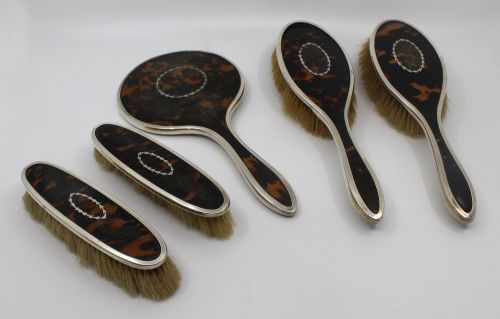
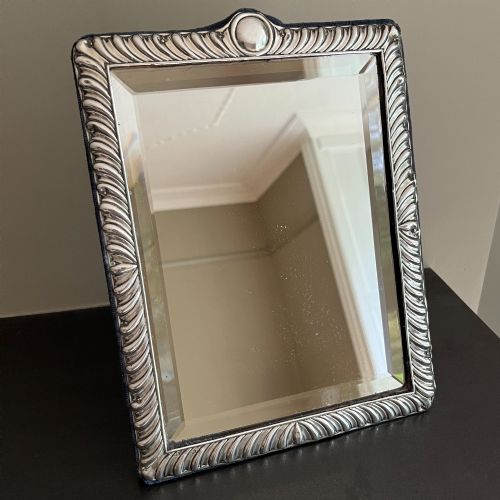
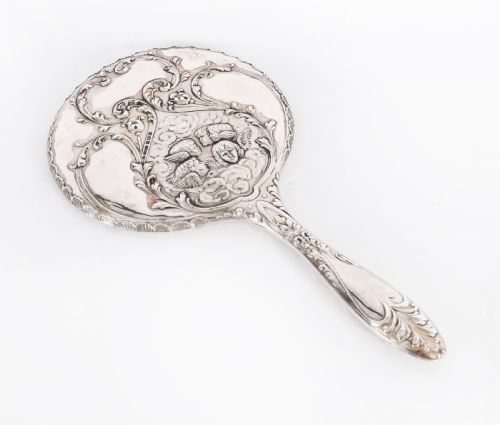
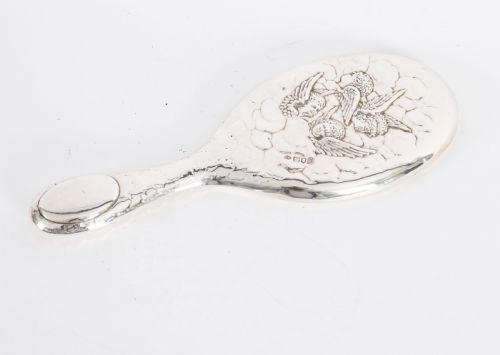
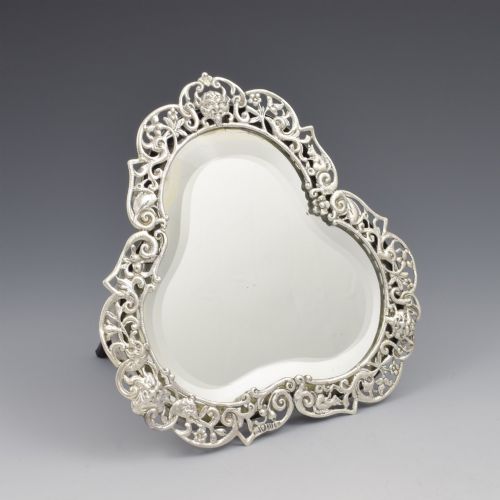
The version most frequently met on this page is the hand-held sterling silver mirror or the larger dressing table mirror supported by a wooden strut. Makers from Birmingham and London produced these pieces in substantial quantities, frequently pairing them with matching brushes, combs, and powder compacts.
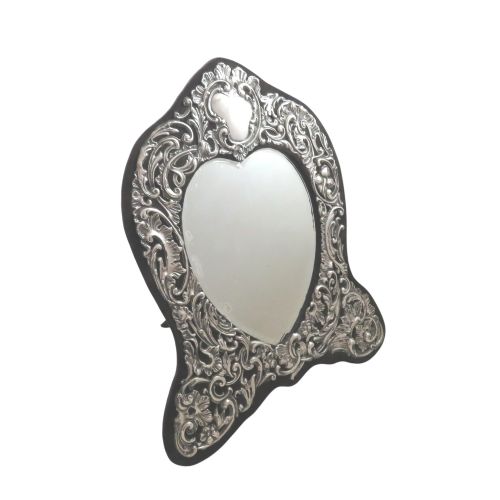
Beyond standard English domestic work, pieces from this search phrase occasionally include Chinese export silver and Continental imports bearing British import hallmarks. These encompass everything from heart-shaped toilet mirrors to large fourteen-inch vanity glasses intended for permanent placement on a dressing chest.
Materials and Technique
The construction relies upon heavy sterling silver sheets shaped by hand-hammering, stamping, or casting over a structural wooden core or plaster backing. Handles and frames are securely fastened to mirror glass and protected at the rear by materials such as velvet, wood, or natural bristle.
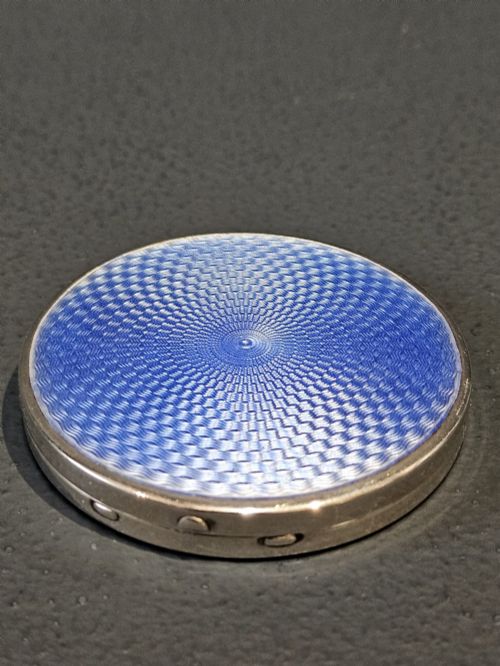
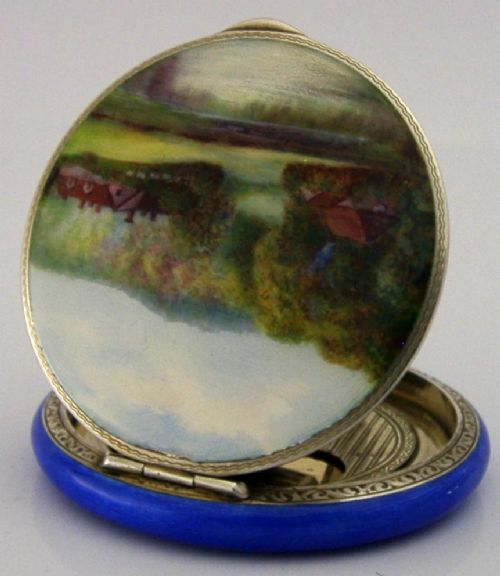
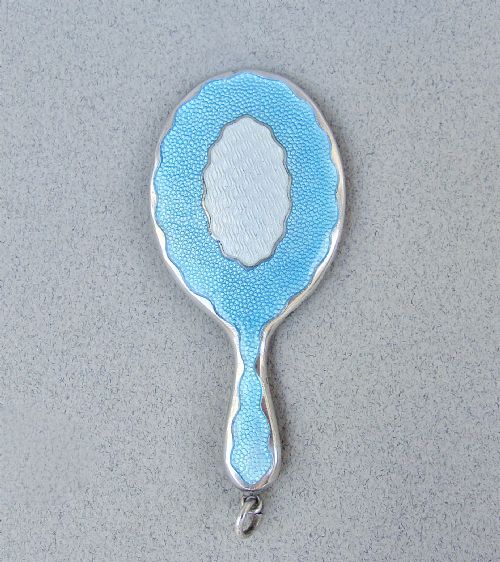
Decoration is achieved through varied silversmithing techniques including repoussé embossing, pierced openwork, and engine-turning. Many pieces incorporate vitreous enamel, particularly guilloche enamel with intricate machine-engraved patterns beneath translucent coloured layers, alongside accents of faux tortoiseshell and silver gilt.
Antique Sterling Mirror Retail Price Guide 2026
Typical asking prices for sterling mirror among the pieces listed under this phrase on Sellingantiques today, from the lower quarter to the upper quarter. They describe what is for sale here now, not the wider market.
Several mirrors feature mischievous cherubs peering out from the silver border, watching over morning routines with winged indifference.
Assessing Craftsmanship
Quality rests upon the gauge of the sterling silver sheet and the crispness of the chased or embossed detail. Finer examples display deep, deliberate relief work and substantial metal weight rather than thin sheeting that yields easily to pressure.
The integration of decorative elements dictates the upper tier of pieces, seen in intact guilloche enamel free from chipping, precise engine-turning, and the presence of notable silversmith marks. The quality of the original mirror glass and the stability of the easel or handle structure complete the evaluation.
Henry Williamson·Henry Matthews·Charles Boyton·S Blanckensee and Son·William Comyns
The Antique Sterling Mirror Glossary
- Sterling silver
- A silver alloy containing 92.5 percent pure silver by mass, standard for British plate and indicated by the lion passant hallmark.
- Guilloche enamel
- A decorative technique where a geometric pattern is engine-turned into metal and covered with transparent enamel.
- Easel mirror
- A table mirror supported at the rear by a hinged leg or strut allowing it to stand upright.
- Repoussé
- A method of metalworking where the silver is hammered into relief from the reverse side.
- Silver gilt
- Sterling silver that has been coated with a thin layer of gold on its surface.
Antique Sterling Mirror: Frequently Asked Questions
How do I clean an antique silver mirror?
Use a soft microfiber cloth and a mild silver polish specifically formulated for antique plate, applying light pressure to avoid disturbing embossed details or enamel.
Keep moisture away from the edges of the mirror glass and the backing materials such as velvet or wood to prevent staining and deterioration.
Can antique mirror glass be replaced?
Original mirror glass often exhibits light foxing and grey spots due to age, which many collectors prefer to leave intact as evidence of authenticity.
Replacement is possible through a specialist restorer if the glass is broken, though an original plate contributes directly to the character of the piece.
How do I read British silver hallmarks?
British hallmarks typically include a maker's mark, a standard mark denoting sterling quality such as the lion passant, a town mark indicating the assay office, and a date letter.
Matching these stamps against standard reference tables reveals the exact year and city of manufacture for the silver mount.