

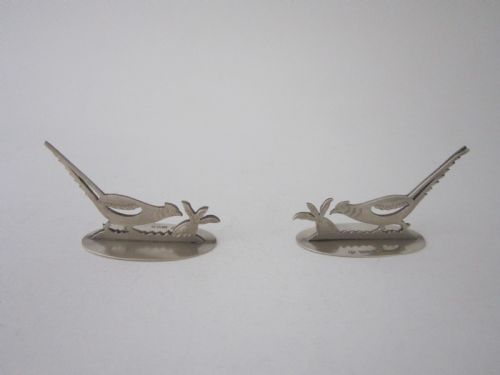


Antique Sterling Menu Holders
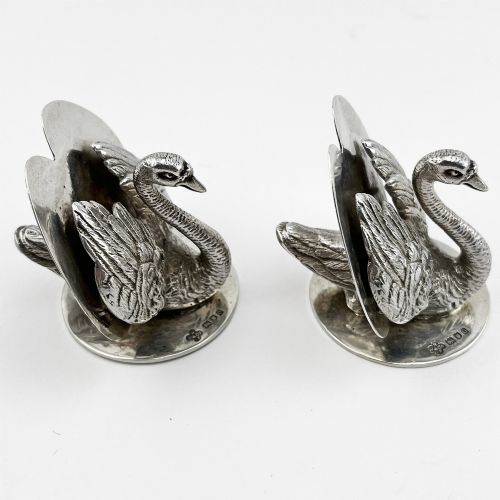
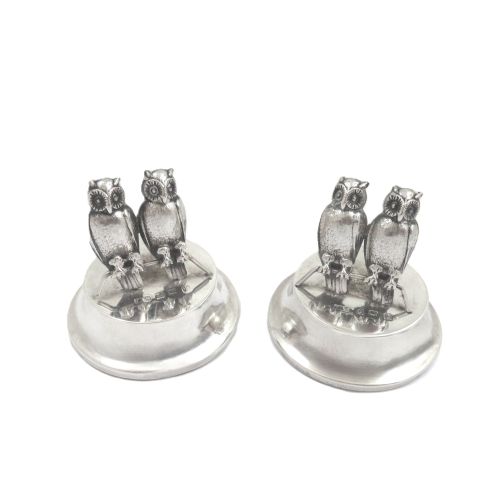
These antique sterling menu holders bring silver owls, figures, and birds to the dining table, offering a decorative way to display menus and place cards.
Antique Sterling Menu Holders
When you search for antique sterling menu holders, you encounter small desk or dining table accessories designed to prop up dinner menus or name cards. These pieces appear frequently from the Edwardian period, alongside examples from the Victorian, George V, and George VI eras.
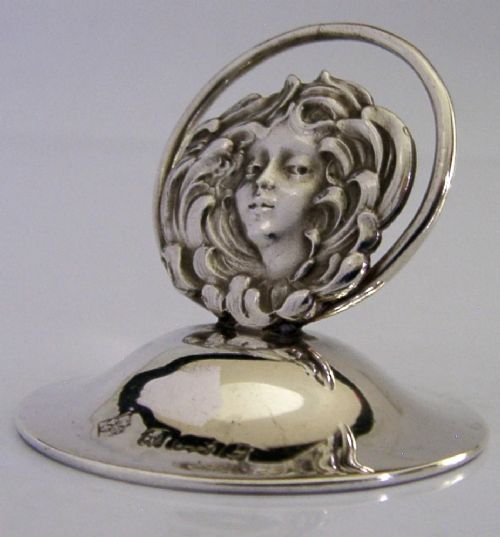
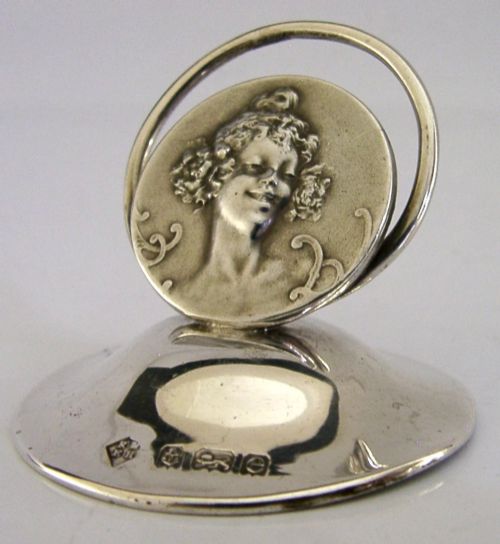
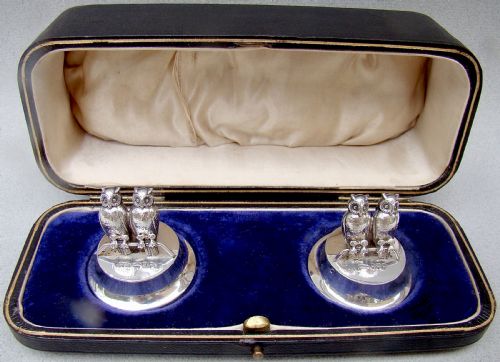
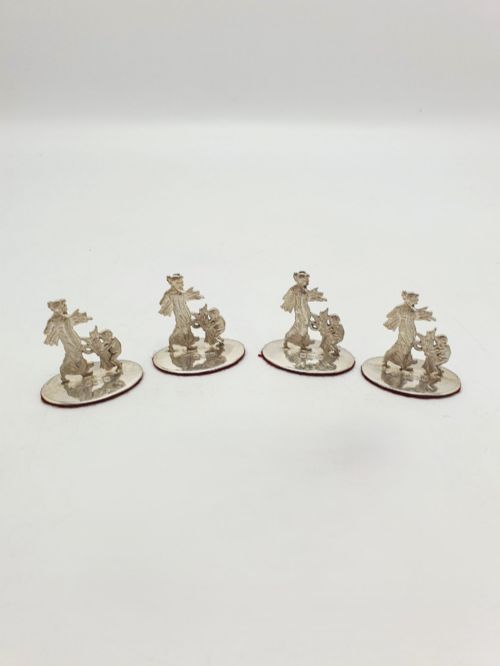
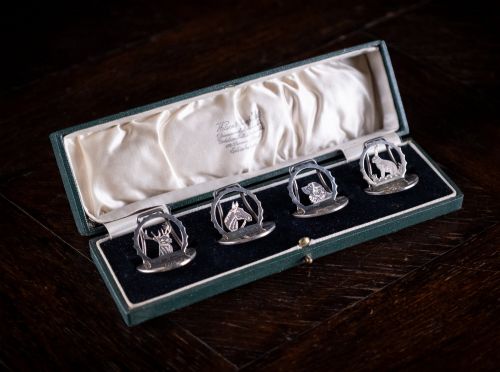
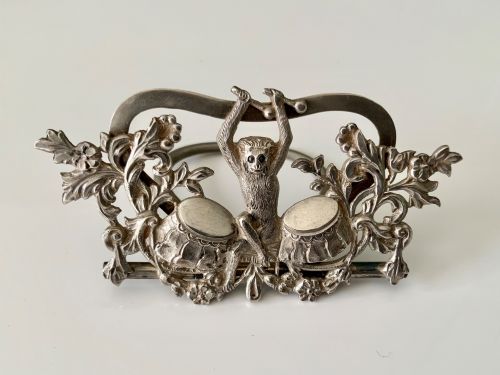
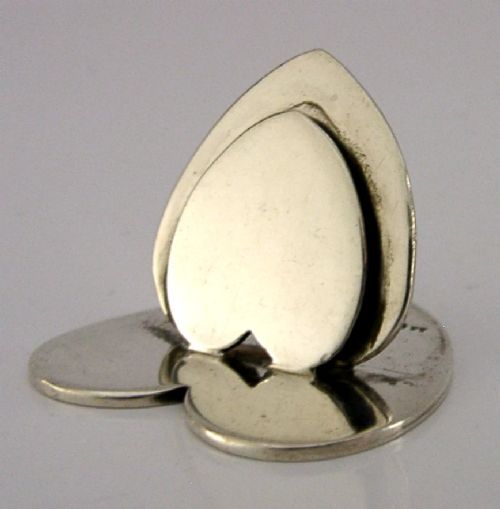
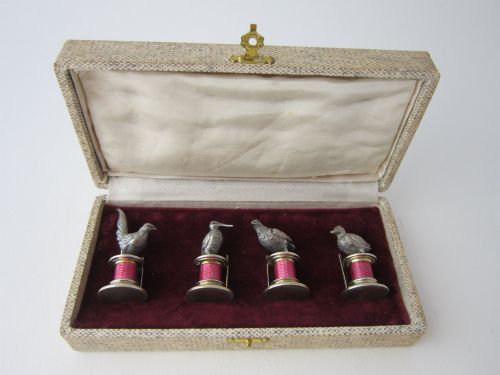
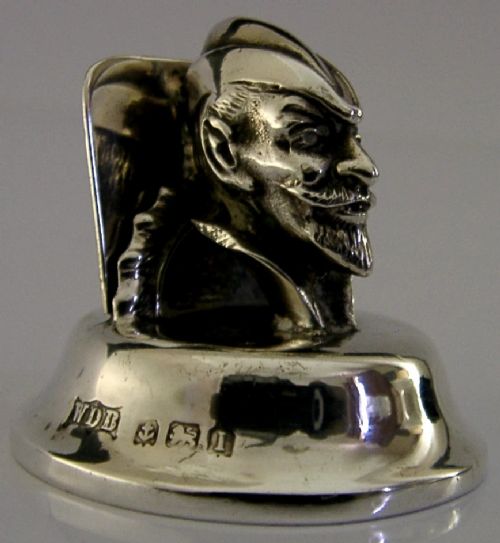
The forms span simple laurel wreaths, wishbones, and parasols alongside intricate figural designs depicting owls, foxes, ducks, stags, cherubs, and characters like Alice in Wonderland and Robin Hood. Many survive as pairs or matched sets of four, sometimes complete with their original fitted presentation boxes.
Makers utilised these small silver canvases to showcase prevailing design movements, moving from ornate Victorian styles into clean Edwardian lines, Art Nouveau curves, and geometric Art Deco shapes.
How they were made
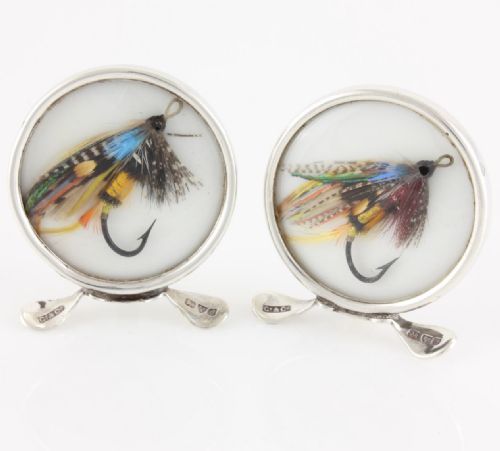
The primary material across these listings is solid sterling silver, often combined with applied details or backing elements in materials such as glass, leather, velvet, silk, feathers, mother of pearl, and colourful guilloche enamel.
Manufacturers employed casting, stamping, and detailed hand-chasing to render animal feathers, facial expressions, and foliate motifs with crisp definition. Many pieces feature weighted bases or hinged struts to support the weight of heavy card menus without tipping over.
Materials appearing alongside silver include enamel, leather, feathers, velvet, silk, glass, and mother of pearl.
What varies in quality
The distinction between standard examples and superior pieces rests largely on the crispness of the casting and the depth of the hand-chased detail on figural subjects like birds, animals, and human characters. Finer items exhibit realistic textures and secure hinges that hold their tension over time.
The presence of a recognised maker, complete hallmarks, original fitted presentation boxes, and uncommon thematic subjects such as military insignia or distinct literary characters elevates the standing of an individual piece.
Levi & Salaman·A. Wilcox·Grey & Co.·Sampson Mordan·Asprey·Mappin & Webb·Liberty
The Antique Sterling Menu Holders Glossary
- Sterling silver
- A silver alloy containing 92.5 percent pure silver and 7.5 percent other metals, usually copper, to add strength. This standard is indicated on British silver by the lion passant hallmark.
- Guilloche enamel
- A decorative technique where intricate geometric patterns are mechanically engraved beneath a translucent layer of coloured enamel. It adds vibrant colour and texture to small silver items.
- Hallmark
- An official stamp or series of marks applied to precious metals in Britain, indicating the maker, assay office, standard of purity, and year of testing. These stamps allow precise dating of the silver.
- Figural
- A description for objects moulded or cast in the likeness of human figures, animals, or characters. In menu holders, these often take the form of owls, foxes, or figures from stories.
- Chasing
- A metalsmithing technique where designs are hammered into the front surface of the metal to push details outward and create relief. It gives texture and depth to feathers, hair, and clothing.
Antique Sterling Menu Holders: Frequently Asked Questions
How were menu holders used originally?
Hosts placed them around the dining table so guests could easily read the courses planned for the meal or locate their assigned seats. They were often matched to the theme of the evening or the interests of the host.
In many cases, the same holders doubled as photo clips or place card markers, making them versatile accessories for formal entertaining.
How do I date an antique menu holder?
You can date these pieces by examining the set of hallmarks stamped into the silver, which typically include a date letter corresponding to the assay office and year of testing. Stylistic clues such as Art Nouveau curves or Edwardian motifs also help narrow down the period.
Many listings provide the specific year or reign, such as George V or Edwardian, based on these official assay marks.
Why do some menu holders come in sets?
Dinner parties of the Victorian and Edwardian periods required multiple tables or large gatherings, necessitating matching sets of four, eight, or twelve table accessories. Manufacturers retailed these sets either loose or nestled inside custom velvet-lined leather presentation boxes.
Finding a complete boxed set from makers like Asprey or Mappin & Webb reflects the original high-end retail presentation.