






Antique Stationery Rack
An antique stationery rack gathers correspondence and notes with desktop organisation shaped by Victorian and Edwardian hands.
Antique Stationery Rack
An antique stationery rack comprises desk tidies, correspondence boxes, and letter holders designed to sort mail and paper in domestic and office settings. These desktop and wall-mounted pieces emerge most frequently from the Victorian and Edwardian periods, alongside earlier Georgian iterations and later 1920s or 1930s examples.
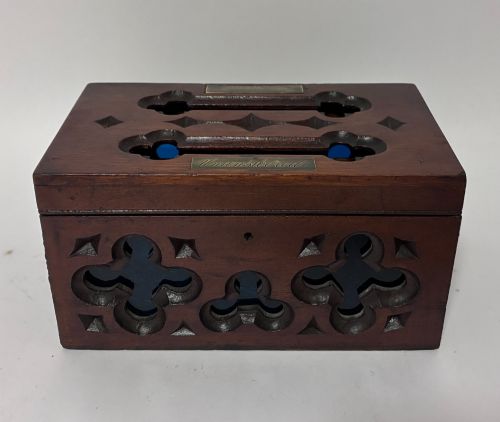
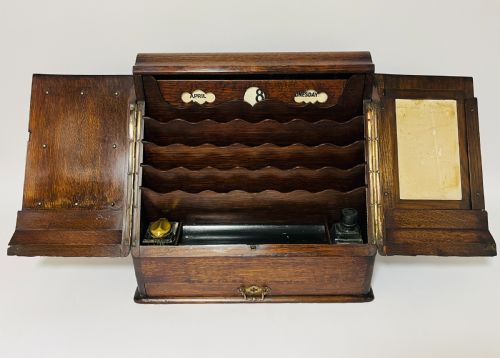
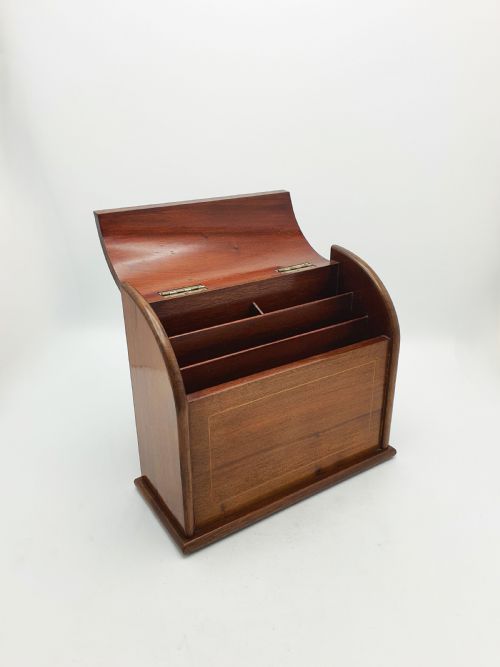
Forms range from simple open wooden letter racks and tiered waterfalls to fall-front stationery cabinets, enclosed writing boxes, and heavy cast brass architectural or figural pockets. Pieces often integrate inkwells, pen trays, or secret drawers, reflecting the varied writing routines of past households and offices.
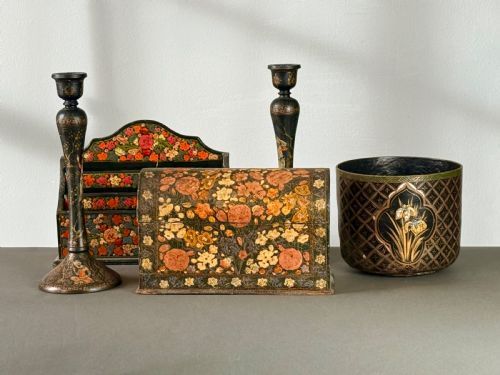
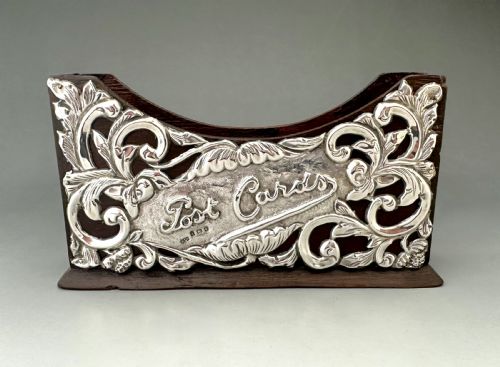
The materials span native and exotic timbers like oak, mahogany, walnut, and rosewood, alongside decorative finishes in brass, papier-mâché, lacquer, and silver mounts. Buyers encounter everything from country house utility oak to elaborate French boullework and Gothic revival designs.
How they were made
Cabinetmakers constructed the wooden frames of stationery racks using durable hardwoods such as oak, mahogany, and walnut, often applying dovetail joints to withstand daily desk use. Surfaces frequently featured inlaid details, boxwood stringing, or carved architectural motifs.
Metal components relied on cast and sheet brass, sometimes enhanced with ormolu mounts, silver plating, or copper work associated with the Arts and Crafts movement. Papier-mâché and lacquer pieces employed layered papier bases finished with painted decoration or mother-of-pearl inlay.
Antique Stationery Rack Retail Price Guide 2026
Typical asking prices for stationery rack among the pieces listed under this phrase on Sellingantiques today, from the lower quarter to the upper quarter. They describe what is for sale here now, not the wider market.
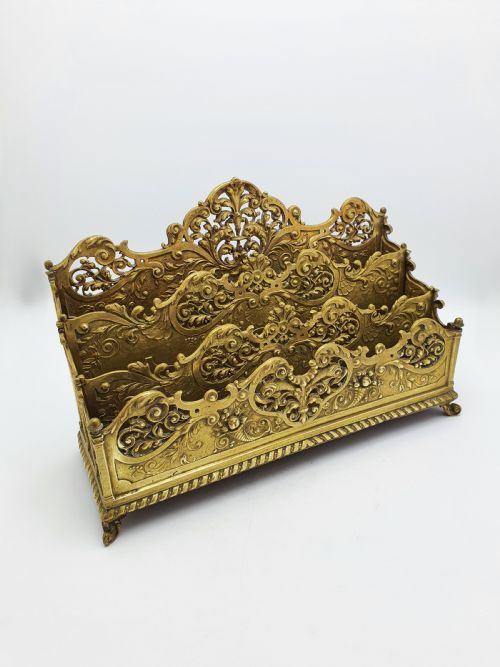
Several brass racks feature watchful dolphins or cherubs guarding the post.
What varies in quality
The standard of timber selection and interior fitting distinguishes fine examples from standard utility pieces, seen in figured grain matching and tightly fitted pigeonholes. Superior brasswork exhibits crisp casting detail in figural or rococo motifs rather than softened edges.
Construction integrity shows in the survival of original glass ink bottles, working locks with keys, and sound hinges on fall-front cabinets and folding letter stands. The integration of specialty details like secret drawers or makers' labels elevates a piece.
Asprey London·F Waller
The Antique Stationery Rack Glossary
- Cartonnier
- A desktop cabinet featuring multiple tiers or drawers designed for holding papers and documents. These pieces often display architectural styling and rich wood veneers.
- Correspondence box
- An enclosed box intended to store writing paper, envelopes, and incoming mail securely. They frequently feature fitted sloping interiors.
- Standish
- A complete desk set combining an inkwell, sander, pen tray, and sometimes an integrated letter rack. These portable writing accessories sat centrally on library tables.
- Boullework
- A technique of marquetry using brass and tortoiseshell inlaid in elaborate scroll patterns. Named after French cabinetmaker André-Charles Boulle, it appears on luxury Victorian and continental pieces.
- Tunbridge ware
- Small wooden items decorated with mosaic patterns created from thousands of tiny tinted wood blocks. This meticulous technique originates from Kent, England.
Antique Stationery Rack: Frequently Asked Questions
How were stationery racks used?
These accessories organised incoming and outgoing mail, writing paper, and envelopes on writing desks and library tables.
Enclosed cabinets provided privacy for correspondence, while open racks offered quick access to daily letters.
Where were these racks placed?
Desk-top models sat directly on partners desks, writing slopes, and library tables within studies and drawing rooms.
Wall-mounted pocket versions hung near hallways, libraries, or administrative offices to catch post.
How do I date a rack?
Stylistic clues such as Gothic revival carving, Arts and Crafts copper work, or Edwardian satinwood inlay provide clear chronological markers.
Materials and construction methods, including machine-cut versus hand-cut dovetails, further narrow down the manufacturing decade.
Can I use them today?
Modern correspondence, bills, and notepads fit neatly into the vertical divisions and compartments of historical letter racks.
They function practically on contemporary home office desks while maintaining period character.