





Antique Staffordshire Mantle
An antique staffordshire mantle piece brings 19th-century ceramic character to a hearth with figures, animals, and clocks.
Antique Staffordshire Mantle
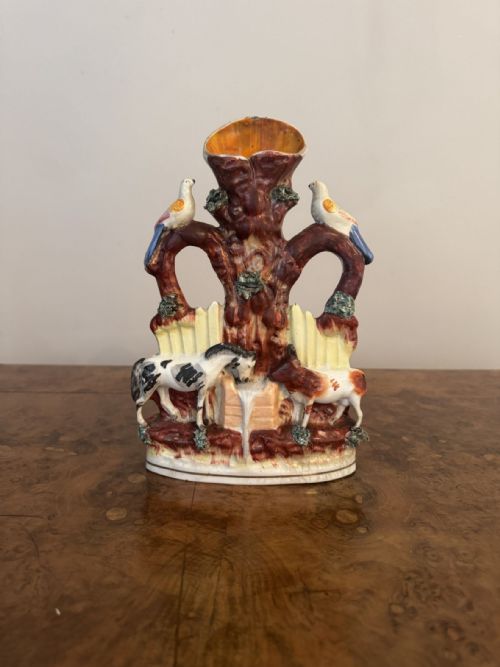
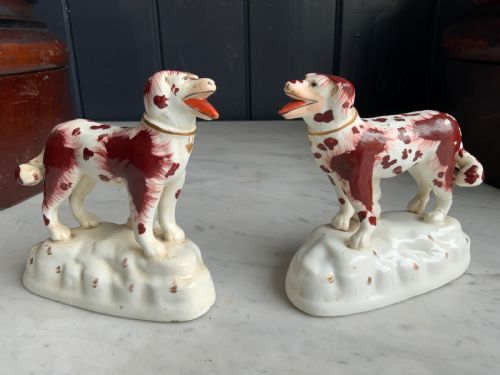
When searching for an antique staffordshire mantle piece, collectors encounter 19th-century earthenware and porcelain figures designed for display on mantelpieces. These pieces include pairs of dogs such as spaniels, greyhounds, pugs, and poodles, alongside spill vases and flatback figures.
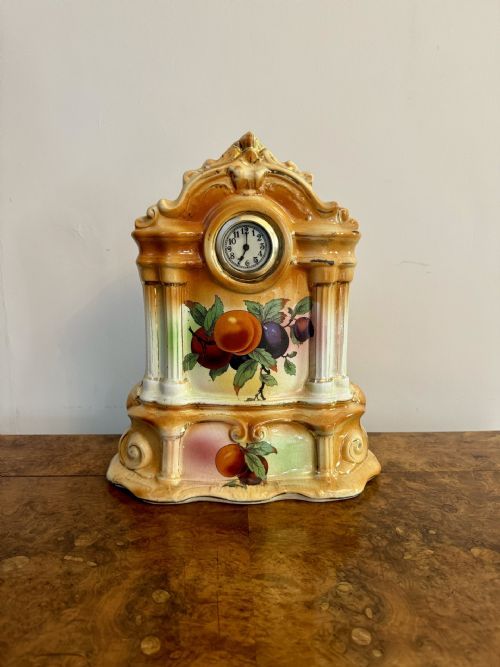
The objects frequently depict royal portraits, historical subjects like Louis Napoleon and Empress of France, or literary and theatrical figures such as Highland Jessie and Little Red Riding Hood. Victorian examples dominate the selection, often taking the form of mantel clocks or decorative pottery figures.
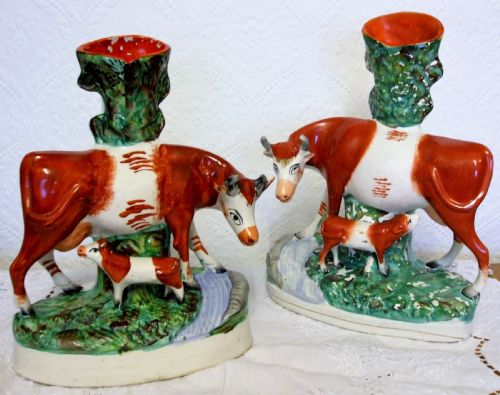
Makers produced these ceramics in symmetrical pairs or standalone sculptural forms intended to ornament nineteenth-century domestic interiors. The assortment ranges from sheep and cow-and-calf spill vases to hand-painted spaniels adorned with blue cushions and encrusting.
Materials and construction
Potters utilised earthenware, ceramic, and porcelain as the primary body materials for shaping these nineteenth-century figures. Artisans applied lead glaze and enamel colours to finish the surfaces, often adding gilt highlights and glass eyes to enhance the visual detail of dogs and human subjects.
Antique Staffordshire Mantle Retail Price Guide 2026
Typical asking prices for staffordshire mantle among the pieces listed under this phrase on Sellingantiques today, from the lower quarter to the upper quarter. They describe what is for sale here now, not the wider market.
Watchful Staffordshire spaniels peer out from mantelpieces with glossy glass eyes, guarding the hearth since the Victorian era.
Judging quality and character
Quality in these ceramics depends on the precision of the hand painting and the crispness of the moulding in the earthenware body. Pieces featuring glass eyes, careful enamel work, and rich gilt details stand apart from simpler decorated examples.
The presence of original pairings, such as matched greyhounds or spaniels, elevates the standing of a mantel piece. Finer examples display intricate encrusting and well-defined facial expressions that reflect superior nineteenth-century Staffordshire craftsmanship.
The Antique Staffordshire Mantle Glossary
- Flatback
- A figure moulded with a finished front and a flat, unglazed or minimally decorated rear designed to sit flush against a wall or mantelpiece. This construction saved materials and kept the weight down for display.
- Spill Vase
- A hollow ceramic vessel featuring an attached upright cylinder intended to hold wooden spills for lighting fires or candles. These combine decorative figural sculpture with a practical domestic function.
- Earthenware
- A porous pottery body fired at lower temperatures and rendered impermeable through the application of glaze. It served as the foundation for the majority of nineteenth-century Staffordshire figures.
- Enamel
- Opaque vitreous colours applied over the glaze and fired at a lower temperature to fix the pigments. This technique allowed potters to achieve bright reds, blues, and blacks on portrait and animal figures.
- Encrusting
- Applied slip or clay worked into small raised dots, flowers, or foliage across the surface of the pottery. It provides tactile texture and floral ornamentation to bases and cushions.
Antique Staffordshire Mantle: Frequently Asked Questions
What is an antique staffordshire mantle piece?
These pieces are nineteenth-century ceramic figures, animals, and clocks made in the Staffordshire potteries for display on mantelpieces. They encompass portrait subjects, spill vases, and pairs of dogs.
Potters shaped them from earthenware and porcelain, finishing them with hand-painted enamels, glazes, and occasional gilt highlights.
How were staffordshire figures used?
Victorian households placed these ceramic figures on mantelpieces, sideboards, and shelves to ornament domestic interiors. Spill vases additionally served the practical purpose of holding wooden fire-lighters near the hearth.
Pairs of dogs, such as spaniels and greyhounds, sat symmetrically at either end of a fireplace during the nineteenth century.
How do I identify a flatback figure?
A flatback figure has a fully modelled and decorated front with a flat, plain back designed to stand directly against a wall. This method of construction was standard for nineteenth-century mantel ornaments.
It distinguishes them from fully three-dimensional sculptures intended to be viewed from all sides in the round.
What subjects appear on these figures?
Common subjects include pairs of spaniels, pugs, poodles, and greyhounds, frequently accented with glass eyes or blue cushions. Historical and literary figures also appear, ranging from Napoleon III and the Empress of France to Little Red Riding Hood.
Makers further produced rural subjects, such as sheep, cows with calves, and Scottish figures.