




Antique Staffordshire Flatback Vase
An antique staffordshire flatback vase brings the distinct character of nineteenth century earthenware mantlepieces straight into a modern room.
Antique Staffordshire Flatback Vase
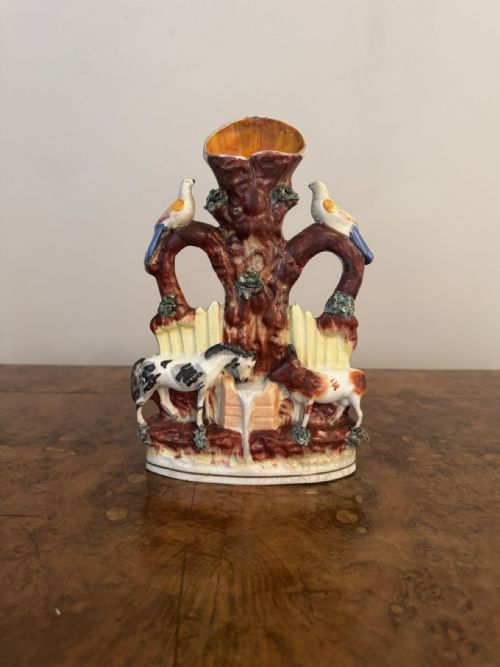
When you search for an antique staffordshire flatback vase, you encounter nineteenth century ceramic figures and spill vases made for domestic display. These pieces typically present subjects like animals, figures, and castles designed to stand flat against a wall.
The selection here spans the Victorian era, running from eighteen sixty through to nineteen hundred. You find individual figures, pairs of spill holders, and groups depicting subjects such as cows, deer, Scots harvesters, and the Band of Hope.
How they were made
Potters shaped these earthenware objects using ceramic moulds during the nineteenth century. The resulting pottery figures received hand painted enamel colours and lead glaze finishes.
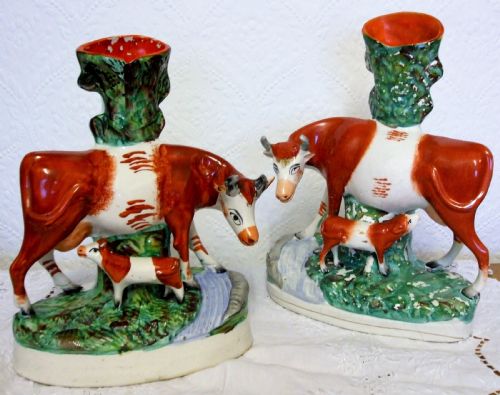
Cows and calves peer out from nineteenth century mantelpieces with wide, painted eyes.
What varies in quality
The standard of modeling and painting sets individual pieces apart across the Victorian range. Finer examples display more careful brushwork on the enamel details and cleaner definition in the ceramic moulding.
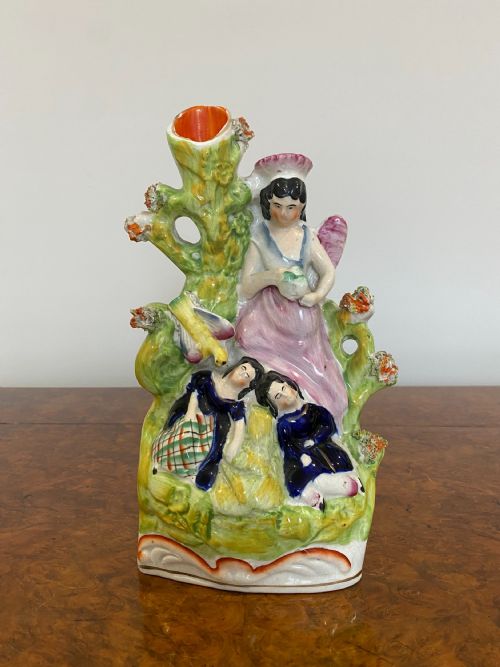
Pairs and grouped figures often command greater interest than single items, particularly when the subjects tell a clear story like the Scots harvesters or the Babes in the wood.
The Antique Staffordshire Flatback Vase Glossary
- Flatback
- A ceramic figure moulded with a finished front and a flat, unadorned rear surface. This design allowed the piece to stand flush against a wall or mantlepiece.
- Spill vase
- A hollow ceramic holder designed to hold wooden spills used for lighting fires or pipes. These function as both decorative figures and practical mantel accessories.
- Earthenware
- Porous pottery fired at lower temperatures than stoneware or porcelain. It serves as the primary ceramic body for nineteenth century Staffordshire figures.
- Lead glaze
- A glossy coating applied to pottery before firing to waterproof the earthenware body. It gives these nineteenth century pieces their characteristic sheen.
Antique Staffordshire Flatback Vase: Frequently Asked Questions
What is a staffordshire flatback vase?
These nineteenth century earthenware figures feature a flat rear side designed to rest against a wall. Many incorporate a hollow cylinder for holding wooden fire spills alongside the decorative ceramic modeling.
Potters in the Staffordshire potteries produced these items in various sizes and subjects during the Victorian era for home display.
How old are these pottery figures?
The pieces available date from the nineteenth century, specifically spanning the decades between eighteen sixty and nineteen hundred. Most examples belong to the Victorian period.
Makers utilised traditional earthenware and enamel techniques typical of that era to create the figures and spill holders.
Where were these pieces displayed?
Victorian households typically placed these ceramic figures on fireplace mantles and high shelves. Their flat backs made them ideal for sitting securely against parlor walls.
Subjects ranged from animals like cows and deer to literary and moral groups such as the Band of Hope.
Did these pieces come in pairs?
Potters frequently produced these figures in matching pairs to flank a fireplace or mirror. You often find twin spill vases depicting mirrored animal subjects or human figures.
Individual pieces and larger group arrangements also appear alongside these matched pairs.