





Antique Staffordshire Animals
These antique staffordshire animals capture the rustic charm of nineteenth-century parlours, offering characterful ceramic figures that bring domestic history into modern rooms.
Antique Staffordshire Animals
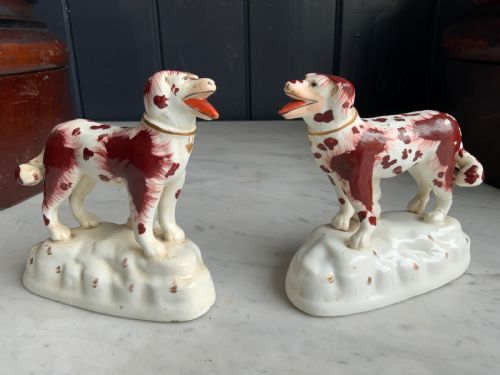
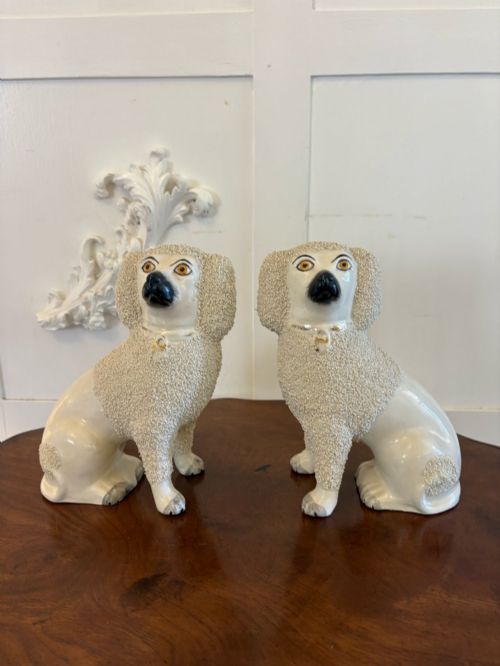
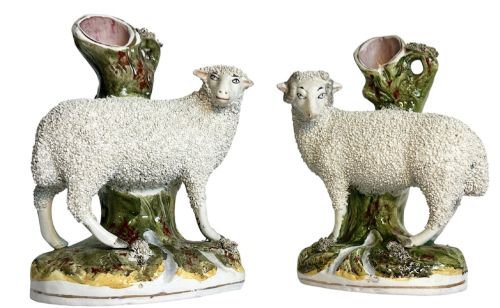
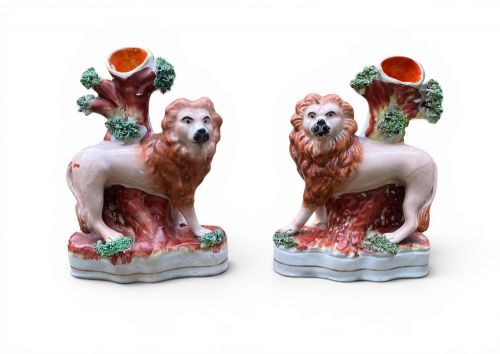
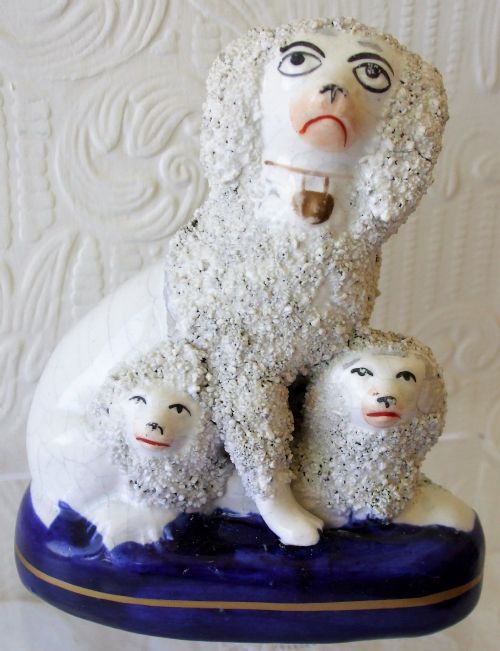
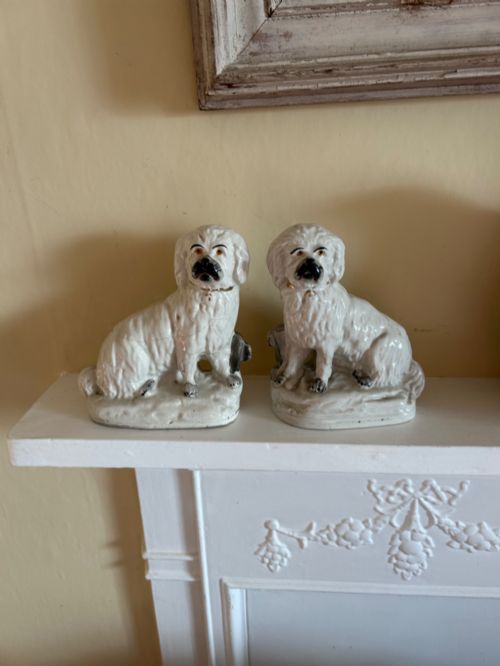
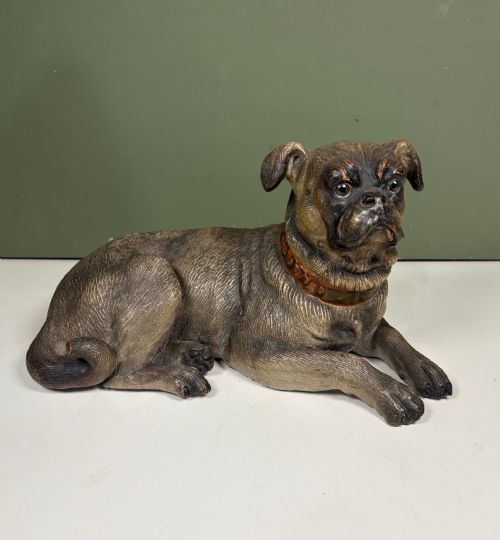
When you search for antique staffordshire animals, you encounter a delightful menagerie of earthenware and pearlware figures produced across the nineteenth century. The most common survivals on this page are pairs of dogs such as poodles, pugs, and lions, alongside sheep, zebras, and cows.
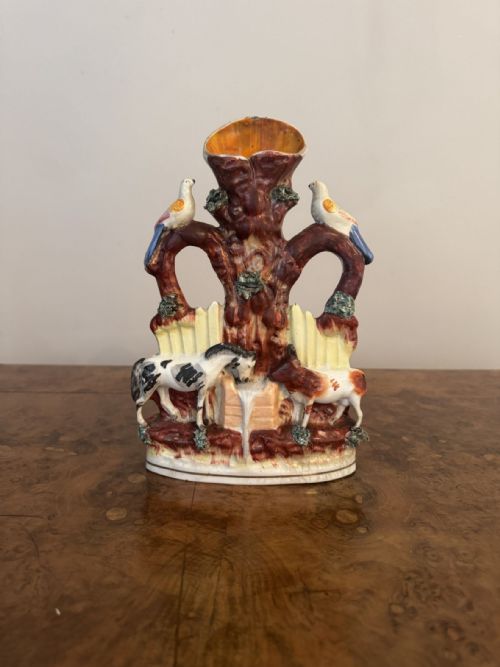
Many of these pieces take the form of spill vases or functional inkwells rather than purely decorative ornaments. Makers across the Victorian, Regency, and Georgian periods shaped these ceramics to sit upon mantelpieces, often depicting domestic pets or exotic beasts with equal enthusiasm.
How they were made
Potters built these figures using earthenware, pearlware, or porcelain, often shaping them in moulds before applying lead glazes. Artisans then decorated the surfaces with enamel colours to define the coats of dogs, lions, and zebras.
The use of treacle glaze appears frequently on nineteenth-century lions and pugs, providing a deep, lustrous brown finish. After glazing, the ceramics underwent kiln firing to set the vitreous surfaces and rich pigments.
Antique Staffordshire Animals Retail Price Guide 2026
Typical asking prices for staffordshire animals among the pieces listed under this phrase on Sellingantiques today, from the lower quarter to the upper quarter. They describe what is for sale here now, not the wider market.
Snow leopards and zebras join the usual poodles and lions, proving Victorian potters possessed wonderfully adventurous imaginations.
What varies in quality
Quality rests in the crispness of the moulding and the sensitivity of the hand-painted enamel details. Superior figures display distinct facial expressions and carefully rendered fur, rather than the hurried brushwork found on simpler output.
The presence of early pearlware bodies and well-preserved glaze finishes elevates certain pieces above standard Victorian earthenware. Proportion and the survival of original pairs further distinguish the finer examples in this category.
Walton·Wooley·Rockingham Pottery
The Antique Staffordshire Animals Glossary
- Pearlware
- A refined earthenware developed in the late eighteenth century featuring a subtle bluish glaze that pooled in recesses. It frequently precedes standard Victorian white-glazed pottery.
- Spill Vase
- A hollow ceramic vessel designed to hold taper spills used for lighting candles or pipes. These often double as tree trunks behind animal figures.
- Treacle Glaze
- A dark, translucent brown lead glaze heavily utilised on nineteenth-century pottery. It gives lions and dogs a glossy, molasses-like appearance.
- Earthenware
- Porous pottery fired at relatively low temperatures and rendered impermeable through glazing. It serves as the primary body for the majority of these figures.
- Enamel
- Opaque glass-based paints applied over the fired glaze to add colour and detail to the animals. These pigments underwent a secondary low-temperature firing.
Antique Staffordshire Animals: Frequently Asked Questions
Why were ceramic animal figures so popular?
Victorian households held a deep affection for domestic pets and exotic creatures alike, displaying them widely in parlours. These figures served as accessible substitutes for actual pets or showcased an owner's interest in the wider natural world.
Potteries responded to this domestic demand by producing abundant pairs of dogs, lions, and farm animals. They brought warmth and a sense of order to the Victorian mantelpiece.
How do I distinguish pearlware from later earthenware?
Pearlware typically exhibits a faint bluish tint in the glaze where it pools around crevices or base rims. This refined body belongs predominantly to the late Georgian and early nineteenth-century periods.
Later Victorian earthenware tends toward a whiter, clearer glaze without that characteristic blue tinge. Examining the base and weight of the ceramic often clarifies this distinction.
What is the purpose of a spill vase?
A spill vase incorporates a tubular holder designed to contain thin wooden spills or rolled paper used to transfer fire. Before safety matches became common, these rested by the fireplace to light candles or lamps.
Potters cleverly integrated these holders behind figures like sheep or lions to combine utility with ornament. They sat readied for daily use in the family room.
How can I tell if a pair is genuine?
Genuine pairs show consistent ageing, crazing in the glaze, and wear appropriate to the nineteenth century. The hand-painted enamels should sit naturally beneath the final glossy surface.
Weight, potting technique, and the specific texture of the earthenware body also guide identification. Reproductions often lack the subtle hand-finishing present in period pieces.