
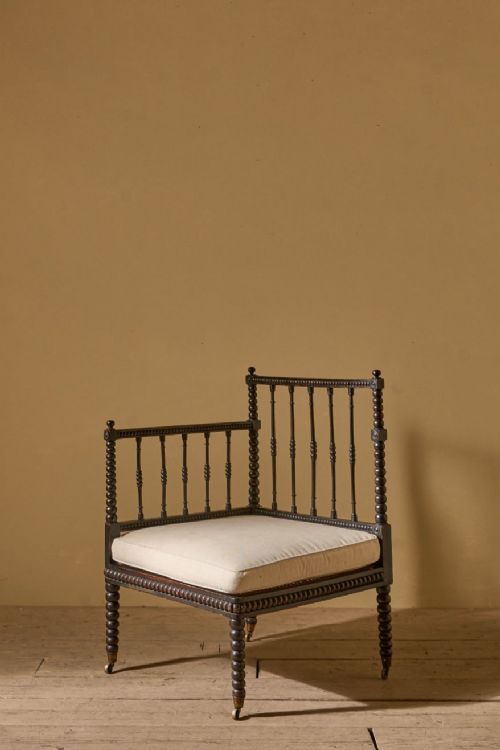

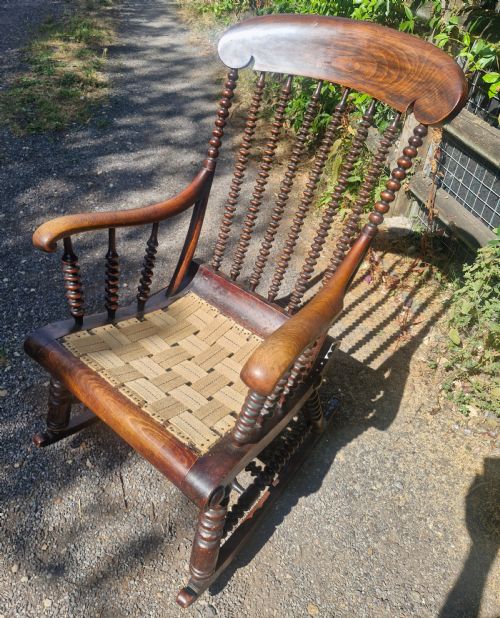
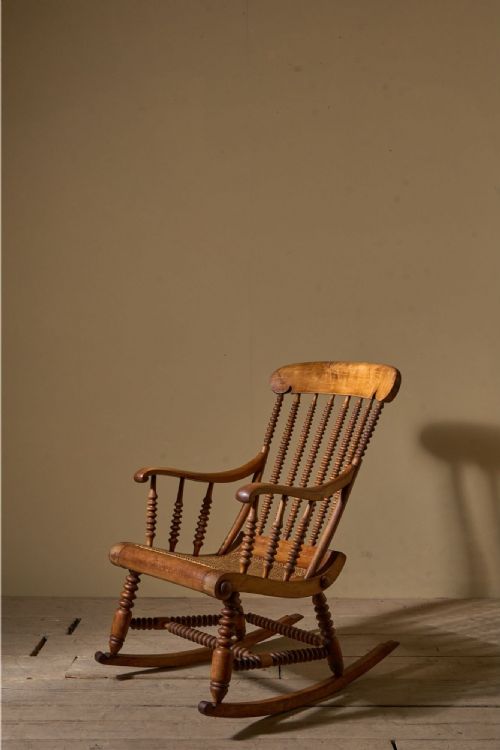
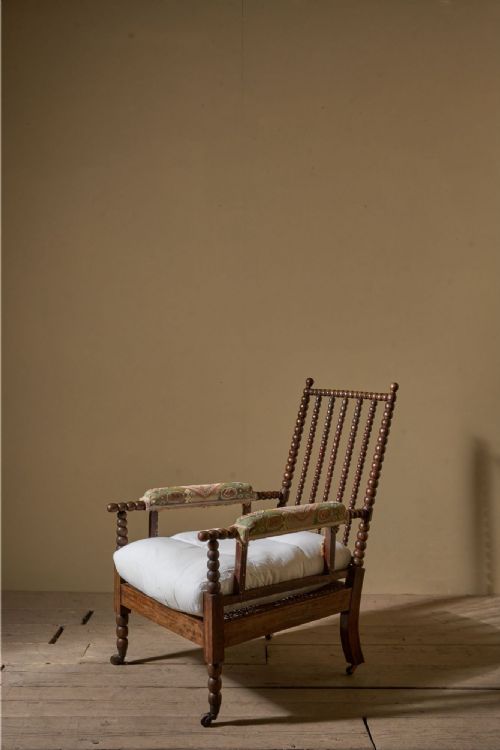


Antique Spool Chair
An antique spool chair brings architectural turning and distinct character to a room.
Antique Spool Chair
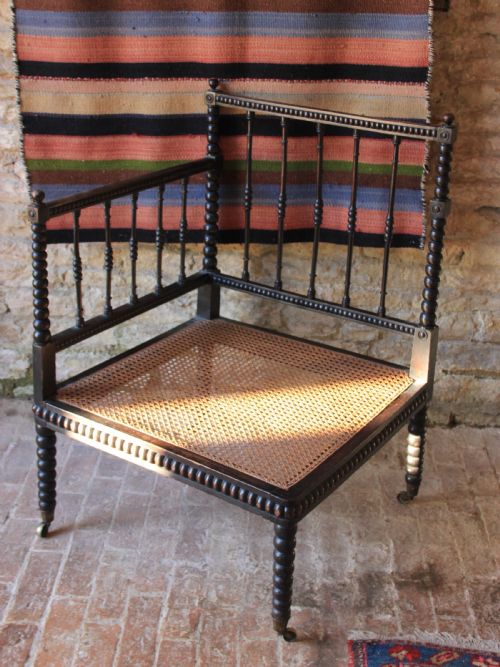
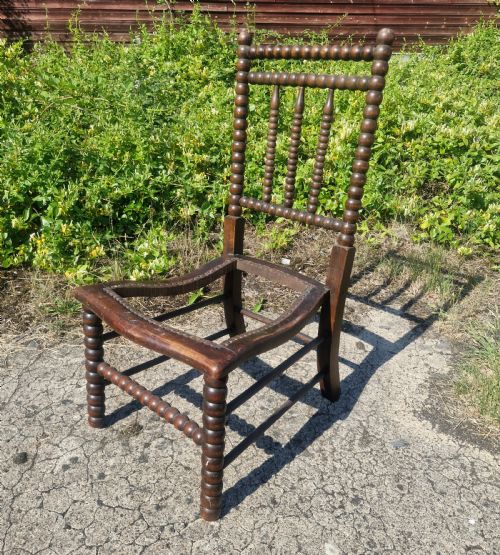
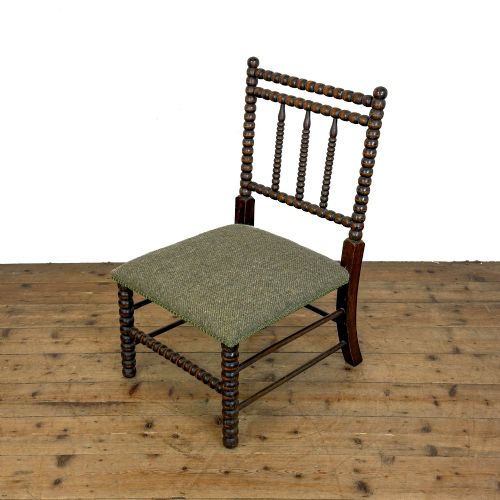
An antique spool chair is defined by its characteristic bobbin or spool turning, shaping the uprights, stretchers and frames into rhythmic sequences of rounded wooden discs. Buyers searching for an antique spool chair will encounter a wide variety of seating forms spanning several centuries and regional traditions.
The selection ranges from low bedroom chairs and rocking chairs to substantial armchairs, corner chairs, daybeds and occasional side chairs. Most examples date from the nineteenth century, encompassing Victorian and country variations, alongside earlier eighteenth-century oak pieces and occasional continental or Scandinavian interpretations.
Regional vernacular styles appear frequently, including English country models, Scottish vernacular rocking chairs and Swedish country folk art thrones. Seating materials vary from traditional cane and wood to upholstered pads finished in velvet, fabric and textile.
Materials and turning methods
Makers fashioned these frames using native and imported hardwoods such as oak, walnut, and rosewood, alongside beech or other timbers finished with ebonised surfaces or simulated rosewood painting. The defining spool or bobbin effect was achieved through lathe turning, shaping solid lengths of wood into repetitive cylindrical segments.
Structural integrity relied on traditional joinery methods combined with turned stretchers that braced the legs and uprights. Seating surfaces incorporated woven cane panels or drop-in pads, while later or revived examples accommodated padded upholstery trimmed in velvet and other textiles.
Materials recorded across the inventory include oak, walnut, rosewood, brass, cane, velvet, and ebonised wood.
Judging turning and preservation
Quality in these seats rests upon the crispness and regularity of the lathe turning across the structural members. Finer examples display deeply defined spools with uniform spacing, whereas simpler pieces show softer profiles or heavier proportions.
Condition and originality dictate the character of each piece, particularly regarding the survival of original surface finishes, ebonised layers, and cane work. The integration of regional styles, from Scottish vernacular framing to Swedish country folk art, further distinguishes individual examples.
The Antique Spool Chair Glossary
- Bobbin turning
- A form of lathe turning that creates a series of rounded, spool-like shapes along a wooden spindle. This decorative technique defines the entire framework of the seating.
- Ebonised wood
- Timber treated with a dark stain or finish to imitate the appearance of ebony. It is commonly found on nineteenth-century frames.
- Vernacular furniture
- Domestic objects made by local craftsmen following regional traditions rather than high-style metropolitan fashions. Scottish and country examples fall into this category.
- Cane seat
- A seating surface woven from peeled rattan or cane strips. It provides a light, flexible support popular in historic chair design.
- Daybed
- An elongated piece of furniture designed for reclining, combining the backrest of a chair with an extended seat. Several regional variants incorporate turned bobbin stretchers.
Antique Spool Chair: Frequently Asked Questions
What is a spool chair?
A spool chair is a piece of seating furniture characterised by turned wooden framing resembling a string of spools or bobbins. These pieces range from simple side chairs to large armchairs and rocking chairs.
Most surviving examples date from the nineteenth century, though earlier eighteenth-century oak versions and continental interpretations also exist. The distinctive turning technique provides both structural support and decorative visual rhythm.
How old are these chairs usually?
The majority of pieces encountered date from the nineteenth century during the Victorian era, spanning various revival styles. Earlier examples originate in the eighteenth century, constructed from solid oak.
Stylistic cues such as ebonised finishes, rosewood simulation, and regional vernacular details help indicate the approximate period of manufacture. Construction methods and wood types also assist in determining age.
Were they used in bedrooms or parlours?
These versatile seats were placed throughout domestic interiors, depending on their specific form and size. Low bedroom chairs and slipper chairs served private quarters, while larger armchairs and rocking chairs occupied parlours and living spaces.
Daybeds and chaise longue variations provided lounging options for larger reception rooms. Corner chairs and side chairs functioned as occasional seating around the home.
How do I care for wooden turned frames?
Maintenance involves dusting the turned spindles regularly with a soft cloth to prevent dirt accumulation in the recessed grooves. Avoiding direct sunlight and stable humidity levels will protect the historic wood and any applied ebonised finishes.
Cane seats and upholstered textile pads require gentle handling and periodic inspection to preserve the original materials. Conditioning the wood occasionally helps maintain the finish without harming the antique surface.
What is the difference between bobbin and spool turning?
Bobbin turning and spool turning describe the same lathe-work technique of shaping cylindrical wooden components into rounded, repeating segments. The terms are used interchangeably by makers and dealers.
Regional preferences and periods may influence the exact profile of the turning, but the underlying method remains consistent across English, Scottish, and continental examples.