

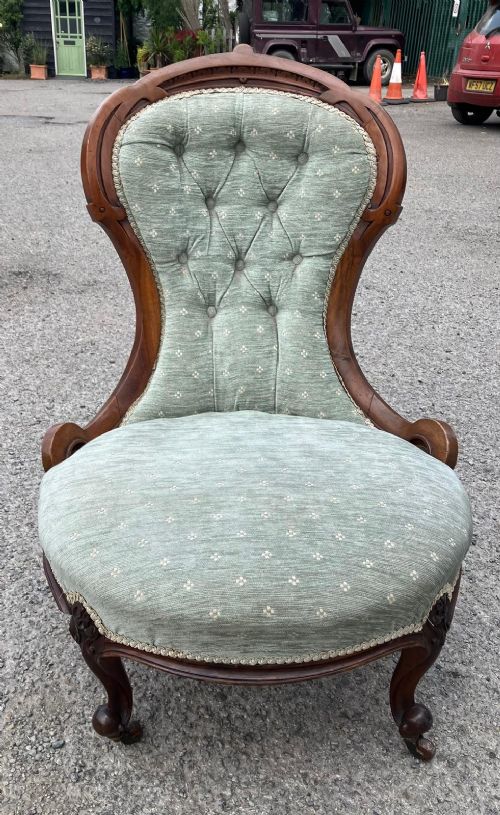
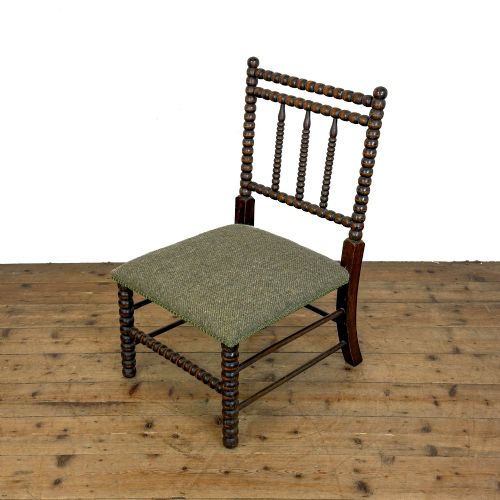
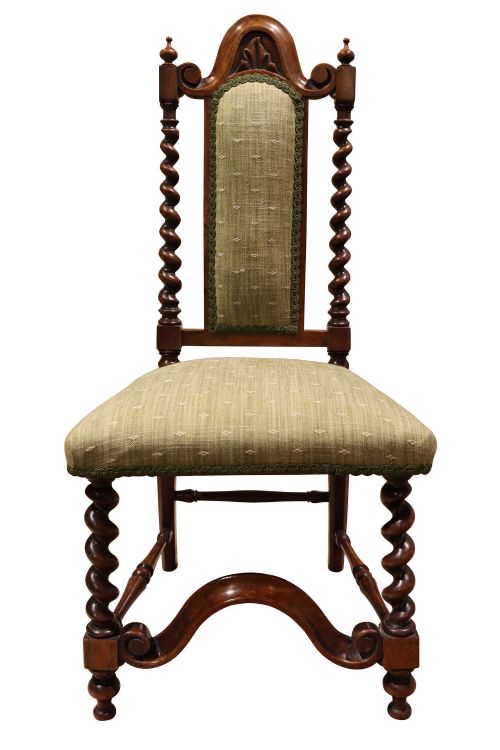


Green Fabric Side Chairs
Green fabric side chairs bring warmth and texture into a room, offering practical seating shaped by centuries of cabinet-making.
Green Fabric Side Chairs
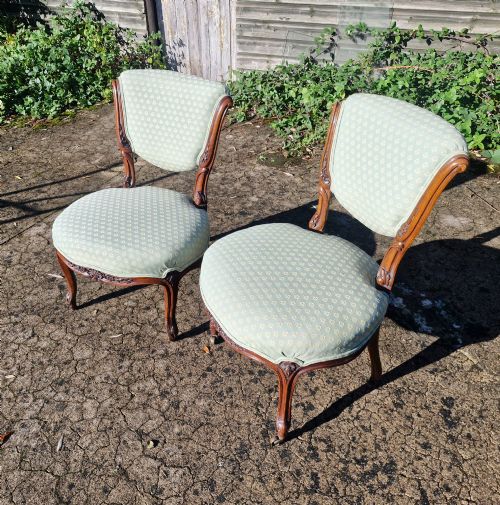
Green fabric side chairs encompass seating found across the Victorian, Edwardian, and earlier 19th-century periods, spanning dining rooms, bedrooms, and parlours. These items emerge in diverse forms, from robust oak dining sets to intimate walnut nursing and bedroom chairs.
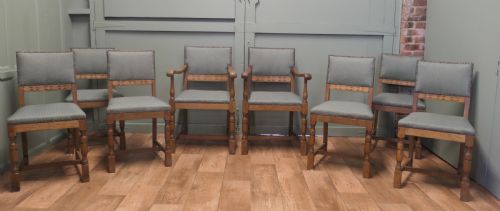
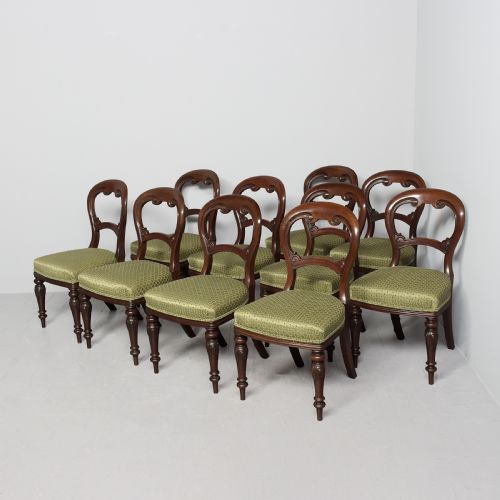
The material selection on this page centres on green textiles and upholstery paired with traditional hardwood frames. Buyers encounter everything from single decorative bedroom seats to large sets of dining chairs intended for formal tables.
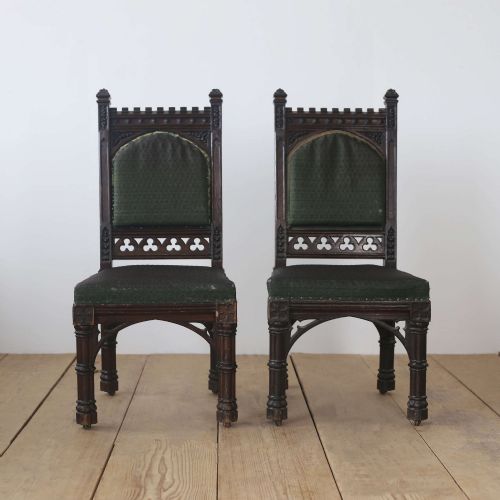
Makers and workshops of the 19th and early 20th centuries produced these green fabric side chairs using regional timbers and prevailing aesthetic movements such as Gothic Revival, Arts and Crafts, and Sheraton.
How They Were Made
Frames rely on solid hardwoods including oak, walnut, mahogany, and satinwood, frequently shaped with turned details like barley twists or bobbin turnings. Joinery is traditional, uniting structural timbers to support daily use over generations.
Upholstery incorporates fabric, textile, and wool tweed stretched over supportive foundations. Decorative elements include satinwood inlay and carved wooden components that define specific revival styles.
Green Fabric Side Chairs Retail Price Guide 2026
Typical asking prices for green fabric side chairs among the pieces listed under this phrase on Sellingantiques today, from the lower quarter to the upper quarter. They describe what is for sale here now, not the wider market.
Several chairs feature turned wooden bobbins stacked like tiny wooden spools to support the sitter.
What Varies in Quality
Quality rests in the selection of timber and the precision of the frame's construction, distinguishing robust dining sets from simpler single chairs. Dense hardwoods like walnut and mahogany provide superior durability and finer grain detail.
The refinement of the woodwork, from intricate barley twists to precise inlay work, separates standard utility pieces from exceptional examples. Upholstery execution and textile selection further determine the distinction between ordinary seating and high-grade specimens.
The Green Fabric Side Chairs Glossary
- Side chair
- A chair without arms, traditionally used at a dining table or placed against a wall when not in use. These versatile seats appear across multiple historical periods.
- Nursing chair
- A low-seated chair designed for comfort, historically used in nurseries or bedrooms. They frequently feature upholstered seats and backs.
- Barley twist
- A type of furniture turning resembling a twisted rope or barley sugar stick. This decorative technique appears on the wooden legs and uprights of 19th-century chairs.
- Bobbin chair
- Seating constructed with turned wooden components resembling reels or bobbins stacked end to end. This style gained popularity during the Victorian era.
- Satinwood inlay
- A decorative technique inserting contrasting light-toned satinwood into the primary timber of a chair frame. It adds geometric or floral detail to mahogany surfaces.
Green Fabric Side Chairs: Frequently Asked Questions
Where do green fabric side chairs work best?
These chairs find natural placement around dining tables, in bedrooms, or as occasional seating in living spaces. Their versatile forms allow them to complement both traditional and contemporary interiors.
Matching a set of dining chairs to a table creates a formal arrangement, whilst single side or nursing chairs function well in reading corners.
How do I identify a Victorian chair?
Victorian seating often displays deep-toned timbers like walnut and mahogany, alongside characteristic details such as bobbin turnings or barley twists. The proportions tend to be substantial and sturdy.
Stylistic influences from Gothic Revival or Arts and Crafts movements frequently manifest in the carved wooden frames of this era.
What is an Edwardian side chair?
Edwardian chairs, produced around the turn of the 20th century, typically feature lighter woods and refined proportions compared to their heavy Victorian predecessors. They often incorporate classic Sheraton influences.
These pieces reflect a shift towards brighter, more understated domestic interiors whilst retaining traditional framing techniques.
How are different wood types used?
Oak appears predominantly in Arts and Crafts and revival pieces, offering a strong, prominent grain. Walnut and mahogany provide a smoother, darker finish suited to formal dining and parlour chairs.
Exotic woods like satinwood are reserved for fine inlay work, adding subtle contrast to the primary timber structure.