


Antique Split Chest
An antique split chest is a modular piece designed to separate into distinct sections for transport, offering practical storage with enduring military character.
Antique Split Chest
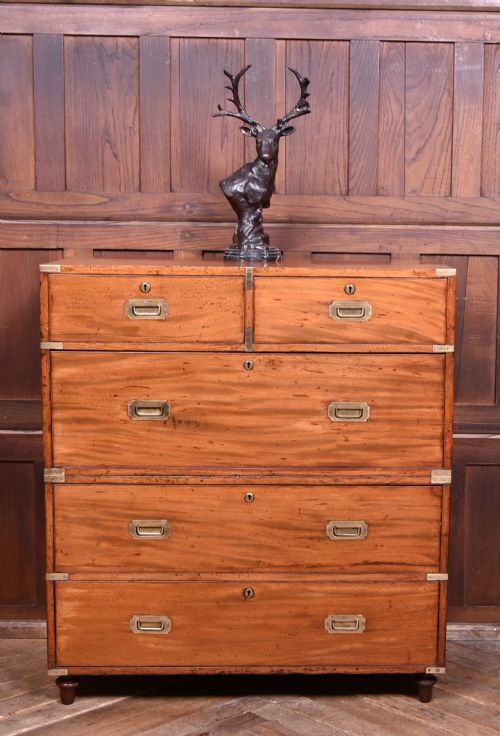
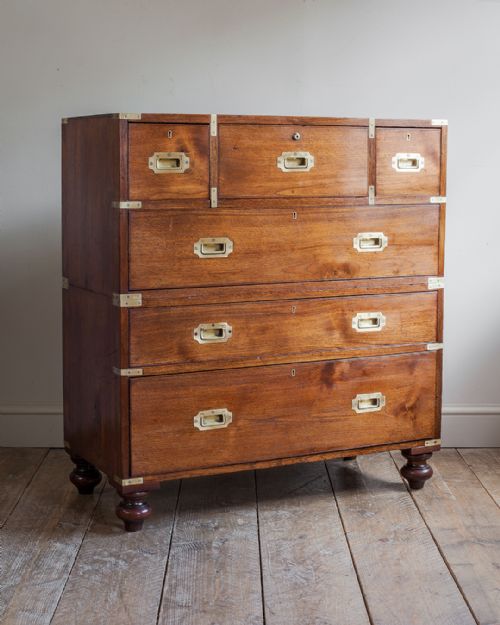
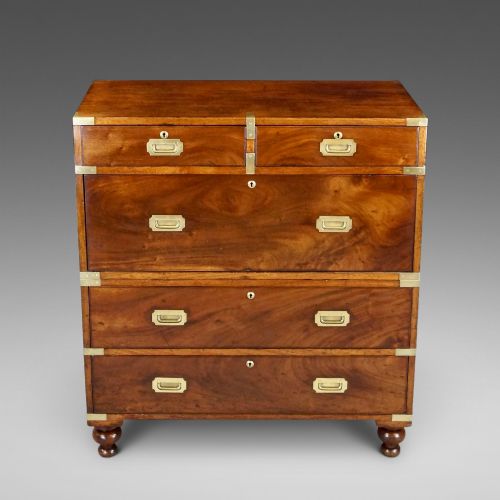
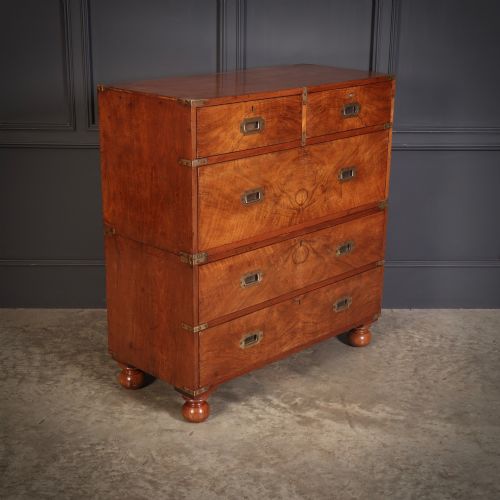
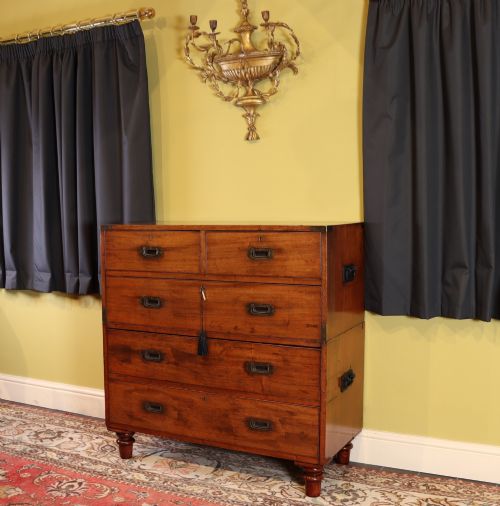
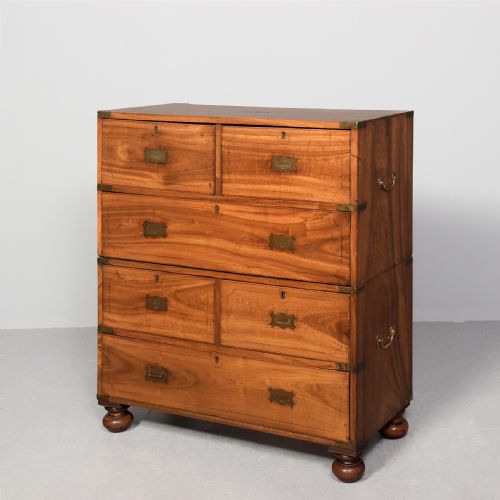
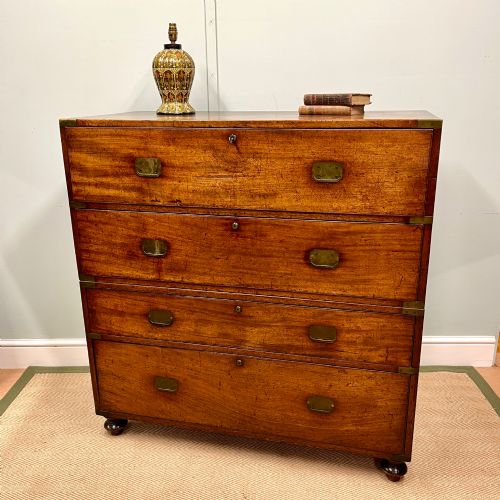
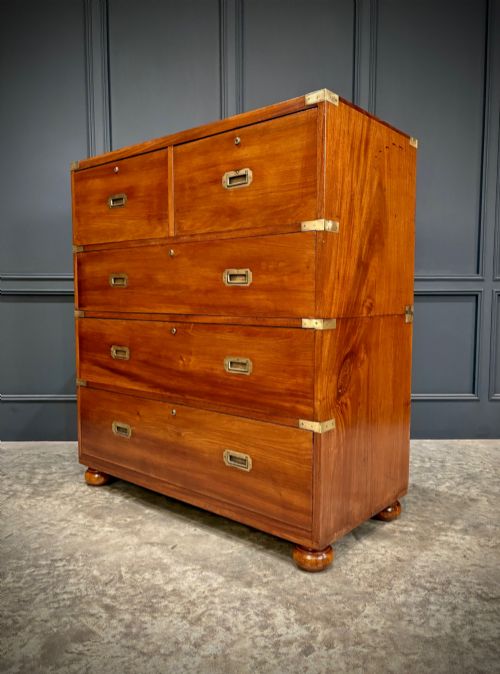
An antique split chest typically presents as a robust piece of case furniture engineered to divide horizontally into two or more distinct sections, a design intended originally for travel by officers on campaign. The most common form on this page is the mahogany or teak military campaign chest, usually featuring brass binding, recessed handles, and a two-part construction joined by corner brackets and pins.
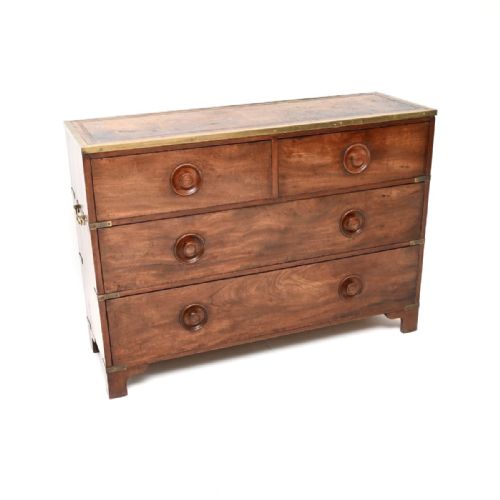
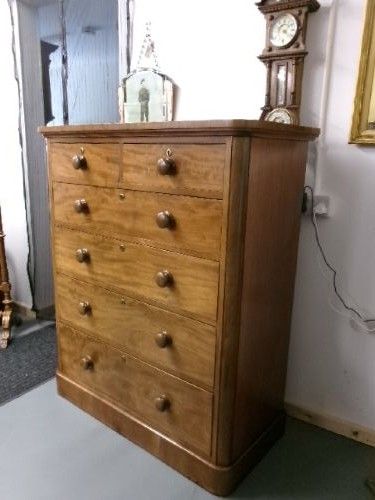
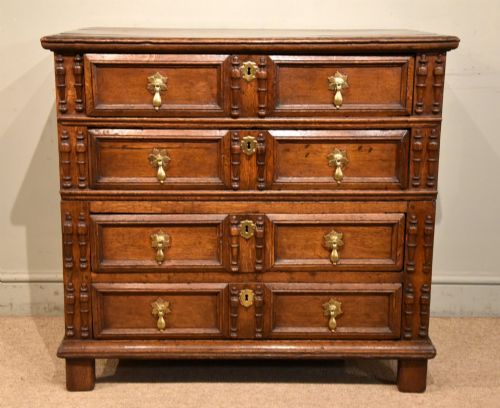
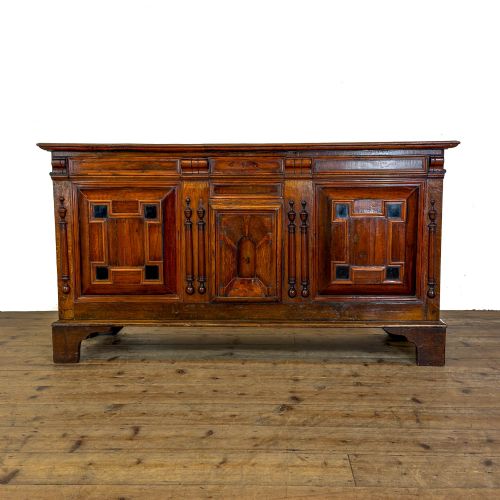
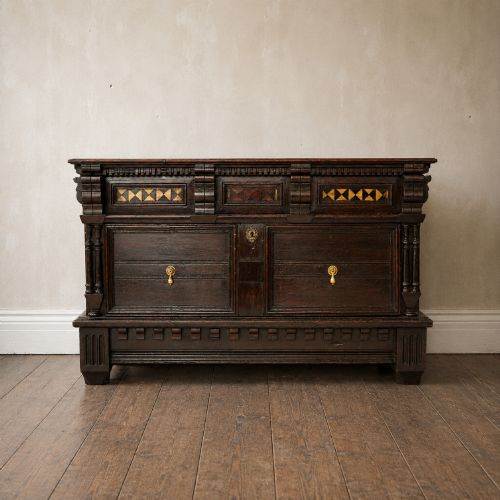
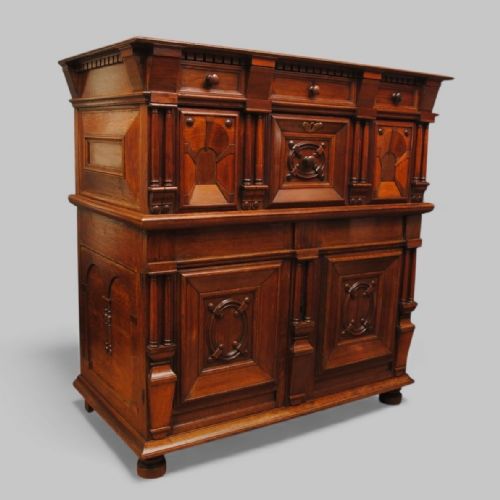
The materials and periods span widely through the listings, encompassing 17th-century oak two-part chests alongside 19th-century camphor wood, walnut, padouk, and fruitwood examples. Alongside strict military pieces, buyers will also encounter Georgian and Victorian chest of drawers variants employing a similar two-part split design for ease of movement.
These chests frequently double as secretaire units, incorporating a fitted writing drawer that folds down with pigeonholes and small compartments inside. Whether built in solid teak for colonial service or finished in polished mahogany for domestic settings, the split construction remains the defining characteristic.
Construction and materials
Makers utilised dense, durable timbers capable of enduring long journeys, with mahogany, teak, and camphor wood appearing most frequently across the pieces. Camphor wood served particularly well for trunks and campaign furniture due to its natural aromatic properties and resistance to insects, whilst oak and walnut formed the foundation of earlier seventeenth-century split forms.
Brass reinforcement is integral to the manufacturing technique of campaign examples, protecting the corners and edges from heavy impacts during transit. Recessed brass flush handles allowed the sides of the chest to remain completely flat, preventing snagging when packed into canvas or loaded onto transport.
Camphor wood campaign chests retain their distinctive medicinal aroma across the centuries, acting as a built-in moth repellent for your sweaters.
Assessing quality and finish
Quality rests heavily upon the integrity of the original brass hardware and the precision of the modular joinery where the sections meet. Superior examples maintain tightly fitted flush handles, original inset locks bearing maker details, and robust securing pins that lock the upper and lower halves firmly together.
The choice and figuring of the timber further separate standard pieces from exceptional ones, with finely grained camphor wood, figured walnut, or well-chosen flame mahogany elevating a piece. Original secondary timbers inside the drawer linings and untouched patination on the polished exterior surfaces demonstrate superior preservation.
S. W. Silver & Co. London & Liverpool·Army & Navy
The Antique Split Chest Glossary
- Split chest
- A piece of case furniture built in two or more stacked sections that separate horizontally. This construction aided transport on military campaigns and domestic moves.
- Campaign chest
- A modular chest of drawers designed for dismantling and travel. They are typically bound in brass and fitted with flush recessed handles.
- Secretaire
- A desk disguised as a standard drawer chest. The upper drawer pulls out and folds down to reveal a writing surface and small compartments.
- Flush handle
- A metal pull let into the surface of the drawer front so it does not protrude. This prevented damage during transport and allowed tight packing.
- Camphor wood
- An aromatic timber native to Asia, frequently utilised for campaign chests. Its natural scent helped protect stored uniforms and documents from pests.
Antique Split Chest: Frequently Asked Questions
Why did campaign chests split in two?
Splitting the cabinet into two separate modular boxes made it considerably easier to pack, load onto pack animals, and transport across difficult terrain during military campaigns.
Once safely at the destination, the sections simply stacked on top of one another and locked together with internal pins or side brackets.
Are all split chests military campaign pieces?
Not every split chest served a military purpose, as earlier seventeenth-century oak examples were constructed in sections primarily for domestic removal between properties.
Domestic Georgian and Victorian cabinetmakers also adopted the two-part split design simply to assist with navigating tight staircases and narrow hallways.
What woods were used for these chests?
Makers selected dense tropical hardwoods such as teak, mahogany, padouk, and camphor wood to withstand harsh climates and rough handling during travel.
Earlier British examples frequently employed native oak and walnut, whilst colonial pieces often utilised local timbers suited to the region.