



British Campaign Chest
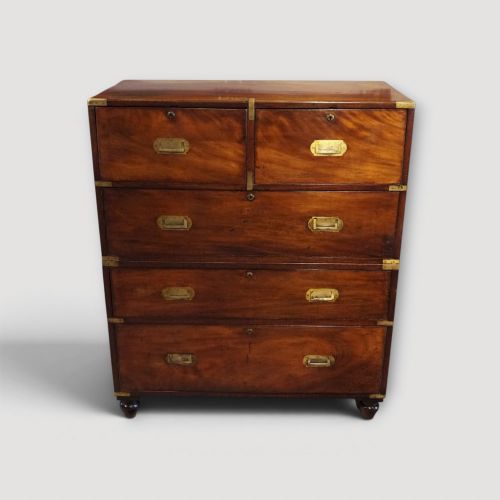
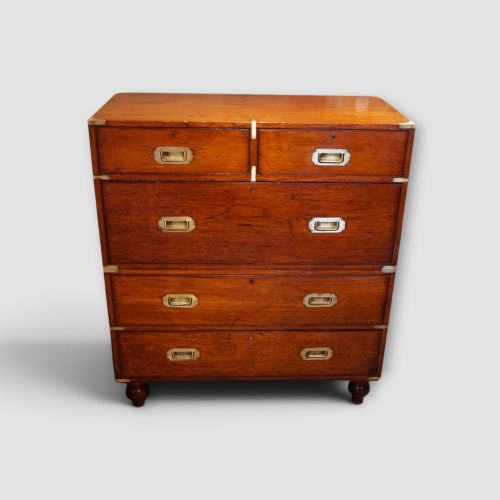
A genuine british campaign chest is a modular piece of folding furniture built for officers on the move, combining practical storage with rugged construction.
British Campaign Chest
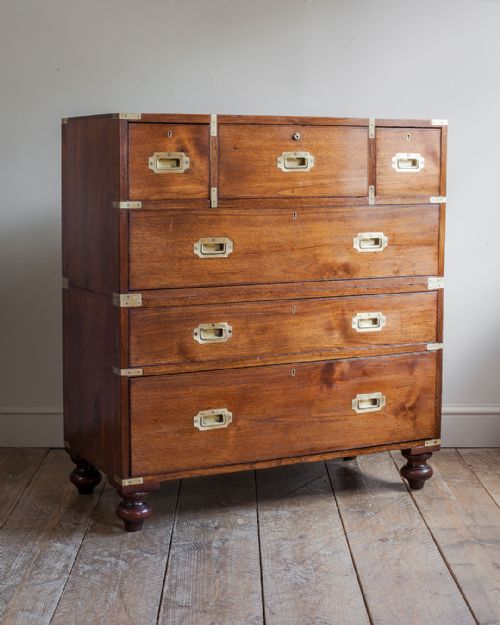
A british campaign chest divides into two separate sections to simplify transport on horseback, wagon or ship during the nineteenth century. These sturdy chests of drawers usually feature flush brass handles and corner brackets designed to withstand the knocks of military travel.
The versions met most often on this page belong to the Victorian era, spanning the mid to late nineteenth century. Formats range from standard chests of drawers to secretaire variations fitted with drop-front writing desks and internal pigeonholes.
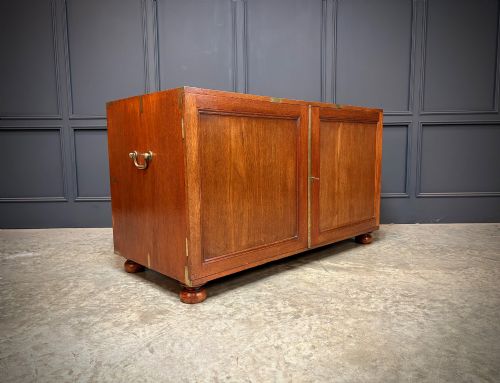
Origin details often point toward British Colonial or Anglo-Indian workshops using dense exotic timbers suited to tropical climates. Side cabinets and trunks also appear alongside the classic two-part chests of drawers.
Materials and construction methods
Cabinetmakers utilised durable hardwoods such as teak, mahogany, camphorwood and padauk wood to resist warping in humid environments. Secondary timbers like pine appear on internal drawer linings and hidden partitions.
Brass corners, straps and flush-fitting ring handles protect vulnerable edges and prevent snagging during transit. Cast iron carrying handles provide additional support for heavy lifting on military expeditions.
British Campaign Chest Retail Price Guide 2026
Typical asking prices for british campaign chest among the pieces listed under this phrase on Sellingantiques today, from the lower quarter to the upper quarter. They describe what is for sale here now, not the wider market.
The inventory includes standard chests of drawers alongside specialised secretaire desks and side cabinets.
Distinctions in quality and execution
Quality rests on the precision of the joinery and the integration of the brass hardware into the timber face. Superior examples exhibit tight dovetail joints, carefully inset mounts and well-fitted secretaire drawers that slide smoothly.
The choice of primary wood also influences standing, with dense tropical timbers like teak and padauk indicating pieces destined for demanding colonial service. Retailer provenance stamped into the brass or wood adds documented history to the construction.
Army & Navy Stores
The British Campaign Chest Glossary
- Campaign furniture
- Portable furnishings built in sections with removable legs and recessed hardware for military officers on active service. These pieces needed to pack down quickly and endure rough handling.
- Secretaire chest
- A chest of drawers featuring a hinged writing flap that pulls down to reveal small drawers and compartments. This configuration provided a portable desk space for paperwork in the field.
- Two-part chest
- A case furniture design built as separate upper and lower cabinet boxes that stack together and lock with metal side brackets. This split construction halved the weight for transport.
- Flush handle
- A metal pull hinged to sit level with the drawer front so it catches on nothing during packing. These fittings are almost universally cast in brass.
- Padauk wood
- A heavy, durable reddish-brown timber favoured in Anglo-Indian colonial workshops for its resilience and rich grain. It resists moisture and insect damage effectively.
British Campaign Chest: Frequently Asked Questions
Why do campaign chests split into two parts?
The two-part design allowed soldiers and servants to lift and pack individual sections easily during relocations. Stacking the upper box onto the lower base created a full-height chest once unloaded.
Metal brackets on the sides locked the separate halves securely together during transit. This modular construction prevented structural twisting on uneven terrain.
What is a secretaire campaign chest?
A secretaire chest incorporates a specialised drawer that folds down to serve as a writing desk. Inside, small pigeonholes and hidden compartments held stationery and documents.
Officers relied on these fitted compartments to write reports and manage correspondence while stationed away from permanent bases.
How do you identify nineteenth-century campaign pieces?
Look for recessed brass corners, flush-fitting drawer rings, and side carrying handles designed to prevent damage during travel. The presence of two stacked sections is another primary indicator of military utility.
Timbers such as teak, camphorwood, and mahogany point toward nineteenth-century colonial and Victorian production periods.
Where were these chests used?
British military officers used them extensively across colonial outposts, barracks, and campaign tents during the nineteenth century. The furniture travelled wherever regiments deployed, from India to South Africa.
Camphorwood variations offered the added benefit of repelling insects in tropical climates during long postings.