
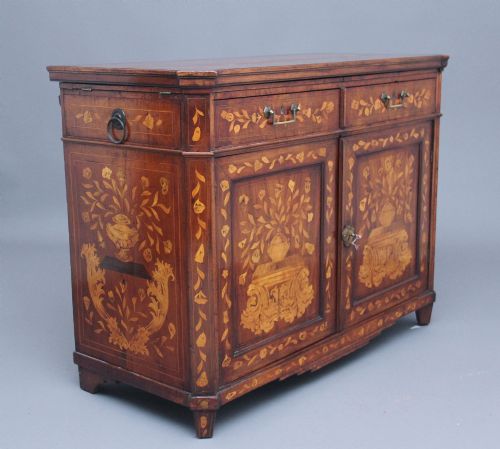


Travel Chest of Drawers
A travel chest of drawers packs a household into brass-bound timber, built to move across empires.
Travel Chest of Drawers
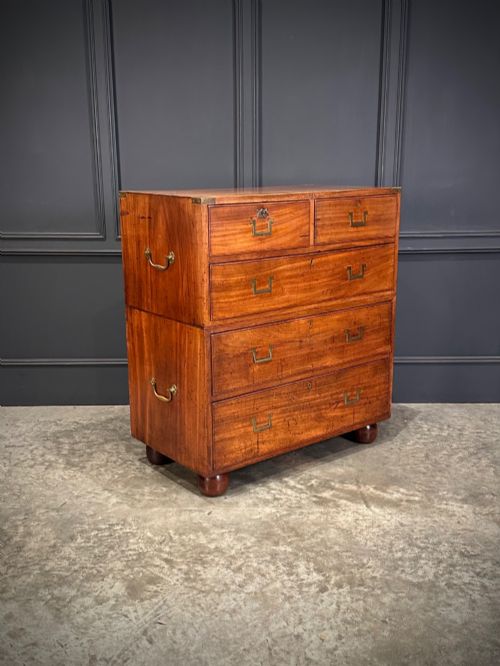
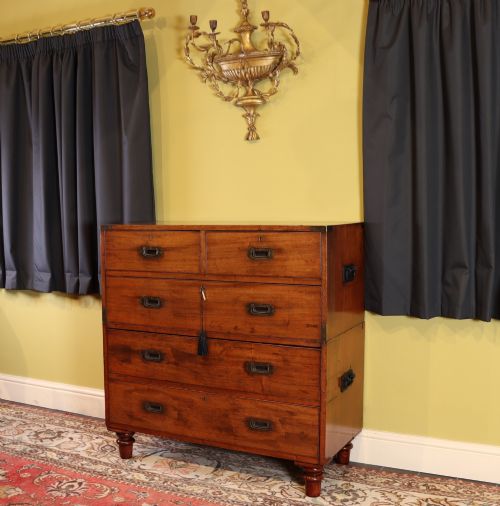
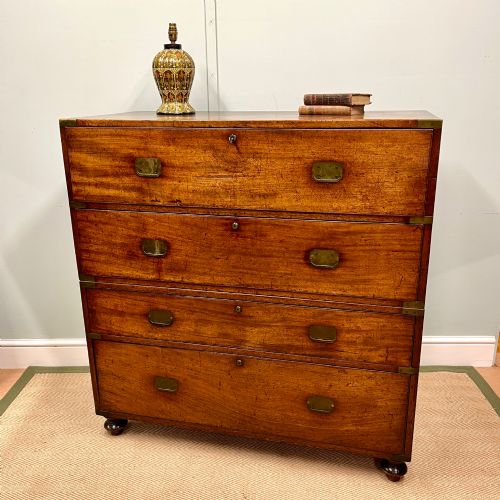
A travel chest of drawers is a portable case built in stacked sections with recessed brass handles for officers and travellers on the move. Most examples met here are Victorian military campaign pieces made of dense timbers designed to withstand rough voyages.
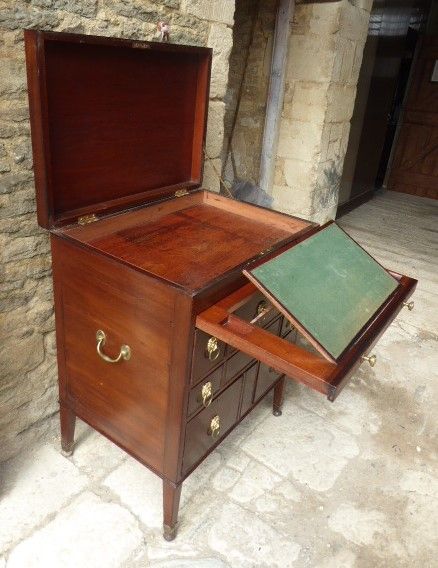
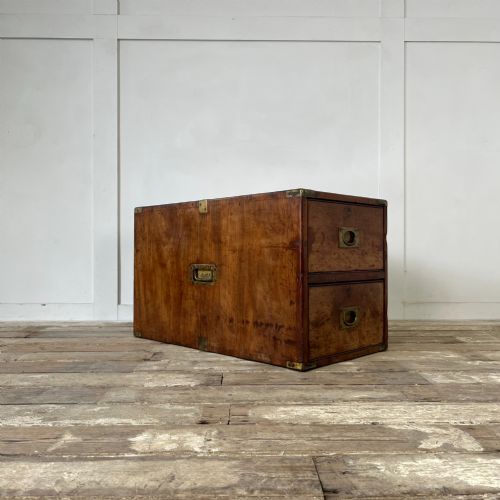
Makers divided these chests into two or more stacking boxes so they could be hoisted on pack animals or carried through ships. The form ranges from compact desktop storage and apothecary cases to tall secretaire chests with fitted writing drawers.
The selection includes robust teak and mahogany carcases alongside specialised travelling cabinets and steamer trunks from later eras. Each piece shows the compact engineering required for life on active service or long voyages.
How they were made
Carpenters built these carcases from sturdy timbers like mahogany and teak, able to endure shifting humidity and rough handling. Brass corners, binding straps and flush-fitting handles reinforced every edge and prevented the wood from splitting.
Makers set drawer pulls and carrying handles flush into the wood so nothing would catch during transit or stacking. Secret drawers and internal compartments utilised clever locking mechanisms to secure valuables while in motion.
Many a travelling apothecary box still guards tiny glass bottles designed to hold remedies across stormy seas.
What varies in quality
Quality rests in the precision of the joinery and the gauge of the brass hardware fitted to the carcase. Finer examples retain original recessed handles, locks and internal fittings without later replacements.
The choice of timber defines the build, with dense straight-grained teak and figured mahogany marking the superior end of production. Untouched surfaces and crisp brasswork distinguish pieces made for high-ranking officers from utilitarian equipment.
S. W. Silver and Co·Army and Navy·Hartman Luggage Co
The Travel Chest of Drawers Glossary
- Campaign chest
- A sectional chest of drawers designed to dismantle into parts for military transport. These units use brass corners and inset handles to protect the wood.
- Secretaire
- A cabinet or chest containing a pull-out writing drawer fitted with small compartments and pigeonholes. It allowed travellers to write letters securely on the road.
- Teak
- A dense, durable tropical hardwood highly resistant to moisture and warping. It was frequently utilised for campaign furniture destined for tropical climates.
- Flush handle
- A pull recessed into the surface of a drawer so it does not project outward. This stopped the hardware from snagging during loading and unloading.
- Two-part chest
- A piece constructed as two separate boxes stacked one upon the other. This configuration made heavy wardrobes manageable for transport.
Travel Chest of Drawers: Frequently Asked Questions
Why are campaign chests built in two parts?
Dividing a tall chest into separate stacking boxes made it easier to pack, weigh out and load onto horses or ships during military campaigns. Each section locked into the next using metal brackets or pins.
This modular design meant officers could transport heavy storage furniture across difficult terrain without damaging the timber framework.
What is a secretaire drawer?
A secretaire drawer pulls out to reveal a fitted writing surface, small drawers and pigeonholes for stationery. It combines a chest of drawers with a compact desk.
Travellers used these concealed compartments to manage correspondence and keep important documents secure while away from home.
Which woods were used for travel chests?
Mahogany and teak appear most frequently in these listings, chosen for their strength and stability. Teak was favoured for tropical postings due to its natural resistance to moisture.
Fruitwood and other dense timbers also supported specialised travelling cases and apothecary boxes.
How do I care for a teak or mahogany chest?
Keep these pieces away from direct heat sources and sudden humidity changes to prevent the timber from splitting. Regular dusting with a dry cloth keeps the polished surface stable.
Avoid heavy liquid polishes and let the natural grain and brass hardware age gracefully over time.