


Antique Soup Ladle
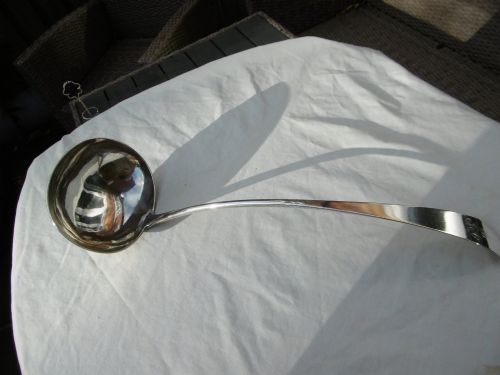
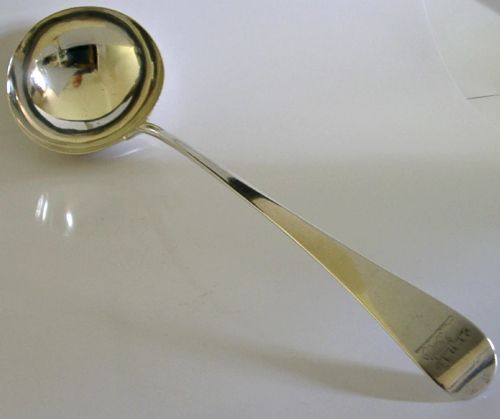
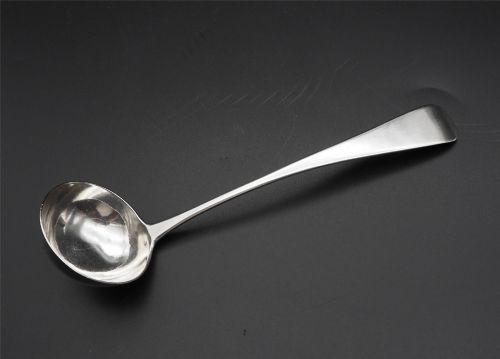
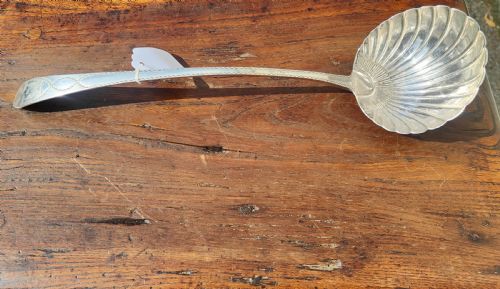
When you search for an antique soup ladle, you meet heavy silver service pieces designed to portion broth and stew from deep tureens.
Antique Soup Ladle
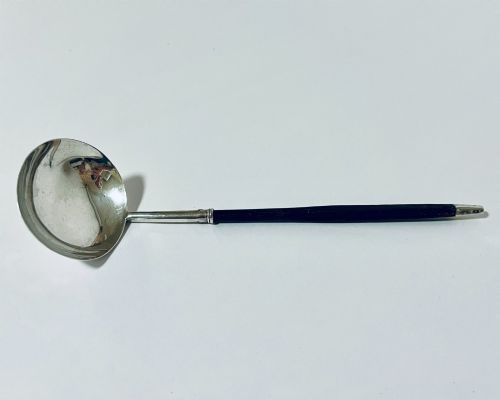
When searching for an antique soup ladle, buyers encounter large serving utensils originating primarily from the Georgian, Victorian, and Edwardian eras. These domestic implements span substantial sterling silver table service, provincial silver, and base metals like pewter, brass, and earthenware. Most examples serve generous portions from matching tureens at formal dining tables.
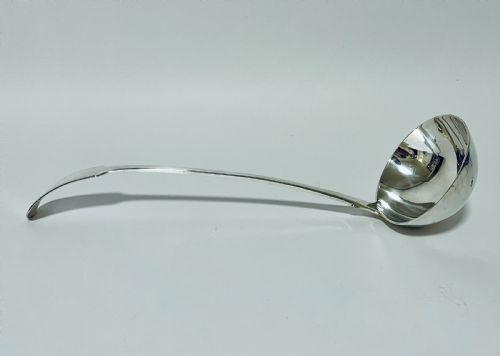
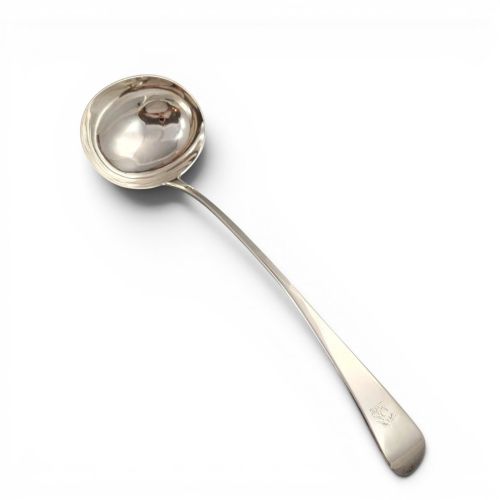
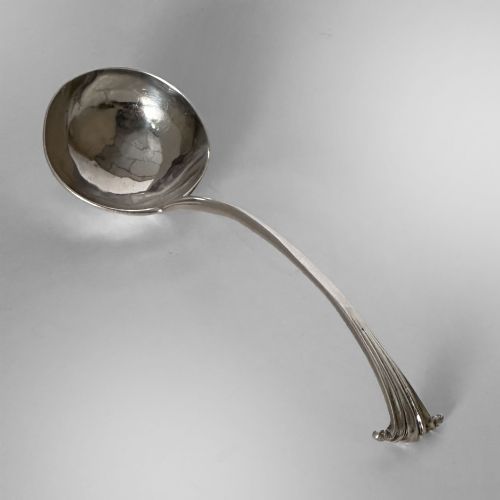
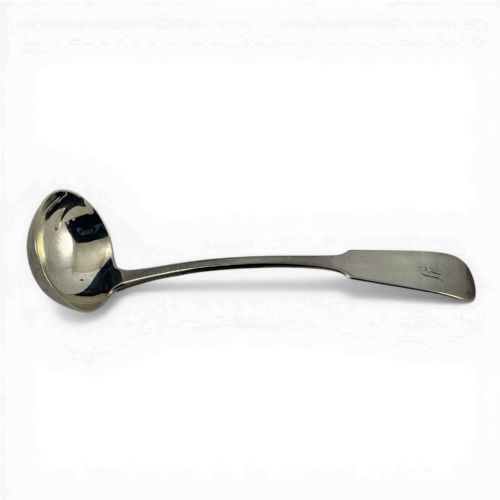
The dominant forms on this page include heavy sterling silver ladles bearing traditional patterns such as Old English, Fiddle, and Queen's. Alongside solid silver, buyers find ceramic pieces with blue and white transfer printing, ironstone sauce tureens with integrated ladles, and electroplated nickel silver variants. Provincial and Scottish regional pieces appear frequently alongside London hallmarks.
Origin details extend across English, Irish, Scottish, and continental workshops, reflecting varied regional dining customs. Some pieces arrive paired with punch bowls or lidded tureens, while others stand alone as singular silver service items. The range encompasses both plain utility forms and heavily crested or engraved family silver.
How they were made
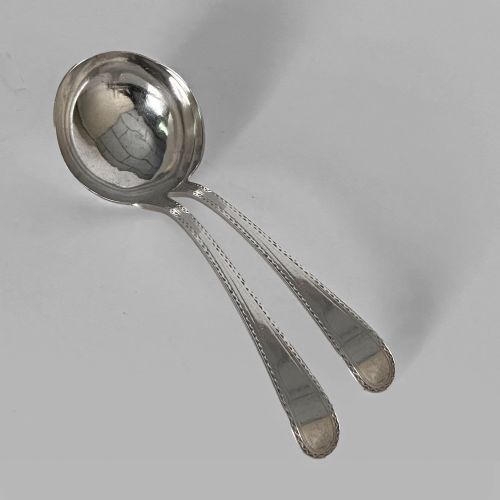
Silversmiths hammered and shaped sterling silver ingots into deep bowls and long, reinforced handles, often applying threaded or patterned borders for rigidity. Handles frequently connect to bowls via reinforced joints to support the weight of dense broths.
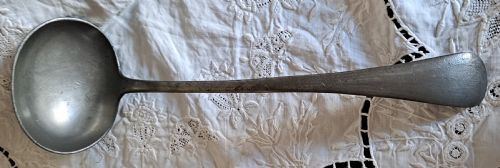
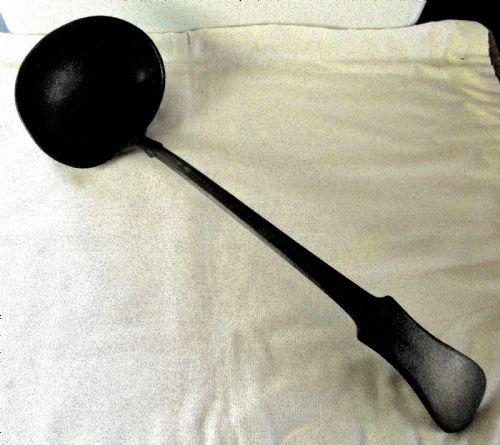
Pewter and brass examples utilise casting and hammering techniques, yielding robust kitchen and table utensils intended for heavier domestic use. Ceramic and ironstone ladles involve moulded earthenware fired with transfer-printed cobalt designs.
Plated wares rely on electroplating silver onto base metal foundations, a method that expanded access to polished tableware during the Victorian period.
Antique Soup Ladle Retail Price Guide 2026
Typical asking prices for soup ladle among the pieces listed under this phrase on Sellingantiques today, from the lower quarter to the upper quarter. They describe what is for sale here now, not the wider market.
Listings feature sterling silver, pewter, brass, earthenware, and silver plate across Georgian, Victorian, and Edwardian periods.
What varies in quality
The distinction between standard service items and the finest examples rests on gauge thickness, metal weight, and the crispness of maker marks and heraldic crests. Heavier silver gauge prevents handle bending under substantial loads of soup or stew.
Design complexity marks the upper tier, where specialised handle patterns, detailed floral engraving, and cast crests demonstrate superior craftsmanship by prominent silversmiths. Simpler utilitarian pewter or basic plated items prioritise durable construction over decorative flourish.
Milne and Campbell·Hester Bateman·John Yates·Dixon and Son·William Ferguson·Mappin and Webb·Michael Smith·Jamieson and Naughton·Mary Chawner·Daniel and Arter
The Antique Soup Ladle Glossary
- Old English pattern
- A traditional flatware design featuring a plain, down-turned rounded handle end popular in the eighteenth century.
- Fiddle pattern
- A nineteenth-century handle shape characterised by its narrow stem widening towards a shoulder and squared terminal.
- Queen's pattern
- An ornate, heavily embossed flatware style decorated with shells and scrollwork along the handle borders.
- Sterling silver
- A silver alloy containing 92.5 percent pure silver by weight, standard for British domestic plate.
- Provincial silver
- Silverware marked and made outside major assay office cities like London, often bearing distinct regional maker stamps.
Antique Soup Ladle: Frequently Asked Questions
How were antique soup ladles used?
These utensils served to transfer hot broth, soup, or punch from a large central tureen or punch bowl into individual bowls or cups at the dining table.
Their long handles allowed the server to reach deep into lidded vessels while keeping hands clear of steam and boiling liquid.
How do I date an antique silver ladle?
Dating relies on stamped hallmarks on silver pieces, which include maker initials, town marks, and date letters corresponding to specific assay office records.
Stylistic indicators such as handle shape, crest engraving style, and bowl contour provide secondary clues when marks are worn.
What is the difference between a sauce ladle and a soup ladle?
Soup ladles feature significantly larger bowls and longer, sturdier handles designed for deep tureens and large portions.
Sauce ladles are scaled down proportionally for use with gravy boats and smaller table vessels.
Are ceramic and pewter ladles safe to use?
Ceramic and pewter utensils can be utilised for display or serving, though older pewter containing high lead content requires caution with acidic foods.
Most buyers keep antique pewter and ceramic items for collection, table styling, or gentle modern service.