


Antique Smiths Clock
An antique smiths clock spans everything from oak longcases by regional makers to Art Deco station dials and wartime bulkhead clocks.
Antique Smiths Clock
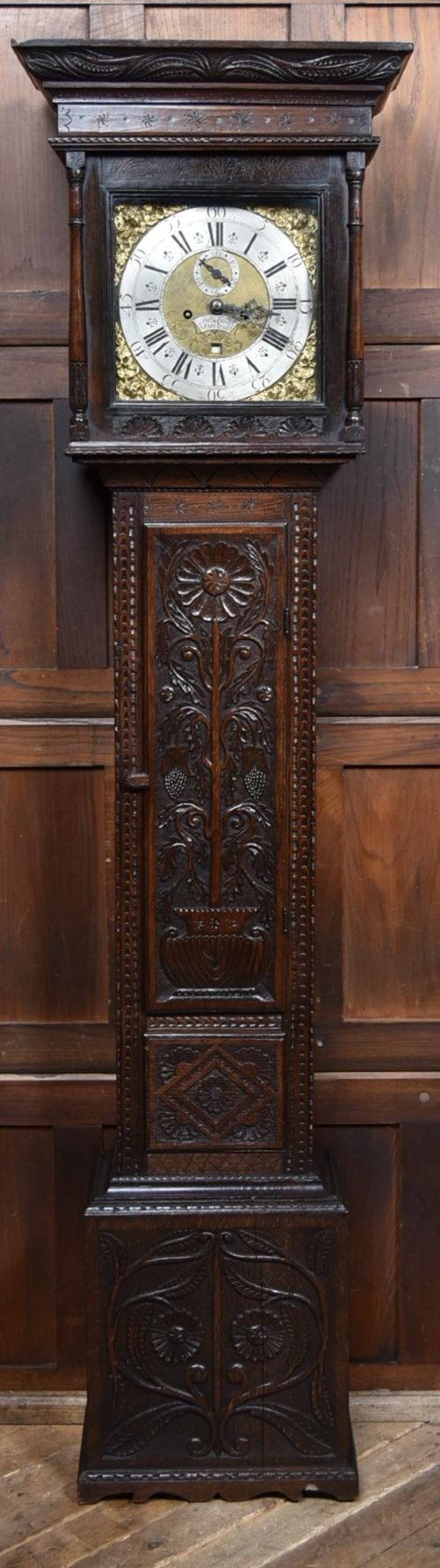
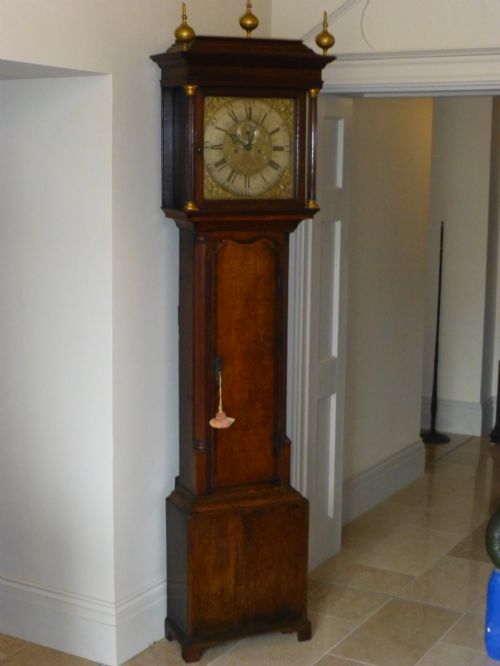
The antique smiths clock encompasses a broad sweep of horology, moving from eighteenth-century floor-standing longcases down to mid-twentieth-century industrial and transport timepieces. Buyers searching this phrase will find that domestic mantel clocks, railway station dials, and heavy brass ship bulkhead models dominate the selection.
The earlier end of the range is anchored by traditional floor-standing clocks housed in timber cases, bearing signatures from makers across various British towns. Conversely, the more industrial and transport-related variants reflect the expansion of mass production and institutional timekeeping during the interwar and wartime decades.
Materials and construction methods
Cases utilise a variety of traditional and industrial materials, pairing timbers such as oak, mahogany, walnut, and beech with robust metals including brass, chrome, and cast iron. Bakelite and coloured glass emerge in later twentieth-century pieces, reflecting shifting manufacturing capabilities and modern design preferences.
Movements span key-wound eight-day mechanical systems, electric mechanisms, and specialised striking or chiming trains housed securely behind glass dials. Dial construction ranges from painted wood and traditional brass faces to enamel and metal plates designed for legibility in schools, offices, and railway platforms.
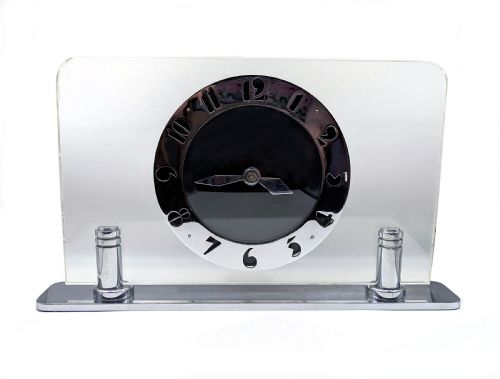
Listings span centuries of British horology, encompassing 18th-century oak longcases alongside 1930s Art Deco chrome and glass mantel pieces.
Assessing quality in construction and design
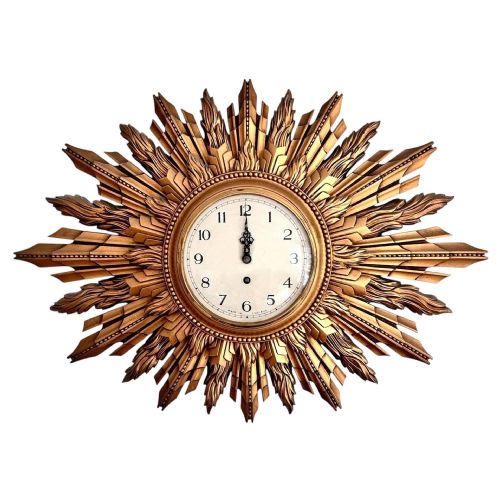
Quality reveals itself in the integrity of the case construction, the choice of timber veneer, and the crispness of the dial markings rather than simply the age of the piece. Heavy cast bezels, solid brass cases, and well-executed stylistic details such as starburst wooden surrounds or clear Art Deco lettering elevate certain examples above standard utility issues.
The sophistication of the movement and the historical significance of the piece, particularly regarding railway, ministry, or transport provenance, further define the upper tier of the category. Pieces that retain their original components and legible institutional markings command greater interest from collectors.
William Smith·James Smith·Henry Smith·Jn° Smith·Smith of Chester
The Antique Smiths Clock Glossary
- Longcase clock
- A tall, weight-driven pendulum clock housed in a protective wooden case standing directly on the floor. These tall clocks are frequently referred to as grandfather clocks.
- Bulkhead clock
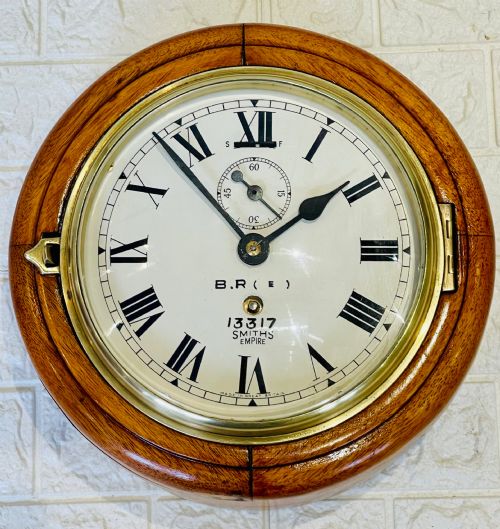
- A sturdy timepiece designed to be mounted directly onto the wall of a ship cabin or engine room. They usually feature heavy brass housings and waterproof gaskets to withstand marine environments.
- Fusee
- A conical pulley used in mechanical clocks to maintain an even pull on the gear train as the mainspring unwinds. This mechanism improves the timekeeping accuracy throughout the running period.
- Dial
- The visible face of the clock upon which the numerals and hands are displayed. In railway and school clocks, these are often protected by heavy glass set within a hinged metal bezel.
- Bakelite
- An early form of synthetic plastic used extensively for clock cases from the 1930s onward. Its dark, durable finish became a staple of interwar industrial design.
Antique Smiths Clock: Frequently Asked Questions
What is a railway station clock?
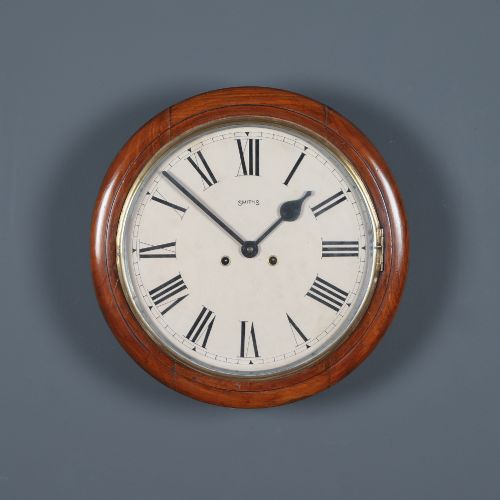
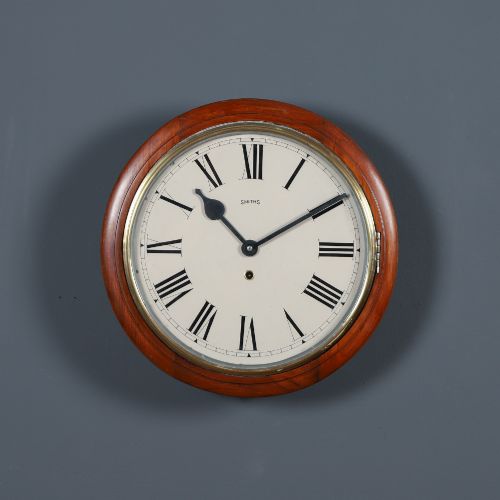
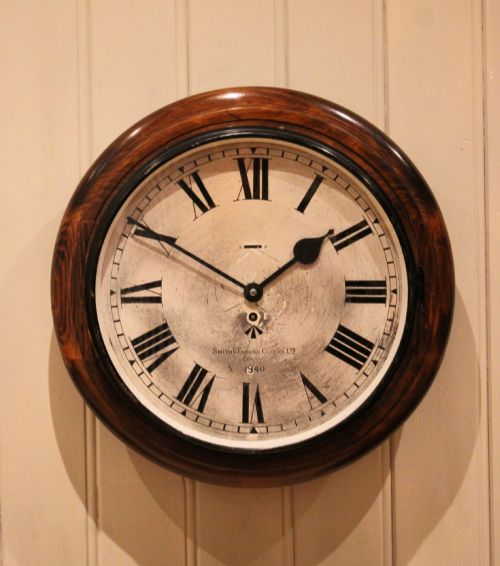
Railway station clocks are large, round dial wall timepieces built for high visibility in public transport hubs. They feature clear Arabic numerals and robust housing to endure heavy use.
Many examples from this era were produced for specific transport networks and government ministries, prioritising straightforward legibility over ornamental detail.
How do I date a longcase clock?
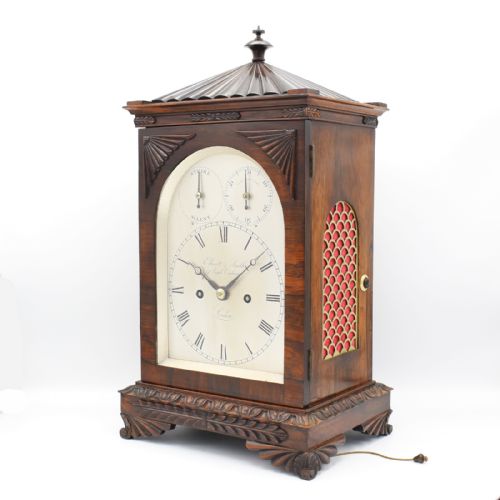
Dating a longcase clock involves examining the style of the timber case, the lettering on the dial, and the signature of the maker. Eighteenth-century examples often feature brass dials and oak or walnut cases.
Later nineteenth-century iterations frequently utilise painted white dials and mahogany veneers, reflecting changing domestic fashions and cabinetmaking techniques.
What is an Art Deco mantel clock?
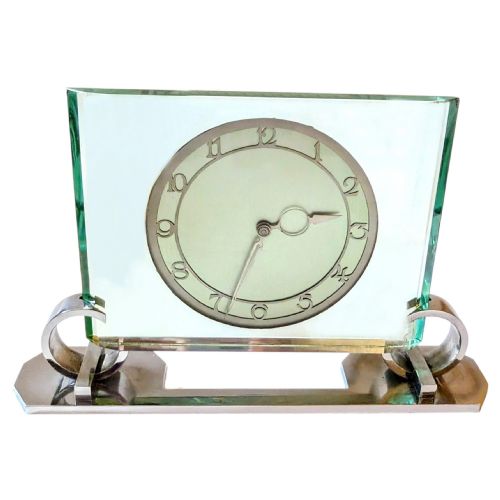
Art Deco mantel clocks embrace geometric forms, stepped wooden cases, and contrasting materials such as chrome, blue glass, and Bakelite. They emerged strongly during the 1930s as domestic interior design shifted toward modernism.
These clocks often incorporate striking architectural silhouettes, abstract starburst motifs, and streamlined numerals that break away from traditional Victorian ornamentation.
Where were bulkhead clocks used?
Bulkhead clocks were engineered for maritime environments, serving aboard passenger liners, cargo ships, naval vessels, and railway ferries. Their heavy brass construction protected the delicate internal movements from moisture and vibration.
Institutional variants were also deployed across government offices, engine rooms, and transport depots where durability was paramount.
What does an 8-day movement mean?
An eight-day movement requires winding only once a week to maintain continuous operation. This mechanical efficiency became standard for better-quality domestic, office, and transport clocks.
Spring-driven or weight-driven systems of this capacity reduced the frequency of maintenance for busy households and railway staff alike.