


Antique Small Couch
An antique small couch offers compact seating with period character, perfect for filling a cosy alcove or a tight drawing room.
Antique Small Couch
An antique small couch brings compact seating into domestic spaces without overwhelming the room. You will regularly encounter Victorian, Edwardian, and Georgian iterations on this page, alongside specific forms like love seats, canapes, and settees.
The evidence shows a range of regional and stylistic influences, from English country house to French Chateau and Napoleon III designs. These shorter seating options were traditionally made for boudoirs, bedrooms, or smaller reception rooms.
Makers and workshops utilised varied timbers and upholstery methods to suit the prevailing fashion of each decade, spanning the nineteenth and early twentieth centuries.
How they were made
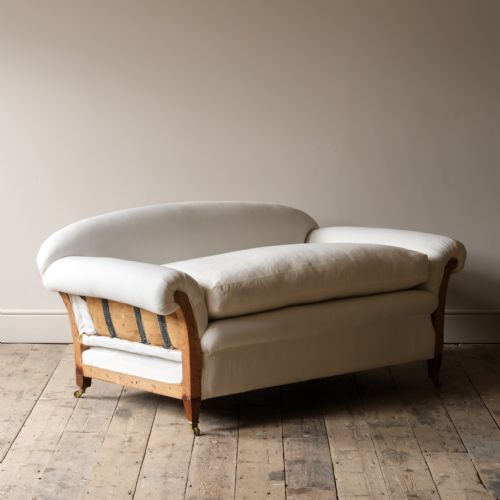
Frames rely on hardwoods such as mahogany, walnut, rosewood, birch, and timber, providing structural integrity for compact seating. Joinery methods varied by period, supporting both carved wooden show-frames and fully upholstered forms.
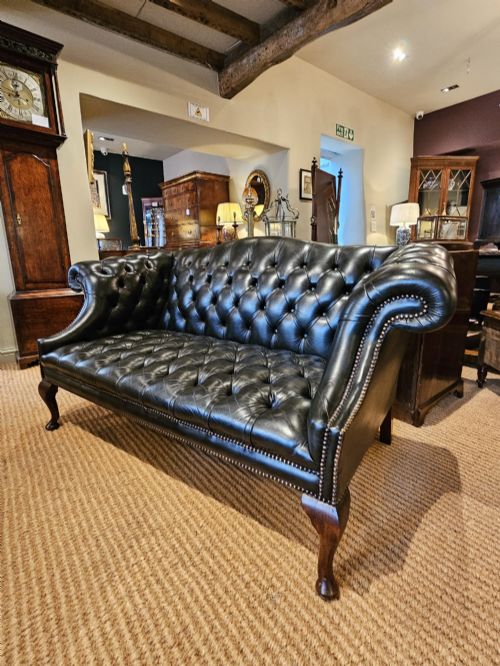
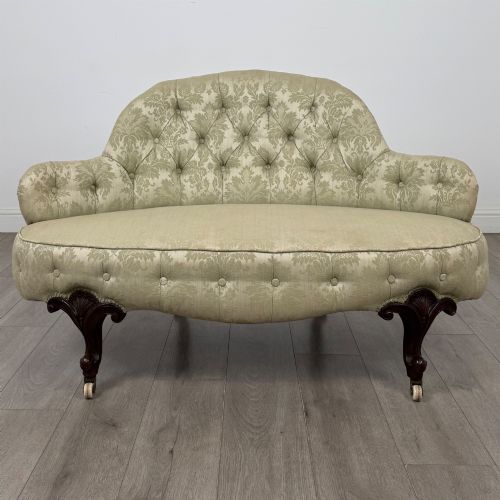
Upholstery utilised traditional stuffing materials, hessian, and springs, finished with fabrics like velvet, silk, leather, and general upholstery fabric. Decorative detailing often included brass tacks, tassel trims, buttoning, and canework.
Periods represented span from the Georgian era through Victorian and Edwardian decades up to the 1930s.
What varies in quality
The refinement of the wooden frame sculpture and the crispness of any carving set apart the finer examples. Timber selection also matters, with richly grained rosewood or figured mahogany sitting above simpler painted or hardwood structures.
Execution of the upholstery work, from buttoning to fabric choice, dictates the overall finish. Pieces retaining original decorative elements like canework or specific trim show higher integrity.
Howard And Sons
The Antique Small Couch Glossary
- Settee
- A long upholstered seat for more than one person, typically featuring a back and arms. They are common across the Victorian and Edwardian periods.
- Canapé
- A French-style upholstered sofa with an exposed wooden frame, often featuring carved details. These emerged in various nineteenth-century continental designs.
- Love Seat
- A small two-seater sofa designed for intimate seating. This form appears across several periods in various upholstered configurations.
- Chaise Longue
- An upholstered couch in the form of a chair with a seat long enough to support the legs. Miniature versions also occur in the archive.
- Canework
- Woven cane material utilised for chair or sofa panels. It provides a lightweight decorative texture on specific early twentieth-century frames.
Antique Small Couch: Frequently Asked Questions
Where should I place a small antique couch?
These compact seats suit smaller spaces such as bedrooms, dressing rooms, or cosy reception corners where a standard three-seater would overwhelm the floor plan.
Their reduced proportions also allow them to sit comfortably at the foot of a bed or beneath a window.
How do I identify a Victorian piece?
Victorian examples often feature deep buttoning, dark hardwoods like mahogany or rosewood, and generous padding designed for comfort.
Look for stylistic cues such as high backs or turned wooden legs that reflect nineteenth-century manufacturing traditions.
What is the difference between a settee and a couch?
Historically, the terms often overlap in antique descriptions, though a settee generally denotes a formal upholstered wooden-framed seat for two or more.
Couches can sometimes refer to pieces with a single raised headrest or daybed configuration, depending on the regional terminology.
Are these seats suitable for daily use?
Most antique small couches provide sturdy seating, though nineteenth and early twentieth-century suspension relies on traditional webbing and springs.
Consider the internal padding and fabric resilience if you plan to use the piece heavily in a main living area.
How do Edwardian pieces differ from Victorian ones?
Edwardian seating tends to embrace lighter forms, simpler painted or polished timbers, and brighter decorative fabrics.
They frequently draw on earlier revival styles while maintaining a less heavy aesthetic than their mid-nineteenth-century predecessors.