

Antique Sloping Stationery Box
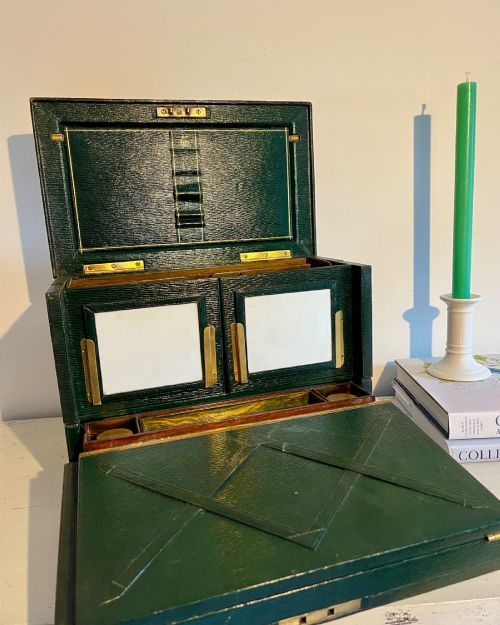
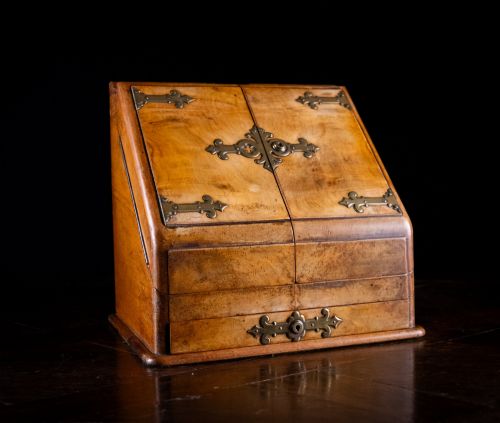
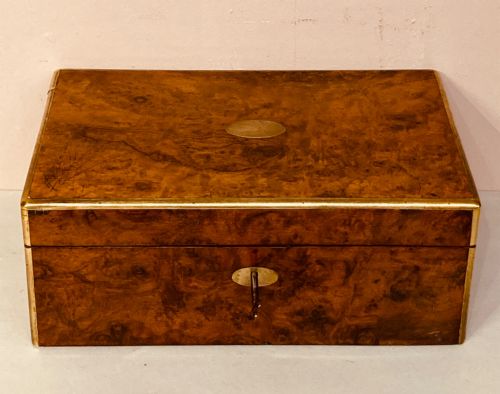
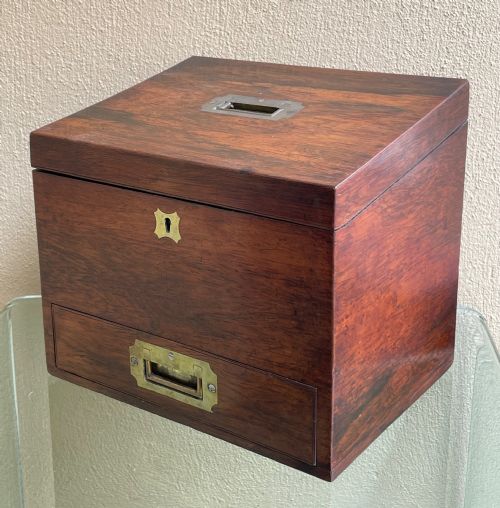
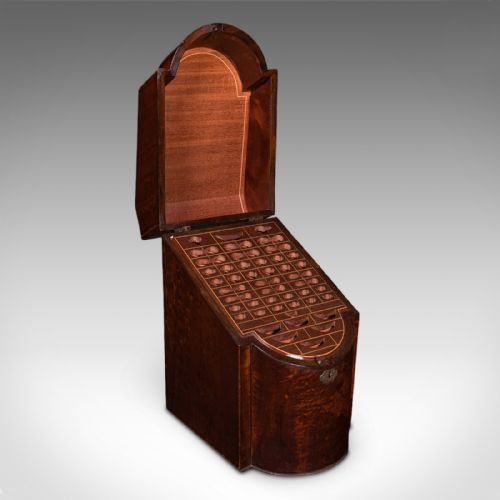
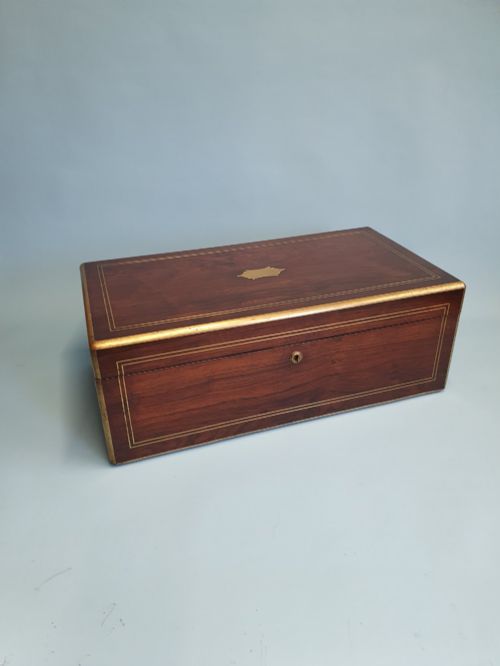
An antique sloping stationery box organises correspondence with fitted elegance, offering a timber-crafted desk tidy designed to hold paper, envelopes and pens.
Antique Sloping Stationery Box
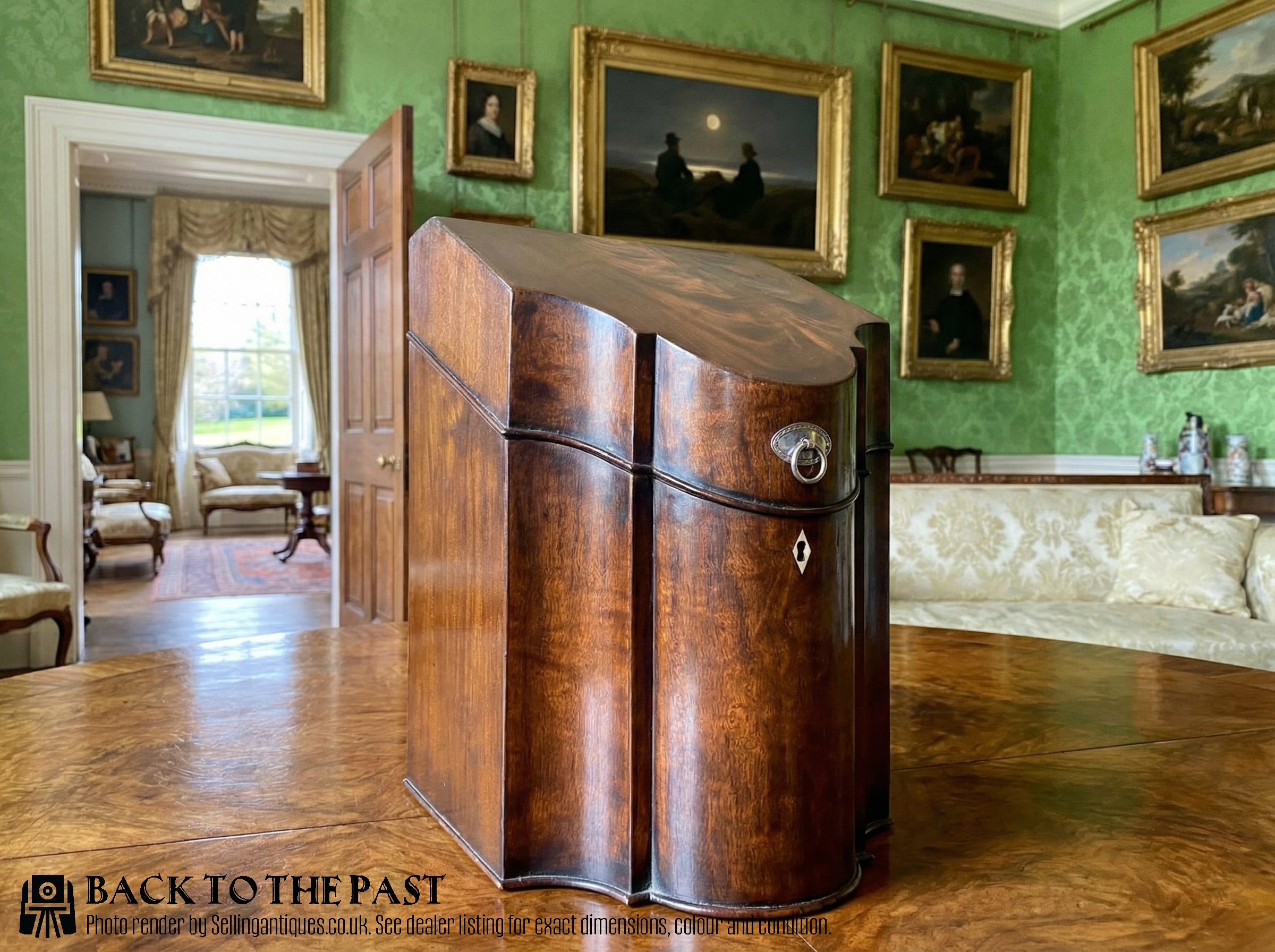
An antique sloping stationery box encompasses writing slopes, correspondence boxes, desk cabinets and fall-front organisers designed for desktop organisation. These pieces range from Georgian and Regency prototypes to Victorian walnut cabinets and Edwardian oak tidies.
How they were made
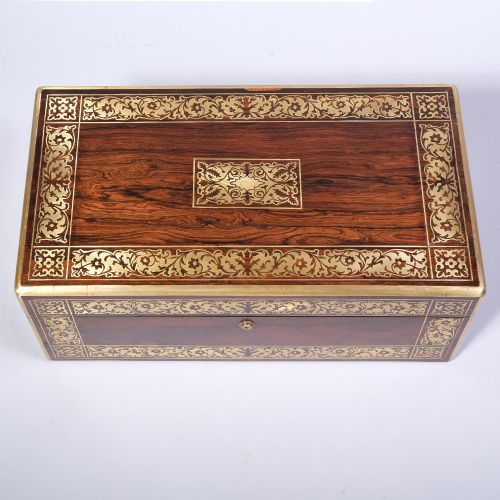
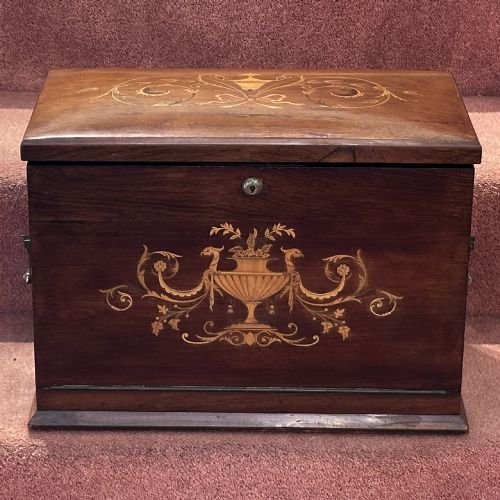
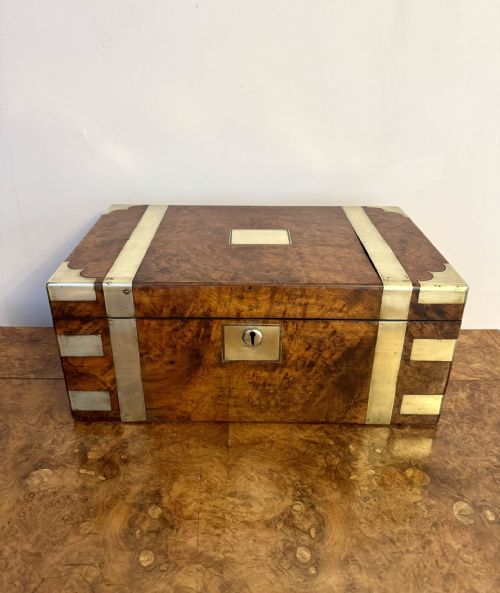
Cabinet makers built these boxes using dense hardwoods such as mahogany, rosewood, walnut and oak, often selecting figured burr veneers for decorative lids. Brass banding, corner mounts and flush inset handles provided structural reinforcement, particularly for portable campaign pieces intended for travel.
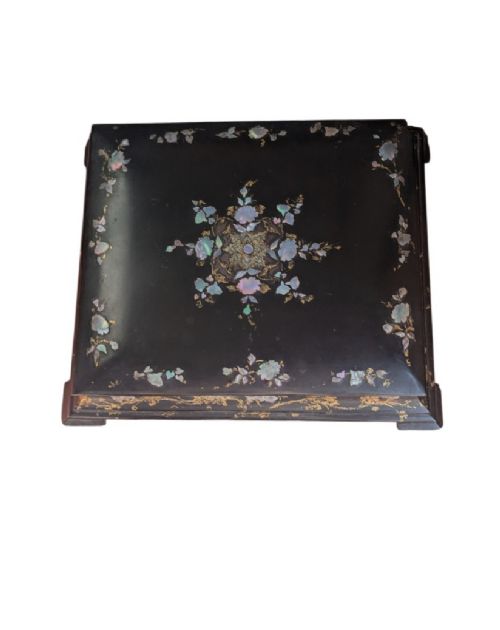
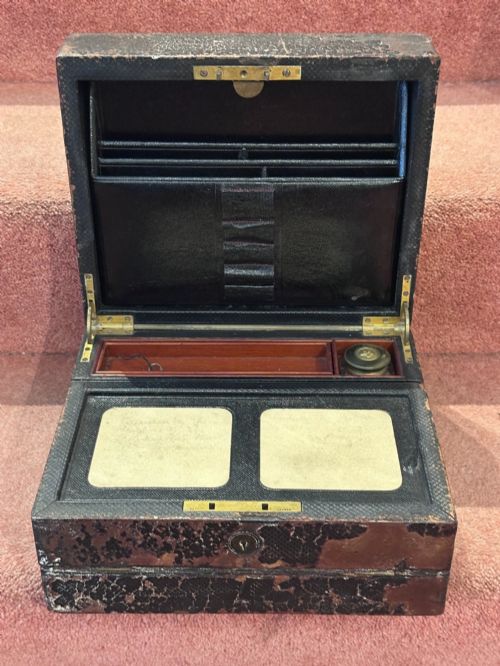
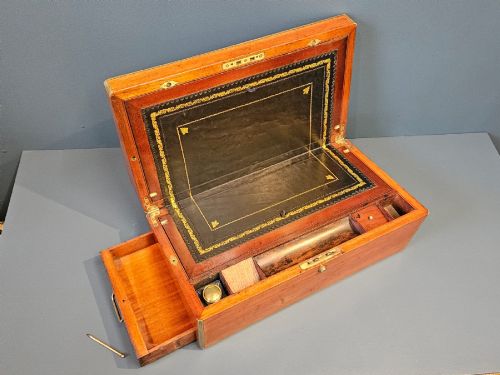
Interiors incorporated secondary timbers like satinwood alongside leather writing surfaces, velvet linings and fitted compartments for inkwells and pens. Specialised decorative techniques such as Tunbridge ware, bone inlay, brass stringing and mother-of-pearl embellishment distinguished the more ambitious workshops.
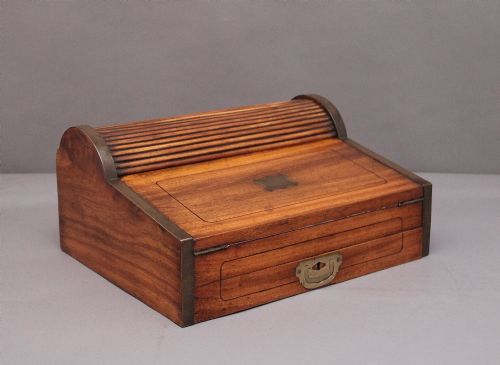
Listings feature woods spanning mahogany, rosewood, walnut, burr walnut, oak, camphor wood, satinwood, coromandel and huanghuali.
What varies in quality
Construction fidelity separates standard utilitarian boxes from superior examples, visible in the precision of dovetail joints, the snugness of closing lids and the integrity of secret drawers. Timber selection dictates visual appeal, with richly figured burr walnut, coromandel or substantial rosewood marking out elevated production.
Interior complexity and hardware standards further define the hierarchy. High-quality pieces retain original fitted velvet or leather panels, intact brass campaign mounts, and working locks with matching keys, whereas lesser boxes rely on simpler internal layouts and plain secondary woods.
The Antique Sloping Stationery Box Glossary
- Writing slope
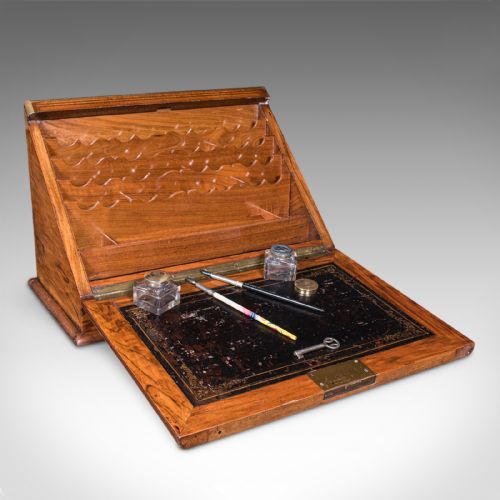
- A portable box with a slanted lid that folds open to reveal a sloping writing surface and internal compartments for stationery. These objects served travellers and homeowners before fitted desks became universal.
- Campaign box
- A sturdy wooden box fitted with brass corners, straps and flush handles designed for military officers on the move. Such pieces prioritize durability and transport convenience.
- Fall-front
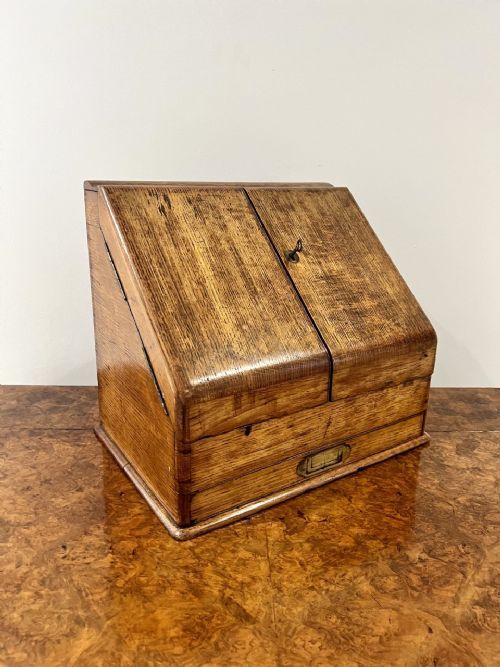
- A vertical box design featuring a hinged front panel that drops open to access tiered letter slots and pigeonholes. This configuration allows stationery to be stored upright rather than flat.
- Tunbridge ware
- A meticulous form of British woodworking utilising thousands of tiny tinted wood blocks to create mosaic pictures on box lids. Collectors prize geometric and floral tessellated panels.
- Secret drawers
- Concealed compartments hidden behind false partitions or removable panels within the interior well. Makers included these to secure private documents and valuables.
Antique Sloping Stationery Box: Frequently Asked Questions
How were writing slopes used originally?
Writing slopes provided a portable writing surface and secure storage for stationery before modern desks with built-in drawers became common. Users opened the hinged, slanted lid to reveal compartments for ink, pens and paper, often utilising the slant as a firm angled surface for handwriting.
Many examples accompanied travellers on journeys, while stationary versions remained permanently positioned on library tables or Davenport desks.
How do I date an antique stationery box?
Dating relies on timber choice, hardware style and construction methods observable in the piece. Georgian and Regency boxes frequently employ rosewood or mahogany with brass stringing, while mid-Victorian pieces often feature burr walnut, coromandel and heavy brass corner banding.
Edwardian examples commonly display golden oak or simpler mahogany frames with fall-front mechanisms and reduced decorative embellishment.
Where should I place a stationery box at home?
These boxes sit comfortably on top of writing desks, sideboards, bookcases or hall tables where their timber grains and brass fittings can be appreciated. Their internal compartments make them practical for holding modern mail, notepads and everyday correspondence.
Keeping them away from direct sunlight and extreme radiator heat protects the polished wood veneers and internal leather linings from drying out.