



Antique Silver Table Coaster
An antique silver table coaster protects dining surfaces and holds bottles gracefully, spanning George III elegance through to later twentieth-century designs.
Antique Silver Table Coaster
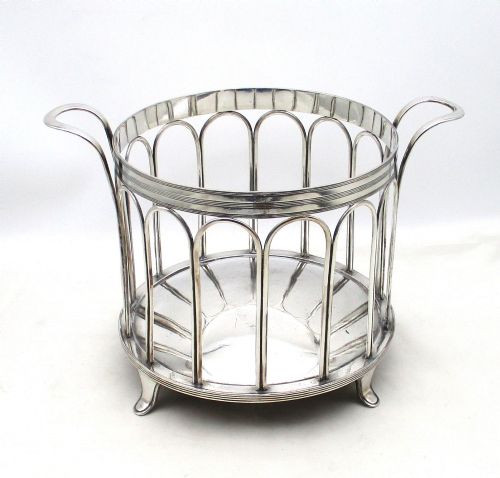
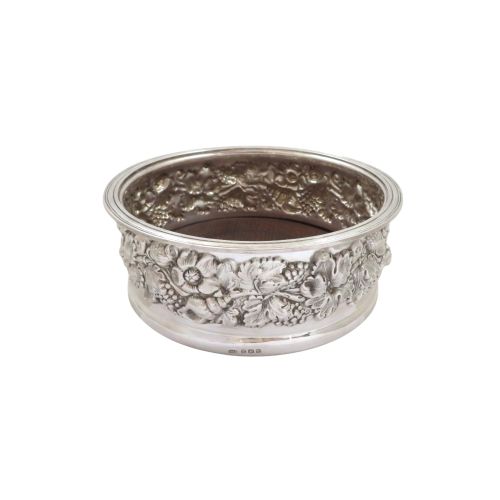
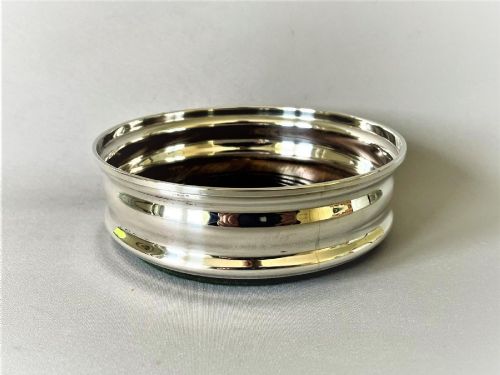
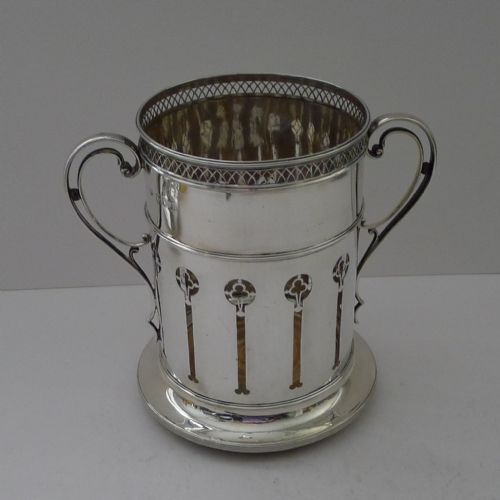
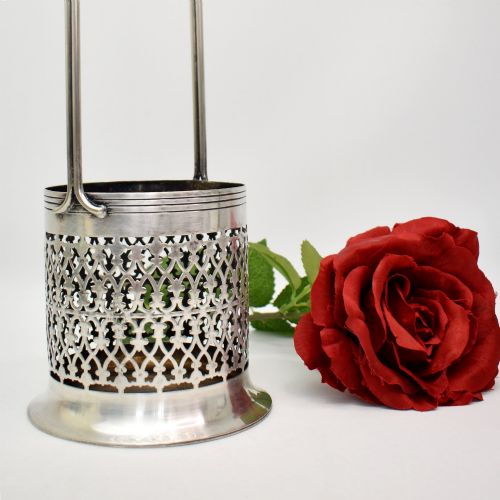
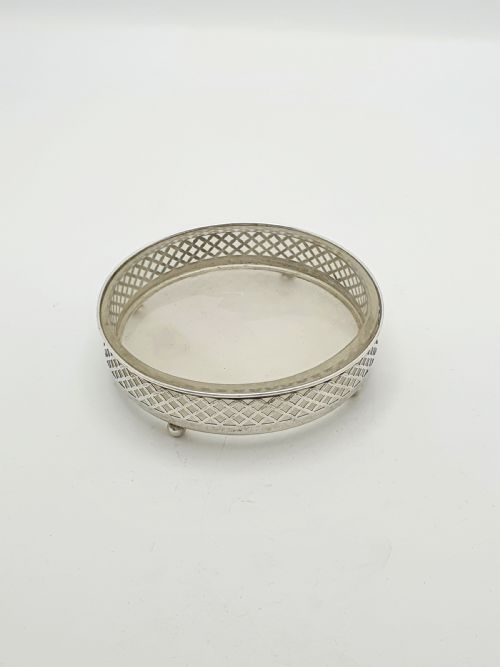
An antique silver table coaster serves primarily as a protective base for wine bottles and decanters on the dining table. These pieces appear in forms such as individual wine coasters, barware items, and larger table stands across Georgian, Victorian, and Edwardian periods.
The selection on this page ranges from early nineteenth-century George III examples to mid-century items, encompassing sterling silver and silver plate constructions. Buyers encounter both single items and matched pairs or sets designed for formal dining.
Makers and makers' marks occasionally identify specific silversmiths from Sheffield and Edinburgh, while materials extend beyond solid metal to incorporate timber bases and glass inserts.
How They Were Made
Silversmiths utilised sterling silver and silver plate, often combining metal bodies with turned wood bases, particularly mahogany. Old Sheffield Plate techniques fused a thin layer of silver onto a copper core, visible in pieces from the Georgian and Victorian eras.
Decorative detailing involved piercing, embossing, and applied borders, while internal turned wooden bases frequently featured central silver buttons for engraved crests or armorials. Glass liners appeared in related serving pieces such as butter dishes.
Listings feature periods spanning from George III and Regency through Victorian and Edwardian up to nineteen-sixty and beyond.
What Varies in Quality
The distinction between standard items and superior examples lies in the crispness of chased and pierced ornamentation, the weight of the silver or silver plate, and the integrity of the underlying wooden base. Matched pairs and complete sets command higher regard than single survivors.
Attribution to documented makers or specific assay offices such as Sheffield and Edinburgh elevates an example's standing. The preservation of original Old Sheffield Plate surfaces without excessive copper show-through also dictates the tier of the piece.
Brook & Son·Christofle·John & Thomas Settle·Asprey
The Antique Silver Table Coaster Glossary
- Old Sheffield Plate
- An early fusing technique where a sheet of silver is fused to a thicker copper core by heat and pressure. Edges often reveal the underlying copper upon close inspection.
- Sterling Silver
- An alloy consisting of silver and other metals, typically copper, maintaining a standard purity of nine hundred and twenty-five parts per thousand. Marks on the metal indicate its official standard.
- Silver Plate
- A base metal coated with a thin layer of silver through electroplating or older fusion methods. It provides the appearance of solid silver at a different scale of production.
- Wine Coaster
- A small, circular tray with a raised rim designed to hold a bottle and protect the table surface. They frequently include baize or timber linings on the underside.
Antique Silver Table Coaster: Frequently Asked Questions
What is an antique silver table coaster used for?
These pieces hold wine bottles, decanters, or champagne vessels while protecting polished dining tables from moisture and condensation.
They also serve as decorative table centerpieces, often remaining on the dining surface throughout a meal.
How do I care for antique silver coasters?
Cleaning requires a soft cloth and dedicated silver polish designed to preserve thin plating or delicate hallmarks.
Wooden bases should be kept dry, avoiding immersion in water during routine maintenance.
Are silver coasters sold as pairs?
Many examples survive as matched pairs or sets of four, reflecting formal dining arrangements of the Georgian and Victorian periods.
Single coasters also appear frequently for individual use.
What materials are used in these coasters?
Construction involves sterling silver, silver plate, and Old Sheffield Plate combined with turned mahogany bases.
Some variations incorporate brass, copper, or ceramic and glass elements.