

Antique Silver Salts Set
An antique silver salts set brings practical elegance to the dining table, combining precious metal and glass in traditional forms.
Antique Silver Salts Set
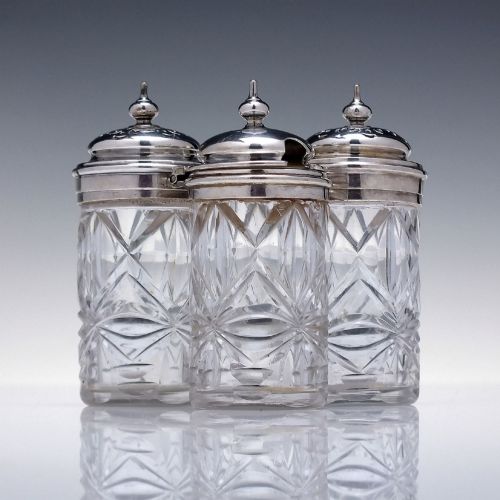
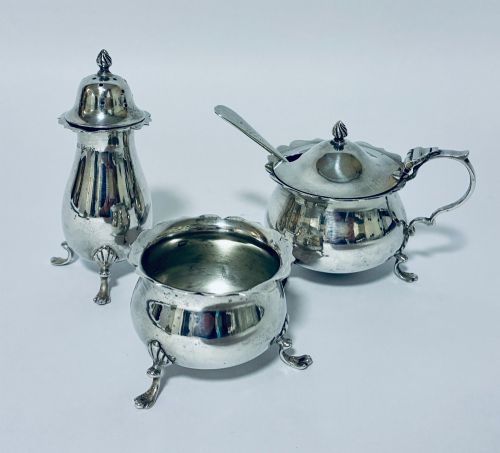
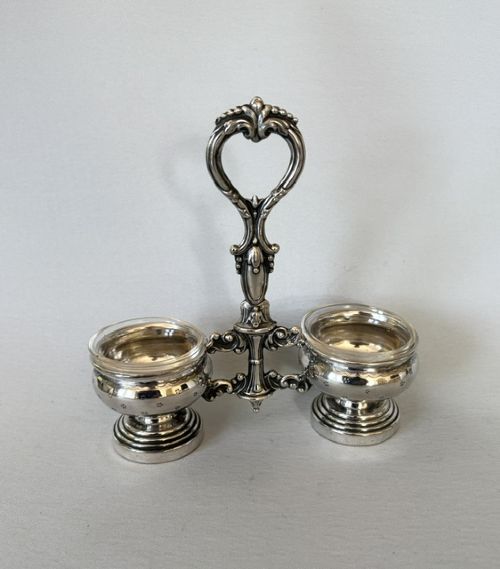
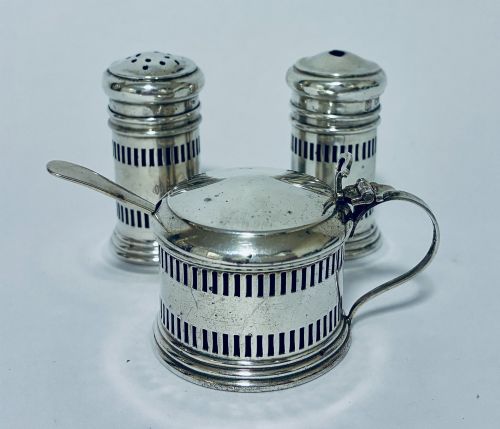
An antique silver salts set comprises open salt cellars, shakers, or multi-bottle cruet frames designed for table seasoning. These collections range from simple pairs of Victorian cauldron salts to extensive Edwardian and Georgian cruet stands holding multiple glass bottles.
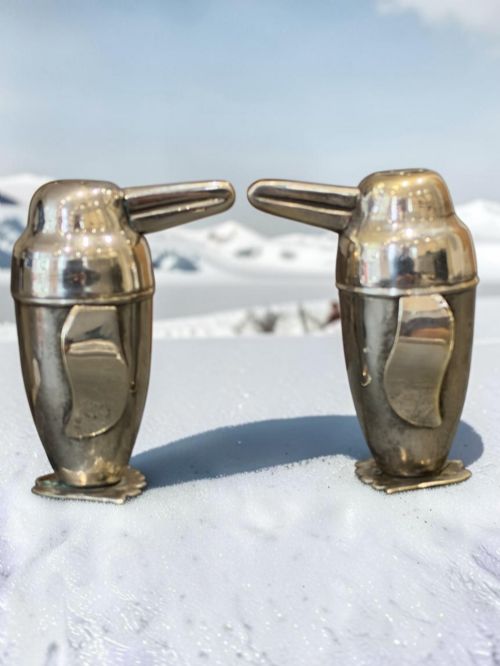
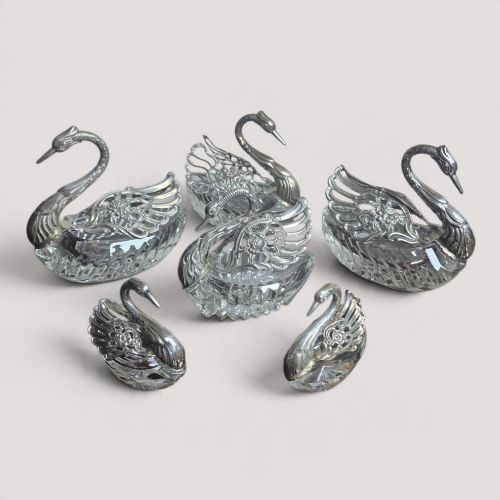
The pieces appearing on this page span the Georgian, Victorian, Edwardian, and Art Deco periods, encompassing sterling silver, silver plate, and combinations with cut glass liners.
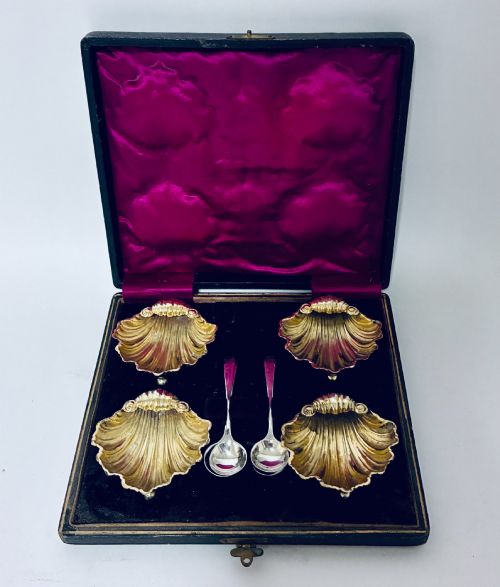
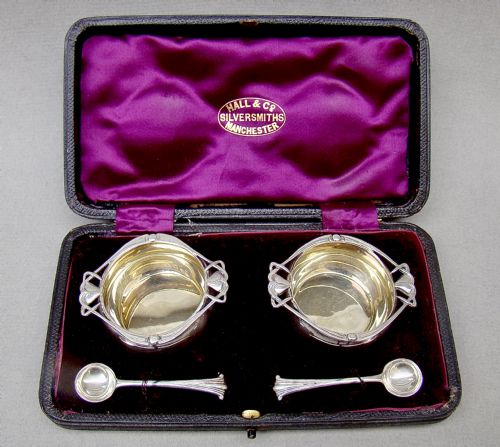
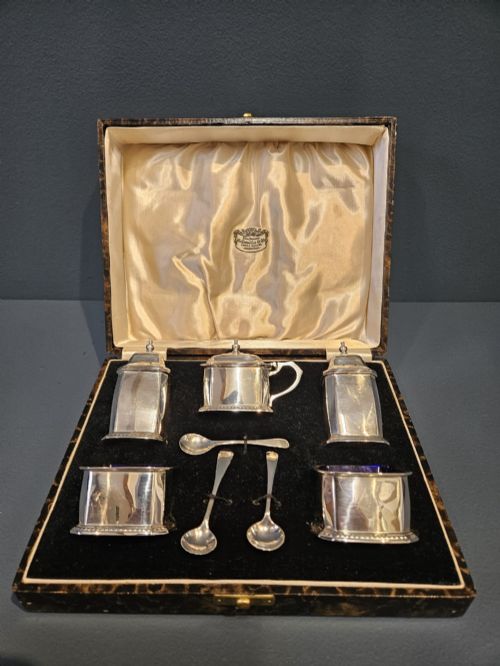
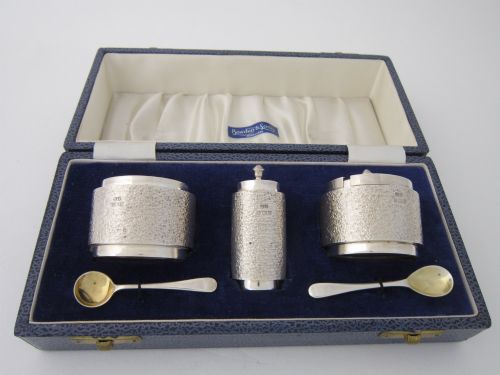
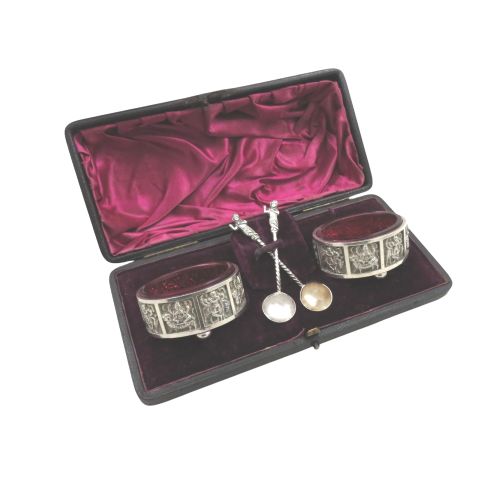
Buyers will encounter cased sets intended for gifting alongside standalone pieces meant for active table use, reflecting diverse dining customs across the nineteenth and twentieth centuries.
Materials and Technique
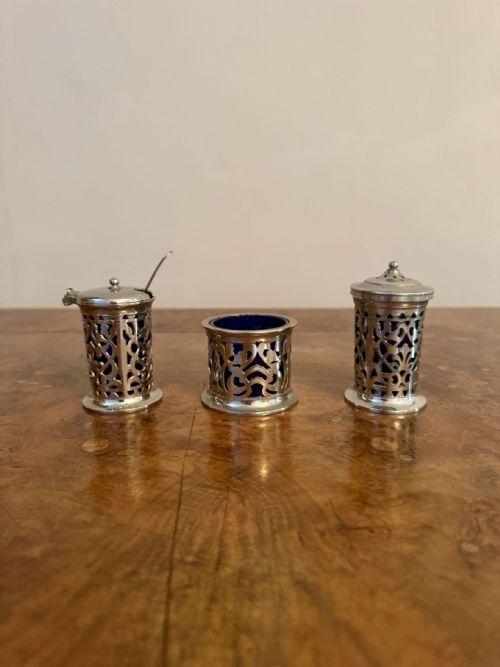
Silversmiths utilised sterling silver and silver plate for frames, mounts, and spoons, shaping them through casting, piercing, and hammering. Many examples incorporate cobalt glass, cranberry flashed cut glass, or plain glass liners held securely within pierced silver galleries.
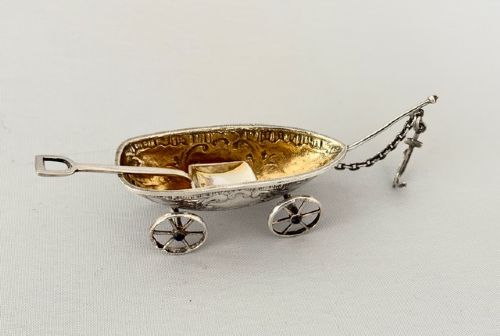
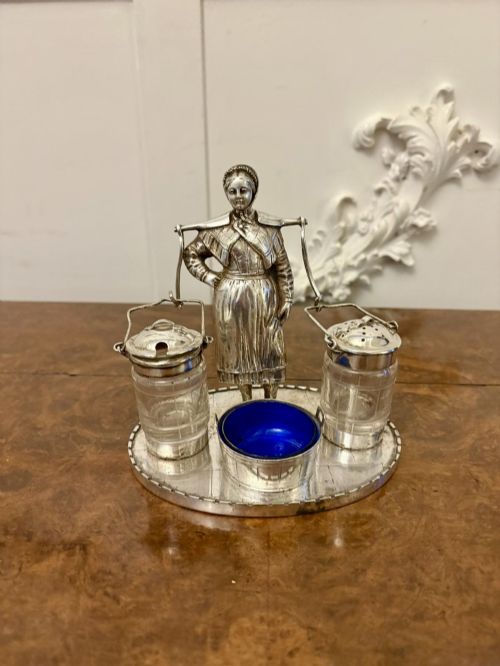
Specialised items integrate contrasting elements such as carved horn, oak barrels, or vibrant enamel work, demonstrating the varied craftsmanship of period makers.
Antique Silver Salts Set Retail Price Guide 2026
Typical asking prices for silver salts set among the pieces listed under this phrase on Sellingantiques today, from the lower quarter to the upper quarter. They describe what is for sale here now, not the wider market.
Listings feature sterling silver, silver plate, cut glass, cobalt glass, velvet, and satin across Georgian, Victorian, Edwardian, and Art Deco periods.
Assessment of Quality
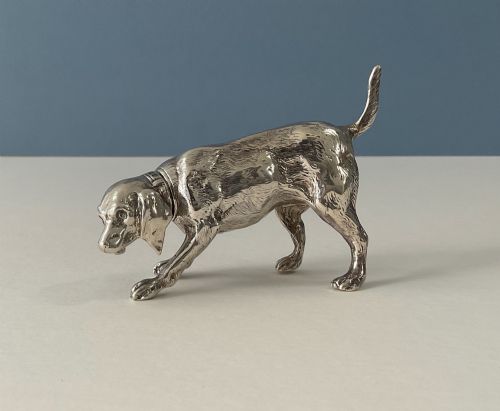
Superior examples display crisp hallmarks, substantial metal weight, and finely detailed chasing or engraving on motifs like floral garlands or figural novelties. The integrity of matching components, such as original glass liners and corresponding spoons, distinguishes a cohesive set from assembled groupings.
Makers known for exceptional output maintain clear standards in structural balance and the secure fit of bottles within cruet frames, elevating everyday tableware to notable decorative art.
Goldsmith & Silversmith's·Georg Jensen·William Neale·Walker & Hall·Bateman
The Antique Silver Salts Set Glossary
- Cruet set
- A matched collection of bottles, jars, or shakers mounted in a frame for condiments. These stands often incorporate handles for transport between kitchen and dining table.
- Cauldron salt
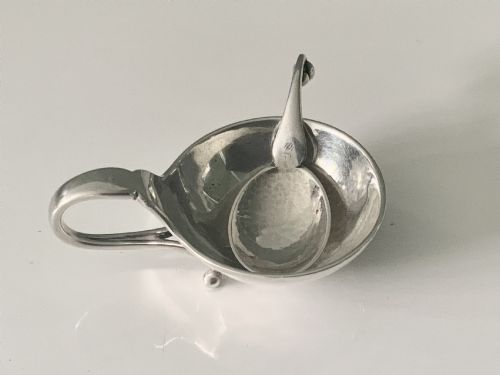
- A small, round salt cellar shaped like a cooking pot, typically standing on three legs. Victorian versions frequently feature embossed repoussé decoration.
- Silver plate
- A base metal, such as copper or Britannia metal, coated with a thin layer of silver. This technique offered an accessible alternative to solid sterling silver during the nineteenth century.
- Cobalt glass
- Deep blue glass commonly utilised for removable liners inside open salt cellars. The dark colour contrasts sharply with polished silver frames.
- Condiment stand
- A portable frame holding multiple receptacles for seasonings, sauces, and spices. Georgian and Victorian iterations often accommodate up to eight individual bottles.
Antique Silver Salts Set: Frequently Asked Questions
How do I clean antique silver salts?
Clean sterling silver and silver plated components gently using a dedicated silver cloth or mild polish, avoiding abrasive materials that can damage surface details.
Remove glass liners before cleaning to wash them separately in warm soapy water, ensuring all dried salt residue is completely dissolved.
Were these sets used for dining?
Dining arrangements historically required individual salt cellars placed near each guest before salt shakers became commonplace in the twentieth century.
Larger cruet stands held a central supply of oils, vinegars, and condiments that were passed around the table during formal meals.
How do I identify the period?
Examine the stamped hallmarks on sterling silver pieces for date letters, maker's marks, and standard symbols indicating the assay office and purity.
Stylistic cues such as Aesthetic movement engraving, Art Deco geometric lines, or Victorian floral repoussé further help determine the era of manufacture.
Can I use glass liners safely?
Original glass liners are durable, but thermal shock from very hot water should be avoided to prevent cracking antique glass.
Check the rim and base of each liner for minor chips before washing, and handle them carefully when removing them from tight silver mounts.