



Antique Silver Rim Glass
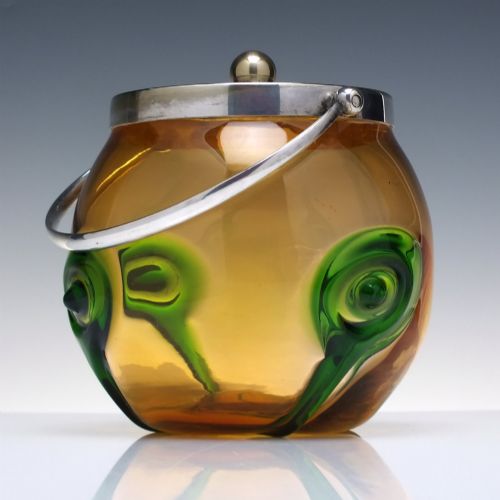
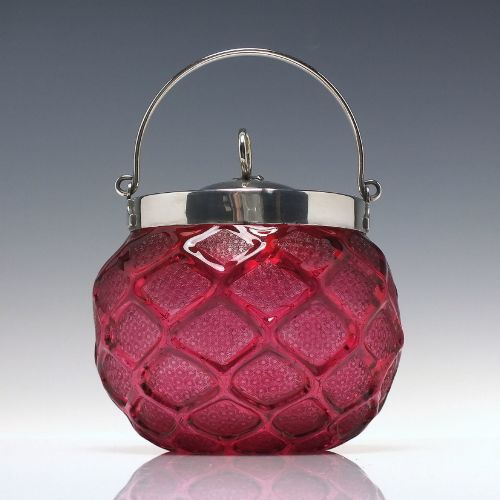
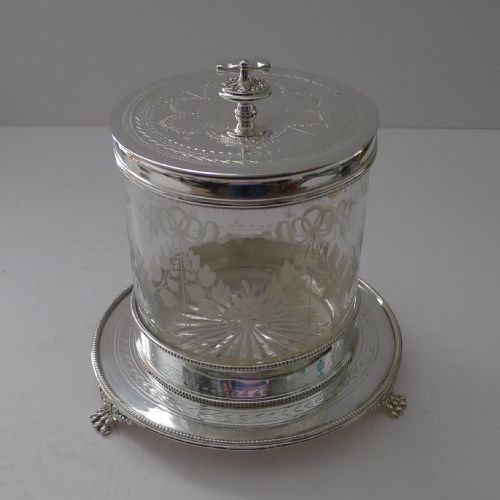
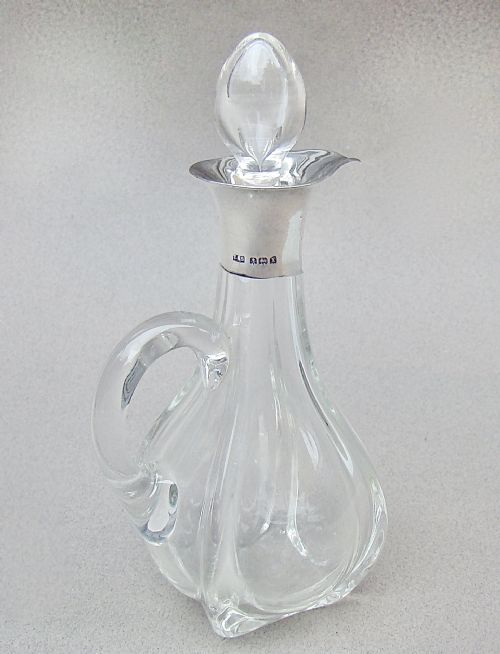
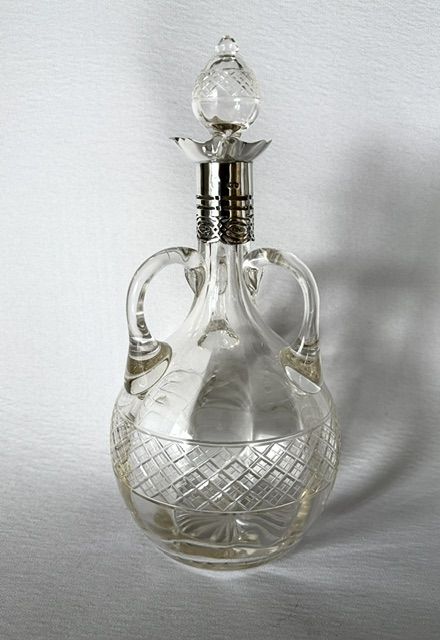
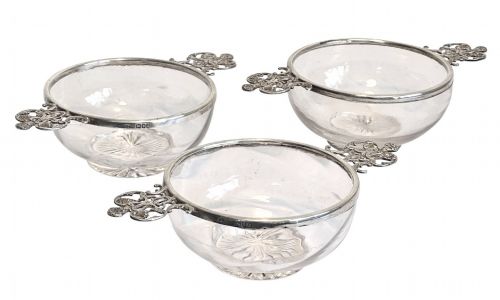
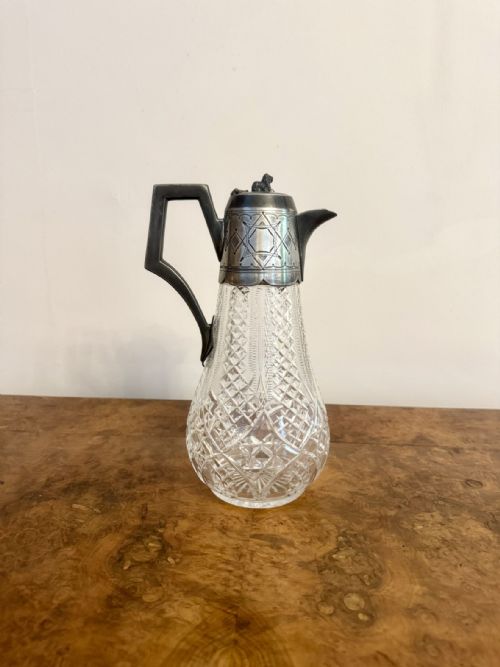
These antique silver rim glass pieces bring together heavy cut crystal and gleaming metal mounts for the dining table and sideboard.
Antique Silver Rim Glass
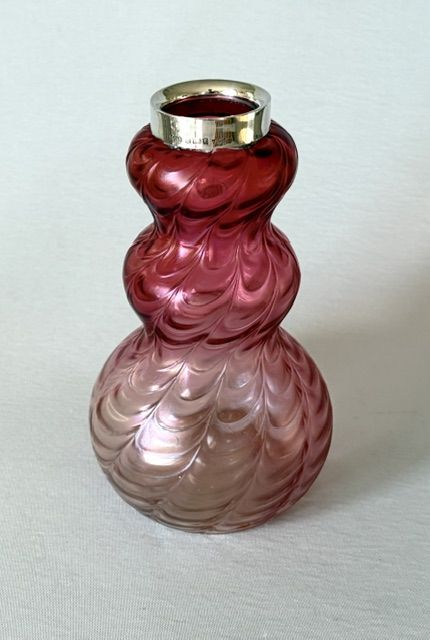
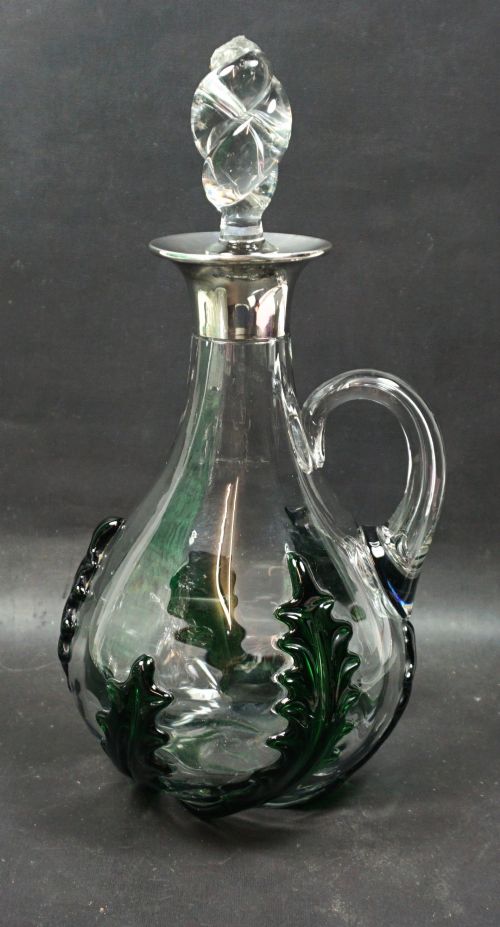
When you search for antique silver rim glass, you encounter vessels and serving accessories designed for the dining table and parlour from the Victorian, Edwardian, and Art Deco periods. These items combine transparent or coloured glass bodies with mounted collars, handles, and lids made from sterling silver or silver plate.
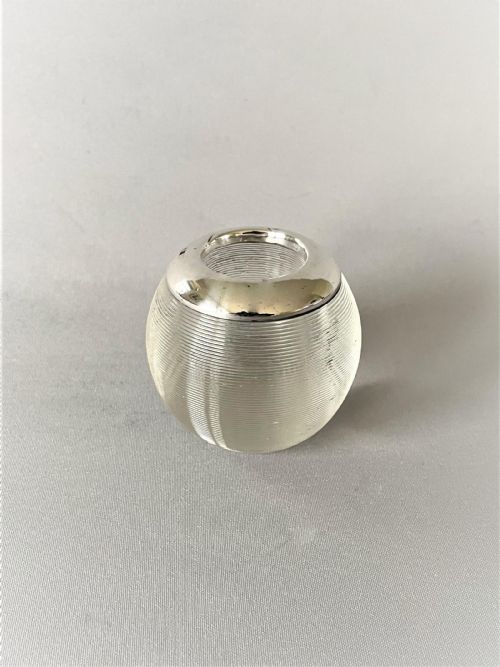
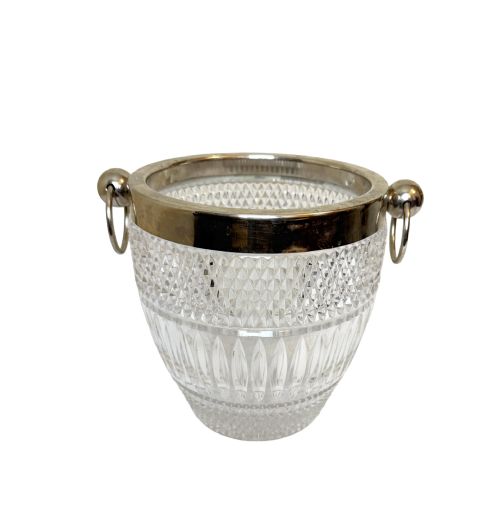
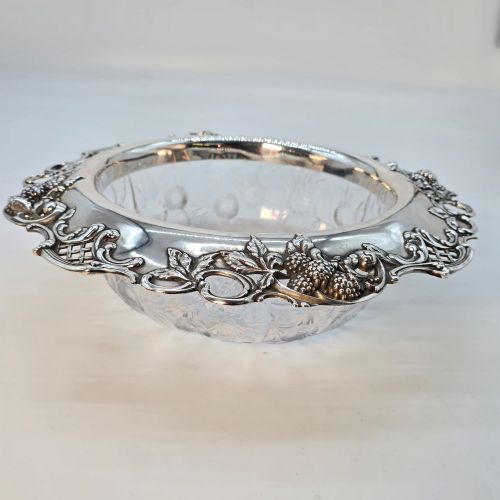
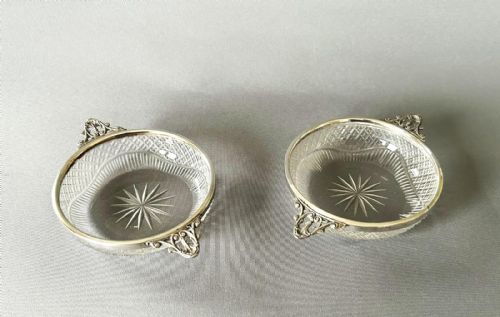
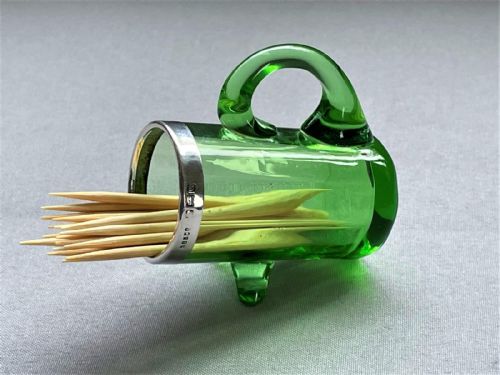
The most common forms on this page include decanters, ice buckets, claret jugs, and biscuit barrels alongside smaller accessories like match strikers and preserve pots. The glass takes various forms including cut crystal, vaseline glass, and blue enamel, shaped into tankards, bowls, and table salts.
Originating largely from British and French makers, these functional objects bridge the gap between utility and display. They represent the domestic entertainments of the nineteenth and early twentieth centuries, surviving today as practical display items for the modern home.
How they were made
The construction relies on the union of heavy blown or cut glass with metalwork fashioned from sterling silver or silver plate. Glass vessels were often deeply cut to catch the light, then fitted with collars, rims, and hinged lids secured by specialised adhesives or mechanical tension.
Metals were worked using techniques such as casting, stamping, and engraving to create decorative mounts and collars. Silversmiths shaped collars to fit precisely over the glass lips of decanters, jugs, and jars, sometimes incorporating blue enamel, vaseline glass, or coloured mirror surfaces.
Antique Silver Rim Glass Retail Price Guide 2026
Typical asking prices for silver rim glass among the pieces listed under this phrase on Sellingantiques today, from the lower quarter to the upper quarter. They describe what is for sale here now, not the wider market.
Object forms on this page include decanters, claret jugs, ice buckets, biscuit barrels, and match strikers.
What varies in quality
Quality rests upon the depth and clarity of the glass cutting, the weight of the crystal body, and the substantial nature of the metal mounts. Pieces with heavy lead crystal and thick sterling silver collars demonstrate superior craftsmanship compared to lighter silver-plated alternatives.
Design ambition separates standard tableware from exceptional examples, such as those incorporating coloured vaseline glass, intricate enamel work, or specialised mechanisms on biscuit boxes and match strikers.
Tiffany and Co·William Comyns·William Rudkins·Hukin and Heath·Asprey and Co·George Ernest Hawkins
The Antique Silver Rim Glass Glossary
- Sterling silver
- A silver alloy containing 92.5 percent pure silver and 7.5 percent other metals, usually copper, used for the mounts and collars on fine glass vessels.
- Cut crystal
- High-quality glass with a high lead content that is deeply cut with facets to refract light, frequently seen on decanters and ice buckets.
- Vaseline glass
- A type of glass coloured with uranium oxide that exhibits a characteristic yellow-green fluorescence under ultraviolet light, popular in Edwardian and Art Nouveau designs.
- Claret jug
- A pouring vessel designed specifically for serving red wine at the dining table, typically combining a glass body with an elaborate silver handle and hinged spout.
Antique Silver Rim Glass: Frequently Asked Questions
Can I use these decanters for wine?
These decanters function well for serving wine and spirits provided the interior is clean and free from old residue. Inspect the stopper and silver collar to ensure the pour remains secure.
Empty any remaining liquid after use and rinse the crystal to prevent staining over time. Leave the stopper out until the interior dries completely.
How do I date an Edwardian silver rim piece?
Examine the hallmarks stamped into the silver mount for city marks, date letters, and maker symbols. These tiny stamps provide the exact year of assay and the workshop responsible for the metalwork.
Compare the overall aesthetic with known styles of the period, noting the transition from ornate Victorian detailing to the cleaner lines of the Edwardian era.
What is vaseline glass?
Vaseline glass is a distinct yellowish-green transparent glass produced by adding uranium oxide to the batch before melting. It glows brightly under ultraviolet light and appeared frequently in decorative bowls and centrepieces during the Edwardian period.
Handle these items with the same care as other antique glassware, keeping them on display where their unique colour and optical qualities can be appreciated.