
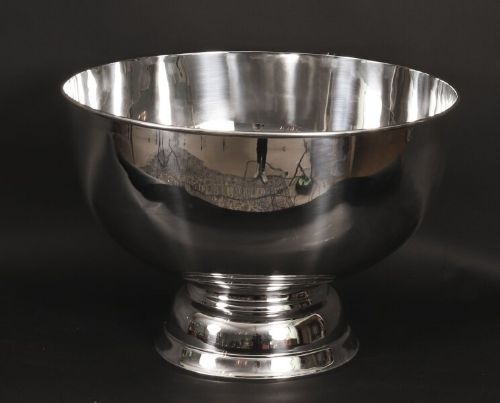


Antique Silver Punch Bowl
An antique silver punch bowl brings heavy Georgian gravity and Victorian weight to a sideboard, made for large gatherings and serious hospitality.
What an antique silver punch bowl is
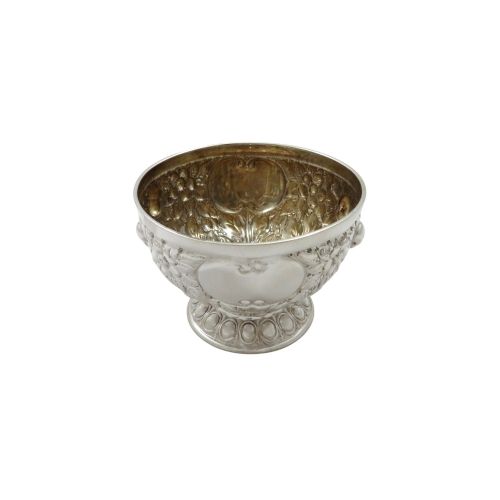
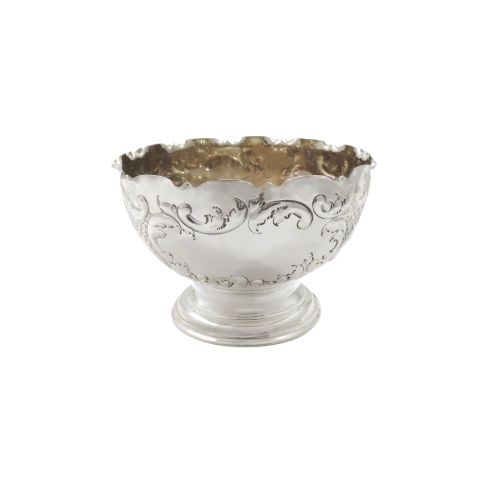
An antique silver punch bowl is a wide, deep vessel designed originally for mixing and serving communal drinks, appearing frequently in Victorian and Georgian incarnations. The forms found here range from footed sterling silver bowls to substantial silver plate on copper vessels and brass pieces. Buyers seeking this phrase encounter both solid sterling silver examples and heavy plated items meant for display and hospitality.
The periods represented stretch from the eighteenth-century Georgian era through the nineteenth century into Victorian production. Many pieces double functionally as wine coolers or champagne coolers due to their generous proportions and deep basins. These bowls arrive from various British assay offices and workshops, reflecting long traditions of domestic metalwork.
How they were made
Makers utilised sterling silver, silver plate on copper, and brass, shaping the metal through hammering, spinning, and casting. Bowls often sit upon elevated feet or stepped bases to give them proper presence on a table. Handles, rims, and repoussé decoration were frequently applied separately to the main body.
Surface ornamentation relies heavily on repoussé work, chasing, and hand engraving to create floral motifs, fluting, or heraldic shields. Silver plated pieces often employ a copper core beneath the exterior metal layer, revealing warmth where wear occurs over generations. Structural joints are soldered with precision to hold substantial liquid volume without leaking.
Retail Price Guide 2026
Typical UK retail prices for silver punch bowl, calculated from the Sellingantiques database of over a million retail prices indexed since 2003. This retail price guide relies exclusively on Sellingantiques data; no external sources or auction records are used, so the figures do not describe the wider market.
The archive shows silver punch bowls ranging from eighteenth-century Georgian pieces to late Victorian heavy plate vessels.
What varies in quality
The dividing line between standard production and the top of the range rests on the thickness of the metal and the crispness of the hand-chased ornament. Heavier gauge sterling silver provides structural rigidity and substantial weight, whereas lighter vessels feel more utilitarian. Maker attribution also plays a role, with identifiable workshops commanding closer attention from collectors.
Proportion and foot design separate ordinary bowls from superior examples. A well-balanced foot and a properly reinforced rim show greater care in the workshop. The depth of the repoussé work determines whether decorative panels appear sharp or flattened by excessive polishing.
W Briggs Sheffield·Fenton Brothers Sheffield·Walter Barnard·Frederick Elkington·Walker and Hall·Goldsmiths and Silversmiths Co·Barnards
The Antique Silver Punch Bowl Glossary
- Sterling silver
- A silver alloy containing 92.5 percent pure silver by mass, with the remainder consisting of other metals like copper. This standard alloy provides the durability needed for large decorative bowls.
- Silver plate
- A manufacturing method where a thin layer of silver is bonded to a base metal, frequently copper or brass. This technique offered the visual richness of solid silver at a lower cost.
- Repoussé
- A metalworking technique where the artisan hammers the metal from the reverse side to form a raised design in relief. It creates textured, tactile surfaces on punch bowl bodies.
- Georgian
- The period covering the reigns of the first four British monarchs named George, spanning from 1714 to 1830. Pieces from this era carry distinct eighteenth-century proportions.
- Victorian
- The period spanning the reign of Queen Victoria from 1837 to 1901. Domestic metalwork from this time often displays heavier ornamentation and varied revival styles.
Frequently Asked Questions
What is a punch bowl used for?
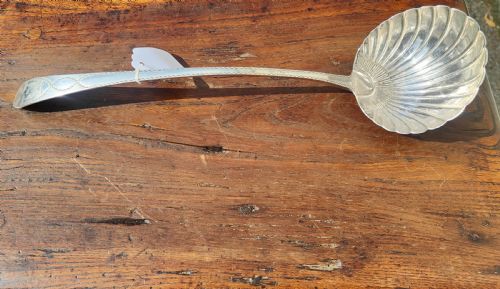
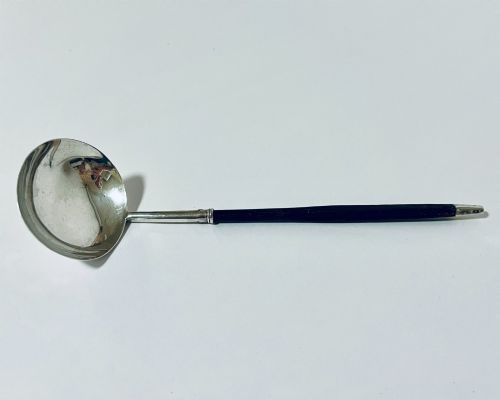
These large vessels were designed for mixing, holding, and serving punch during large social gatherings and celebrations in large homes. Hosts used them as central table pieces where guests could ladle drinks directly.
Today, they serve equally well as decorative centerpieces, wine coolers, or champagne coolers for modern entertaining and interior display.
How do I tell sterling silver from plate?
Sterling silver pieces bear official hallmarked stamps indicating the silver standard, assay office, and maker's mark. These tiny stamped symbols are usually found near the rim or underneath the base.
Silver plated items generally lack these specific purity marks and may instead show base metal glowing through where the silver layer has thinned over time.
How do I clean an antique bowl?
Cleaning requires a soft cloth and a gentle silver polish formulated specifically for antiques to preserve the original surface detail and patina. Harsh abrasive cleaners will strip thin plating and damage hand-chased decoration.
Frequent light dusting keeps tarnish at bay without requiring heavy chemical intervention that might alter the appearance of the metal.
Are these bowls safe for food?
Solid sterling silver vessels are generally safe for holding beverages and cold punch during events. Proper washing immediately after use prevents acidic liquids from marking the interior surface.
Silver plated items require care to ensure the base metal remains completely covered by the protective silver layer before serving consumable drinks.