


Antique Silver Desk Set
An antique silver desk set organises correspondence with heavy glass, gleaming metal and fitted inkwells for any serious writing desk.
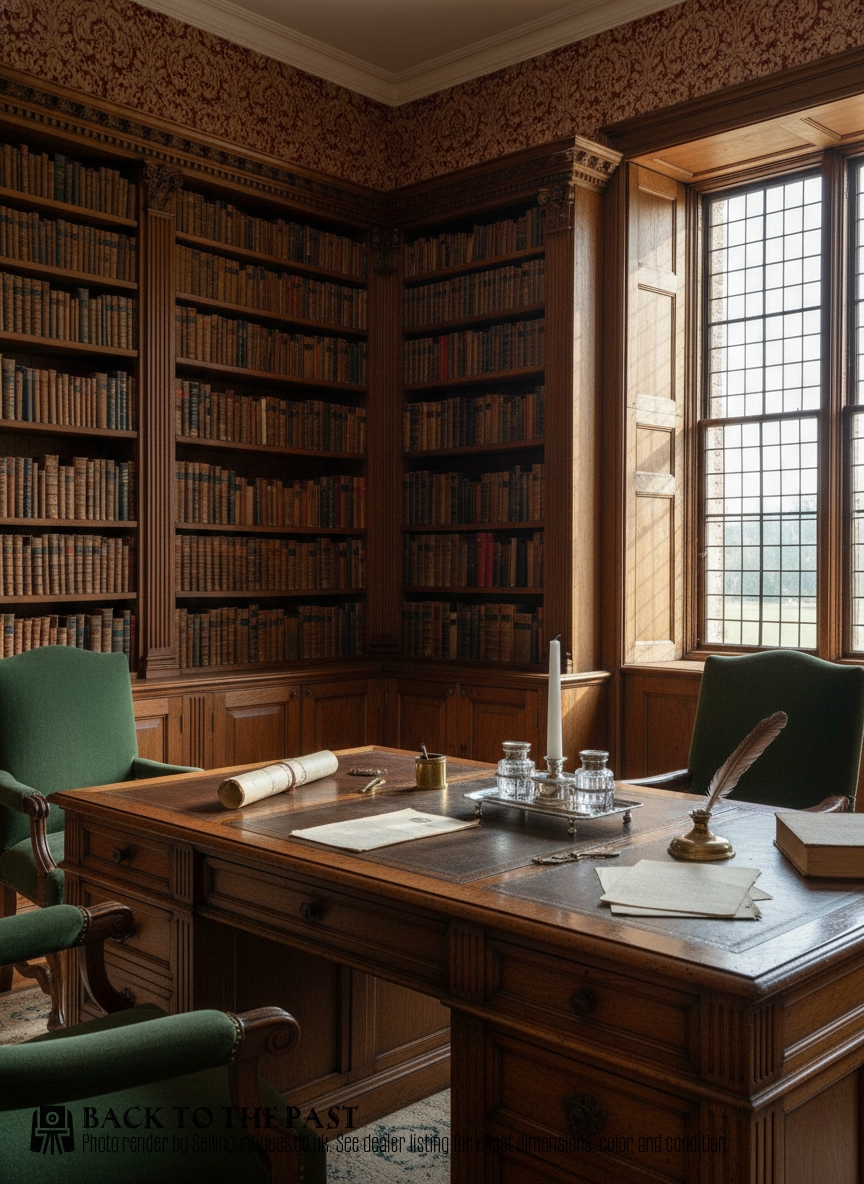
What these pieces are
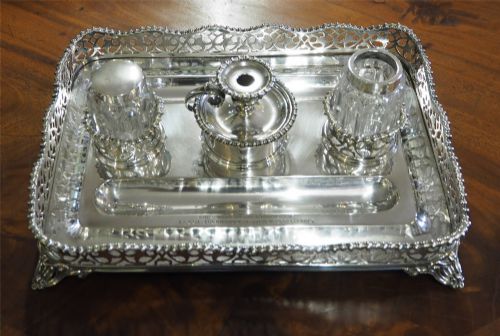
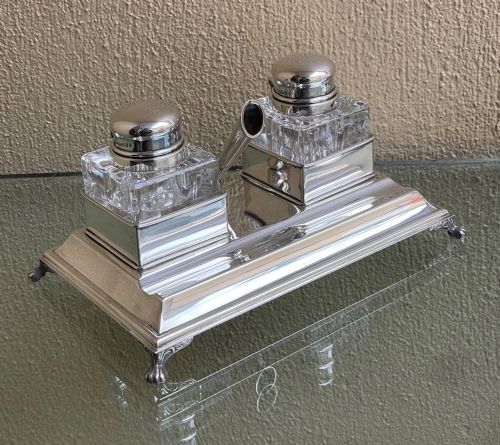
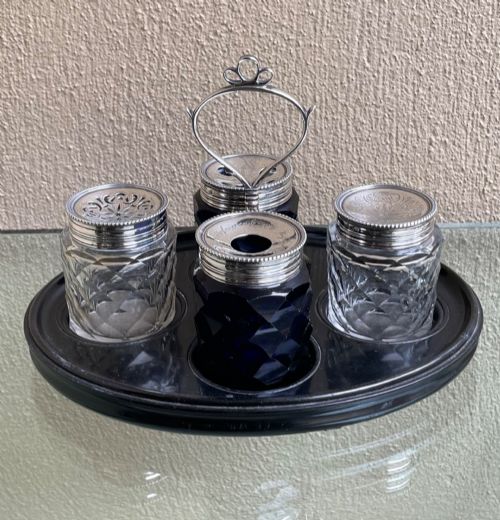
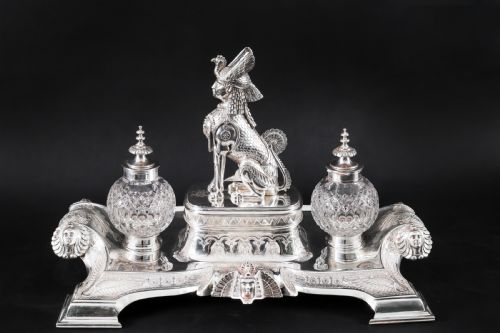
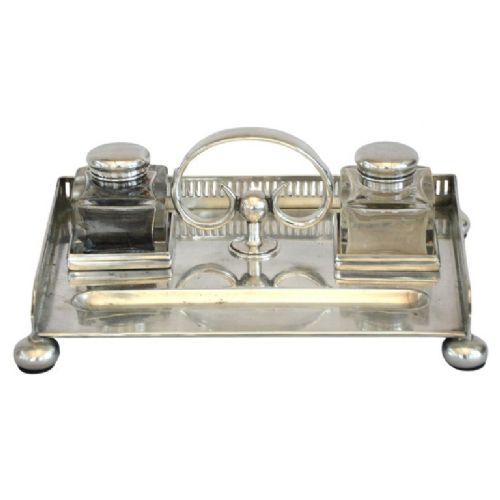
An antique silver desk set gathers essential writing accessories onto a single fitted stand or tray designed for correspondence. These groupings frequently incorporate inkwells, stamp cases, sealing wax holders and chambersticks.
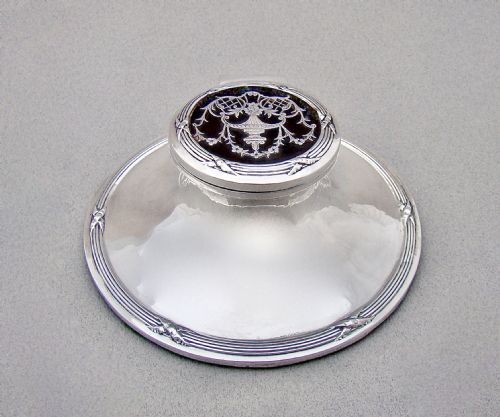
The pieces appearing here span the Georgian, Victorian and Edwardian eras, alongside items from the 1890s. Buyers encounter forms ranging from double inkstands and capstan inkwells to novelty items and heart-shaped silver plated trays.
Makers utilise diverse materials such as sterling silver, silver plate, Sheffield plate, cut glass, enamel and silver gilt. Some examples incorporate organic elements like horn, green stone, tortoiseshell and fruit motifs.
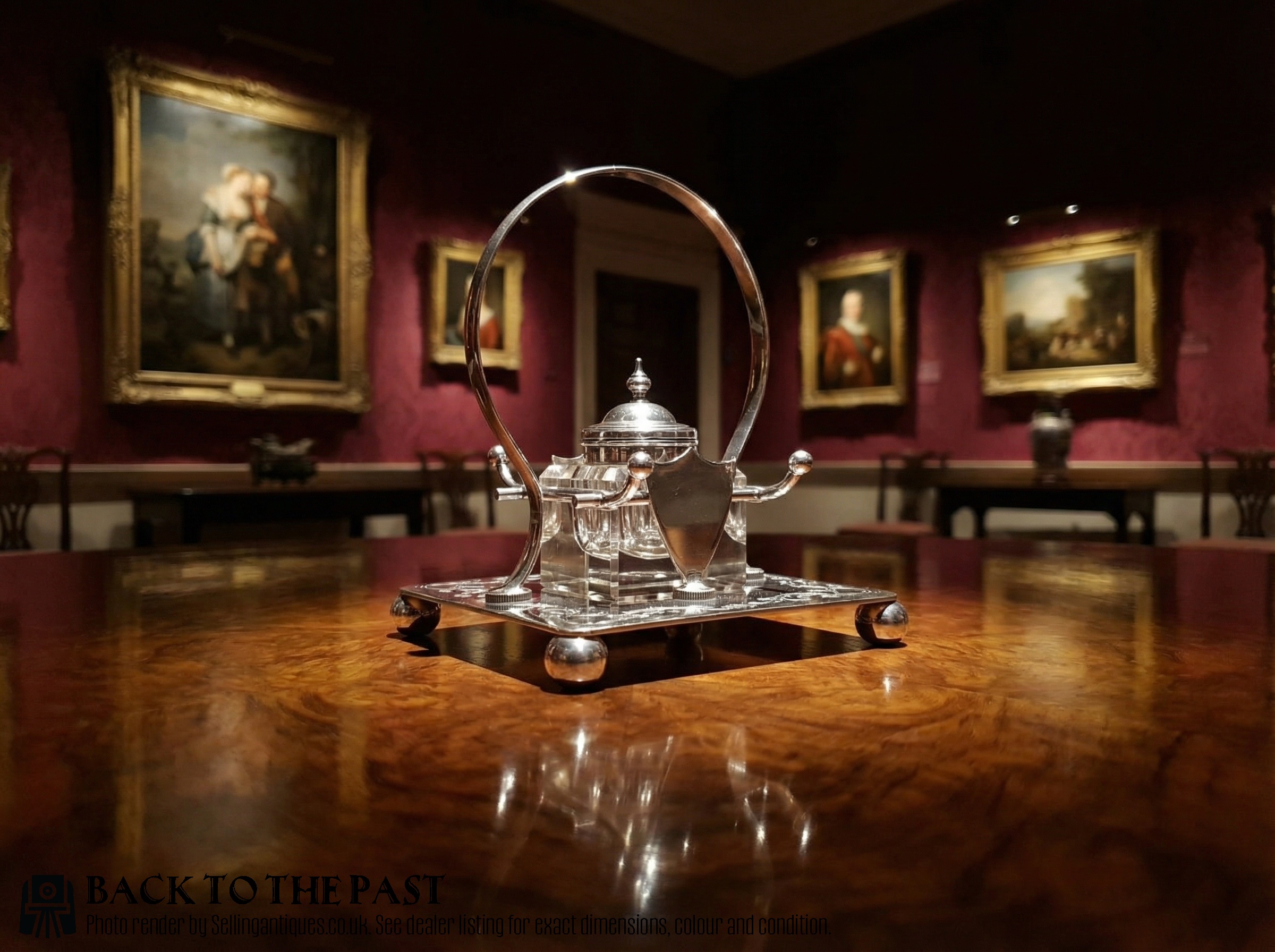
How they were made
Silversmiths shaped sterling silver and Sheffield plate through hammering, casting and soldering, often applying silver gilt finishes for internal richness. Glass reservoirs and inkwells were mouth-blown and frequently heavy-cut to sit securely within metal mounts.
Naturalism and organic themes required detailed chasing and modelling, seen in fruit-shaped vessels and horn bodies fitted with silver plate mounts. Enamel work and gemstone settings added decorative colour to stamp cases and wick holders.
Retail Price Guide 2026
Typical UK retail prices for silver desk set, calculated from the Sellingantiques database of over a million retail prices indexed since 2003. This retail price guide relies exclusively on Sellingantiques data; no external sources or auction records are used, so the figures do not describe the wider market.
Listings feature items from the Georgian, Victorian and Edwardian periods, utilising sterling silver, Sheffield plate, cut glass and tortoiseshell.
What varies in quality
Quality rests in the weight of the metal, the crispness of the chasing and the integrity of the fitted components. Superior examples maintain matching glass inserts and undamaged silver gilt interiors.
Makers with established reputations and clear hallmarks distinguish finer pieces from unmarked or plated alternatives. The complexity of the desk set, such as incorporating clocks or multiple matched candlesticks, elevates the standard.
Robert Hennell·Daniel Holy of Sheffield·Hukin and Heath
The Antique Silver Desk Set Glossary
- Sterling silver
- A silver alloy containing 92.5 percent pure silver by mass, standard for high-quality British desk accessories. It bears hallmarks indicating the assay office and date.
- Sheffield plate
- An early fused-plate material made by melting a sheet of sterling silver to a thicker copper base. This technique creates a durable layered metal seen on Georgian and Victorian wares.
- Silver gilt
- Sterling silver that has been coated with a thin layer of gold on the surface. This process protects the interior of inkwells from the corrosive properties of iron gall ink.
- Capstan inkwell
- A desk accessory shaped like a nautical capstan, featuring a wide weighted base tapering upward to a hinged lid. This form prevents the heavy glass and silver vessel from tipping over during use.
- Chamberstick
- A low portable candlestick fitted with a handle and a drip pan, frequently integrated into larger desk stands. It provided a flame to melt sealing wax for letters.
Frequently Asked Questions
What is included in a desk set?
A traditional desk set includes a base tray holding one or more inkwells, often accompanied by pen rests, stamp holders or taper sticks.
More elaborate examples incorporate sealing wax holders, clocks and matched candlesticks to form a complete writing suite.
How do I care for antique silver?
Care for silver components requires gentle cleaning with a soft cloth and specialised polish to preserve hallmarks and surface detail.
Glass inserts and inkwells should be removed and washed separately to prevent moisture damage to the surrounding metal or fitted base.
How do I identify the period?
Dating relies heavily on stamped hallmarks, maker marks and registration numbers found on the metal mounts of the pieces.
Stylistic shifts, such as Georgian simplicity versus Victorian naturalism or Edwardian form, also indicate the era of manufacture.
Were these items used for writing?
These pieces served as functional desk accessories for writing letters with dip pens and liquid ink.
The inkwells held the ink supply, while associated items melted sealing wax and stored postage stamps.