

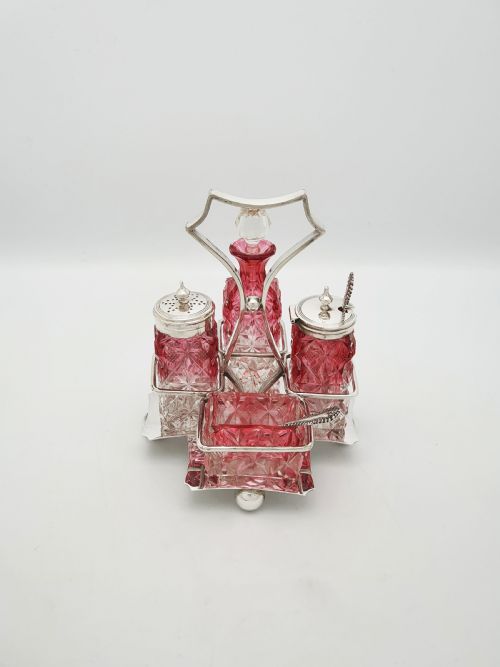
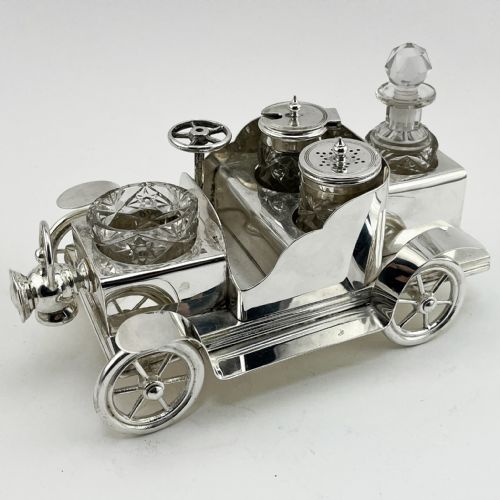

Antique Silver Cruet Set
An antique silver cruet set brings formal dining history to the table, holding essential condiments in matched glass and precious metal frames.
What an antique silver cruet set is
An antique silver cruet set organises condiments like vinegar, oil, mustard and pepper into a dedicated tabletop frame. These coordinated vessels served formal dining rooms across the eighteenth, nineteenth and early twentieth centuries.
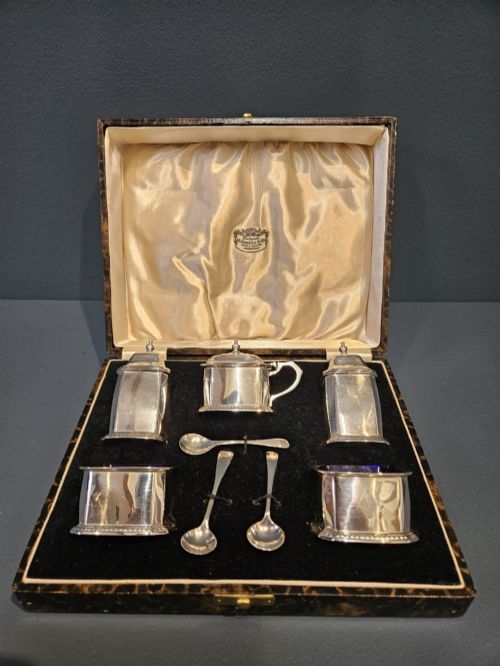
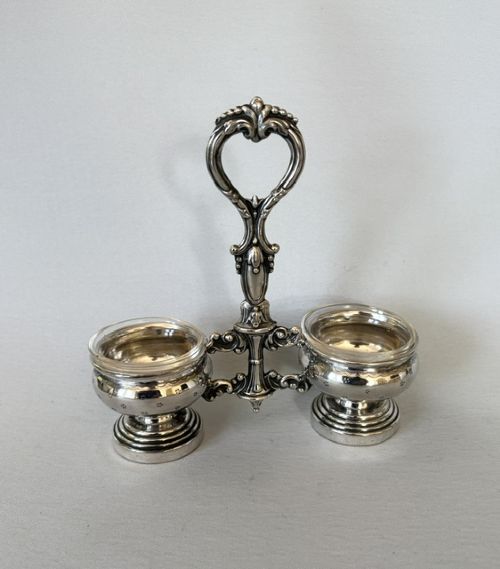
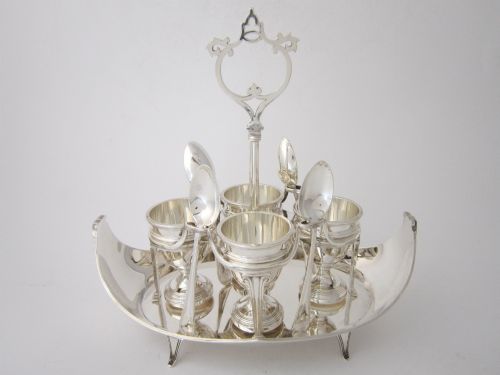
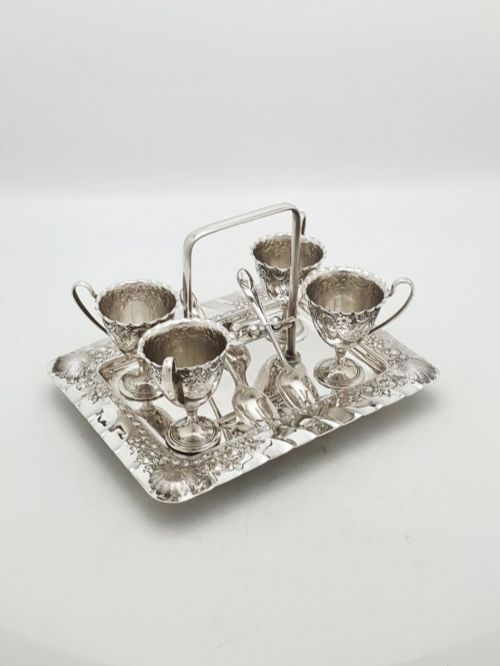
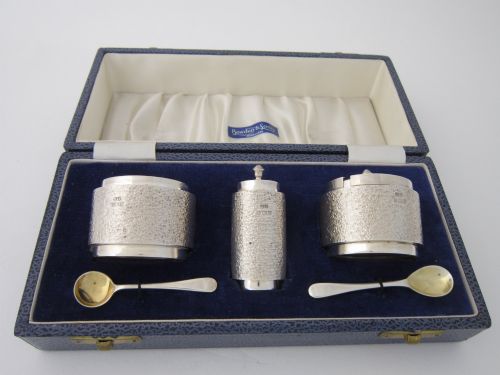
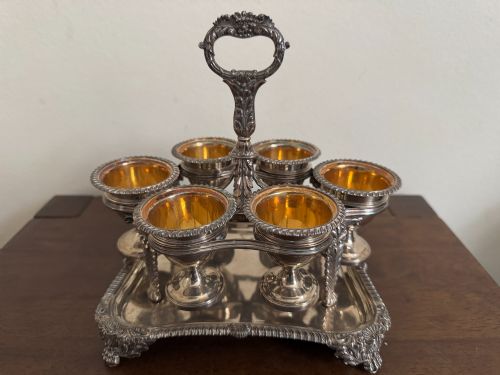
The pieces listed here encompass multi-bottle stands alongside specialist forms including egg cruets with matching cups. Georgian and Victorian examples dominate the selection, showing both sterling silver and silver plate constructions.
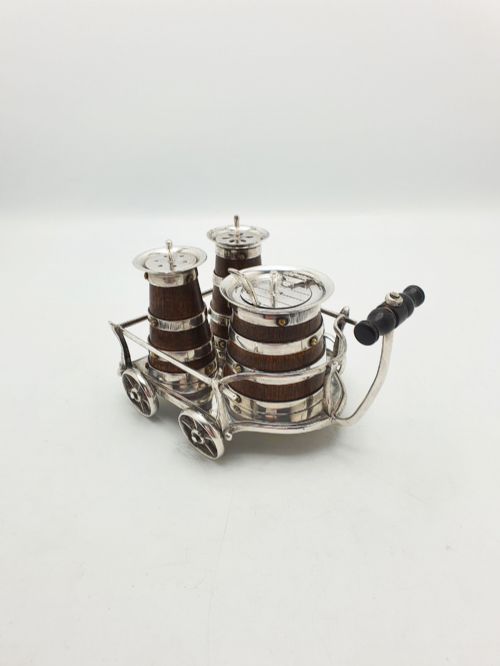
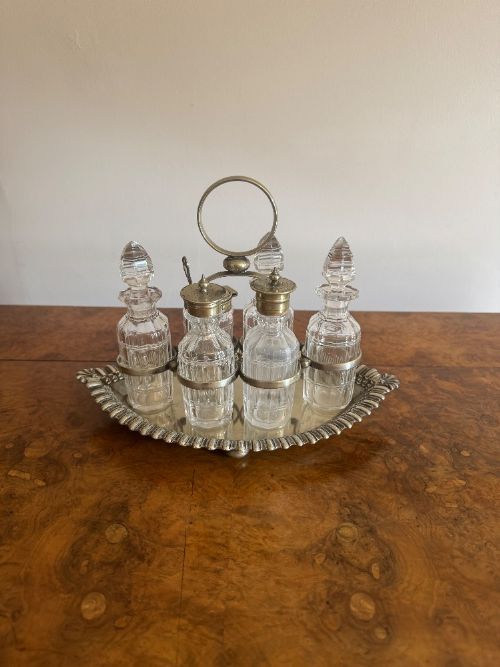
Frames range from substantial seven-bottle frameworks designed for large dining tables to compact three-piece sets intended for intimate use. Each configuration reflects the changing culinary habits of its period.
Materials and construction
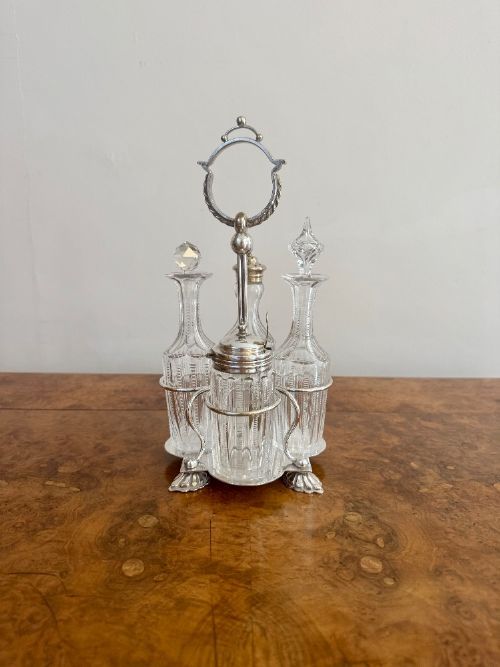
Silversmiths constructed the frames using sterling silver or applied silver plate over a base metal foundation. Cut glass bottles with patterned facets caught the dining room candlelight, fitted with pierced silver tops or stoppers.
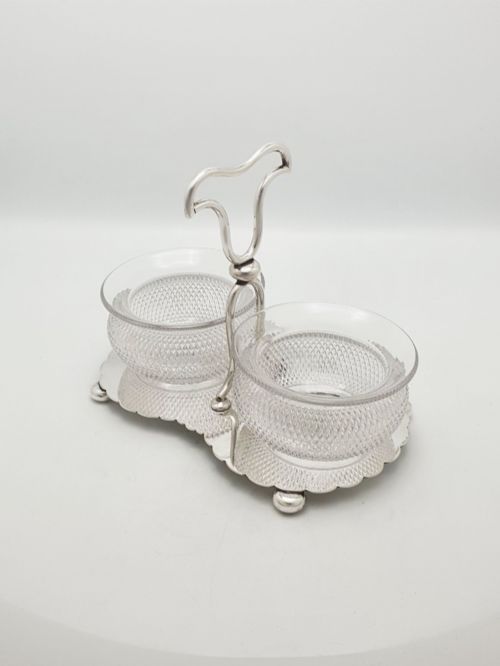
Makers shaped the metal through casting, piercing and soldering, often mounting frames upon cast feet with central carrying handles. Individual bottles relied on heavy lead crystal or moulded glass, frequently cut with flutes or diamond patterns.
Listings span the eighteenth, nineteenth and twentieth centuries, featuring both sterling silver and silver plated frames alongside cut glass bottles.
What separates the grades
Quality rests in the integrity of the fitted bottles and the crispness of the frame's metalwork. Sets retaining their original matching cut glass bottles command greater interest than those assembled later with mixed replacements.
Heavier gauge silver and refined cast ornamentation separate finer workshops from standard production. The retention of matching silver spoons and correct stoppers completes the original design.
Wade Wingfield Wilkins·Henry Wilkinson·Mappin & Webb
The Antique Silver Cruet Set Glossary
- Caster
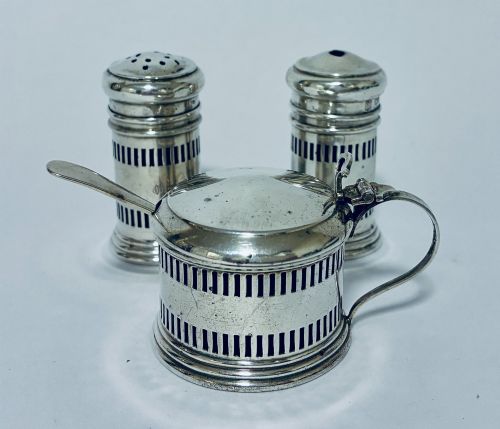
- A small cylindrical vessel with a pierced top used for sprinkling sugar or dry spices over food. These form the taller elements within multi-bottle frames.
- Silver plate
- A layer of silver fused to a base metal, commonly utilised to produce accessible domestic tableware during the Victorian and Edwardian eras. It allowed elaborate designs without solid silver costs.
- Cut glass
- Glassware shaped with wheel-cut facets that refract light and provide a secure grip. These heavy bottles resisted tipping during lively dining conversation.
Frequently Asked Questions
What does a cruet set hold?
A standard cruet set holds glass bottles for liquid condiments like oil and vinegar, alongside pierced casters for dry spices or mustard pots with fitted spoons.
Specialist variations include breakfast sets designed to hold boiled eggs alongside salt, pepper and mustard containers.
How do I date a cruet set?
Sterling silver items carry hallmarks that indicate the assay office, standard of metal and exact year of production. Silver plated versions rely on maker marks, style evolution and construction methods for approximate dating.
Victorian pieces often display heavier cast ornamentation, whereas Edwardian sets favour lighter frames with simpler glass cutting.
Are the glass bottles original?
Finding a set with its original matching glass bottles is significant, as bottles frequently suffered breakage over decades of use. Replacements can often be identified by slight variations in the cut glass pattern or how the base fits into the silver frame.
Original bottles sit flush within their designated rings and share identical crystal clarity and weight.
How do I care for silver plated cruets?
Clean silver plate gently using a mild specialist polish to avoid wearing the thin silver layer down to the base metal. Wash glass bottles separately in warm soapy water, ensuring stoppers are dried thoroughly before reinsertion.
Store pieces in a dry environment away from direct sunlight to prevent tarnishing of the metal framework.