


Antique Silver Coffee Service
An antique silver coffee service brings heavy metal vessels and matching pots to the table, offering a complete set for formal morning hospitality.
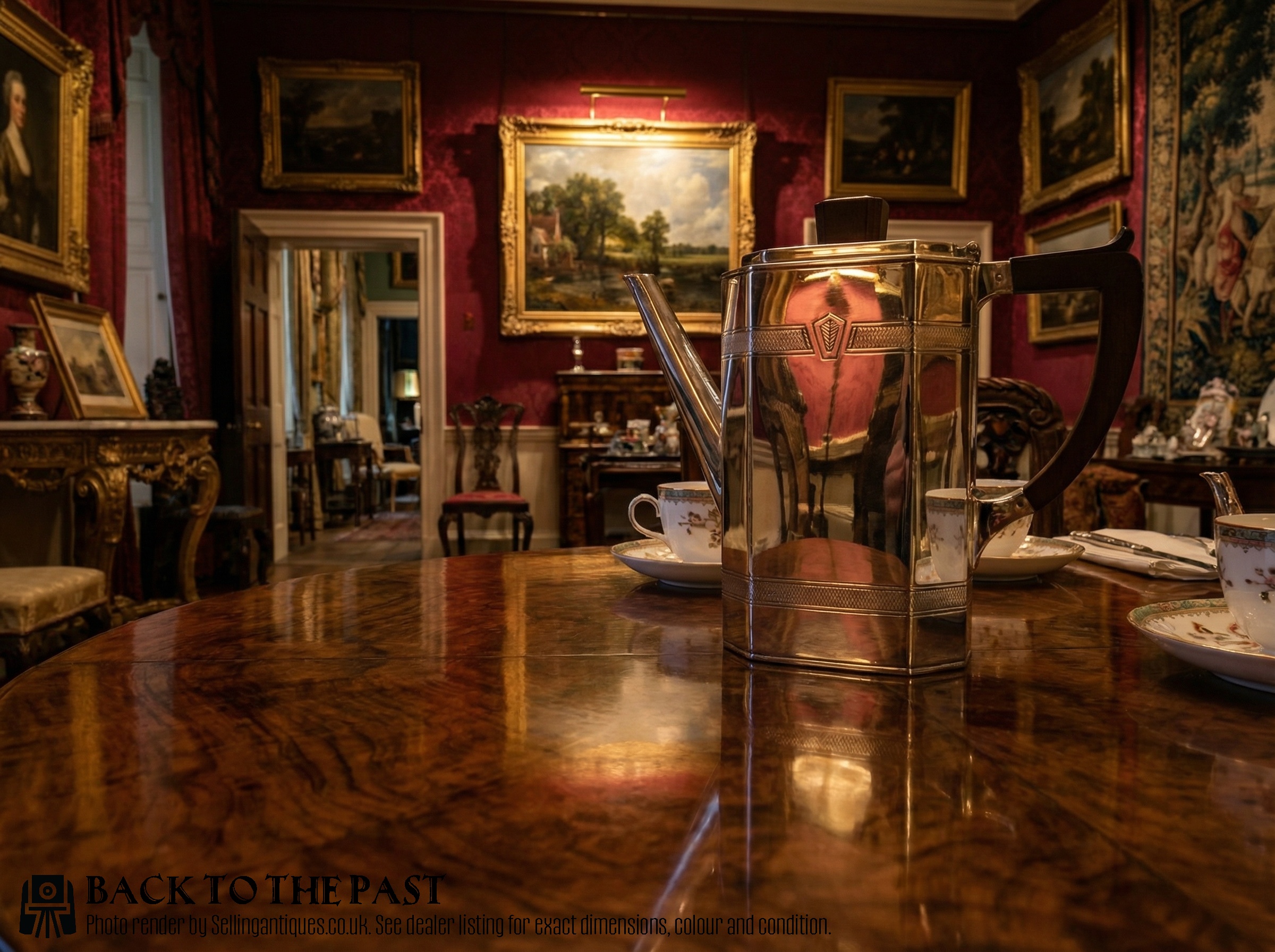
Antique Silver Coffee Service
An antique silver coffee service comprises coordinated pots, jugs and vessels designed for serving hot coffee alongside related beverages in formal settings. These groupings appear in solid sterling silver, Old Sheffield Plate and silver plate across periods spanning the nineteenth and twentieth centuries.
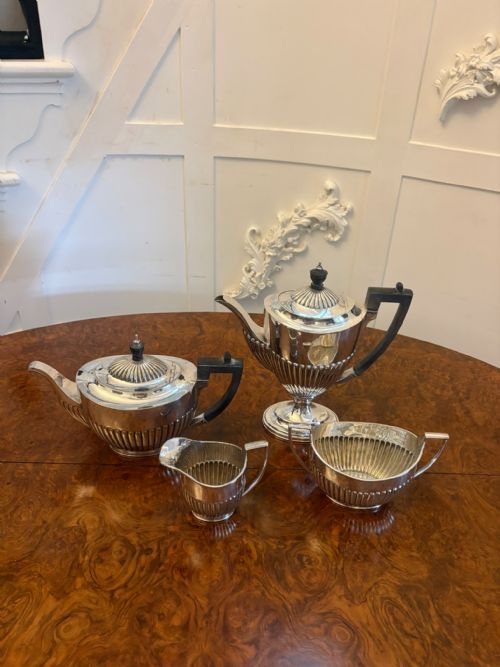
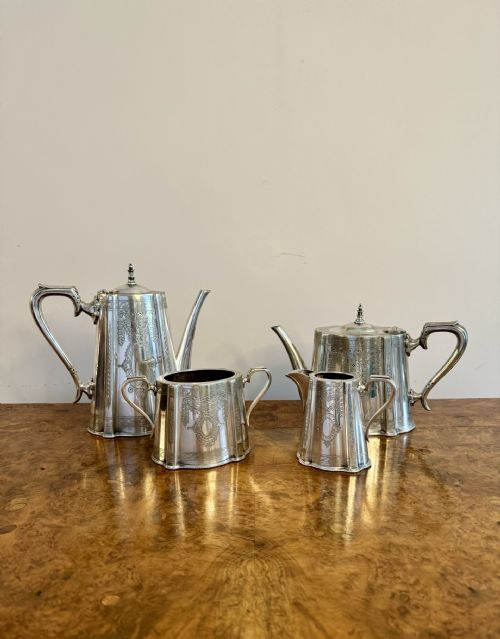
Buyers browsing this selection most frequently encounter Edwardian and Victorian four-piece sets alongside individual coffee pots and café au lait pots. The grouping typically pairs a tall coffee pot with matching teapots, cream jugs and sugar basins manufactured from silver plate or sterling silver.
How these services were constructed
Silversmiths formed the primary bodies of these services using sterling silver or silver plate over base metals, applying techniques such as spinning, hammering and casting. Handles and finials incorporate contrasting materials including wood, ebony, bone and ebonised wood to insulate against heat.
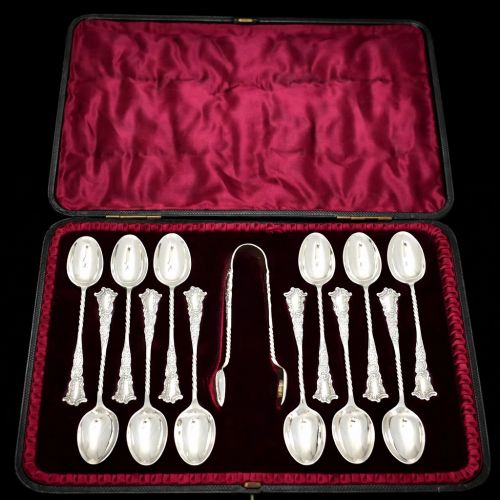
Makers enriched the surfaces with elaborate decorative techniques including ornate grapevine detailing, classical Neoclassical motifs and Edwardian Rococo Revival styling. Complete sets often rested inside original fitted wooden cases lined for preservation.
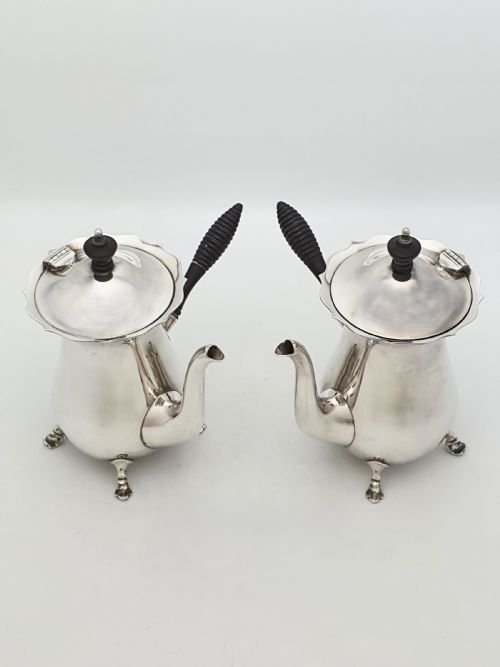
Several sets include miniature chocolate pots, proving that past generations took their morning cocoa rituals just as seriously as their coffee.
What dictates the quality of a service
The standard of a coffee service rests upon the thickness of the silver or plating, the crispness of chased ornamentation and the structural integrity of hinged lids and insulated handles. Substantial gauge metal provides a reassuring weight in the hand that lighter stamped wares lack.
Cohesion within the service elevates a set's standing, as matching hallmarks, uniform maker marks across every component and complete fitted presentation boxes denote commission-level quality rather than assembled groupings.
Walker and Hall·Elkington·Harrison Brothers and Howson·Birmingham Silversmiths Company·Harry Atkin·Shreve and Co
The Antique Silver Coffee Service Glossary
- Sterling silver
- A silver alloy containing substantial pure silver content alongside strengthening metals, denoted by official assay office hallmarks.
- Silver plate
- A manufactured item where a thin layer of silver coats a base metal substrate, appearing frequently in Edwardian and Victorian tea and coffee wares.
- Old Sheffield Plate
- An early composite material produced by fusing a sheet of silver to a copper ingot before rolling and forming into hollowware.
- Café au lait pots
- Matched pairs of pots designed to simultaneously pour hot brewed coffee and warm milk into breakfast cups.
- Demitasse
- A small cup and associated service vessels intended for serving strong espresso or after-dinner coffee portions.
- Electroplated Nickel Silver
- A durable base metal alloy coated with a layer of silver via an electrolytic process, common in later nineteenth and twentieth-century manufacturing.
Antique Silver Coffee Service: Frequently Asked Questions
What pieces belong in a full coffee service?
A complete matching service generally includes a tall coffee pot accompanied by a tea pot, cream jug and sugar basin. Many groupings expand to feature hot water pots, slop bowls and bespoke spoons.
Larger configurations occasionally incorporate dedicated trays and specialised vessels such as chocolate pots or paired café au lait jugs designed for specific morning rituals.
How do I distinguish sterling silver from silver plate?
Sterling silver items carry official assay office hallmarks stamped into the metal, indicating the purity standard and the town of testing. These marks often include a maker's stamp and a date letter.
Silver plate items utilise alternative stamps or maker marks that denote plated manufacture rather than solid precious metal construction.
Why do coffee pot handles feature wood or bone?
Makers incorporated segments of wood, ebony, bone or ebonised wood into handle mounts to act as thermal insulators. Metal conducts heat rapidly from hot liquids contained within the vessel.
These contrasting natural materials prevent the handle from becoming uncomfortably hot to touch during pouring while adding a deliberate decorative accent.
Can I use an antique coffee service daily?
These metal services function effectively for serving hot beverages provided users handle them with care during washing and maintenance. Modern dishwashers must be avoided to protect silver surfaces and insulated handle joints.
Hand washing using mild, non-abrasive cleaners preserves the finish and prevents damage to delicate hinges and historical plating.