
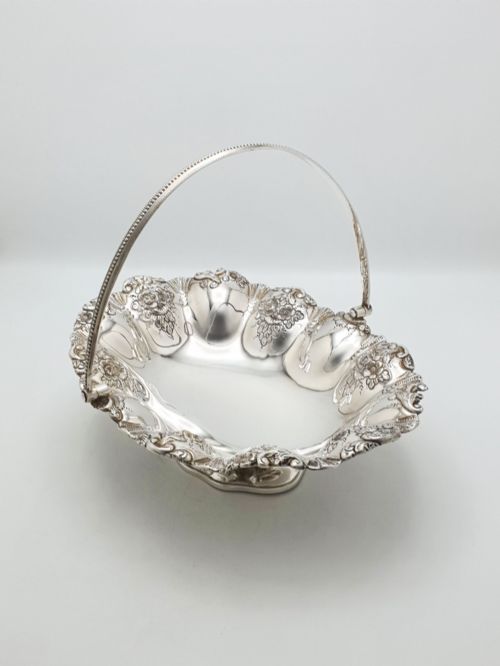


Antique Silver Center Bowl
These antique silver centre bowls command attention on any dining table, bringing heavy nineteenth-century metalwork and cut glass into modern rooms.
Antique Silver Center Bowl
When you search for an antique silver centre bowl, you encounter heavy presentation vessels, shallow baskets, and elaborate epergnes designed to anchor a formal dining table. These pieces range from substantial solid sterling silver to silver plate, Old Sheffield plate, and nickel silver, often paired with deep cut glass bowls.
The versions you are most likely to meet on this page hail from the nineteenth and early twentieth centuries, spanning Victorian, Edwardian, and Regency periods. Makers from Sheffield, London, and Vienna produced these bowls in shapes including oval serving dishes, footed presentation bowls, and handled baskets.
Many items feature detailed craftsmanship such as floral repoussé rims, pierced galleries, and fitted glass liners. Whether you find a massive sterling centrepiece from the Edwardian era or a silver-plated Victorian fruit bowl, each piece reflects the formal dining traditions of its period.
How they were made
Silversmiths shaped solid sterling silver and silver plate through hammering, spinning, and casting, often raising bowls from a single sheet of metal. Pierced designs required careful hand-sawing and drilling to create openwork galleries without weakening the structural integrity of the vessel.
Decoration relied heavily on repoussé and chasing, where artisans hammered designs from the reverse to create raised floral and scroll motifs on the rims. Makers also combined metals with heavy moulded cut glass, inserting fitted glass liners and baskets into plated or sterling frames.
Listings feature items from the nineteenth and early twentieth centuries, utilising materials like sterling silver, cut glass, and Old Sheffield plate.
What varies in quality
The distinction between ordinary and exceptional bowls rests on gauge thickness, weight, and the crispness of the hand-chased ornament. Heavier sterling or Old Sheffield plate holds its form and plating better over generations of polishing.
Design complexity also separates standard production from top-tier examples, particularly where silversmiths employed pierced work, cast handles, and matched cut glass inserts. Maker attribution, such as work by Joseph Rodgers or Martin Hall, further elevates a piece.
Joseph Rodgers·Martin Hall·S Kirk And Son Company
The Antique Silver Center Bowl Glossary
- Repoussé
- Metalworking technique where the design is hammered into relief from the reverse side. This creates tactile floral and scroll patterns around the bowl rim.
- Old Sheffield plate
- Early form of plating created by fusing a layer of silver to a copper base before rolling. This process produces a rich warmth distinct from later electroplating.
- Epergne
- A large ornamental centrepiece featuring a central bowl surrounded by multiple smaller hanging baskets or arms. These pieces dominated formal dining tables in the nineteenth century.
- Pierced
- Metalwork perforated with decorative patterns such as lattices or geometric cut-outs. Silversmiths used this technique on serving dishes and baskets to lighten the visual weight.
- Sterling silver
- An alloy consisting of pure silver and other metals, traditionally copper, standardised for quality. English pieces typically bear full hallmarks indicating standard and assay office.
Antique Silver Center Bowl: Frequently Asked Questions
How were centre bowls used?
These bowls served as the decorative focal point of formal dining tables, often holding fresh fruit, flowers, or iced water during grand meals.
Hosts used larger epergnes and presentation bowls to display wealth and hospitality, while pierced baskets accommodated delicate items that required ventilation.
What is the difference between silver plate and sterling?
Sterling silver contains a high proportion of pure silver throughout the entire object and carries official hallmarked stamps. Silver plate applies a thin layer of silver over a base metal such as copper, nickel, or brass.
Over decades of heavy polishing, plated items may reveal the underlying base metal, whereas sterling remains solid silver all the way through.
How do I care for an antique silver bowl?
Maintain the metal using a soft cloth and a reputable silver polish formulated to remove tarnish without stripping the underlying plating or wearing down chased details. Avoid harsh abrasive cleaners that scratch the surface.
Wash cut glass inserts separately in warm soapy water, ensuring no moisture remains trapped against silver mounts to prevent corrosion.
How can I tell the period of a bowl?
Examine the style of decoration, such as heavy Victorian floral repoussé or lighter Edwardian pierced galleries, alongside any stamped maker marks or hallmarks. British pieces often feature date letters and assay office symbols that pinpoint the exact year of manufacture.
Construction methods also provide clues, as nineteenth-century Sheffield plate differs visibly in edge finish and base metal colour from twentieth-century electroplated nickel silver.