


Antique Silver Card Dish
An antique silver card dish is a small receptacle designed for visiting cards, combining practicality with fine metalwork.
Antique Silver Card Dish
An antique silver card dish serves as a compact tray intended historically for holding calling cards in a hallway or drawing room. The examples found here span the Victorian, Edwardian, and Art Deco periods, encompassing various international origins including Chinese Export and Anglo-Indian designs.
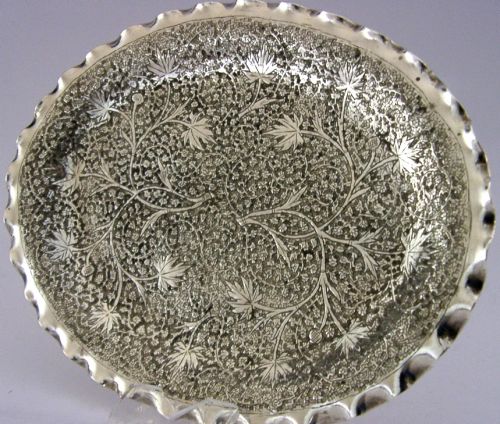
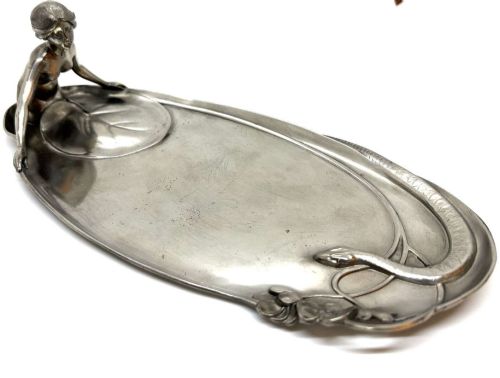
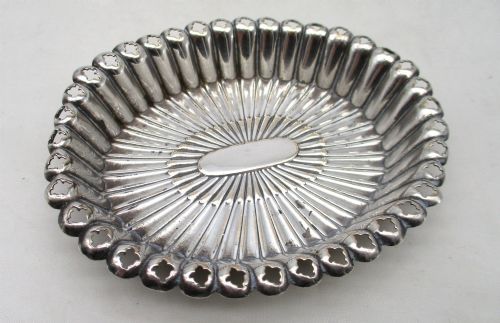
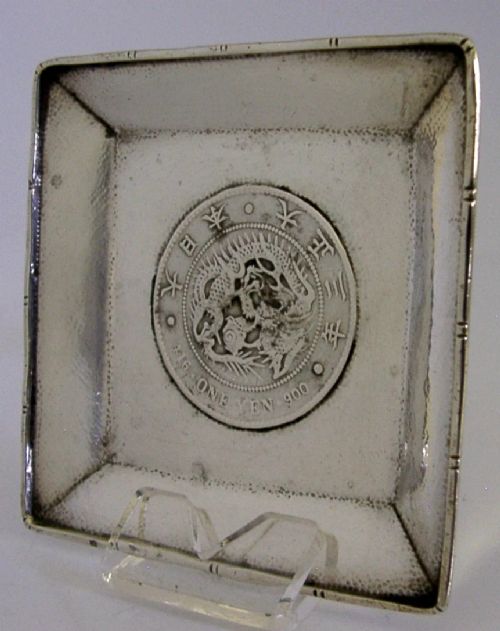
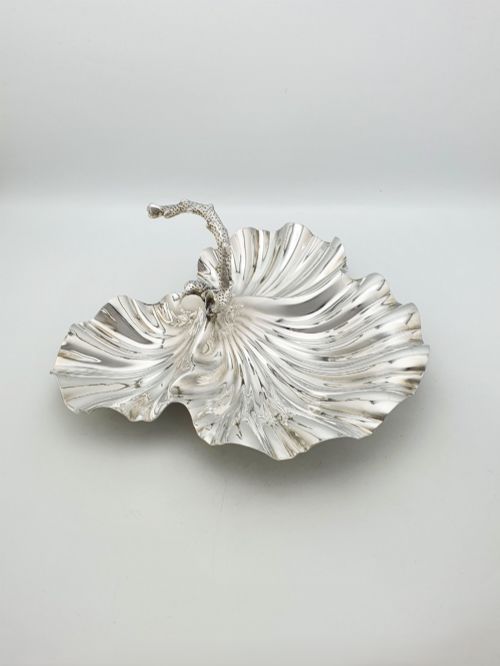
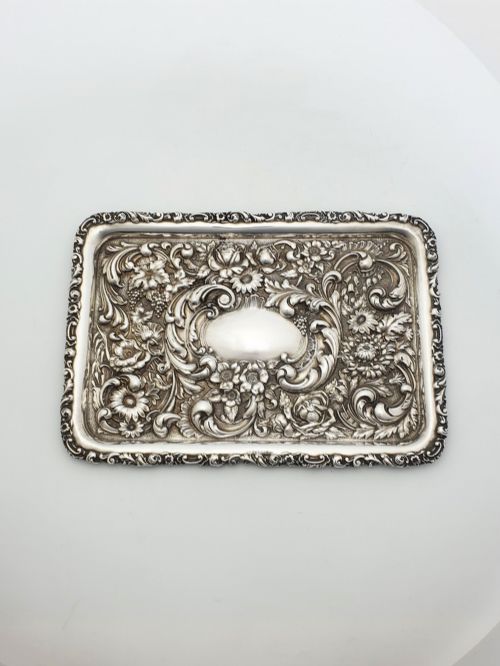
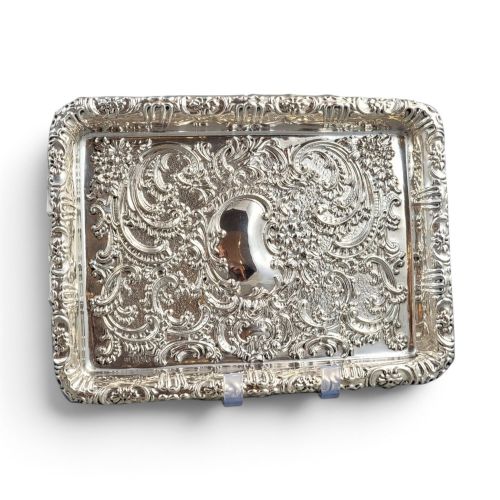
Buyers encounter distinct regional styles, from florid Victorian naturalism and Rococo floral repoussé to sinuous Art Nouveau figural pieces. Forms range from simple pin dishes and trinket trays to shell-shaped vessels with stylised coral handles and coin inset dishes.
Materials extend beyond traditional solid sterling silver to encompass silver plate, Britannia metal, and pewter. These pieces reflect the varied domestic habits and decorative tastes of the late nineteenth and early twentieth centuries.
How they were made
Silversmiths utilised sterling silver and silver plate, shaping metals through hammering, casting, and pressing. Decorative techniques such as repoussé allowed artisans to push the metal from the reverse to create raised floral and scroll motifs on the surface.
Art Nouveau and figural pieces often involved pewter or Britannia metal cast into complex moulds depicting maidens, serpents, and organic forms. Guilloche enamel and coin integration demonstrate the diverse secondary crafts applied to the base metal structures.
Materials span sterling silver, silver plate, pewter, Britannia metal, and guilloche enamel across Victorian, Edwardian, and Art Deco periods.
What varies in quality
The distinction between standard items and superior examples lies in the crispness of the chased or repoussé detail and the weight of the metal used. Pieces bearing clear maker marks and assay office hallmarks demonstrate established provenance.
Artistic execution dictates value, particularly in figural or organic designs where the casting of a maiden or a shell requires distinct sculptural skill. Surface preservation and the integrity of applied enamel or plating further separate basic utility items from exceptional decorative work.
Robert Pringle And Sons·Tiffany And Co·John Collyer Birmingham·William Padley
The Antique Silver Card Dish Glossary
- Repoussé
- A metalworking technique where the artisan hammers the reverse of a sheet to form a raised design on the front. This method creates tactile floral and scroll ornamentation.
- Sterling silver
- An alloy consisting of pure silver and other metals, typically copper, standardised to a specific purity. It provides durability while maintaining a bright metallic lustre.
- Britannia metal
- A tin-based alloy used as a base for metalware and plating, known for its smooth surface and suitability for casting complex shapes.
- Guilloche
- A decorative technique in which a precise, intricate pattern is mechanically engraved into a metal surface beneath translucent enamel. It frequently appears on small twentieth-century trays.
- Tazza
- An ornate pedestal cup or shallow dish raised on a foot, utilised for serving or display.
Antique Silver Card Dish: Frequently Asked Questions
What is a card dish?
A card dish is a small tray historically placed in an entrance hall to receive visiting calling cards left by guests.
Over time, these pieces transitioned from strict social accessories into decorative vessels used for loose items on desks or dressing tables.
How do I style a card dish?
These small trays suit placement on hall tables, desks, or coffee tables to corral keys, small jewellery, or coins.
Their compact dimensions allow them to sit easily on narrow surfaces without cluttering a room.
How do I identify the period?
Periods are identified through stylistic markers such as asymmetric Art Nouveau whiplash lines or florid Victorian repoussé work.
Examining stamped hallmarks, maker marks, and the specific metal alloy provides further chronological context.
What is the difference between solid silver and silver plate?
Solid silver consists of the precious metal throughout the entire piece, often verified by standard assay hallmarks.
Silver plate involves a thin layer of silver bonded to a base metal such as copper, nickel, or pewter.