


Antique Silhouette Miniature
These antique silhouette miniature works capture fleeting likenesses in profile, offering a direct, intimate encounter with Georgian and Regency sitters.
Antique Silhouette Miniature
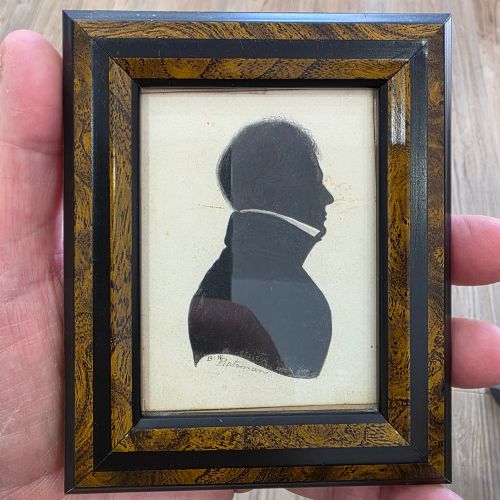
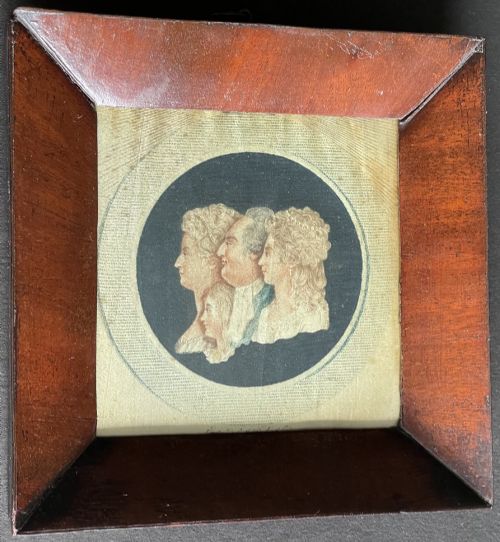
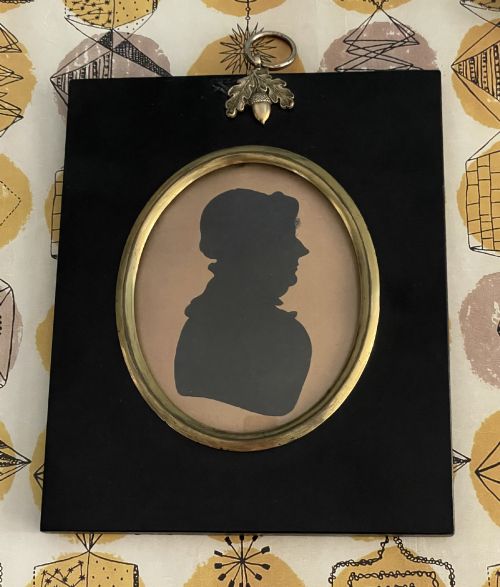
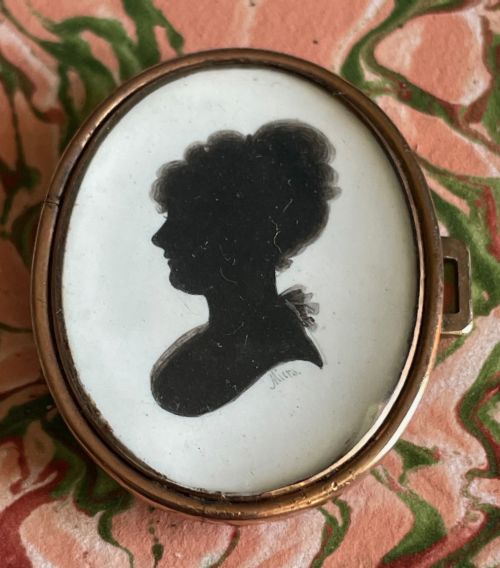
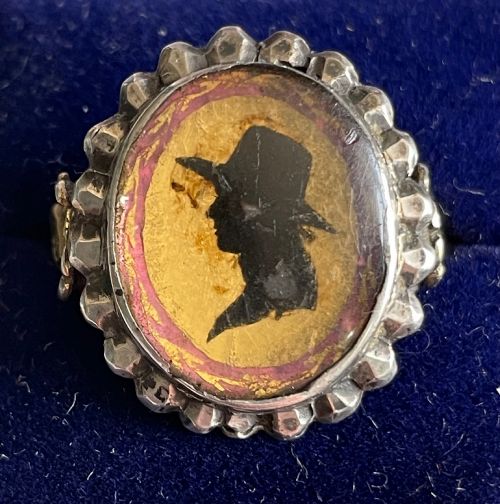
An antique silhouette miniature presents a strict profile likeness of a sitter, originating mostly from the eighteenth and nineteenth centuries. You will frequently encounter framed wall art alongside smaller jewellery items such as rings, brooches, and pendants.
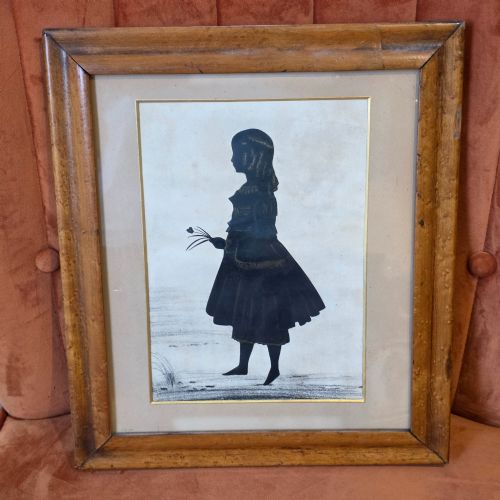
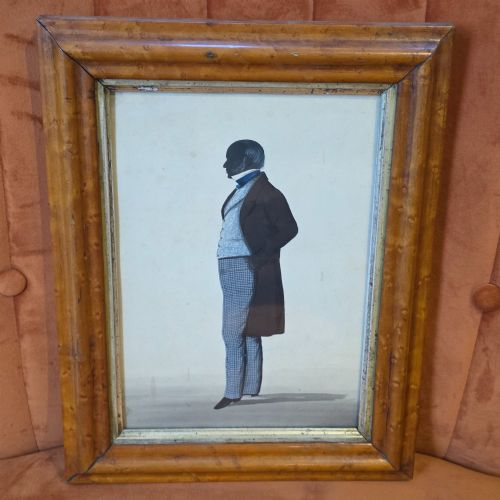
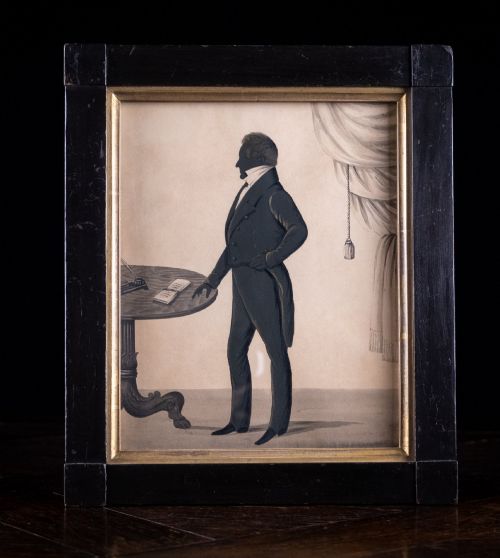
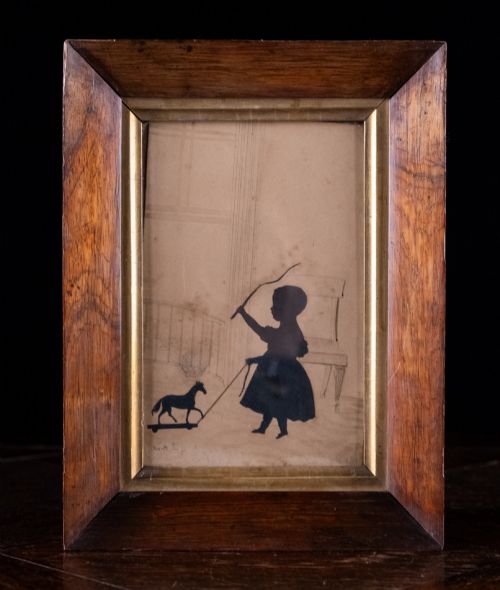
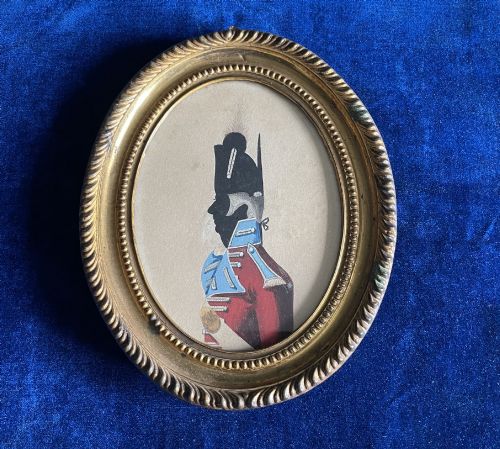
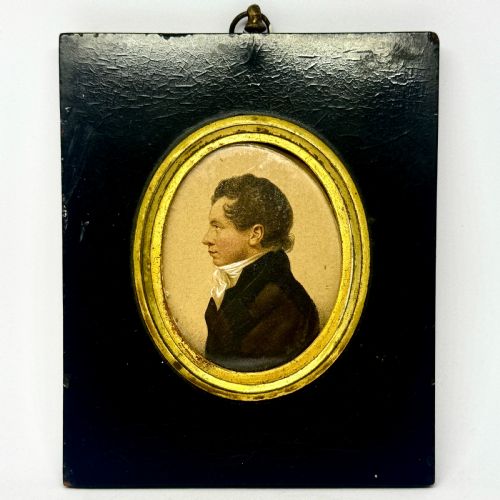
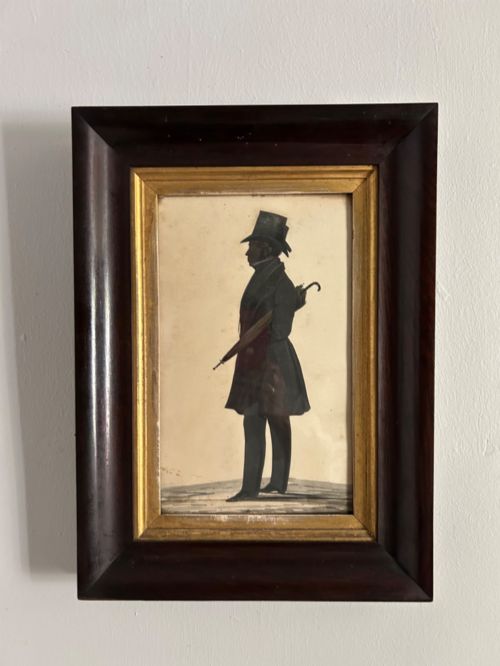
The form spans Georgian, Regency, and Victorian periods, capturing gentlemen, ladies, children, and occasionally animals with sharp economy. Pieces range from bust portraits to full-length studies set within ebonised wood or rosewood frames.
Makers recorded in the material history include prominent profilists such as John Miers and Augustin Edouart, whose works define the standard of the genre.
Materials and construction methods
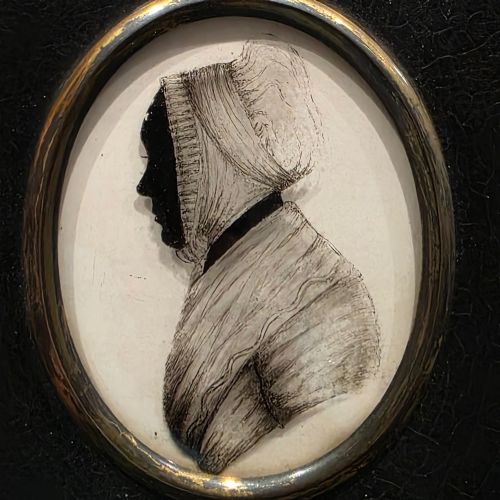
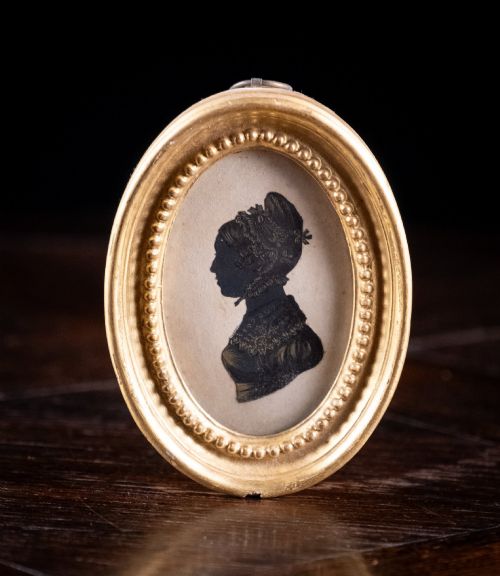
Makers utilised cut paper, black ink, and watercolour wash applied to card, plaster, or silk, often finishing details with gold leaf highlights. Reverse painting on glass, known as verre églomisé, required immense steadiness to render hair, bonnets, and lace directly onto the rear pane.
Enclosed formats relied on brass bezels, wood frames, and precious metal settings to protect fragile paper and glass components from atmospheric decay.
Sitters occasionally included beloved family dogs alongside children, captured with the same solemn dignity as human patrons.
Evaluating execution and finish
Superior examples reveal exceptional precision in the cutting of paper or the brushwork of ink and pigment, capturing the exact set of a jaw or the drape of a collar. The crispness of gilded highlights and the absence of smudging or bleeding around edges separate master profilists from lesser hands.
The quality of the housing matters equally, with original brass mountings, inscribed versos, and period wood frames preserving the integrity of the object.
Bateman·William James Hubard·Frith·Augustin Edouart·John Miers·Elizabeth Hudson·Thomas London·J. Deacon·John Smith of Edinburgh
The Antique Silhouette Miniature Glossary
- Verre églomisé
- A technique involving painting and gilding on the reverse side of glass to create a shimmering, reflective background for the dark profile.
- Profilist
- An artist who specialises in cutting paper silhouettes or painting miniature profile portraits from life or shadow traces.
- Bust portrait
- A framing format that captures the head and shoulders of the sitter, which is the most common composition found in miniature works.
- Gilded silhouette
- A dark paper or painted profile enhanced with fine gold leaf details to delineate lace, buttons, or hair curls.
Antique Silhouette Miniature: Frequently Asked Questions
How were these miniature silhouettes displayed?
Owners hung framed wall art in parlours or wore them close to the heart as jewellery pieces like rings and brooches.
Their small scale suited intimate domestic spaces and personal adornment.
How do I date an antique silhouette?
Dating relies on costume details such as bonnets, cravats, and hairstyles, alongside framing materials like ebonised wood and brass bezels.
Inscribed versos and signatures from known profilists also provide precise chronological markers.
What is the difference between cut paper and painted silhouettes?
Cut paper versions involve snipping black paper with scissors or knives, sometimes laid against a contrasting background.
Painted examples utilise dark ink, pigment, or reverse painting on glass to build the profile.
Why do some silhouettes include gold highlights?
Artists added gold leaf to delineate fine clothing details, jewellery, and hair accessories against the flat black profile.
This technique added depth and caught the candlelight in dimly lit rooms.