




Black Gold Picture Frame
A black gold picture frame brings architectural depth and rich contrast to prints, portraits and textiles from the eighteenth and nineteenth centuries.
Black Gold Picture Frame
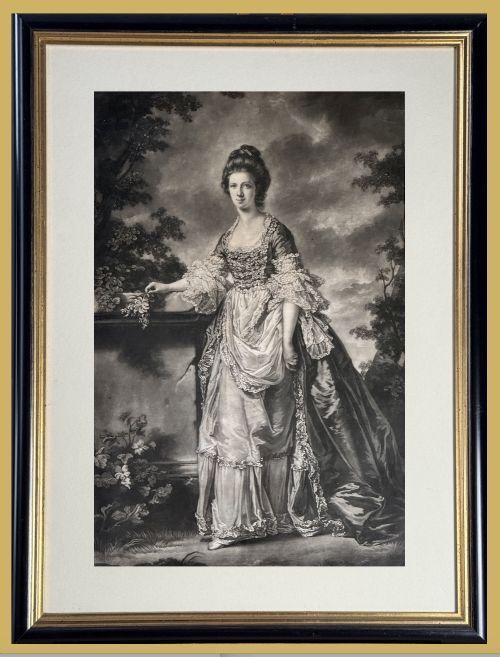
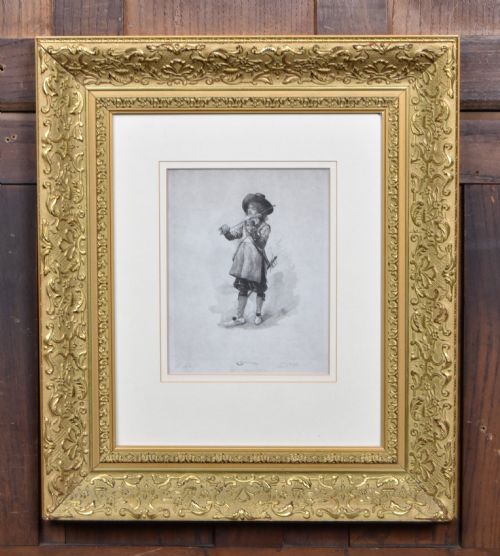
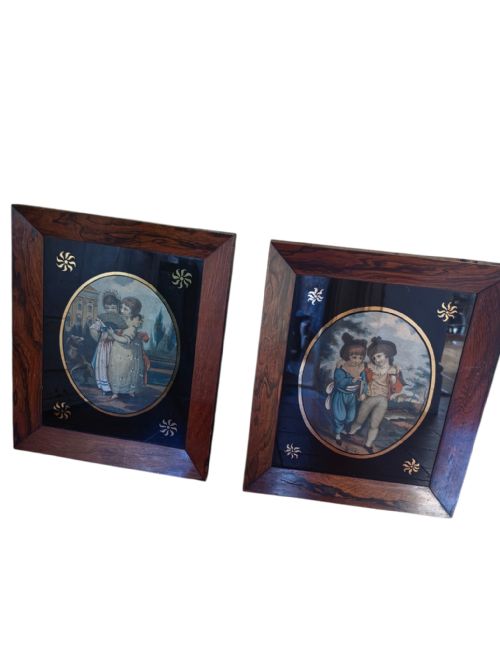
When you search for a black gold picture frame, you encounter surrounds designed to house engravings, mezzotints, oil paintings and silk embroideries. The pieces on this page span the eighteenth, nineteenth and twentieth centuries, taking the form of Hogarth mouldings, rosewood profiles and original giltwood housings.
The objects framed inside these borders range from classical portrait engravings and silhouette paintings on glass to Victorian needlework panels and religious old master coloured prints. Regency examples frequently pair dark glass with gilt wood, while Georgian items house works after artists such as George Romney and Francis Cotes.
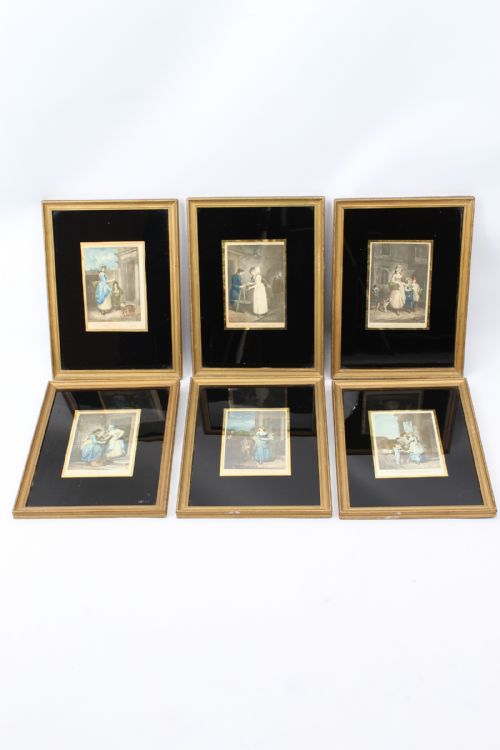
You also find sets of prints, such as Wheatley's The Cries of London, alongside watercolours, lithographs and oil paintings on board. Each combination of dark ground and gilded highlight sets the enclosed artwork apart from the wall.
Materials and construction
Makers constructed these frames primarily from wood, applying gold leaf and gilt to highlight carved profiles and rebate edges. Silk, glass and paper support the works held within, while backing boards and reverse silhouette techniques utilise painted glass surfaces.
Mouldings take distinct historical shapes, from narrow Hogarth profiles common in the Regency period to broader rosewood and giltwood borders seen on Victorian pieces. Gilding is applied over prepared wooden grounds to create the luminous contrast against blackened timber.
Listings feature wood, glass, silk and gold leaf combined across Georgian, Regency and Victorian periods.
Assessing quality in framing and contents
Quality rests in the harmony between the frame and the artwork it holds, particularly where original gilt wood and period mezzotint glass remain together. Finer examples retain their original gilding and uncompromised wooden profiles without modern alterations.
The distinction also lies in the execution of the enclosed piece, whether an engraved portrait by an established hand, a hand-coloured Regency plate or a finely worked silk embroidery panel.
James Watson·Francis Cotes·Robert Sayer·George Romney·Henry William Banbury·Hans Holbein·W Roffe·Del Buono·G Morland·Henry Corbould
The Black Gold Picture Frame Glossary
- Mezzotint
- A printmaking process of the scraperboard family allowing half-tones to be produced without line networks. It creates rich dark tones well suited to dramatic portraits.
- Hogarth frame
- A narrow, dark wooden picture frame with a inner gilded slip popular during the eighteenth and nineteenth centuries. It provides a crisp, restrained border for prints and engravings.
- Silkwork
- Embroidery executed on a silk ground, frequently mounted within a decorative frame during the Georgian and Victorian eras. These panels often depict classical or sentimental scenes.
- Silhouette
- A portrait cut from paper or painted as a solid dark profile, sometimes executed inversely on glass. They appear frequently in nineteenth-century domestic settings.
- Giltwood
- Wood that has been coated with gold leaf or gold paint to simulate solid gold enrichment. It forms the bright contrasting element in dark picture frames.
Black Gold Picture Frame: Frequently Asked Questions
What goes inside a black gold picture frame?
These frames house eighteenth and nineteenth-century works on paper, including mezzotint prints, hand-coloured engravings, portraits and architectural views. Needlework panels and reverse glass paintings also appear frequently.
Such enclosures complement monochrome prints and dark-toned oil paintings by providing a formal visual boundary that draws the eye directly into the artwork.
How do I date a picture frame?
Dating relies on the moulding profile, construction joints, timber species and the method of gilding applied to the wood. Regency and Georgian examples often feature slender Hogarth profiles with distinct slips.
Comparing the frame construction to the medium and period of the enclosed artwork helps confirm whether the pairing is original to the piece.
Are the prints inside original?
The listings include original engravings, period mezzotints, hand-coloured plates and vintage prints dating from the eighteenth century onwards. Each medium carries the characteristic plate marks or printing textures of its era.
Examining the paper stock, ink density and printing technique reveals whether a work is a contemporary period impression or a later reproduction.
How should I hang a framed textile?
Textile art and silk embroidery panels require protection from direct sunlight to prevent the silk threads and pigments from fading over time. Maintaining stable indoor humidity levels also preserves the fabric and backing.
Ensure the frame hangs securely from appropriate fixings that support the combined weight of the timber, glass and internal mount.