


Antique Silhouette Artwork
Antique silhouette artwork captures likenesses in stark profile, offering a direct window into Georgian and Victorian lives.
Antique Silhouette Artwork
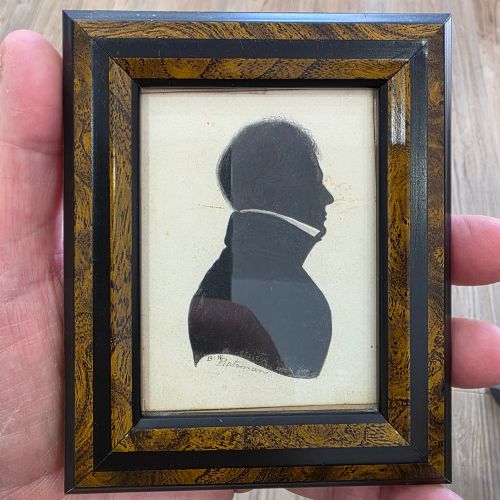
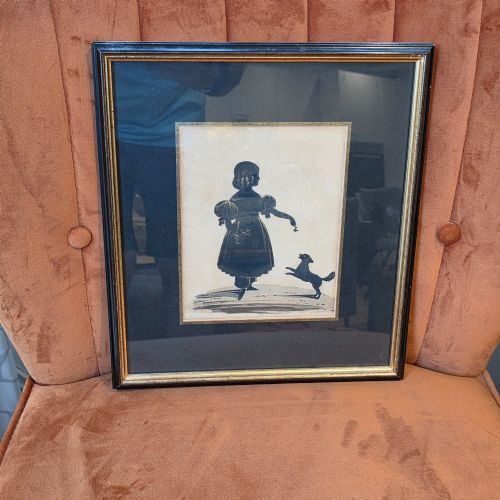
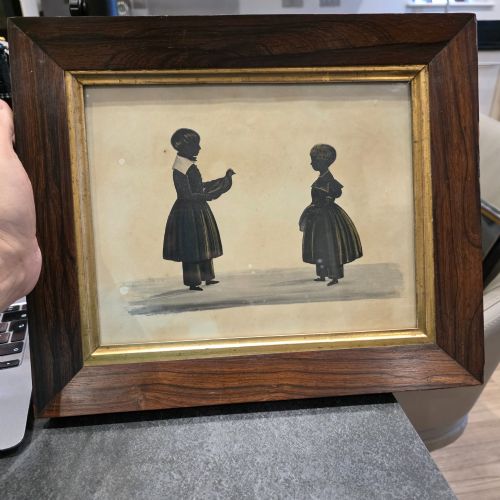
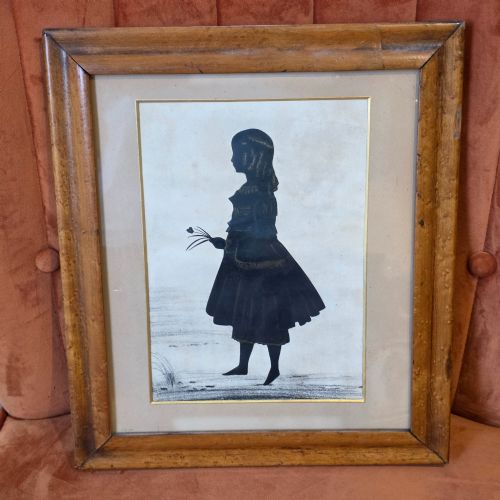
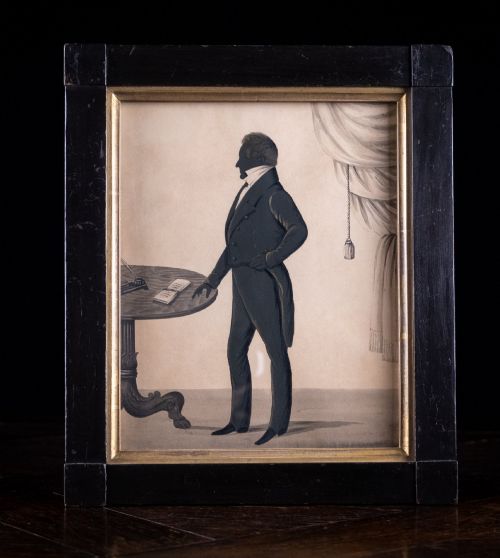
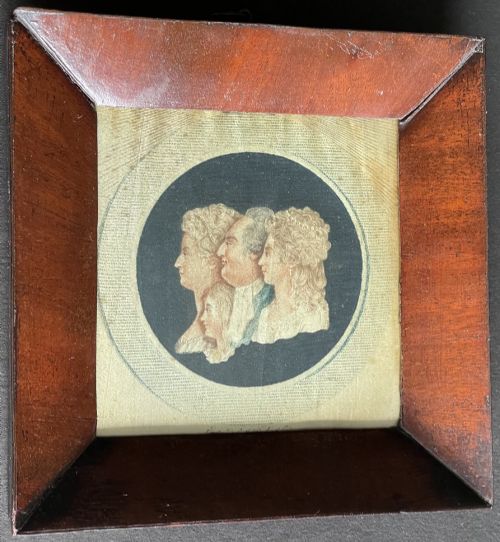
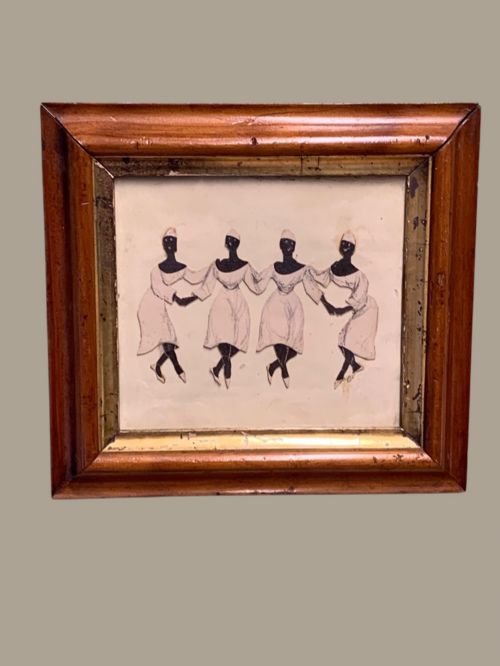
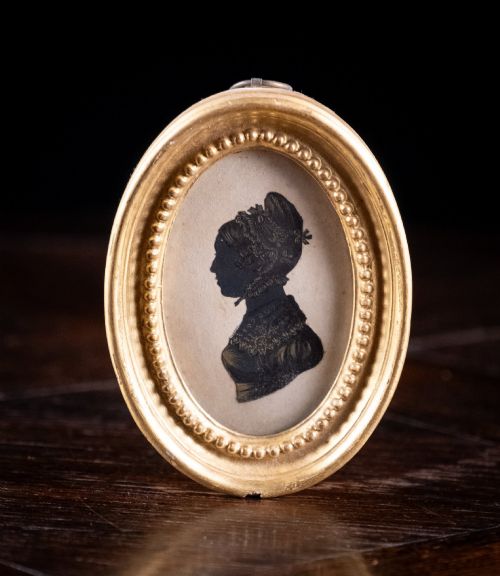
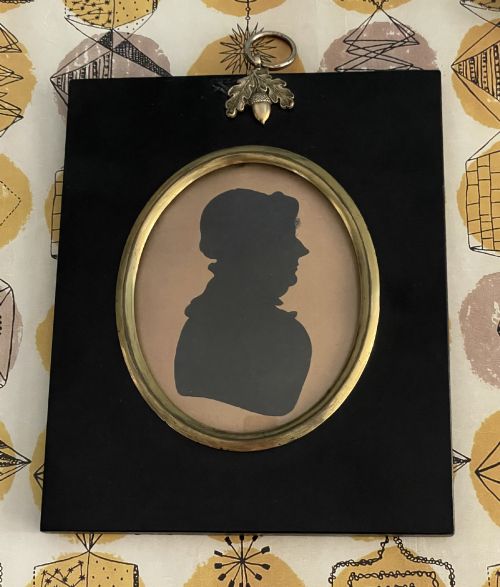
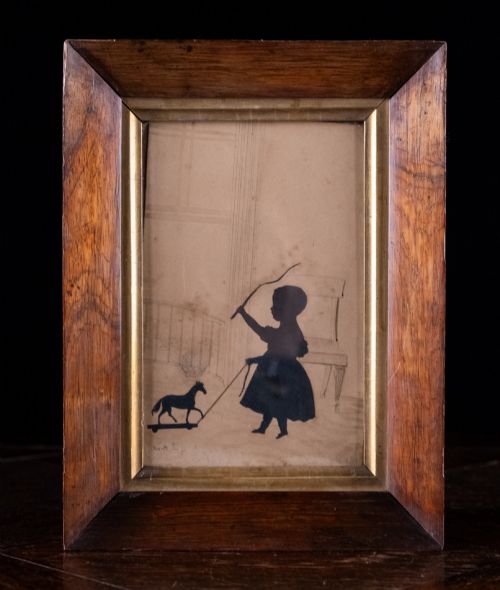
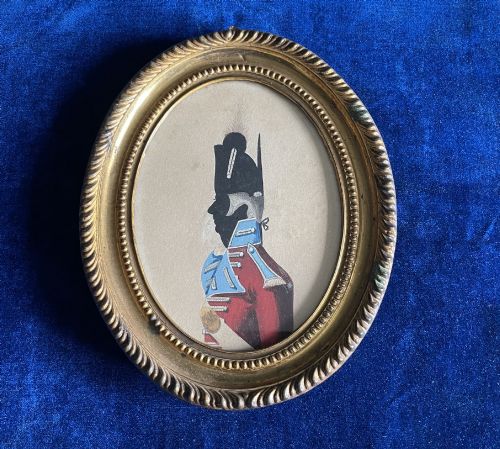
Antique silhouette artwork takes the form of framed wall art, portrait miniatures, and cut paper pictures depicting gentlemen, ladies, and children. The selection includes profiles rendered in ink, watercolour, and collage, often framed in ebonised wood or brass.
The versions most commonly met span the eighteenth and nineteenth centuries, reflecting Regency and Victorian tastes. These pieces range from simple hollow-cut portraits to elaborate conversation pieces featuring multiple figures and animals.
Makers and galleries such as the Hubard Gallery and the Royal Victoria Gallery produced significant works during the nineteenth century. Alongside these, anonymous British School portraits and signed individual studies appear frequently.
Materials and Techniques
Artists created these works primarily using black paper, ink, and watercolour on a pale ground, occasionally adding gold leaf highlights to enhance costume details. Some examples involve reverse painting on glass or printing on silk.
The listings span periods from the eighteenth century through to the Art Nouveau era, utilising paper, glass, and ebonised wood.
Quality and Execution
Quality rests upon the precision of the cutting or brushwork, where finer pieces capture exact facial structures and contemporary hairstyles without hesitation. The complexity of the composition also elevates the work, distinguishing simple head-and-shoulder profiles from multi-figure conversation pieces.
The survival of original framing, including convex glass and papier-mâché surrounds with brass acorns, contributes significantly to the standing of a piece. Signed examples and those with documented provenance from known artists or studios command greater recognition.
William James Hubard·Augustin Edouart·Frederick Frith·John Smith of Edinburgh·J. Deacon
The Antique Silhouette Artwork Glossary
- Silhouette
- A portrait rendered as a solid shape, usually in profile and coloured black, taking its name from Etienne de Silhouette.
- Hollow-cut
- A technique where the profile is cut out from a sheet of white paper, which is then laid over a dark background.
- Ebonised wood
- Timber treated to resemble ebony, frequently used for the narrow dark frames enclosing nineteenth-century profiles.
- Reverse painting on glass
- An image painted on the back side of a glass panel so that it is viewed correctly through the front.
- Conversation piece
- An informal group portrait, often showing family members or children engaged in daily activities.
Antique Silhouette Artwork: Frequently Asked Questions
How do I date an antique silhouette?
Dating relies heavily on costume, hair styling, and the framing materials used in the piece. Regency profiles often feature high collars and specific bonnet shapes, while Victorian examples show different dress codes.
Paper stock and backing boards also provide clues, as does any contemporary handwriting on the reverse. Signed works by recorded artists help establish firm chronological benchmarks.
What is a hollow-cut silhouette?
A hollow-cut silhouette is created by carefully cutting the profile out of a piece of white paper rather than cutting out the black figure itself. The remaining paper with the hollow profile is then placed over a dark backing fabric or paper.
This method created a crisp edge and was widely practiced by professional profileists in the late eighteenth and early nineteenth centuries.
Where should I hang these artworks?
These works suit small wall spaces, hallways, or grouped arrangements alongside other framed miniatures and portraiture. Their monochromatic nature allows them to sit comfortably against various wall colours.
Protection from direct sunlight remains essential to prevent the fading of dark inks, watercolours, and the paper grounds.
Are all silhouettes signed by artists?
Many surviving pieces remain unsigned because itinerant profileists often produced rapid work without adding a signature. Studio stamps or exhibition labels sometimes identify the maker instead.
Unsigned works are frequently attributed through stylistic comparison with known examples by practitioners like Augustin Edouart or William James Hubard.