

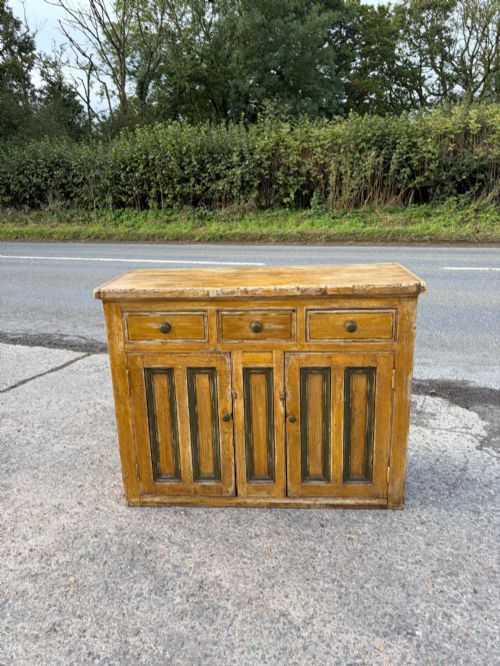
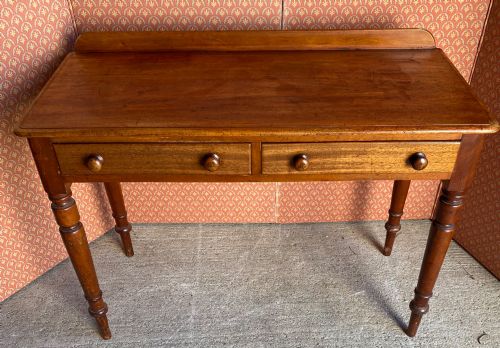
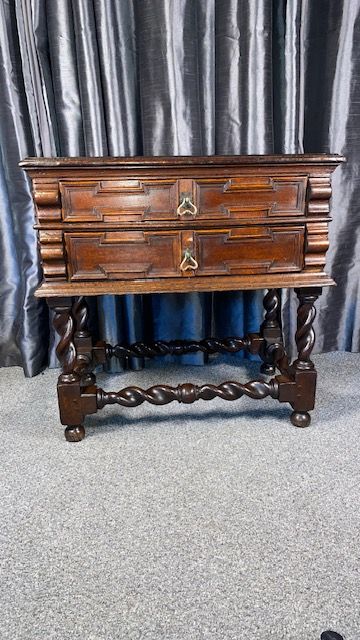
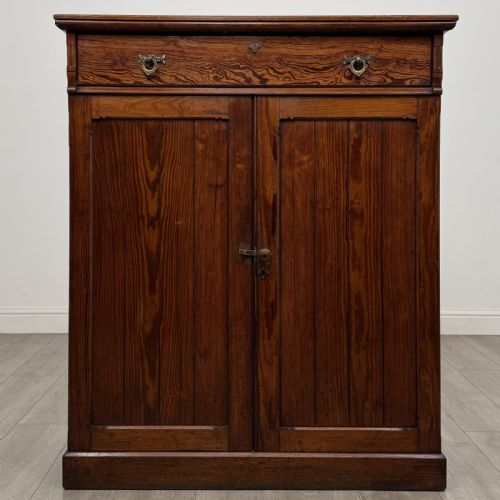

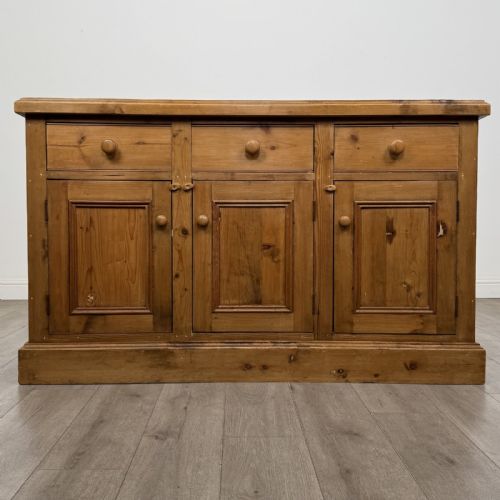
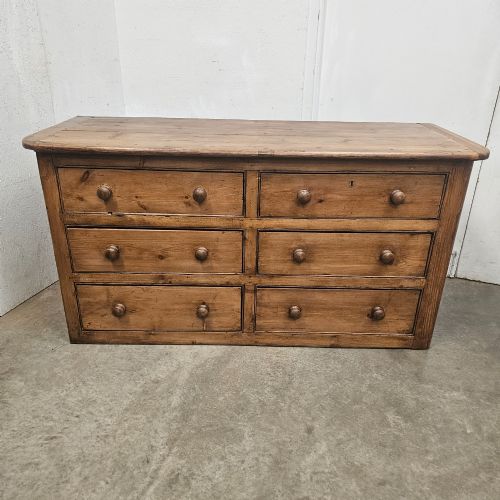
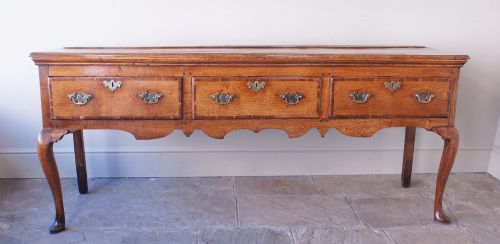
Antique Sideboard with Drawers
An antique sideboard with drawers brings enduring utility to a room, offering sturdy storage formed from timber and brass.
Antique Sideboard with Drawers
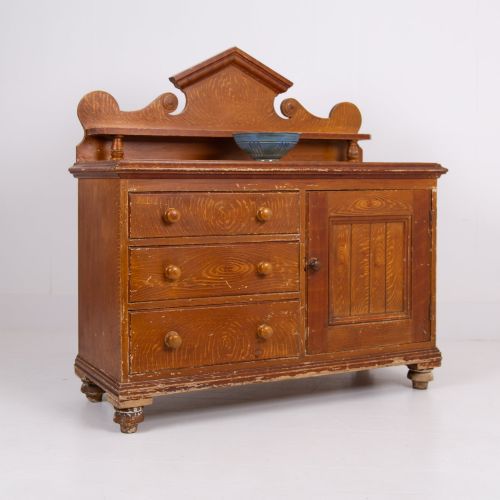
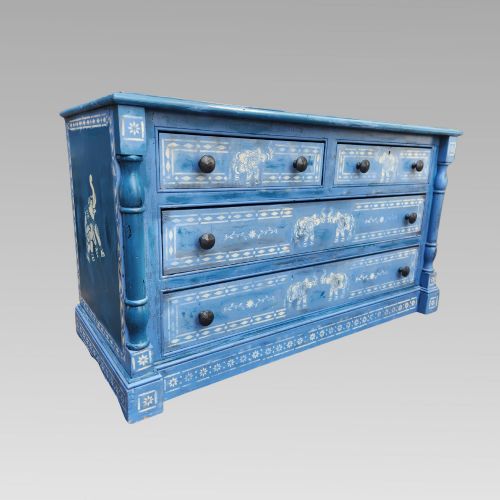
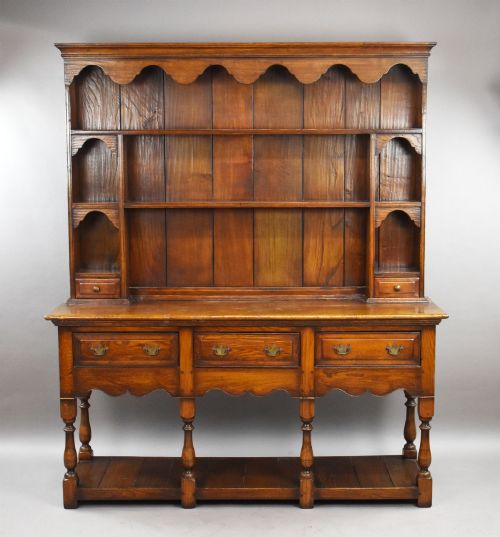
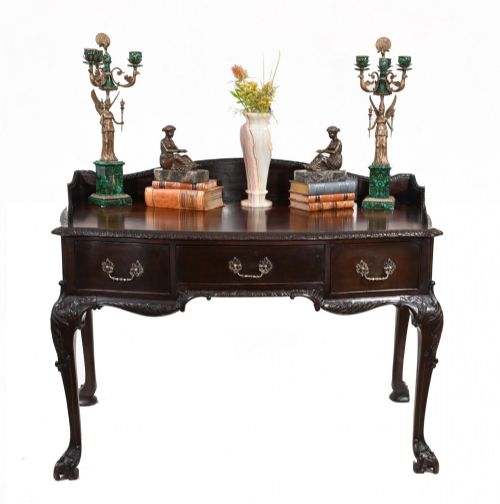
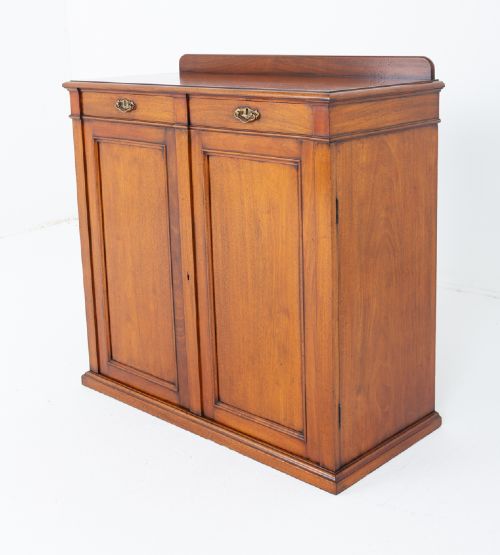
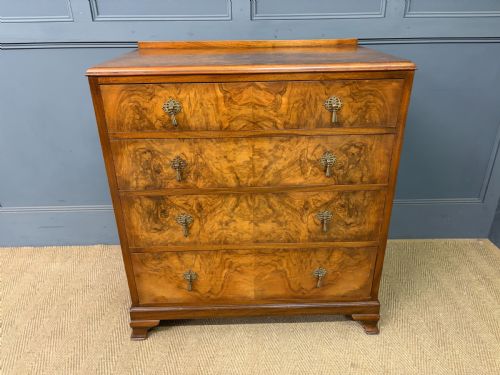
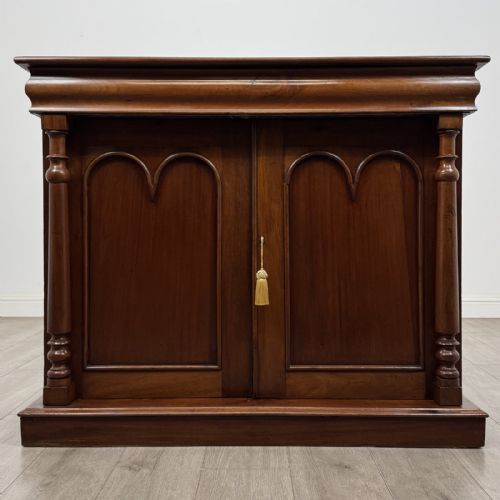
An antique sideboard with drawers encompasses substantial timber storage units designed for domestic utility across dining rooms, kitchens, and hallways. These pieces range from Georgian and 18th-century oak potboard dresser bases to Victorian pine servers and Edwardian mahogany cabinets fitted with multiple drawers.
Buyers meet sturdy regional examples such as Welsh and Lancashire dresser bases alongside refined Sheraton-inlaid mahogany sideboards and walnut servers. These forms integrate practical drawer banks and cupboards to provide functional storage suited to traditional and contemporary spaces.
The surviving selection spans formal George III periods through to early 20th-century oak and burr walnut designs. Regional character remains strong in solid oak and waxed pine constructions intended for everyday service.
Materials and construction
Makers relied primarily on solid oak, pine, and mahogany, often pairing them with brass handles, escutcheons, and occasional marble tops. Pine served for waxed kitchen dressers, while oak and mahogany formed the basis for formal Georgian and Edwardian servers.
Joinery methods included pegged mortise and tenon frames, hand-dovetailed drawer construction, and panelled doors. Inlaid surfaces utilised contrasting timbers such as flame mahogany and tulipwood to create geometric and classical motifs.
Antique Sideboard with Drawers Retail Price Guide 2026
Typical asking prices for sideboard with drawers among the pieces listed under this phrase on Sellingantiques today, from the lower quarter to the upper quarter. They describe what is for sale here now, not the wider market.
Listings feature oak, pine, mahogany, and walnut across Georgian, Victorian, and Edwardian periods.
Judging the standard
Quality rests in the integrity of the timber selection, the crispness of any carved detailing, and the original state of the brass hardware. Superior pieces display carefully chosen grain patterns in mahogany or burr walnut alongside uncompromised structural frames.
Construction details reveal the standard of the workshop, from the precision of hand-cut dovetails within the drawers to the retention of original potboards and backboards. Alterations to drawer configurations or replaced tops influence the standing of an individual piece.
The Antique Sideboard with Drawers Glossary
- Potboard
- An open lower shelf built into a dresser base for storing heavy kitchen pottery. This practical lower tier distinguishes many 18th-century and Georgian regional pieces.
- Dresser base
- A low cabinet fitted with drawers and occasionally cupboards, omitting the upper plate rack. These surfaces functioned as serving tables in dining spaces.
- Commode
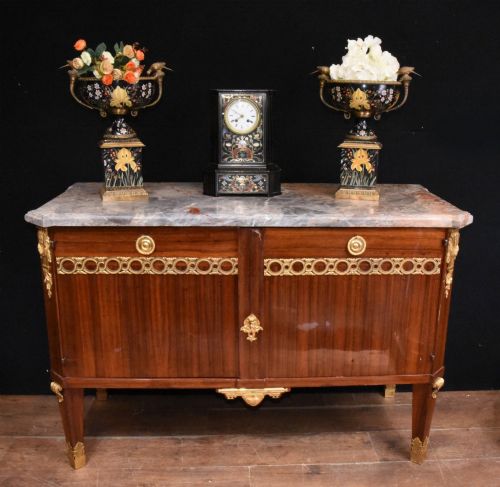
- A low French cabinet or chest containing drawers, frequently topped with marble. 18th-century examples often display intricate parquetry and tulipwood veneers.
- Sheraton inlay
- Delicate contrasting wood veneers embedded in geometric or classical patterns. This decorative technique characterises many refined mahogany sideboards from the Georgian and Edwardian periods.
- Kneehole desk
- A compact writing or storage desk featuring a recessed central space beneath a bank of drawers. Fine walnut versions appear in 18th-century collections.
Antique Sideboard with Drawers: Frequently Asked Questions
Where were sideboards used?
These pieces functioned primarily in dining rooms and kitchens for storing serving dishes, cutlery, and provisions. Larger regional dresser bases served as central work surfaces in domestic spaces.
Over time, refined mahogany and walnut iterations transitioned into formal dining and reception rooms to display silver and ceramics.
How do I clean a waxed pine finish?
Maintain waxed pine surfaces by dusting regularly with a soft, dry cloth. Apply a traditional beeswax sparingly when the timber appears dry, buffing gently to restore the sheen.
Avoid modern liquid polishes containing silicones, which can degrade the historic wax layer over prolonged use.
How do I distinguish oak from mahogany pieces?
Oak exhibits a pronounced, open grain with visible medullary rays, appearing in heavier Georgian and regional vernacular forms. Mahogany presents a tighter, reddish-brown grain suited to refined Sheraton and Victorian designs.
Weight and colour further separate the sturdy golden-brown tones of oak from the deep reddish hues of mahogany.