


Antique Side Table Canterbury
An antique side table canterbury brings together the utility of a magazine rack and the grace of a small display surface.
Antique Side Table Canterbury
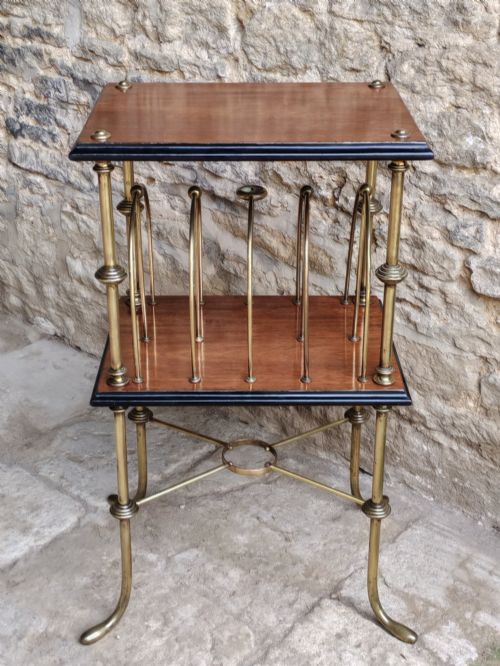
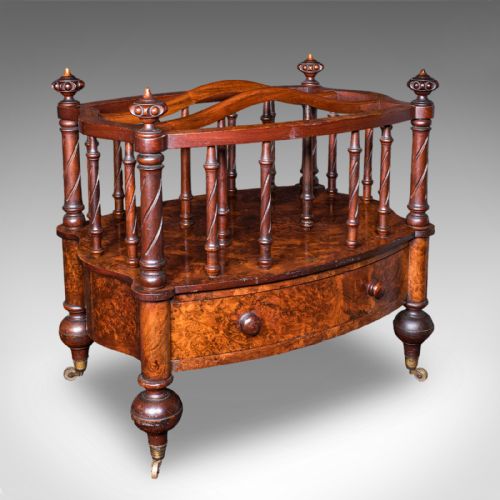
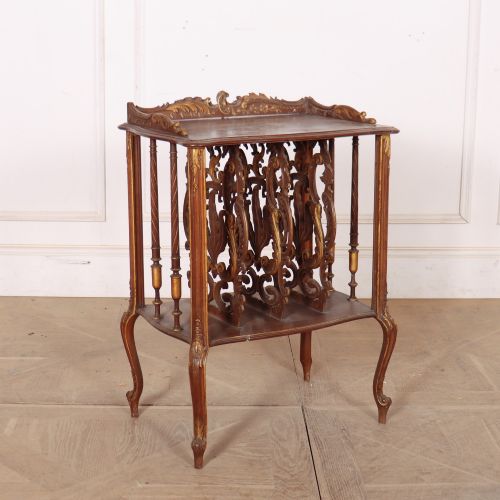
An antique side table canterbury serves as a compact multi-functional piece combining a surface for lamps or books with vertical divisions for newspapers, sheets of music or periodicals. Pieces meeting this description span the Regency, Victorian and Edwardian periods, appearing in forms such as open-shelf racks, multi-tiered whatnots and drawer-fitted stands.
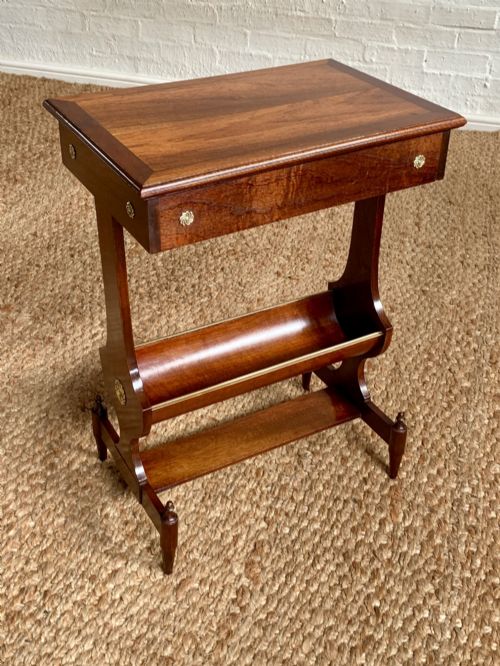
The most common examples encountered on this page date from the Victorian era and utilise rich timbers like burr walnut and mahogany. These variations often incorporate turned uprights, low drawers or integrated castor wheels, fulfilling both structural durability and refined domestic display.
Materials and construction methods
Cabinet makers relied heavily on dense hardwoods such as mahogany, rosewood and burr walnut, frequently applying fine stringing and marquetry in lighter woods like boxwood. Frames often incorporate delicate brass fittings, castors or ormolu mounts to secure the divisions of the magazine rack.
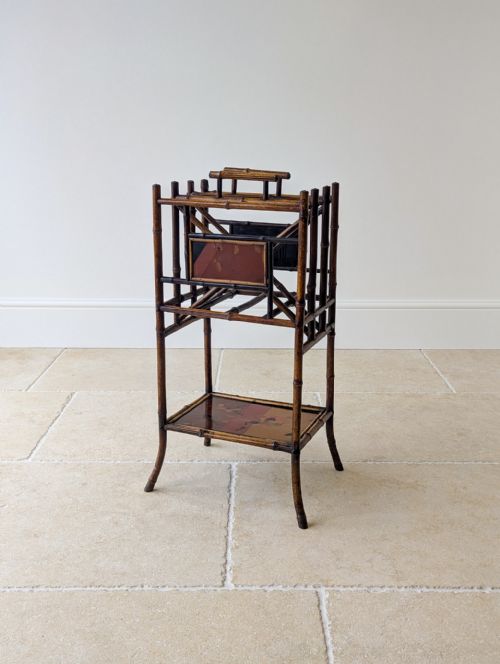
Alternative constructions utilise bamboo and tiger bamboo secured with bound joints, reflecting later nineteenth-century aesthetic movements and arts and crafts influences. Structural joins rely on traditional cabinet-making techniques to support the weight of books and papers within the open compartments.
Victorian readers kept their daily broadsheets tidy in musical stands that doubled as impromptu tables for afternoon tea cups.
What separates examples in quality
The grade of timber veneer and the precision of inlaid stringing distinguish standard workshop output from finer cabinet work. Burr walnut figures prominently in superior pieces, where symmetrical grain matching across the top and sides demands considerable skill from the maker.
The integration of functional elements such as a smoothly operating drawer, turned spindles and original brass castors alters the character of the piece. More ambitious designs combine the rack with a whatnot tier or music cabinet function, requiring more complex joinery than a simple open frame.
The Antique Side Table Canterbury Glossary
- Canterbury
- A low stand fitted with divisions for holding sheet music, newspapers or periodicals. It frequently includes a small drawer or table top.
- Whatnot
- A piece of furniture consisting of a set of open shelves for displaying ornaments or books. Examples often combine this shelving with a lower canterbury section.
- Marquetry
- Decorative veneer work formed by fitting pieces of various coloured woods into a design. It appears on tabletops and drawer fronts across Victorian examples.
- Ormolu
- Gilt bronze mounts applied to furniture for decorative effect. They are typically found on French-influenced pieces from the nineteenth century.
- Stringing
- Thin lines of contrasting wood inlaid into the surface of furniture. This technique frames panels and highlights the borders of tables.
Antique Side Table Canterbury: Frequently Asked Questions
What is an antique canterbury used for?
These pieces were originally designed to hold sheet music, newspapers and unbound periodicals near a piano or seating area. The top surface functioned simultaneously as a lamp table or occasional stand for small decorative objects.
Today, they serve a similar domestic purpose in living spaces or studies. The vertical partitions accommodate magazines and books while maintaining a compact footprint.
How do I date an antique canterbury?
Dating relies on identifying timber choices, decorative styles and construction methods associated with specific periods. Regency and early nineteenth-century pieces often feature solid mahogany or rosewood with restrained classical lines.
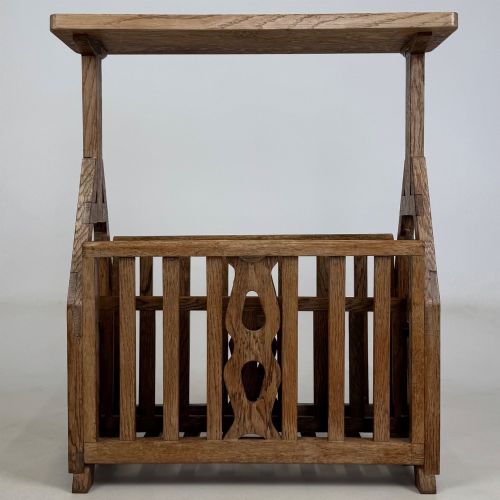
Victorian examples frequently display figured burr walnut veneers, inlaid stringing and ebonised details. Later Edwardian items include lighter rosewood occasional tables and arts and crafts oak constructions.
Are bamboo canterburys authentic antiques?
Bamboo and tiger bamboo stands date from the late nineteenth century, reflecting the popularity of aesthetic movement and exotic-inspired furnishings. These pieces utilise natural bamboo stalks bound at the joints.
They function as lightweight side tables combined with magazine racks. Their construction reflects the decorative tastes of the Victorian period rather than earlier cabinet-making traditions.
Can a canterbury double as a bedside table?
The compact dimensions and flat top surface allow these stands to function effectively beside a bed. The lower compartments provide storage for reading material and personal items.
Selection depends on the height of the piece and whether it includes a drawer for concealed storage. Open racks require careful placement to keep bedside clutter contained.