


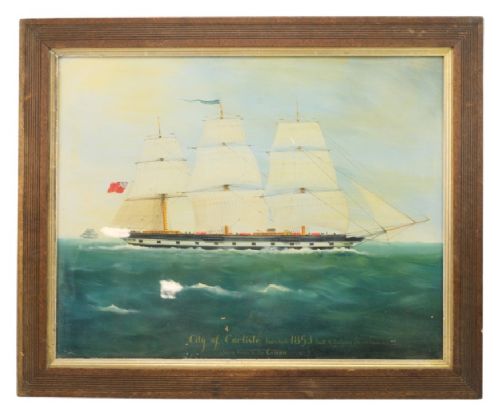
Antique Ship Seascape Artwork
These antique ship seascape artwork pieces capture the drama of maritime history on canvas and paper, bringing historic vessels and coastal gales directly into your room.
Antique Ship Seascape Artwork
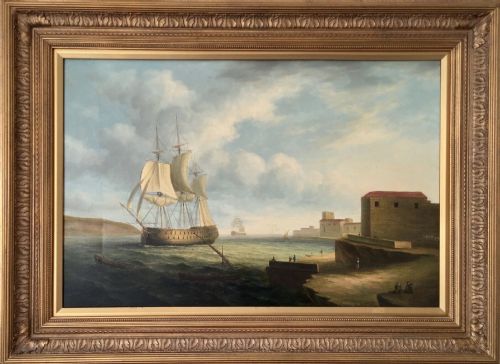
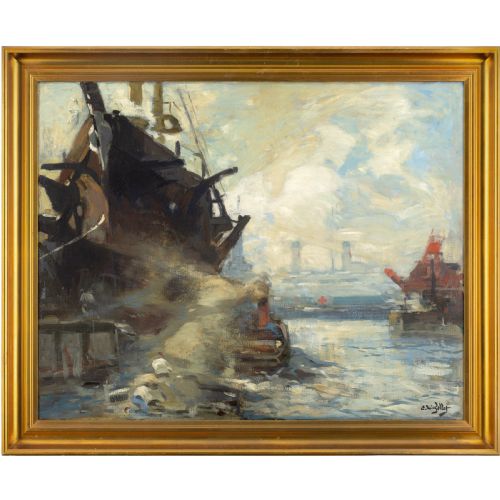
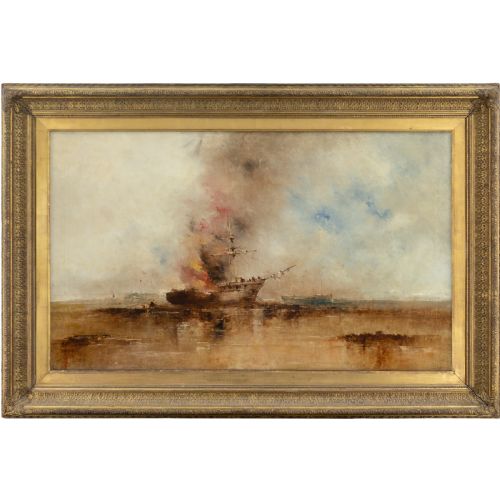
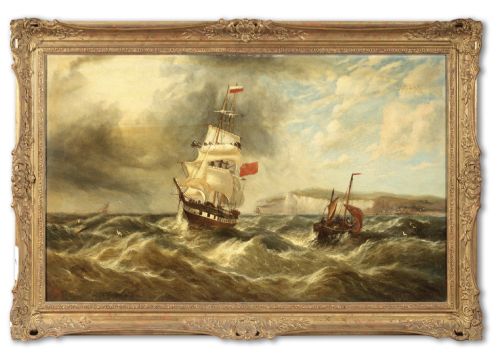
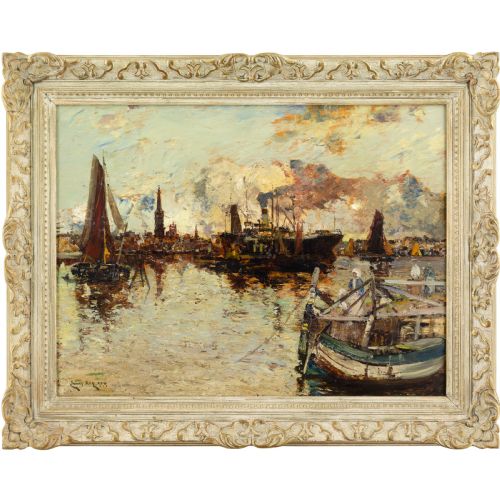
When searching for antique ship seascape artwork, a buyer encounters visual records of maritime heritage spanning the nineteenth and twentieth centuries. These works document specific vessels, naval engagements, and coastal trades through detailed oil paintings and delicate watercolours.
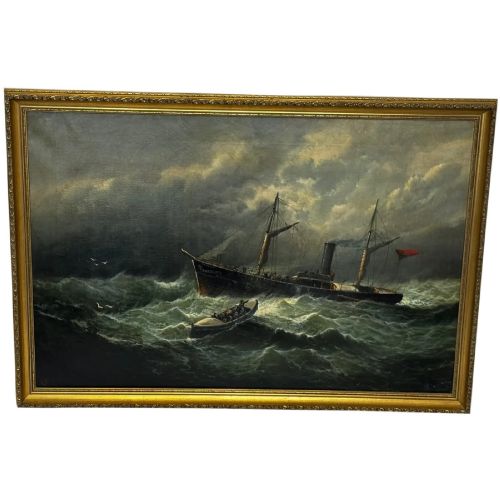
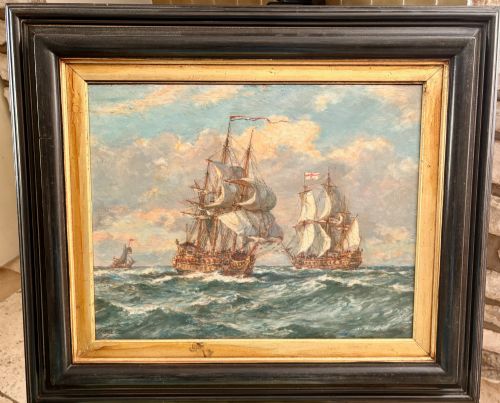
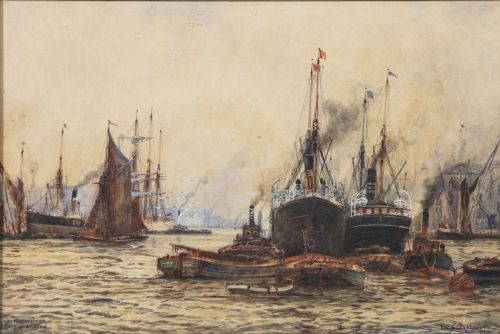
The selections available on this page lean heavily toward nineteenth-century Victorian marine scenes, Edwardian watercolours, and mid-century depictions of sailing ships and steamships. Works range from intimate harbour studies on paper to large oil paintings on canvas framed in gilt wood.
Materials and construction
Artists deployed oil paint upon stretched canvas or wooden panel to achieve deep atmospheric effects in rough seas and stormy weather. Watercolours executed on paper capture the softer light of harbours and coastal ports.
Framing forms an integral part of these works, utilising traditional gilt wood frames that complement the maritime subject matter. Support materials such as thick paper, card, and canvas boards underpin the longevity of each painting.
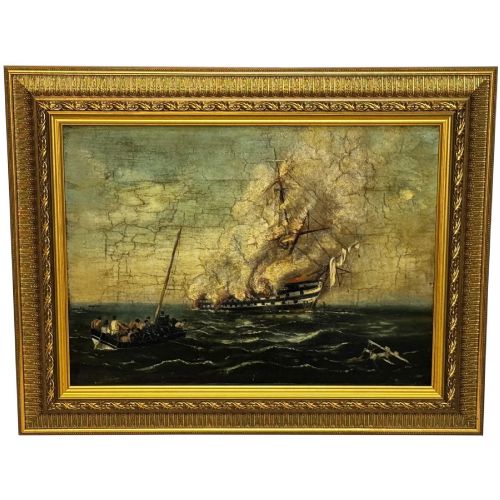
Several artists captured the precise moment a ship met trouble near port, ensuring stormy waves live on through generations.
Distinctions in quality
Superior execution relies upon the artist's precise understanding of maritime architecture, rigging, and nautical movement against water. Master hands capture the weight of a hull and the force of wind in sails with convincing accuracy.
The depth of colour and stability of the underlying pigment separate exceptional compositions from standard decorative works. Condition of the canvas, paper, and original frame also dictates the standing of each piece.
Eugène-Louis Gillot·William McAlpine·Charles Edward Dixon·John Rose Miles·James Kay RSW·Bernard Gribble·Bonaventura Peeters·Frank William Scarbrough·F. Corpuz·Bernard Benedict Hemy·Thomas Bush Hardy·John Wilson Carmichael·Nicholas Condy·Frank Kelsey·Abraham Hulk I·William Frederick Settle·Charles William Wyllie·Charles William Adderton·Vincenzo D’Esposito·Ernest Dade·Daniel Sherrin
The Antique Ship Seascape Artwork Glossary
- Barque
- A sailing vessel with three or more masts, where the foremast and mainmast are square-rigged and the mizzenmast is fore-and-aft rigged. This configuration appears frequently in nineteenth-century maritime paintings.
- Gouache
- An opaque water-based paint that produces bold, flat areas of colour and bright highlights. Artists utilise this medium on paper or board for sharp marine details.
- Gilt frame
- A wooden picture surround covered in a thin layer of gold leaf or metallic gilt paint. These frames define traditional nineteenth-century oil paintings.
- Gale
- A strong wind at sea, categorized by meteorological force and depicted by artists through towering waves and distressed rigging. Such scenes test the skill of maritime painters.
- Watercolour
- A painting method where fine pigments are suspended in a water-soluble binder on paper. It creates luminous coastal and harbour views.
Antique Ship Seascape Artwork: Frequently Asked Questions
What subjects do these marine paintings show?
The artworks depict historical sailing ships, naval frigates, steamers, and working fishing boats navigating harbours or battling rough seas.
Scenes range from quiet coastal anchorages to dramatic wartime engagements and rescues.
How do I care for antique oil paintings?
Keep oil paintings away from direct sunlight and steady humidity levels to prevent the canvas from sagging or cracking.
Dust the surface gently with a soft, dry brush and avoid chemical cleaning agents on the paint.
How do I distinguish watercolours from oil paintings?
Watercolours feature paper supports protected beneath glass, displaying a translucent quality with visible paper grain.
Oil paintings utilise textured canvas or wood panels with thicker, light-reflecting pigment layers.
What periods dominate these maritime artworks?
The majority of pieces date from the Victorian and Edwardian eras, reflecting the height of global shipping and naval power.
Examples also extend into early twentieth-century and mid-century modern interpretations of the sea.