
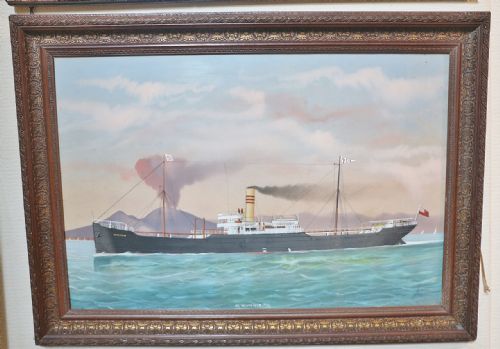


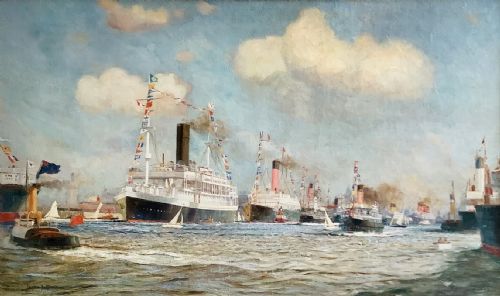
Antique Steamship Oil Canvas
An antique steamship oil canvas brings the industrial power and romance of maritime history directly onto the wall in rich pigment.
Antique Steamship Oil Canvas
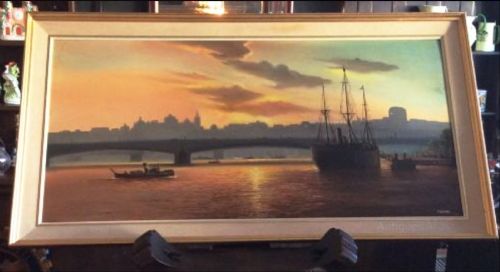
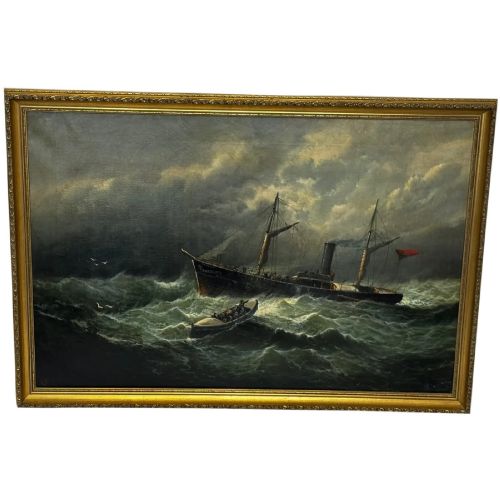
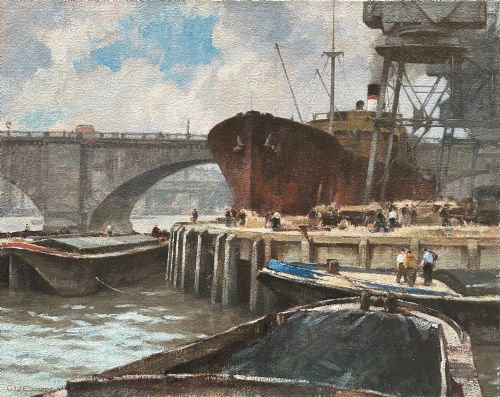
When you search for an antique steamship oil canvas, you are looking at marine paintings that capture vessels powered by steam alongside traditional sailing ships across the nineteenth and twentieth centuries. These works range from busy river scenes on the Thames and Mersey to dramatic depictions of liners, rescue vessels, and polar expeditions on heavy seas.
You are most likely to meet pieces originating from the Victorian and Edwardian eras, as well as early twentieth-century port and pierhead paintings. The subjects span named liners such as the RMS Lusitania and RMS Queen Mary, alongside atmospheric records of industrial shipping and naval vessels.
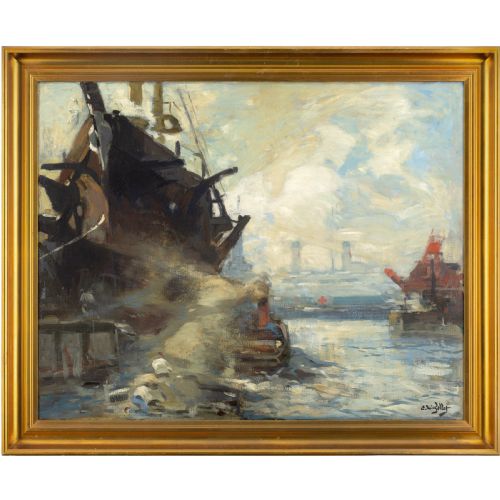
The styles vary from detailed maritime realism and traditional pierhead portraiture to impressionist interpretations of harbour light and water. Whether showing a calm stretch of river or a steamer battling heavy waves, each canvas preserves a specific moment in maritime history.
Materials and construction
These works are painted in oil paint directly onto stretched canvas surfaces, allowing artists to build rich textures for rolling waves, smoke from funnels, and changing skies. Pigments capture the dark hulls of iron steamers, white steam, and the subtle grey and blue tones of open water.
Many of the surviving works retain their original wood or giltwood frames, which often complement the maritime subject matter with moulded or gilded decoration. The combination of durable oil paint on canvas has allowed these historical records of shipping to survive in varied domestic and institutional settings.
Listings feature periods spanning the nineteenth century through the 1960s, documenting the transition from early steamers to twentieth-century ocean liners.
Judging quality in marine painting
The distinction between ordinary and exceptional works rests on the artist's ability to render naval architecture, rigging, and the physics of water with convincing precision. Stronger paintings convey the sheer weight and movement of a steamship displacing water, whereas lesser pieces can appear static or formulaic in their depiction of hulls and waves.
Provenance and attribution also elevate a work, particularly when a painting is securely linked to a documented marine artist or records a historically significant vessel such as a named liner or polar expedition ship. The handling of atmospheric light, smoke, and sky separates competent port portraits from masterly compositions.
Eugène-Louis Gillot·William Broome·Charles William Wyllie·Edward Fletcher·Johan Jens Neumann·James Scrimgeour Mann
The Antique Steamship Oil Canvas Glossary
- Pierhead painting
- A specialised genre of marine art created to record specific merchant ships, often commissioned by captains, owners, or shipping lines while docked.
- Marine realism
- An artistic approach focused on accurate representation of ships, maritime equipment, and coastal topography without excessive romantic stylisation.
- Giltwood
- Wood carved and coated with gold leaf or metallic powder, commonly used for traditional picture frames housing nineteenth-century oil paintings.
- Post-Impressionism
- An art movement extending beyond impressionism that emphasises symbolic content, heavier brushwork, and distinct structural forms in landscapes and seascapes.
- Pool of London
- A historic reach of the River Thames in central London that historically accommodated dense merchant shipping and intense maritime traffic.
Antique Steamship Oil Canvas: Frequently Asked Questions
What is a steamship oil canvas?
An antique steamship oil canvas is a historical painting executed in oil on canvas that depicts steam-powered vessels, ocean liners, or industrial shipping. These works document the evolution of maritime transport from the nineteenth century into the twentieth century.
They serve as both fine art and historical records of named ships, busy ports, and dramatic marine encounters on rivers and oceans.
How were these marine paintings used?
Many of these paintings were commissioned by shipping companies, ship captains, or maritime enthusiasts to record specific vessels and famous fleets. They were displayed in shipping offices, maritime clubs, and private homes to celebrate commercial and naval achievements.
Today, they function primarily as decorative and collectible fine art for interiors focused on maritime history.
How do I care for an oil painting?
Protect the canvas by keeping it away from direct sunlight, excessive moisture, and rapid temperature fluctuations that can cause the oil paint or canvas to crack. Dust the surface and frame gently with a soft, dry brush without applying pressure to the painted area.
Avoid using liquid cleaners on the canvas, and consult a professional conservator if the paint surface requires cleaning or stabilization.
How can I tell the period of a painting?
The period can often be identified through the specific type of steamship depicted, the clothing of figures in harbour scenes, and the style of the artist's signature or framing. Changes in ship design, from early nineteenth-century paddle steamers to twentieth-century ocean liners, provide clear chronological markers.
Stylistic shifts from Victorian maritime realism to later impressionist and post-impressionist approaches also help narrow the date of creation.