


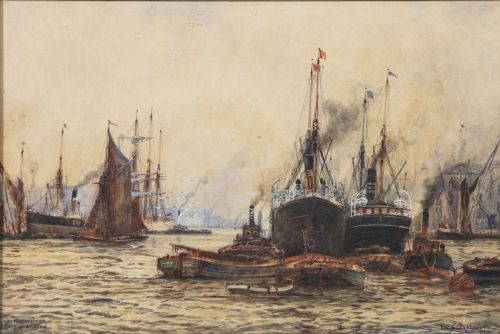
Antique Ship Painting
These works capture the enduring drama of the seas, offering collectors an intimate view of historic vessels through period oils and watercolours.
Antique Ship Painting
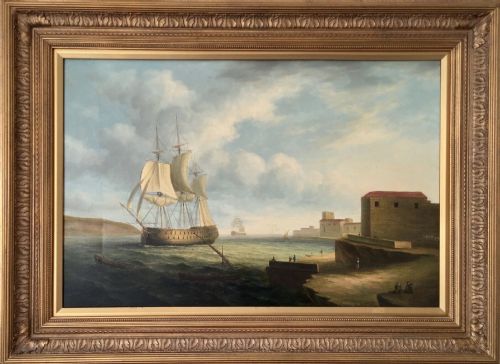
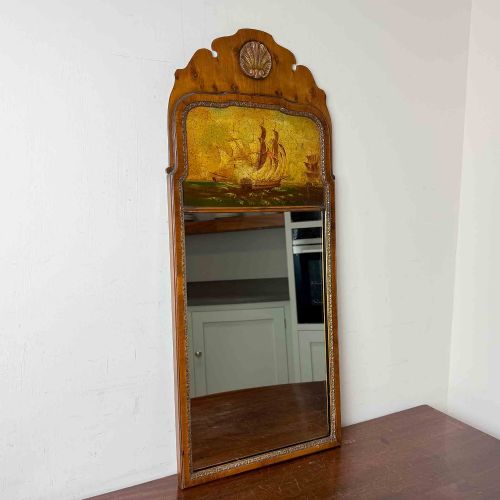
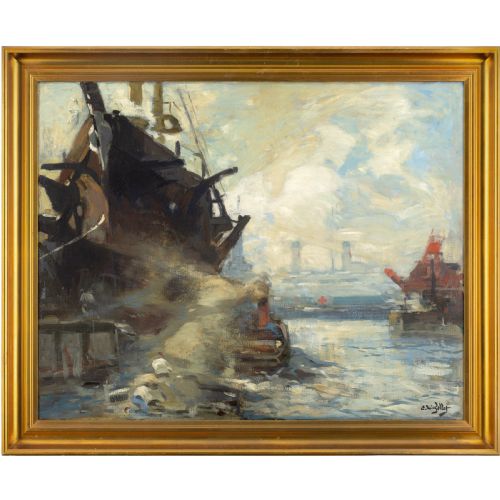
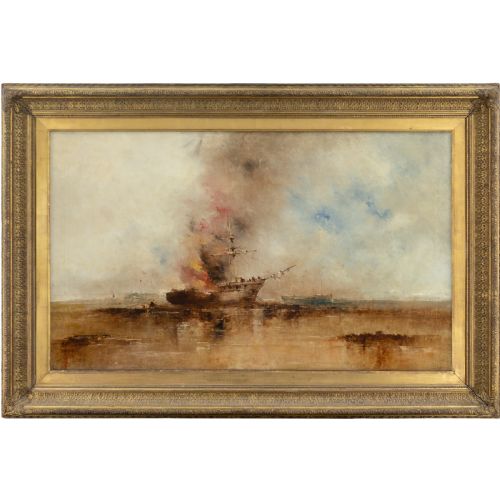
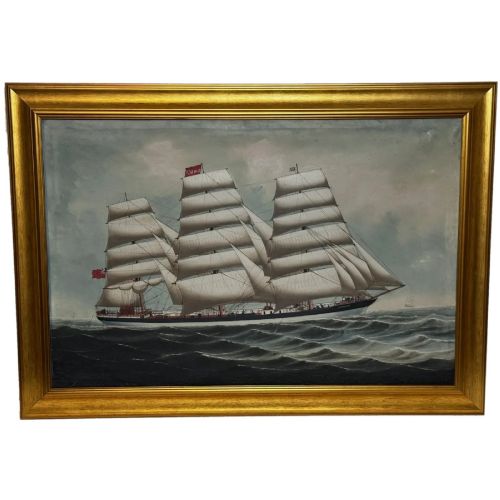
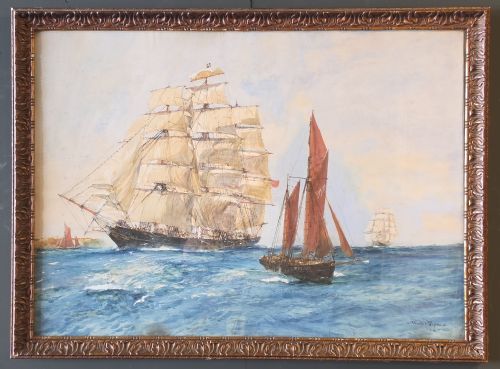
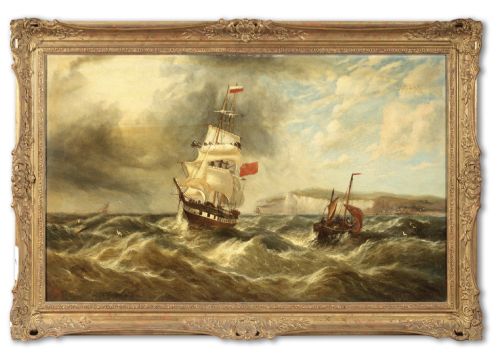
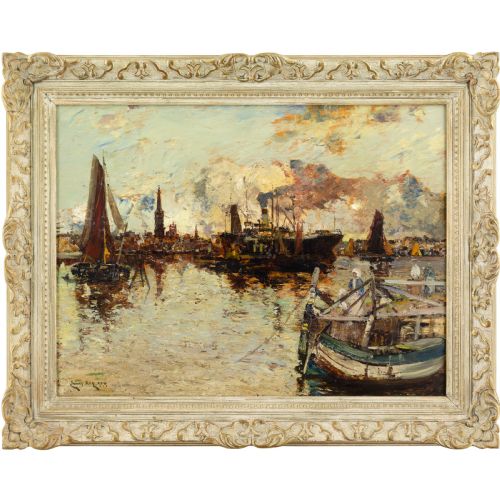
Collectors seeking an antique ship painting encounter a rich variety of maritime art spanning the Victorian, Edwardian and earlier eras. The selection ranges from detailed portrayals of merchant clippers and warships to dramatic storm scenes and quiet harbour moorings.
Most examples found on this page date from the nineteenth and early twentieth centuries, reflecting a period when maritime trade and naval power dominated global commerce. Works vary from intimate watercolours on paper to large oil paintings on canvas framed in giltwood.
How they were made
Artists relied primarily on oil on canvas, panel or board, alongside watercolour and gouache on paper, to capture the shifting moods of the sea. Pigments were handled to render translucent waves, billowing canvas sails and the dense smoke of naval engagements.
Many surviving canvases remain housed in their original heavy giltwood or wood frames, occasionally constructed from timbers salvaged from wrecks. The technical execution ranges from tightly controlled draughtsmanship documenting specific vessel rigging to loose, expressive brushwork characteristic of plein air marine painting.
Antique Ship Painting Retail Price Guide 2026
Typical asking prices for ship painting among the pieces listed under this phrase on Sellingantiques today, from the lower quarter to the upper quarter. They describe what is for sale here now, not the wider market.
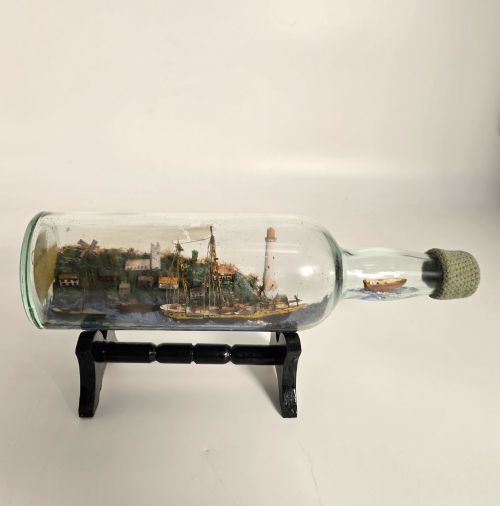
Sailors occasionally spent months carving intricate miniature wooden frigates inside narrow glass bottles using only long tweezers and steady patience.
What varies in quality
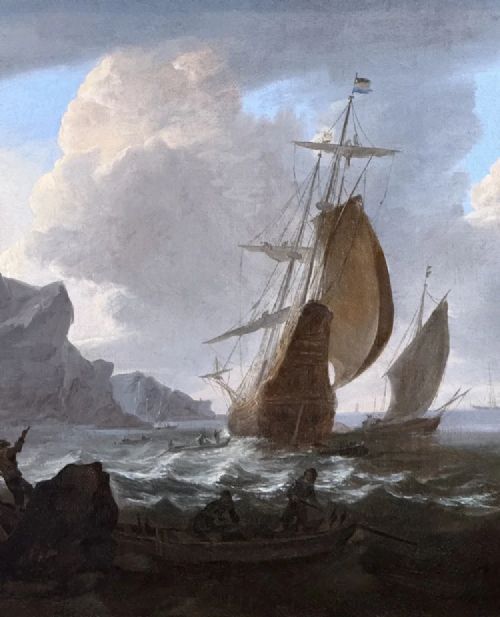
Quality rests upon the artist's understanding of nautical architecture and maritime weather patterns, separating accurate historical records from generic decorative seascapes. Superior works demonstrate precise handling of hull lines, rigging geometry and the correct physics of wind in the sails.
Atmospheric depth and the management of light on water further distinguish exceptional pieces from routine workshop productions. The handling of turbulent waves and coastal distance creates a convincing sense of place that elevates the entire composition.
James Hardy·Eugène-Louis Gillot·William McAlpine·Reginald Arthur Borstel·Charles Edward Dixon·John Rose Miles·James Kay·William Broome·Bernard Gribble·Bonaventura Peeters·Frank William Scarbrough·F. Corpuz·Bernard Benedict Hemy·John Wilson Carmichael·Lai Fong·Richard B. Spencer·Alexander Harwood·Nicholas Condy·TB Hardy·William Frederick Settle·William Henry Williamson·George Clarkson Stanfield·James Webb·William Clark Of Greenock·William Langley
The Antique Ship Painting Glossary
- Grisaille
- A painting executed entirely in shades of grey or neutral monochrome. This technique was frequently employed by early artists to prepare compositional studies or to mimic sculptural reliefs.
- Diorama
- A three-dimensional display enclosing a handmade model ship within a fitted box or glass case. These pieces often incorporate painted backgrounds and detailed miniature rigging.
- Seascape
- A work of art depicting the sea, coastal views or marine vessels. The genre encompasses calm harbour scenes as well as dramatic shipwrecks in heavy gales.
- Provenance
- The documented history and ownership lineage of an artwork. Clear records help establish attribution to specific nineteenth-century marine painters.
Antique Ship Painting: Frequently Asked Questions
What subjects appear most often?
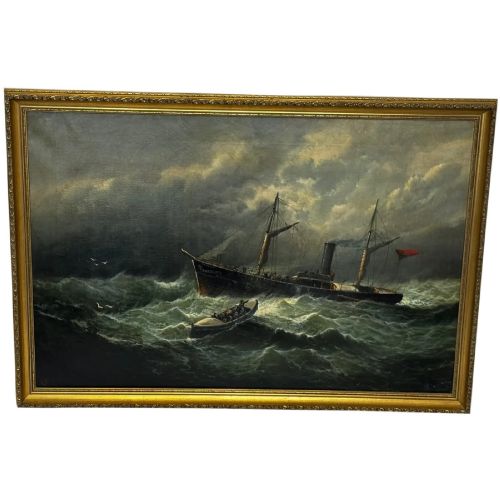
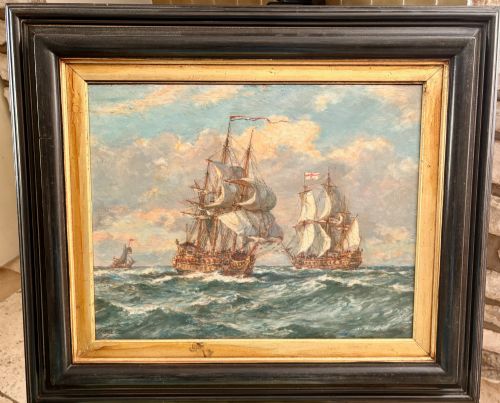
Paintings frequently depict named merchant barques, three-masted schooners, royal warships and steamers navigating busy estuaries or open coastal waters. Scenes range from peaceful harbour approaches to dramatic rescues and vessels caught in heavy gales.
Artists often recorded specific historical events, such as troop movements to the Crimea or coastal shipping off major ports like London and Liverpool. These compositions serve as both fine art and reliable historical documentation of nineteenth-century maritime commerce.
How were diorama ships constructed?
Makers built miniature sailing vessels and steam barges by hand, placing them inside shallow wooden boxes or glass bottles alongside painted maritime backdrops. These intricate pieces combined carpentry with detailed rigging work.
Folk art dioramas were often created by sailors during long voyages or by coastal craftsmen using local materials. They provide a tangible record of naval architecture preserved in protective enclosures.
How should I care for these works?
Works on paper and canvas require stable indoor environments away from direct sunlight to prevent fading of watercolours and yellowing of old varnish. Glazed pieces should be checked periodically to ensure moisture does not accumulate behind the glass.
Original giltwood frames benefit from gentle dusting with a dry, soft brush rather than liquid cleaners. Preserving the mounting integrity helps maintain the historical context of the piece.
How do I identify the period?
Period markers include the rigging style of the vessels depicted, clothing of figures on deck, and the construction methods of the accompanying frames. Steamships and specific naval uniforms often point clearly to the late Victorian or Edwardian eras.
Signatures, dates inscribed on the reverse, and stretcher construction provide additional clues for dating. Comparing the handling of water and light against known nineteenth-century British and European marine schools aids further attribution.